Miami Opens at No. 7 as Florida and Florida State Start the Season Unranked
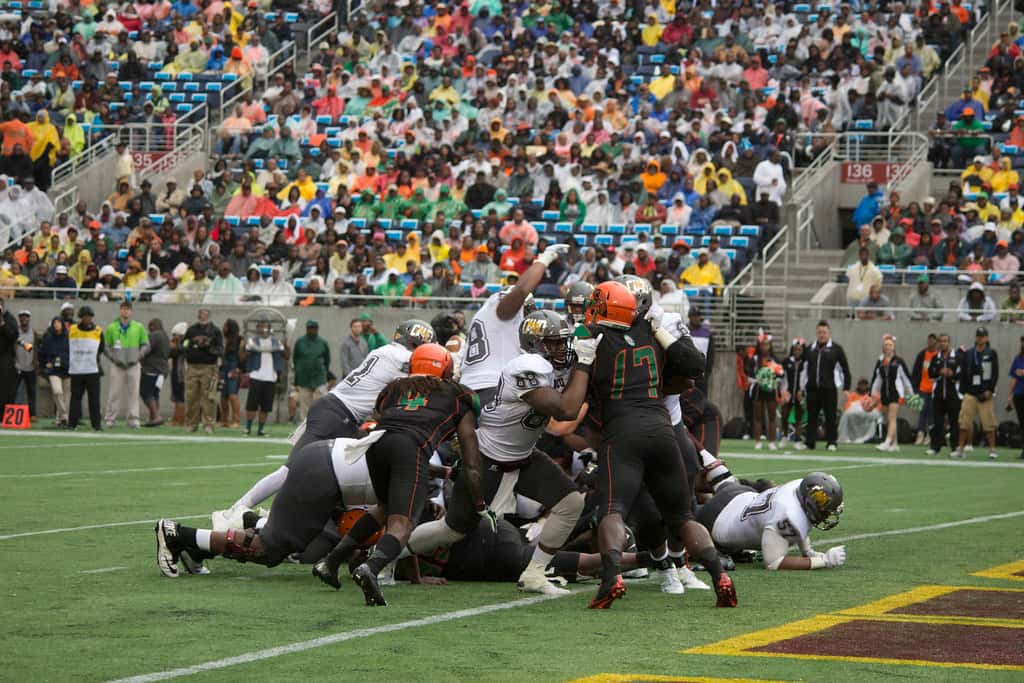
Miami opens the 2026 college football season at No. 7 in the preseason USA Today Coaches Poll, the program's highest preseason ranking since 2004 and a marker of how far the Hurricanes have climbed over the past two seasons. Florida and Florida State both begin the year outside the top 25.
The gap between the state's three flagship programs is the widest it has been in a preseason poll in years, and it frames a fall in which one Florida program carries national championship expectations while the other two carry very different kinds of pressure.
Miami is scheduled to open the season on September 4 against Stanford.
Miami's climb
The Hurricanes' rise has been steady rather than sudden. The program has improved across consecutive seasons, culminating in a run to the College Football Playoff National Championship Game last year.
Reaching the title game reset national expectations for a program whose modern history has been defined by the distance between its 1980s and 1990s dynasty and everything that followed. Miami spent two decades as a program more often discussed in terms of its past than its present.
The preseason ranking reflects returning production, recruiting momentum and the recruiting and roster-building advantages that follow a championship game appearance. In the transfer portal and name, image and likeness era, success compounds faster than it once did, because a program coming off a title game run competes for players from a materially better position than one coming off a middling season.
The No. 7 placement also carries an implicit caution. Preseason polls measure expectation rather than performance, and a top-10 ranking creates a standard against which every result is measured. A one-loss season at No. 7 draws scrutiny that the same record would not at No. 20.
Florida State's rebuild
Florida State enters the season coming off a 5-7 campaign, with head coach Mike Norvell facing direct pressure to demonstrate that the program can return to annual conference contention.
The Seminoles received three first-place votes in the Atlantic Coast Conference preseason media poll but were picked to finish eleventh in the league, a split that captures the uncertainty around the program. A handful of voters see the roster talent; most see the recent results.
Florida State's recent trajectory has been volatile. The program produced an undefeated regular season and a conference championship within recent memory, followed by a sharp decline. That kind of swing is more common in the current environment than it once was, because roster turnover through the transfer portal can reshape a depth chart in a single offseason in either direction.
Doak Campbell Stadium in Tallahassee remains one of the more demanding environments in college football, and Florida State's fan base has historically supported the program through down cycles. The patience question is whether that support survives a second consecutive losing season.
Florida's position
The Gators start the season outside the top 25 in the Coaches Poll, though preseason projections placed Florida on the fringe of the Associated Press Top 25, with one projection slotting the program around No. 22.
Florida's schedule offers a defined early runway. The Gators face Florida Atlantic and Campbell at home in the first two games before opening Southeastern Conference play on the road at Auburn.
Two home nonconference games to start a season serve a specific purpose: they let a coaching staff evaluate depth, integrate transfers and freshmen into game situations and establish operational rhythm before the schedule turns. What they do not do is tell anyone much about the team, since the SEC opener is the first genuine data point.
Florida's competitive challenge is structural. The SEC is the deepest conference in the sport, and the expanded league schedule leaves little margin. A program that would contend for a conference title in most leagues can finish in the middle of the SEC standings.
What the polls actually measure
Preseason rankings are projections built from returning production, recruiting rankings, transfer portal activity, coaching stability and the previous season's results. They contain no information about the current season because none exists yet.
Their practical significance is inertia. Polls tend to move slowly, and a team ranked highly in August retains the benefit of that placement through early results in a way an unranked team does not. Under the College Football Playoff selection process, a committee rather than the polls determines the field, but public perception shaped by preseason expectations influences the environment in which those decisions are made.
The Coaches Poll and the Associated Press poll use different voter pools. The Coaches Poll surveys head coaches, while the AP poll surveys sportswriters and broadcasters. The two frequently diverge, particularly in the preseason.
What it means for Florida fans
The three programs offer three different seasons to follow.
Miami supporters enter with genuine championship expectations for the first time in a generation, which is both the reward for the program's climb and a source of pressure that Hurricanes fans have not carried in years.
Florida State supporters face a season that will be judged on trajectory more than record. A competitive team that loses close games to good opponents reads differently than another 5-7 finish.
Florida supporters get an early schedule that provides little information followed by an immediate test in Auburn. The season's shape will be clearer after the SEC opener than it is now.
The state's other programs, including UCF, USF, Florida Atlantic, FIU and Florida A&M, all field teams that draw substantial regional followings and, in several cases, play schedules with meaningful matchups against Power Four opponents.
How the transfer portal changed the calculus
Preseason expectations in college football now rest on a roster-building environment that did not exist a decade ago. The transfer portal allows players to move between programs with far fewer restrictions than the old transfer rules imposed, and name, image and likeness compensation has given schools a competitive lever that operates outside traditional recruiting.
The practical effect is compression. A program can add several immediate starters in a single offseason, which means the gap between a five-win team and a nine-win team can close faster than the traditional development cycle allowed. It also means the gap can open just as fast when a roster loses production to departures.
Florida's three flagship programs have all operated in that environment with different results. Miami's climb has been supported by an ability to retain and add talent that matches its championship game appearance. Florida State's decline followed a season in which the roster turned over substantially. Florida has used the portal to address specific position needs while building through high school recruiting.
Florida is unusually well positioned as a recruiting state. It produces more Division I talent per capita than nearly anywhere in the country, and the three in-state Power Four programs compete against national brands for players who grew up within driving distance of their campuses.
The schedule dynamics
Preseason rankings interact with schedule strength in ways that shape a season's arc before a snap is played.
Miami's opener against Stanford on September 4 is a nonconference game against an Atlantic Coast Conference member, an artifact of the league's geographic expansion. The Hurricanes then face an ACC schedule in which the conference's competitive middle is deep enough to produce upsets but its top is thin enough that a talented team can run the table.
Florida's SEC schedule is the harder assignment. The conference's expanded membership means a Florida team can face several ranked opponents in consecutive weeks, and the league's depth produces road environments that few programs elsewhere encounter. Opening SEC play at Auburn is a genuine test rather than a soft landing.
Florida State's path runs through the same ACC that Miami navigates, which means the November meeting between the two programs carries implications for both the conference standings and the postseason picture.
The 12-team College Football Playoff format changes what a loss costs. Under the four-team format, a single September defeat frequently ended a program's realistic playoff hopes. The expanded field gives a one-loss or two-loss team from a Power Four conference a genuine path, which lowers the stakes of any individual result while raising the stakes of the full body of work.
The economics behind the season
College football is the financial engine for athletic departments across Florida, funding the sports that do not generate revenue and supporting facilities, coaching salaries and scholarship costs across the full athletic program.
Home game weekends carry substantial economic effects for the host communities. Gainesville, Tallahassee and Miami Gardens each absorb large influxes of visitors on game days, filling hotels, restaurants and parking operations, and generating sales tax revenue that flows to local governments.
Ben Hill Griffin Stadium in Gainesville and Doak Campbell Stadium in Tallahassee are among the larger venues in the sport, and a sellout in either produces a temporary population surge in a mid-sized city. Miami plays at Hard Rock Stadium in Miami Gardens, which it shares with the Dolphins and which hosted matches during the 2026 World Cup.
The revenue-sharing arrangements now permitted between schools and athletes have added a new line to athletic department budgets, and programs across the state have restructured their financial models to accommodate it. That restructuring has consequences for non-revenue sports, facilities timelines and staffing.
What's next
The season opens over Labor Day weekend, with Miami facing Stanford on September 4 and the other Florida programs opening across the same window.
The Associated Press Top 25 releases weekly through the season, and the College Football Playoff selection committee begins issuing its rankings later in the fall. The committee's rankings, not the polls, determine the playoff field.
Schedules, kickoff times and broadcast assignments are published by each athletic department and by the conferences. Many early-season kickoff times are set on a rolling basis by television partners several weeks in advance.
Spotted an issue with this article?
Have something to say about this story?
Write a letter to the editor