NASA's Swift Observatory, Launched From Cape Canaveral in 2004, Nears Reentry After Failed Robotic Rescue
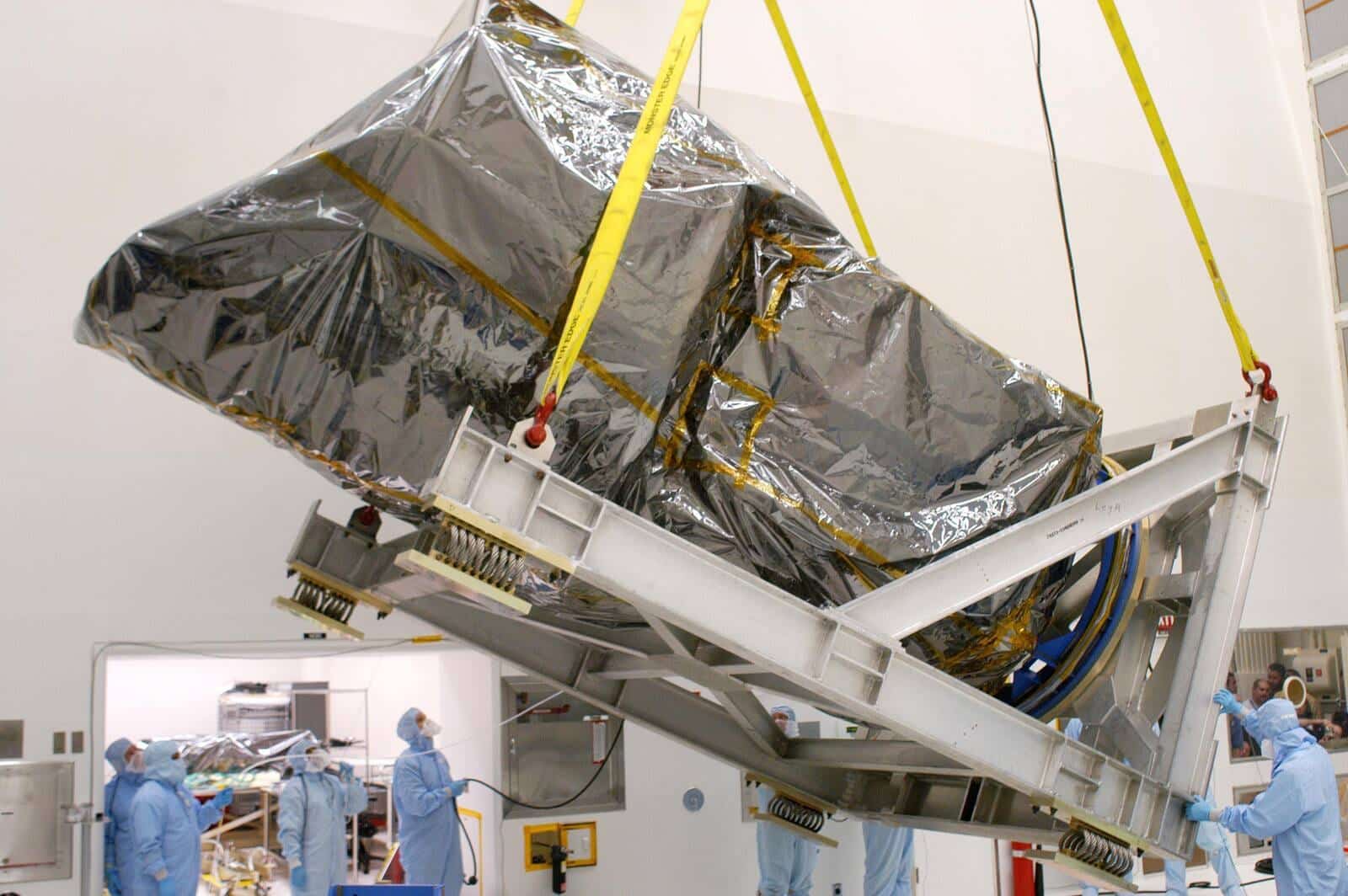
NASA's Neil Gehrels Swift Observatory, a gamma-ray burst hunter that lifted off from Cape Canaveral nearly 22 years ago, is about to fall out of orbit. The U.S. Space Force predicts the 1.5-ton spacecraft will come down on or around Friday, The Associated Press reported Oct. 31. The reentry follows a commercial robotic rescue mission that failed earlier this year. For Florida's Space Coast, it closes one of the longest-running science missions ever to launch from Cape Canaveral, and it came after a first-of-its-kind effort to save a NASA satellite with a private servicing spacecraft.
Swift made its last science observation on Oct. 20, NASA said. Operators at Penn State then sent a command that effectively ended the mission to prepare the spacecraft for reentry.
Launched from the Cape in 2004
Swift lifted off at 12:16 p.m. EST on Nov. 20, 2004, aboard a Boeing Delta II rocket from Launch Complex 17A at what was then Cape Canaveral Air Force Station, according to NASA. About 80 minutes after launch, the spacecraft separated from the rocket's second stage. Before launch, the satellite was prepared at the Cape. NASA photos distributed by the AP show workers removing protective covers from Swift in Hangar AE at Cape Canaveral Air Force Station in September 2002.
The pad that launched Swift is gone now. Complex 17 hosted the Delta II for years, and its last launch was NASA's GRAIL lunar mission in September 2011. Its two launch towers were demolished in July 2018.
Swift was built to solve what NASA called a 35-year-old mystery: where gamma-ray bursts, the most powerful explosions in the universe, come from. It was designed for a two-year prime mission. It lasted more than 10 times that long. In 2018, NASA renamed it in honor of Neil Gehrels, its first principal investigator, who died in 2017.
What Swift found
Swift's speed set it apart. It typically turned its telescopes to image a new burst within about a minute, NASA said, and its planning system could schedule up to 75 separate targets a day. That quickness earned the observatory its name. NASA treated it as a first responder for larger telescopes such as Hubble and Webb, which followed its alerts with deeper looks, the AP reported.
Over its lifetime, according to NASA:
- Swift observed more than 2,000 gamma-ray bursts and studied more than 1,400 supernovae.
- It watched stars being torn apart by black holes, monitored active galaxies, studied comets and asteroids, and carried out an all-sky X-ray survey.
- In May 2005, it caught GRB 050509B, a burst lasting 0.03 seconds and the first short burst with a detected afterglow. Those observations supported the view that short bursts come from merging neutron stars.
- Its data contributed to about 7,000 published papers. Its public archive holds nearly 22 years of measurements, including more than 1.5 million images from its ultraviolet and optical telescope.
"Swift delivered an incredible, lasting return on investment for the nation," Shawn Domagal-Goldman, director of NASA's Astrophysics Division, said in NASA's end-of-mission announcement.
Why it is falling
Every satellite in low Earth orbit feels a faint drag from the upper atmosphere. Heavy solar activity in recent years swelled the atmosphere and increased that drag, pulling Swift down faster than expected, NASA said. Swift has no engine of its own, so it could not raise its orbit.
In September 2025, NASA hired Katalyst Space to build a robotic servicing spacecraft in less than a year. The plan was to catch Swift and push it higher. The spacecraft, called Link, had three robotic arms and xenon-fueled electric thrusters. If it had worked, NASA said, it would have been the first time a commercial robot captured an uncrewed NASA spacecraft that was never designed to be serviced in orbit.
How the rescue fell short
Link did not launch from Florida. It flew July 3 on a Northrop Grumman Pegasus XL rocket dropped from the company's Stargazer aircraft over Kwajalein Atoll in the Marshall Islands, NASA said. Engineers had tested the spacecraft inside the rocket at NASA's Wallops Flight Facility in Virginia beforehand.
Weeks after launch, Link developed problems controlling its orientation. On Aug. 19, NASA and Katalyst announced that, because of an ongoing attitude control issue, Link would not capture or boost Swift. The company kept testing its hardware in orbit. It deployed all three robotic arms, fired its three thrusters at the same time, and raised its orbit to line up with Swift's. Link came within 7.5 to 9 miles (12 to 15 kilometers) of Swift but got no closer, NASA said. It reentered the atmosphere in September, the AP reported.
"This is not the outcome we were working toward, but it does not change why this mission was worth attempting," NASA Administrator Jared Isaacman said in August.
The key dates in Swift's final months are below.
| Date | Event |
|---|---|
| Sept. 2025 | NASA awards Katalyst a contract for a rescue mission |
| July 3, 2026 | Link launches on a Pegasus XL from Kwajalein Atoll |
| Aug. 19, 2026 | NASA and Katalyst call off the capture and boost |
| Late Aug. 2026 | Swift resumes science observations |
| Sept. 2026 | Link reenters the atmosphere |
| Oct. 20, 2026 | Swift falls to 171 miles, makes its last observation and enters safe mode |
| Oct. 23, 2026 | NASA announces the end of the mission |
The final weeks
After the boost was called off, the Swift team restarted observations that had been paused to reduce drag. In the weeks that followed, the observatory studied hundreds more targets, from the remains of exploded stars to comets, NASA said. Pointing the spacecraft for science added drag, and Swift sank quickly again. On Oct. 20, it reached about 171 miles (275 kilometers). At that height it could no longer hold steady against the drag and entered safe mode.
Most of the spacecraft is expected to burn up. But a handful of pieces made of tungsten, which is denser than lead, and some mirror parts could survive, Brad Cenko, the mission's principal investigator, told the AP. Any debris that survives will most likely fall into the ocean. The AP reported that parts of Africa, Australia, India, Southeast Asia, and Central and South America lie within the possible reentry zone. Florida and the rest of the continental United States are not among the areas the AP listed. The Space Force is tracking the spacecraft's path.
"At least in low-Earth orbit, what goes up must come down," John Nousek, the Penn State astronomer who led the mission's operations, told the AP.
The Florida connection
Swift belongs to the long run of NASA science missions that left the ground from Florida's Space Coast. Its reentry comes as the Cape's launch pace is far higher than in the Delta II era, driven mostly by commercial rockets. The Swift rescue attempt also shows where NASA is heading. Instead of building its own repair hardware, the agency hired a private company for a quick, high-risk servicing mission.
NASA is already considering commercial servicing for other observatories. This week, the agency published an article on possible commercial servicing for the Hubble Space Telescope.
What's next
The Space Force will refine its reentry forecast as Swift drops lower. NASA has said it will use existing missions to respond quickly to cosmic events while it looks for new options. Scientists are still figuring out how to fill the gap, the AP reported. "Our fervent hope is that the lessons learned by the successes of Swift can be applied to new generations of space missions," Nousek told the AP.
Spotted an issue with this article?
Have something to say about this story?
Write us a letterComments
No comments yet. Be the first to weigh in.
Related Coverage

Jacksonville Sheriff's Office Picked as One of Four Agencies Nationwide for DOJ's Nearly $300 Million Model Cities Initiative
2h ago

GM agrees to pay $220 million to settle claims it sold drivers' data to insurers, including in Florida
2h ago

DEA issues first medical marijuana dispensary registrations, including in Florida, opening door to tax relief
5h ago

ULA Targets Nov. 13 Return to Flight for Vulcan From Cape Canaveral After Nine-Month Grounding
22h ago