Gators Scrimmage in Gainesville as Florida's College Football Programs Close In on Season Openers
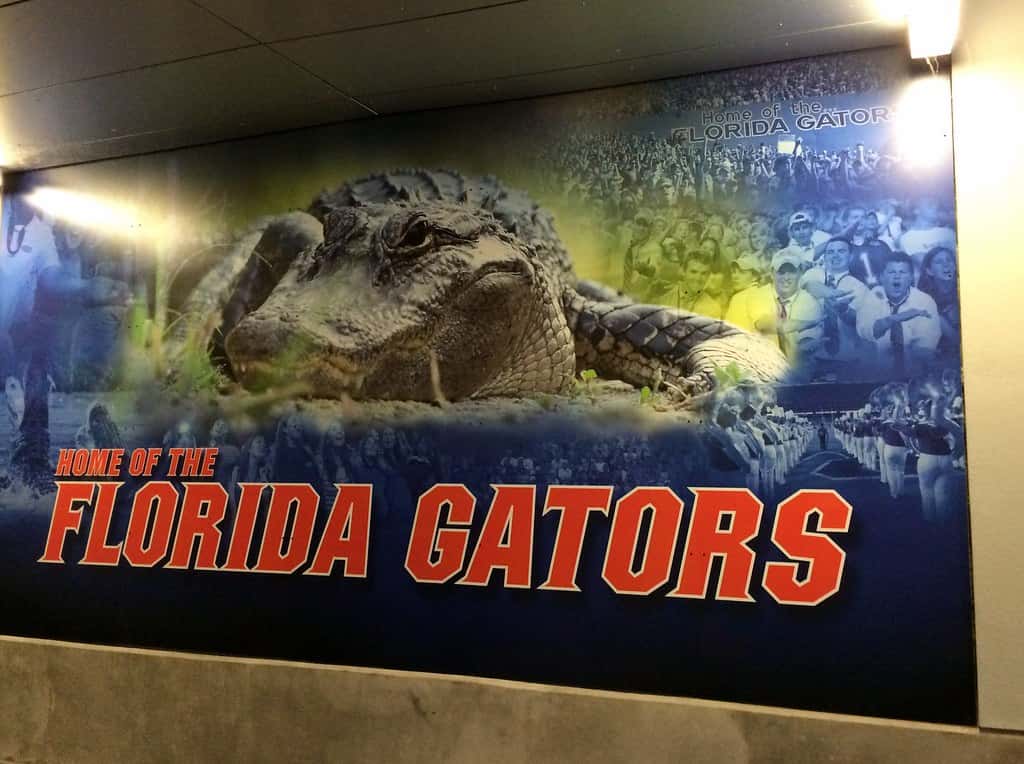
Florida's college football season is two weeks from starting, and the state's flagship programs spent this week in the phase of fall camp where installation gives way to evaluation.
The Florida Gators opened camp on Wednesday, August 5, and scheduled scrimmages for Saturday, August 15 and Saturday, August 22. Florida State began earlier and took its team to Jacksonville to practice at the fields at the University of North Florida, holding scrimmages on August 4 and August 9 under head coach Mike Norvell.
The calendar diverges from there. Florida State opens against New Mexico State on Saturday, August 29 at Doak Campbell Stadium in Tallahassee. Florida opens a week later, on Saturday, September 5, against Florida Atlantic at Ben Hill Griffin Stadium in Gainesville.
What a fall camp scrimmage is for
Scrimmages are the closest thing to game conditions a program gets before the season. Coaching staffs script situations, run live tackling in controlled doses and evaluate players against the same defense they have been practicing against for two weeks, which is both the format's strength and its limitation.
The primary purpose is depth chart resolution. Position battles that look unsettled on a practice field with coaches stopping plays to correct technique often resolve quickly when the whistle stays in the pocket and players have to execute at full speed with consequences attached.
The secondary purpose is conditioning under game-like stress. Florida's August heat makes that a genuine variable rather than a coaching cliche. Programs across the state schedule practices around the worst of the afternoon heat, and the current extreme heat conditions across Florida have made that scheduling more consequential than usual this week.
The risk is injury. Live scrimmage work in August is where programs lose players for the season, and staffs balance the evaluation value against that exposure by limiting reps for established starters and giving the bulk of live snaps to players competing for roles.
Florida State's early opener
The Seminoles face the sharper timeline of the two programs. An August 29 opener means Florida State has been operating on a compressed installation schedule, with the August 4 and August 9 scrimmages coming early enough to inform decisions with time to adjust.
Norvell's decision to move camp practices to Jacksonville and work at the University of North Florida facilities is a variation on a common tactic. Taking a team off campus for a stretch of camp removes distractions, builds cohesion and puts the program in front of a recruiting base, and Jacksonville is a significant talent-producing market for Florida State.
The New Mexico State opener is the kind of game a program schedules to work out installation problems against live opposition without risking the season. What Florida State learns from it will be about its own execution rather than about the opponent.
Beyond the opener, the Seminoles' season includes the annual rivalry game against Florida, a matchup that carries recruiting and program-momentum weight beyond its record implications regardless of where either team sits in the standings.
Florida's later start
The Gators' September 5 opener against Florida Atlantic gives the program an extra week of camp, which cuts both ways. More preparation time is generally an advantage for a team installing new systems, and it is a disadvantage in that the team goes longer without live competition to measure against.
The August 15 and August 22 scrimmages structure that extra week. Two scrimmages spaced a week apart allow a staff to evaluate, adjust and then evaluate the adjustment, a sequence that a program opening in late August does not have room for.
Florida Atlantic as an opener is an in-state matchup, which carries recruiting implications in South Florida where both programs compete for players. Ben Hill Griffin Stadium in Gainesville is one of the more intimidating environments in college football when full, and season openers there typically are.
The rest of the state
Miami, Central Florida, South Florida, Florida Atlantic, Florida International and Florida A&M all begin their seasons in the same window, giving Florida one of the densest concentrations of Division I football programs in the country. The state produces talent at a rate that sustains all of them and still exports players to programs nationwide.
The competitive landscape has shifted substantially with conference realignment, the transfer portal and name, image and likeness compensation. Florida programs have had to build roster management operations that did not exist five years ago, and the programs that adapted fastest have gained ground on those that did not.
Florida high school football, which begins its own season this month, remains the foundation. The state's high school programs produce more Division I signees per capita than almost anywhere in the country, and the recruiting relationships between college staffs and Florida high school coaches shape rosters across the sport.
What fans should watch
Quarterback play is the variable that most determines season outcomes at both flagship programs, and scrimmage performance is where staffs make their reads. Public information from closed scrimmages is limited by design, but programs typically release enough to indicate direction.
Offensive and defensive line depth is the less visible but equally consequential question. College football seasons are attrition tests, and programs that lack line depth in September rarely have it in November. August scrimmages are where staffs learn whether their second unit can hold up.
Special teams work gets scripted into scrimmages as well. Kicking games decide more college football outcomes than any other phase relative to the attention they receive, and preseason evaluation of kickers, punters and return units is genuinely predictive in a way that some other camp evaluation is not.
How college rosters are built now
The transfer portal and name, image and likeness compensation have restructured college football roster management in ways that make the sport's personnel operations resemble professional front offices more than the recruiting-only model that governed for decades.
Programs now manage two acquisition channels simultaneously. High school recruiting still builds the foundation, operating on a multi-year timeline with relationships developed over a prospect's career. The portal operates on a compressed cycle, filling immediate needs with players who have game experience.
Retention has become as important as acquisition. A program that develops a player into a starter now faces the possibility of losing him to a program offering more compensation, which has forced staffs to manage their own rosters the way they previously managed recruiting boards.
Florida's programs sit in a favorable position within that system because the state produces talent in volume and because the major programs have donor bases capable of supporting competitive compensation. Whether that translates into results depends on execution rather than on resources alone.
The economics of a Florida football Saturday
College football home games are among the largest recurring economic events in the communities that host them. Gainesville, Tallahassee and Coral Gables each absorb crowds that substantially exceed their normal population on game days, and the associated spending on lodging, food, retail and transportation is concentrated into a weekend.
Athletic department finances depend on those Saturdays. Ticket revenue, donor contributions tied to seating priority, concessions and parking constitute a large share of the revenue that funds the entire athletic department, including sports that do not generate revenue themselves.
Media rights have grown to rival or exceed gate revenue at the conference level. Conference realignment over recent years was driven substantially by media rights considerations, and the resulting geographic footprints have increased travel burdens for athletes in every sport.
For fans, the practical effect has been rising costs. Ticket prices, required donations for premium seating and travel expenses have all increased, and the accessibility of attending games in person has narrowed relative to earlier eras.
High school football's role
Florida high school football begins its season in August alongside the college and professional calendars, and the state's programs supply talent to college rosters nationwide at a rate matched by only a few other states.
The recruiting relationships between college staffs and Florida high school coaches are among the most valuable assets a program maintains. Access to a program that produces multiple Division I prospects annually requires trust built over years, and staff turnover disrupts those relationships.
Florida's high school playoff structure culminates in state championship games in December, an event that draws college scouts and that functions as a showcase for underrecruited players. The classification system spreads championships across school sizes.
Heat is the operational concern for high school programs in August. The current extreme heat conditions across Florida have implications for practice scheduling at every level, and state athletic association guidelines govern heat acclimatization protocols and practice restrictions during high heat index conditions.
Where the season is decided
Florida's flagship programs compete in leagues with different structures and different paths to the postseason. The Southeastern Conference and the Atlantic Coast Conference each feed into the College Football Playoff, which has expanded to admit more teams than the earlier four-team format allowed.
That expansion changed the calculus for a program's season. A team with a loss or two in September retains a realistic playoff path under the current format, which reduces the season-ending weight that early results once carried and extends meaningful competition deeper into November.
Rivalry games remain the emotional center regardless of playoff implications. Florida against Florida State, Florida against Georgia, and Miami against both carry consequences for recruiting and for program morale that the standings do not capture.
What's next
Florida's second scrimmage is scheduled for Saturday, August 22, the last major evaluation before the Gators shift into game-week preparation for Florida Atlantic. Florida State moves directly into game preparation after its scrimmage work, with the New Mexico State opener on August 29.
Both programs will release depth charts in the week before their openers, which is when the results of August become public. Those documents are provisional, and college staffs revise them through September as the season provides information that camp could not.
The state's football calendar fills quickly from here, with NFL preseason concluding at the end of August, college football opening the same weekend and Florida high school football already underway. For Florida fans, the two-week stretch beginning August 29 is where the year's sports calendar turns.
Spotted an issue with this article?
Have something to say about this story?
Write a letter to the editor