New international enrollment at U.S. colleges falls 15% this fall, and Florida universities face their own new limits
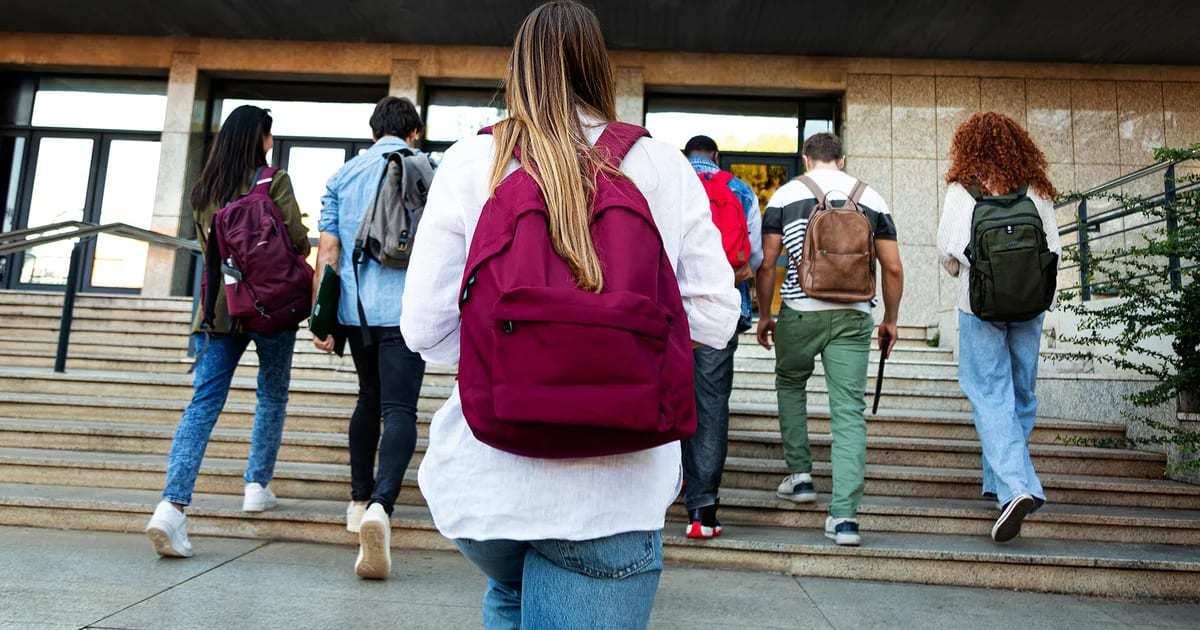
The number of international students starting at American colleges this fall fell 15% from a year earlier, according to a preliminary survey released Monday by the Institute of International Education, the second straight year of steep declines, arriving just months after Florida lawmakers ended a state tuition break for some foreign students.
The IIE snapshot, based on responses from 809 colleges, found total international enrollment down 9% this fall. Graduate enrollment fell 15%, while undergraduate enrollment slipped 3%.
What the new numbers show
The fall survey came alongside the annual Open Doors report, produced by IIE and the U.S. State Department, which counts the full 2025-26 academic year. That report found 1,146,163 international students at U.S. colleges and universities, a 2.7% decline from the year before, according to Higher Ed Dive. The drop was concentrated at the master's level.
The Open Doors figures for 2025-26, by level:
| Category | 2025-26 students | Change from prior year |
|---|---|---|
| Master's | 237,655 | Down 22.4% |
| Undergraduate | 356,165 | Down 0.3% |
| Doctoral | 158,152 | Up 3.1% |
| Optional Practical Training | 335,785 | Up 14.1% |
| New international students | Not specified | Down 17.7% |
India remained the largest source of students with 339,435, down 6.5%, and China sent 254,458, down 4.3%. The fall 2026 survey suggests the slide has continued: participation in Optional Practical Training, the program that lets graduates work in the U.S. after finishing their degrees, fell 6% at the surveyed schools this fall, and colleges reported declines among students from India.
A separate survey of about 200 colleges found nearly six in 10 saw fewer international graduate students this fall, with an average decline of 13%, Higher Ed Dive reported. The Presidents' Alliance on Higher Education and Immigration counted fewer than 1.1 million international students in the U.S. as of October 2026, down 6.7% from October 2024.
Why students are staying away
Colleges in the IIE survey pointed squarely at Washington. Eighty-eight percent blamed the visa application process and 70% blamed travel restrictions, according to the Associated Press. Ninety-five percent predicted students would look to other countries if OPT options were limited. Schools also cited global competition, the rising cost of a U.S. degree and uncertainty over research funding.
Several federal policies are in play:
- The Department of Homeland Security has proposed requiring colleges to pay a fee for each student they recommend for OPT. The AP reported the proposed charge at $70,000 per student, and Higher Ed Dive described fees of up to $100,000. The rule is not final and is expected to face legal challenges.
- A rule finalized this summer would bar international students from staying in the U.S. more than four years without federal approval. A judge has temporarily blocked it.
- DHS has terminated the legal status of thousands of international students and detained and deported many of them, the AP reported.
DHS Secretary Markwayne Mullin has said the changes target loopholes that students were using to extend their studies.
"The administration's policies are creating uncertainty at every stage of an international student's journey," Miriam Feldblum, president and CEO of the Presidents' Alliance, said, according to Higher Ed Dive.
The cost to campuses and local economies
NAFSA: Association of International Educators and JB International estimate that international students' contribution to the U.S. economy dropped by $2.4 billion this fall. A year ago, NAFSA estimated that the fall 2025 decline cost $1.1 billion in lost revenue and nearly 23,000 jobs.
The hit is sharpest at schools that leaned on international master's students for tuition revenue. Cleveland State University in Ohio, for example, saw international enrollment fall 46% in two years, from 1,542 in fall 2025 to 828 this fall, and its provost estimated a budget impact of $2 million to $4 million, the AP reported.
Florida's starting point
Florida's public universities have not yet published fall 2026 international enrollment figures, and IIE's preliminary survey does not break results out by state. But last fall's numbers already showed the same pattern now visible nationally.
In fall 2025, the University of South Florida enrolled 266 fewer international students than the year before, and a spokesperson said most of the decline came at the master's level while undergraduate enrollment stayed relatively stable, WUSF reported in December. Florida State University enrolled 76 fewer international students. The University of Central Florida reported an increase, and the University of Tampa saw overall international enrollment rise while its graduate numbers fell. The University of Florida and Florida International University did not provide figures in time for that report.
That concentration in master's programs matters, because master's enrollment is exactly where the national count fell more than 22% last year and where this fall's graduate decline is landing.
Florida's own policy changes
Federal policy is not the only pressure. Florida lawmakers have also tightened the state's approach to foreign students and foreign ties.
HB 905, a "foreign influence" bill signed by Gov. Ron DeSantis on May 8 and in effect since July 1, amended the law governing the state's linkage institutes, the programs that tie Florida universities to partner countries, and removed the Florida-China Institute from the list. The University of Florida's International Center told students that, as a result of the change, the Linkage tuition benefit "has been discontinued and will no longer be available." That benefit had allowed eligible international students to pay in-state tuition rates.
In March, the Florida House passed HB 1279, which in that version would have capped enrollment of non-U.S. citizens from any single country at 5% at each state university and required top research universities to reserve 95% of new fall undergraduate seats for Florida residents, according to WUSF and the News Service of Florida. The bill's sponsor, Rep. Jennifer Kincart Jonsson, R-Lakeland, called the measure "Florida first, plain and simple." Rep. Gallop Franklin, D-Tallahassee, argued Florida should not lose access to "the best and brightest students from across the entire globe." The version that became law on May 1, Chapter 2026-59, does not contain those enrollment provisions, according to the Florida Senate's bill summary.
Florida universities also continue to operate under a 2023 law, SB 846, that limits hiring of people from China and six other countries of concern.
What's next
The full Open Doors state data will show how Florida fared in the 2025-26 school year, and Florida's universities have yet to release their fall 2026 international counts. On the federal side, the OPT fee proposal still has to be finalized, and the four-year stay limit remains on hold in court. For Florida universities that saw last year's losses concentrated in master's programs, those decisions will help determine how deep the decline runs next fall.
Spotted an issue with this article?
Have something to say about this story?
Write us a letterComments
No comments yet. Be the first to weigh in.
Related Coverage

Trump heads to Asia to meet Xi and Putin, with the U.S.-China trade truce possibly renewed at next month's Miami G20
3h ago

Orlando, Fort Lauderdale and Miami top AAA's Thanksgiving flight list as 4.6 million Floridians get ready to travel
6h ago
Army whistleblower says commanders ignored drone warnings before the Kuwait strike that killed Winter Haven's Maj. Cody Khork
11h ago

University of Florida Senior Detained by ICE at Atlanta Airport After Job Interview as Stepfather Asks 'What More Do You Want?'
1d ago