NTSB Reviews Flight Data After Cargo Jet Overruns Miami Runway, Killing Five
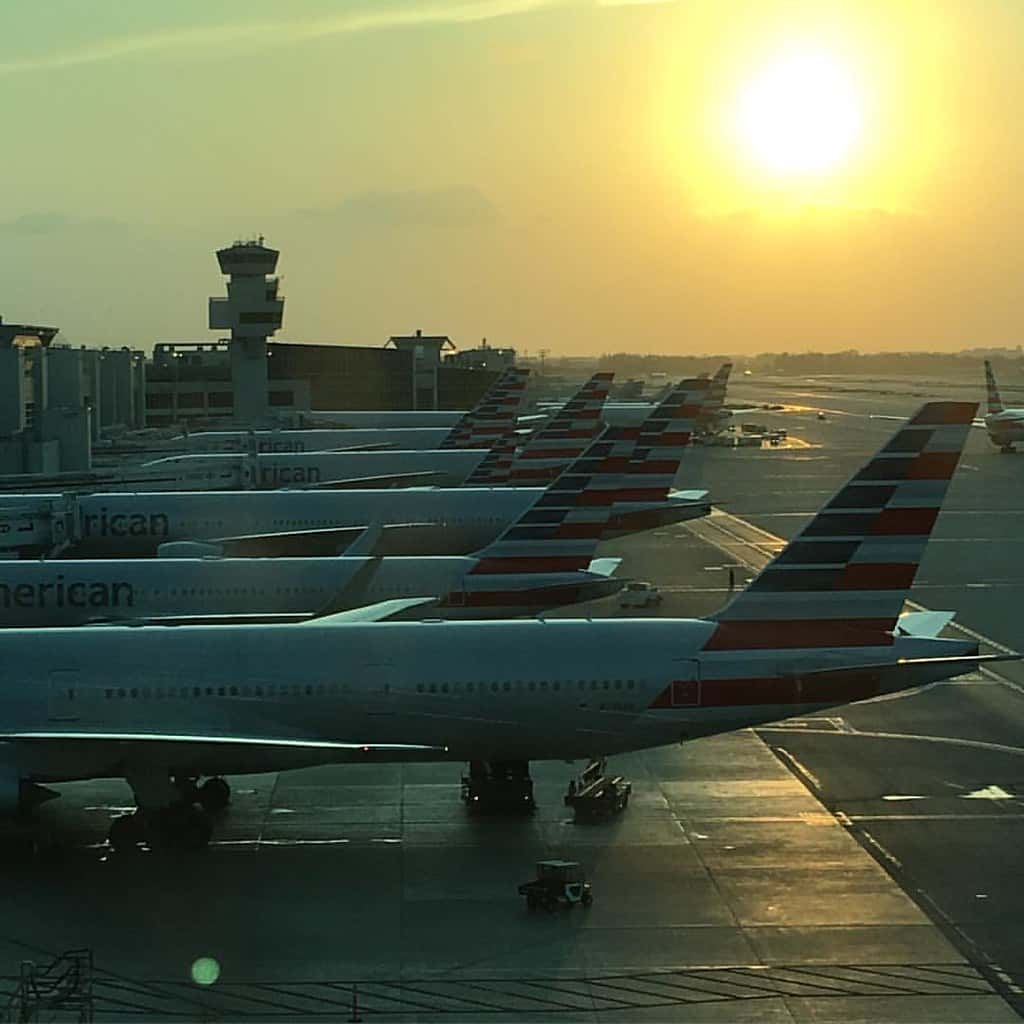
Federal investigators are working through flight data and cockpit audio from the cargo jet that overran a runway at Miami International Airport on September 6, an accident that killed five ground workers and injured five others. The National Transportation Safety Board said the Boeing 767-300 freighter traveled roughly 1,300 feet past the end of the runway before coming to rest, striking a van carrying airport cleaning crew members on airport property.
What investigators have said so far
The aircraft was operating as 21 Air LLC Flight 7598, a cargo run flown under contract for Amazon Air, and had departed from Luis Muñoz Marín International Airport in San Juan, Puerto Rico. It arrived at Miami International in the early afternoon and overran runway 30 while landing.
NTSB Chair Jennifer Homendy said the agency recovered more than two hours of usable audio from the cockpit voice recorder and is reviewing it alongside flight data recorder information to reconstruct the final seconds before the aircraft struck the van. According to information officials have described from the flight data, the crew applied full engine power shortly before the overrun, a sequence consistent with an attempt to abort the landing and go around after an unsteady approach. Investigators have not stated a cause, and the NTSB has cautioned that early data does not establish why the events unfolded as they did.
The five people killed were all on the ground rather than aboard the aircraft. The Miami-Dade Sheriff's Office identified them as Rolando Aleman Leon, 55; Yoel Rodriguez Narajo, 53; Julio C. Pineda, 75; Carlos Acosta Fajardo, 53; and Javierkys Reyes Quevedo, 47. Of the five people injured, three remained hospitalized in the days after the crash, two of them in critical condition and one in stable condition.
How an NTSB investigation of this kind proceeds
The safety board typically deploys a go-team of specialists within hours of a major accident, with separate groups assigned to operations, structures, powerplants, air traffic control, weather, human performance and survival factors. Parties to the investigation ordinarily include the Federal Aviation Administration, the aircraft manufacturer, the engine manufacturer, the operator and relevant labor organizations. Each party contributes technical expertise, and the NTSB alone determines probable cause.
A preliminary report is customarily issued within about 30 days. That document is factual rather than analytical: it lays out what is known about the sequence of events without assigning cause. The final report, which contains the board's probable cause determination and any safety recommendations, usually takes between one and two years for an accident of this complexity.
Runway overrun investigations tend to focus on a specific cluster of questions. Investigators examine approach stability, touchdown point and speed, the condition of the runway surface, braking and thrust reverser performance, spoiler deployment, aircraft weight and balance, weather at the time of landing, and the decision-making sequence in the cockpit. In cases involving a late go-around attempt, the timing of that decision relative to touchdown becomes central.
Why Miami International matters to Florida
Miami International Airport is the busiest airport in the United States for international freight and one of the busiest in the world by that measure. It is the primary air cargo gateway between the United States and Latin America and the Caribbean, and the volume of perishables moving through it, particularly flowers, fresh produce and seafood, shapes supply chains well beyond Florida.
The airport is also among Miami-Dade County's largest economic engines. County figures have long described the airport and its associated activity as supporting hundreds of thousands of jobs across South Florida, spanning airline operations, freight forwarding, customs brokerage, trucking, warehousing and maintenance. A significant portion of that workforce consists of ground personnel who work airside, on the ramps, in cargo buildings and in vehicles moving between them.
That last detail is what makes this accident distinctive and painful. All five people killed were working on the ground when the aircraft reached them. Airside ground workers occupy an unusual position in aviation safety: they are exposed to the consequences of flight operations without any control over them, and they are frequently not counted in the way passengers and crew are when the public thinks about aviation risk.
The operator and the contract cargo model
21 Air LLC is a cargo carrier that flies freighter aircraft under contract, and the flight was operating on behalf of Amazon Air, the delivery network Amazon assembled to move its own packages. The arrangement is common in modern air freight. Large shippers contract capacity from smaller certificated operators rather than holding air operator certificates themselves, which means the aircraft on a route may be branded for one company and flown, maintained and crewed by another.
Investigators in accidents involving contracted operations routinely examine the oversight relationship between the parties, including training standards, maintenance programs, crew scheduling and fatigue management. Nothing announced to date indicates that any of those factors contributed here. They are, however, standard lines of inquiry, and the NTSB's final report is likely to address them.
The FAA maintains regulatory oversight of the certificated operator regardless of who contracts the capacity. Any interim safety action, such as an emergency airworthiness directive or an operational restriction, would come from the FAA rather than the NTSB, which issues recommendations but has no regulatory authority.
What it means for Floridians
For most Floridians the immediate effect is limited. Airport operations at Miami International resumed with disruption confined largely to the affected runway and surrounding movement areas, and passenger schedules were not broadly halted. Travelers flying through Miami in the coming weeks should expect the possibility of intermittent delays while investigators complete on-site work and the airport restores full runway availability.
The deeper significance is for the workforce. South Florida's airside labor force is heavily immigrant, frequently employed through contractors, and concentrated in exactly the roles the five victims held. Workplace safety questions about how ground vehicles are routed, how runway safety areas are managed, and how ground personnel are alerted to abnormal arrivals are likely to be part of the investigation's aftermath.
Florida's air cargo economy also has a stake in the outcome. Any safety recommendations touching runway safety area design, overrun arrestor systems or ground vehicle movement procedures would apply first at high-volume freight airports, and Miami is at the top of that list nationally.
Runway overruns and the equipment designed to stop them
Runway overruns are among the more common categories of serious accidents in commercial aviation, and the industry has developed specific mitigations. Runway safety areas are graded and cleared zones extending beyond the paved surface, intended to reduce damage if an aircraft leaves the runway. At airports where geography prevents a full-length safety area, some operators install engineered materials arresting systems, beds of crushable material that decelerate an aircraft by collapsing under its weight.
Whether such equipment was present, what its condition was, and whether it performed as designed are questions the NTSB will address in its factual record. Investigators will also examine what was located in the overrun area, including the position of the van and the procedures governing vehicle movement in that zone during arrivals.
What recorders capture
The two devices at the center of this investigation record different things and answer different questions. The flight data recorder captures hundreds of parameters at high sample rates, including airspeed, altitude, engine settings, control surface positions, landing gear state, spoiler deployment and brake application. It establishes what the aircraft was doing.
The cockpit voice recorder captures audio from the flight deck, including crew conversation, radio transmissions, aural warnings and ambient sounds. It establishes what the crew knew, when they knew it and what they decided. The NTSB said more than two hours of quality audio was recovered, which covers the approach and landing with substantial margin.
Investigators synchronize the two records against air traffic control communications and radar data to build a second-by-second timeline. That timeline is what allows the board to determine whether a decision was made too late, whether a system failed to perform, or whether the crew received information that was inaccurate or ambiguous.
The board does not release cockpit voice recordings to the public. Federal law restricts their disclosure, and the NTSB publishes transcripts of relevant portions in its docket rather than the audio itself.
The go-around decision
The information described from the flight data, with full engine power applied shortly before the overrun, points toward an attempted go-around. That maneuver is a routine and heavily trained procedure in which a crew abandons a landing and climbs away to try again.
Go-arounds are safe when initiated from a stabilized approach at appropriate altitude. They become significantly more difficult after touchdown, because the aircraft configuration has changed. Spoilers deploy on landing to destroy lift and put weight on the wheels. Thrust reversers may have deployed. Autobrakes may have engaged. Reversing all of that and generating enough thrust and lift to climb away requires both time and runway.
Aviation safety literature has long identified late go-around decisions as a recognized hazard category, and training programs emphasize decision gates: a point on the approach beyond which the crew commits to landing and does not attempt to go around. Whether such a gate existed in this operator's procedures, and what the crew was responding to, are questions the investigation will address.
Nothing announced to date establishes what prompted the sequence. The NTSB has been explicit that early data does not explain causation, and drawing conclusions from a single reported parameter would be premature.
What's next
The NTSB's preliminary report is the next public milestone and is expected within roughly a month of the accident. It will lay out the factual sequence, including recorder data, weather conditions and aircraft configuration, without drawing conclusions.
Miami-Dade County and the airport authority face their own review of ground operations procedures independent of the federal investigation. Local officials have described the scene as devastating, and families of the five workers killed are navigating the practical aftermath, including workers' compensation claims and, potentially, civil litigation that would proceed separately from and more slowly than the safety investigation.
For Florida, the accident is a reminder that the state's role as an aviation and freight hub carries risk that is borne unevenly. Five people who never boarded an aircraft died because of what happened on a runway they were working near. How the investigation addresses that will matter to thousands of Floridians who do the same work every day.
Spotted an issue with this article?
Have something to say about this story?
Write us a letterComments
No comments yet. Be the first to weigh in.
Related Coverage

Trump and Melania Trump vote early in West Palm Beach as GOP sets Oct. 30 Daytona Beach rally
2h ago

Miami magistrate orders Trump to sit for BBC deposition by Dec. 11 or risk losing his $10 billion lawsuit
4h ago

Advocates Say ICE Plans to Deport Gravely Ill Krome and Broward Detainees to Africa; DHS Denies It
7h ago

ACA Open Enrollment for 2027 Opens Nov. 1: What Florida, the Nation's Largest Marketplace, Faces
7h ago