Panthers and Lightning Finish Offseason Business Before Training Camp
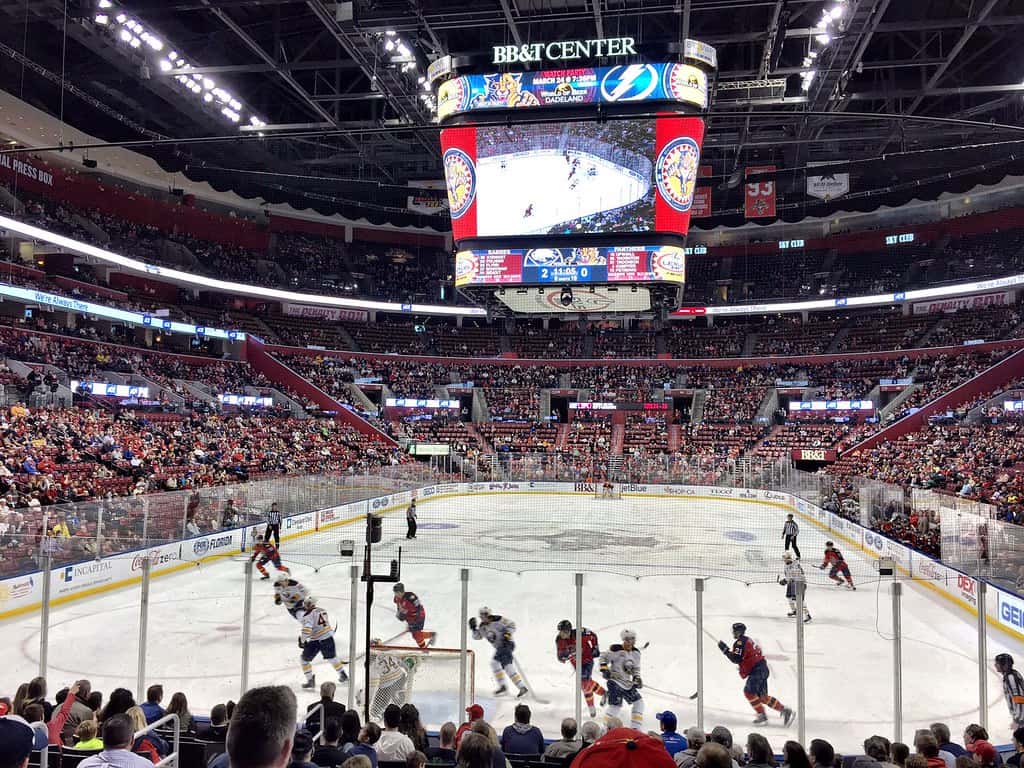
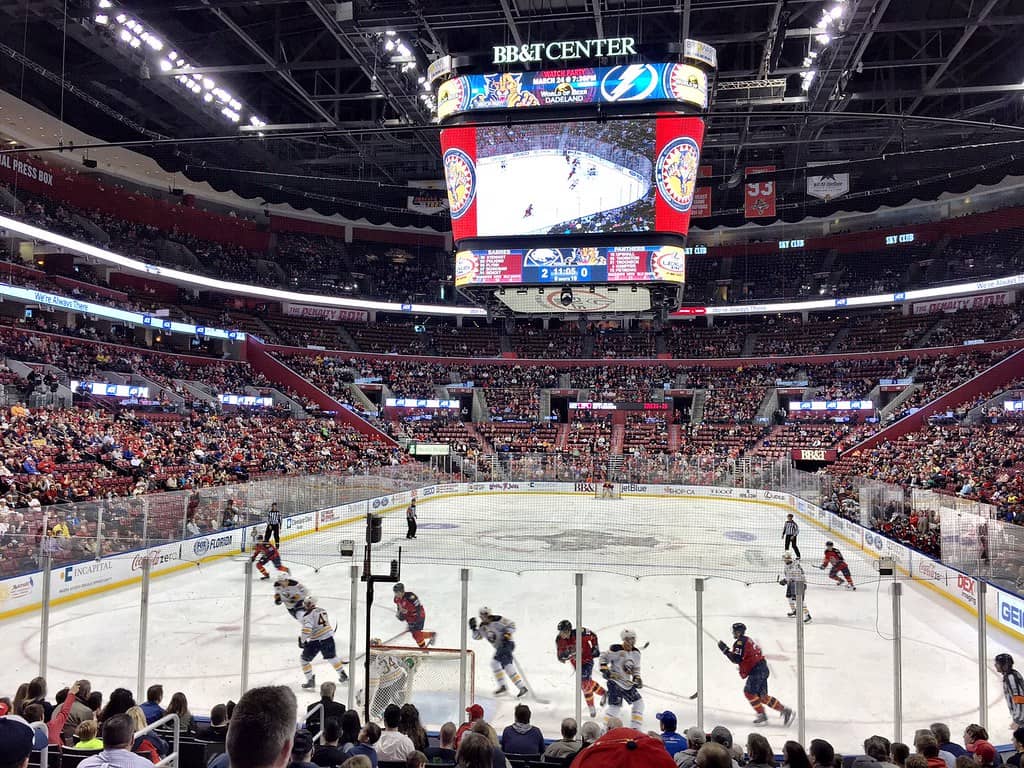
Florida's two NHL franchises have spent the quiet weeks of August closing out roster business ahead of training camps that open in September. The Florida Panthers re-signed restricted free agent forward Sandis Vilmanis to a two-year contract extension and agreed to terms with Cole Schwindt on a two-year deal. The Tampa Bay Lightning added forward Ilya Mikheyev on a four-year contract carrying an average annual value of $3.85 million.
None of these transactions reshapes either roster. They are the kind of moves that fill out a depth chart, resolve restricted free agent situations before arbitration deadlines and secure the fourth-line and reserve forwards that a team needs across an 82-game schedule. That is precisely what August is for in the NHL calendar.
Both organizations enter 2026-27 as established contenders operating under the constraint that defines the modern NHL: a hard salary cap that forces teams to choose which of their own players they can afford to keep.
What the Panthers did
Sandis Vilmanis and Cole Schwindt occupy the category of player that successful organizations must get right. Neither is a star. Both are the sort of internally developed or low-cost forward who can fill a bottom-six role at a cap number that leaves room for the top of the roster.
Restricted free agency gives a team the right to match outside offers and, in most cases, substantial leverage in negotiations. Two-year terms on players in this category are common because they cover the window before the player's next contractual milestone while giving the team cost certainty.
For Florida, this kind of business matters more than it does for most teams. A roster with several high-value contracts at the top requires the rest of the lineup to be filled at low cost, and every dollar saved in the bottom six is a dollar available elsewhere. Organizations that fail at this are the ones that lose good players in successive offseasons.
What Tampa Bay did
The Mikheyev signing is a more substantial commitment. Four years at $3.85 million annually is a middle-six forward contract, and the term indicates Tampa Bay expects him to fill a defined role across multiple seasons rather than serving as a short-term addition.
Mikheyev's profile through his NHL career has been that of a fast, defensively responsible forward with penalty kill utility whose offensive production has fluctuated. Players in that category tend to be valued more highly by coaching staffs than by public analysis, because their contributions concentrate in areas that box scores capture poorly.
Four-year terms carry risk in a cap system. A contract that becomes an overpayment in years three and four constrains everything else, and teams with limited cap flexibility have less capacity to absorb that outcome. Tampa Bay has operated near the cap ceiling for years and has generally managed it well through creative structuring and strong internal development.
Where the two franchises stand
The Panthers and Lightning have between them established Florida as one of the most successful hockey regions in the league over the past decade, an outcome that would have seemed implausible for most of the sport's history. Both franchises have reached the Stanley Cup Final in recent years, and both have won it.
That success has changed the sport's footprint in the state. Youth hockey participation in Florida has grown substantially, ice facilities have been built or expanded in both metropolitan areas, and Florida-developed players have begun appearing in NHL draft classes with regularity. The state now produces hockey players in numbers that were unimaginable when the Lightning entered the league in 1992.
The economic dimension is also real. The Panthers play at Amerant Bank Arena in Sunrise and the Lightning at Amalie Arena in downtown Tampa, and both venues anchor entertainment districts that generate activity well beyond game nights.
The cap constraint
The NHL operates a hard salary cap with no luxury tax mechanism, which means the ceiling is absolute. A team cannot spend past it under any circumstances during the regular season, and the compliance rules force difficult roster decisions every offseason.
The cap has risen in recent years after a period of flat growth tied to revenue disruption, which has given contending teams somewhat more room. That increase is why several clubs have been able to retain cores that previously would have been broken up.
The structural challenge for teams that win is that success raises the price of the players who produced it. Contract extensions for a championship core arrive simultaneously, and organizations must decide which players to pay and which to let go. Both Florida franchises have navigated that repeatedly, which is a substantial part of why both have remained competitive.
The Atlantic Division picture
Florida and Tampa Bay compete in the same division, which means they face each other frequently in the regular season and have met repeatedly in the playoffs. That proximity has produced the most genuine rivalry in Florida professional sports, driven by competitive stakes rather than by marketing.
The Atlantic Division also includes several Original Six franchises with deep resources and long histories, which makes it consistently one of the more demanding divisions in the league. Playoff positioning out of the Atlantic typically requires a substantial points total.
Division rivalries in hockey carry particular intensity because of the frequency of meetings and the playoff format, which prioritizes divisional matchups in the early rounds. A team can face the same opponent a dozen times across a season and postseason.
How restricted free agency works
The distinction between restricted and unrestricted free agency governs most of what happens in an NHL August. Players become unrestricted free agents after reaching a defined combination of age and years of professional experience, at which point they may sign anywhere without compensation to their former club.
Before that threshold, players who have completed their entry-level contracts become restricted free agents. Their original club retains the right to match any offer sheet from another team, and if it declines to match, it receives draft pick compensation on a scale tied to the contract value.
Offer sheets are rare in practice, partly because of the compensation cost and partly because of longstanding reluctance among general managers to use the mechanism. The practical effect is that restricted free agents negotiate with their own club from a position of limited leverage, with salary arbitration available in defined circumstances as the alternative to a negotiated deal.
Building depth under a cap
The teams that sustain contention under a hard cap are the ones that consistently fill the bottom of the roster cheaply. Every dollar spent on a fourth-line forward or a third-pair defenseman is a dollar unavailable for the top six forwards and top pair defensemen who drive results.
The sources of cheap depth are drafting and development, waiver claims, and signing players whose market value is depressed relative to their contribution. Organizations with strong development systems in the American Hockey League produce a steady supply of players who can fill NHL roles at entry-level cap numbers.
Both Florida franchises have demonstrated competence here over an extended period, which is the underrated explanation for their sustained success. Star players get the attention, but the ability to replace a departing depth forward internally rather than through free agency is what allows a team to keep its stars.
Hockey's Florida footprint
The growth of the sport in Florida over the past decade is genuinely remarkable in a state with no natural ice and no historical hockey culture. Youth participation has expanded substantially, and both franchises operate community programs that subsidize equipment and ice time, which addresses the sport's most significant barrier to entry.
Cost is the recurring obstacle. Hockey requires expensive equipment, paid ice time and, at competitive levels, extensive travel. Programs that reduce those barriers are the mechanism by which a sport expands beyond families who can absorb the expense without thinking about it.
Florida-developed players have begun appearing in NHL draft classes and in Division I college programs with increasing regularity. That pipeline takes 15 years or more to mature, which means the players now entering it are the product of interest generated during the franchises' earlier successful periods, and the current era's effect is still ahead.
The business of a Sun Belt franchise
Both Florida clubs operate without the tax burden their counterparts in high-tax jurisdictions face, and the absence of a state income tax is widely acknowledged as a competitive factor in free agent recruitment. A player signing for identical money in Florida nets meaningfully more than one signing in several traditional hockey markets.
That advantage has become contentious within the league, with periodic discussion of whether the salary cap should account for tax differentials. No mechanism to do so has been adopted, and the practical difficulty of designing one is substantial.
Climate and lifestyle contribute as well, particularly for players with families making a decision that extends beyond the contract. Those factors are difficult to quantify and are frequently mentioned by players explaining why they chose one destination over another.
What's next
NHL training camps open in September, with the regular season beginning in early October. Preseason schedules run through late September and give coaching staffs their first look at prospects and at players signed over the summer.
Between now and camp, both organizations will finalize any remaining restricted free agent situations and evaluate whether their rosters require further additions. Late-summer signings of veterans on professional tryout agreements are common and occasionally produce roster players.
For fans, the meaningful evaluation begins in October. August signings establish the roster; whether the roster is good enough is a question that a 82-game season and, for both of these teams, an expected playoff run will answer.
Spotted an issue with this article?
Have something to say about this story?
Write a letter to the editor