Panthers and Lightning Open Training Camps on the Same Day
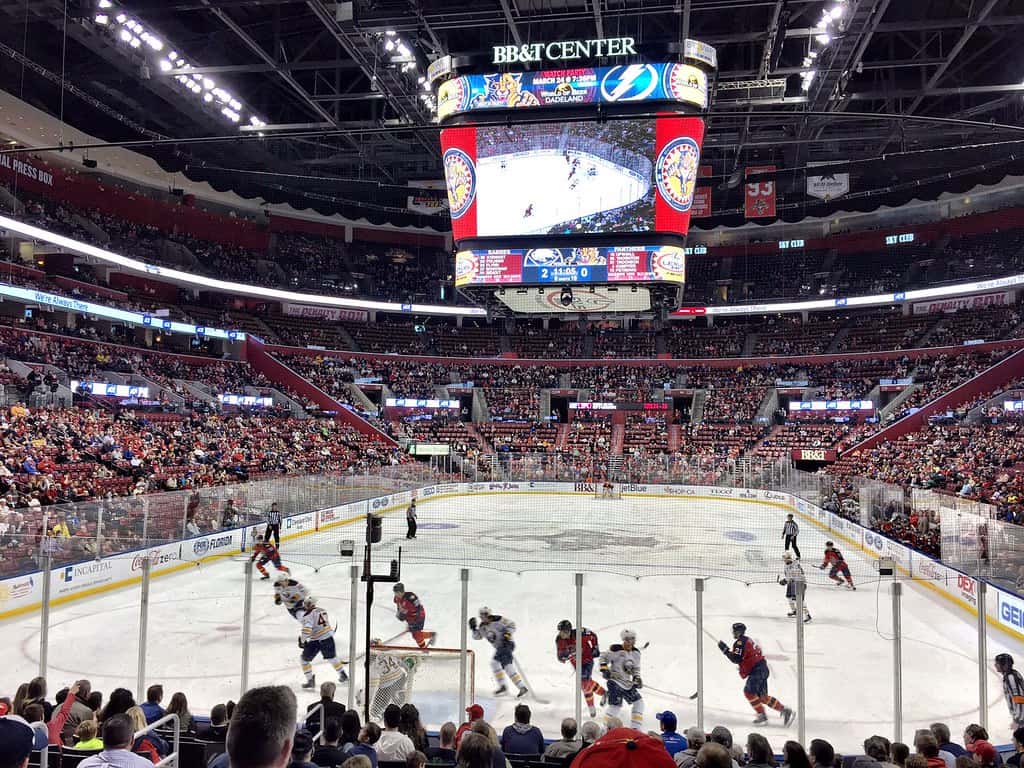
Florida's two NHL franchises opened training camp on the same day Thursday, with the Florida Panthers beginning on-ice work in Sunrise and the Tampa Bay Lightning starting a compressed camp at TGH Ice Plex in Brandon. The Panthers carry a roster of 30 forwards, 16 defensemen and five goaltenders into camp. The Lightning opened with 67 players, including 37 forwards, 23 defensemen and seven goaltenders.
The simultaneous start underlines how central hockey has become to Florida's sports calendar, a development that would have seemed implausible for most of the sport's history. Two of the league's most consequential franchises of the past decade play within four hours of each other on the same peninsula, and both have won Stanley Cups in that span.
Both clubs enter this camp with something to prove, though for different reasons. The Panthers are coming off a season that ended their run at the top of the league. The Lightning are working through a shortened preparation window ahead of a season structured differently than usual.
The Panthers after the reign ended
Florida's 2026 season ended a remarkable stretch. After winning consecutive Stanley Cups, the Panthers became the first defending champion in roughly a decade to miss the playoffs the following season, a collapse that is common in the abstract and rare in practice given how few teams reach that position.
Back-to-back championship runs impose a specific cost. Two consecutive seasons extended by two additional months each means roughly a full extra season of games across three years, compounded by the physical toll of playoff hockey, which is played at a different intensity than the regular season. Championship hangovers are well documented in the sport, and the Panthers experienced an unusually severe version.
The organization returns its core leadership structure. General manager Bill Zito, whose acquisitions built the championship roster, and head coach Paul Maurice, who took the team to three consecutive finals appearances, both remain. Matthew Tkachuk, whose two-way play and physical edge defined the championship teams, is central to whatever this roster becomes.
What camp looks like in Sunrise
The Panthers scheduled a Training Camp Fan Fest for Saturday, September 19, opening practice to fans alongside family activities and games. Events of this kind function as both community outreach and a soft launch of the season ticket and merchandise calendar, and they have become standard practice across the league.
Florida opens a four-game preseason slate on Sunday, September 20, hosting the Carolina Hurricanes at Amerant Bank Arena. The preseason includes two meetings with Tampa Bay, on Thursday, September 24 in Tampa and Saturday, September 26 in Sunrise, giving fans of both clubs an early look at the in-state rivalry that has become one of the more genuine ones in the league.
The roster construction question for the Panthers is depth. Championship rosters are expensive to keep together under a salary cap, and the attrition that follows two title runs typically shows up in the bottom six forwards and the third defensive pairing, which are exactly the areas that determine whether a team can survive an 82-game season without burning out its top players.
Tampa Bay's compressed camp
The Lightning opened a shorter training camp than usual ahead of what has been described as a longer season. Compressed camps have become more common across professional sports as schedules expand and international events are inserted into the calendar, and the tradeoff is straightforward: less time to install systems and evaluate fringe roster players.
A 67-player camp roster is large, and the seven goaltenders reflect the standard practice of carrying extra netminders early so that practice groups can run simultaneously without overworking anyone. Most of those players will be assigned to the AHL affiliate or returned to junior within two weeks.
The Lightning have kept all practices at TGH Ice Plex free and open to the public, a long-standing club policy that has built an unusually engaged local following for a market that had no hockey history before 1992. Open practices in September are one of the few ways casual fans can see NHL players at close range without buying a ticket.
The in-state rivalry
Florida versus Tampa Bay has become one of the NHL's better rivalries on merit rather than by manufacture. Both franchises have won multiple Cups in the past decade, they have met in the playoffs, and the geographic proximity means travel is minimal and fan crossover is real.
The rivalry has also been good for the sport in Florida. Youth hockey participation in the state has grown substantially, and both organizations run development programs that have begun producing players. Florida-born players in the NHL were a novelty a generation ago and are now a recognized pipeline.
The two preseason meetings in late September give the rivalry an early showcase, though preseason games rarely feature full lineups and should be read as evaluation opportunities rather than competitive statements.
Two Florida clubs, two different seasons ahead
The Panthers' season is about whether a core that won two Cups can reassemble itself after a year away from the playoffs. That is a question about health, depth and motivation more than about talent, and the answer typically reveals itself by American Thanksgiving.
Tampa Bay's is about sustaining a competitive window that has now run more than a decade. The Lightning have been among the league's most consistently successful organizations since the mid-2010s, and doing that under a salary cap requires continuous roster churn around a stable core.
Both clubs face the same structural challenge that all Florida professional teams face: building a regular-season audience in markets with year-round outdoor competition for attention and a large population of transplants with prior team loyalties. Winning solves most of it, which both organizations have demonstrated.
How hockey took root in Florida
The Lightning entered the NHL in 1992 and the Panthers in 1993, part of a league expansion into markets with no hockey tradition. Both franchises spent their early years playing in temporary or ill-suited venues and struggling for attention against established local sports.
The turning points came through winning. Tampa Bay's 2004 Stanley Cup established the sport locally, and the back-to-back championships in 2020 and 2021 cemented it. Florida's runs to three consecutive Stanley Cup Finals and consecutive championships did the same in South Florida two decades later.
Sustained success produced infrastructure. Both organizations built practice facilities that double as community rinks, youth programs expanded, and the state now supports a competitive youth hockey scene that did not exist a generation ago.
Florida's tax structure has also worked in the clubs' favor. The absence of a state income tax means a player earning the same nominal salary takes home more in Florida than in most NHL markets, a meaningful advantage under a hard salary cap where every contract dollar is scarce.
What to watch across the season
For the Panthers, the questions are health and depth. A roster that played two additional postseasons' worth of hockey needs its core to arrive intact, and the bottom of the lineup has to hold up well enough to keep the top players from carrying excessive minutes.
For the Lightning, the question is whether a competitive window that has now run more than a decade can be extended again. Organizations that sustain contention under a cap do it through drafting and development, and Tampa Bay's ability to keep producing useful players on entry-level contracts is what has made the run possible.
Both clubs face a compressed and unusual season structure, with the Lightning's shortened camp explicitly tied to a longer schedule ahead. Managing workload across that calendar is a coaching and medical staff problem as much as a tactical one.
The in-state matchups remain the most reliable draw. Meetings between the two clubs consistently produce the highest local ratings and the most difficult tickets of either team's regular season.
What a training camp roster tells you
Camp rosters are built for logistics rather than for competition. Tampa Bay's 67 players and Florida's 51 allow coaching staffs to split into multiple practice groups, run full-ice drills simultaneously and stage intrasquad scrimmages without overworking anyone.
Most of those players will not make the opening roster. NHL teams carry 23 players, which means the majority of camp invitees are prospects getting evaluation reps, players on two-way contracts destined for the American Hockey League, and junior-age players returning to their major junior clubs.
The seven goaltenders Tampa Bay carried is standard practice. Goaltenders cannot be rotated the way skaters can, and running four simultaneous drill stations requires enough netminders to fill them without any single goalie facing hundreds of shots daily.
What coaches actually learn in camp is limited. Conditioning levels, injury status and the readiness of specific prospects are the main outputs, and most lineup decisions are made before camp opens.
The business of Florida hockey
Both franchises operate arenas that anchor entertainment districts, Amerant Bank Arena in Sunrise and Amalie Arena in downtown Tampa. Those buildings host concerts and events year-round, and the non-hockey revenue is a meaningful part of each organization's business.
Tampa's arena sits within a downtown redevelopment area that has transformed over the past decade, with the Water Street district built around it. Sunrise's arena occupies a suburban site in western Broward County, and the organization has pursued surrounding development to create a comparable district.
Ticket demand has followed the on-ice results closely in both markets. Championship seasons produce waiting lists; losing seasons produce discounting. That volatility is more pronounced in Florida than in traditional hockey markets with multigenerational season ticket bases.
What's next
Preseason games begin September 20 for the Panthers, with the four-game slate including the two Tampa Bay meetings. Roster cuts follow through late September and early October as both clubs reach the salary cap compliance deadline and finalize opening night lineups.
The regular season opens in October. Both Florida clubs will be measured against expectations that differ sharply from a year ago: the Panthers as a team looking to re-establish itself, the Lightning as a club that has rarely been out of the postseason conversation.
For fans, the near-term opportunities are the free open practices in Tampa Bay and the Fan Fest in Sunrise on September 19, both of which offer access to players that disappears once the season begins.
Spotted an issue with this article?
Have something to say about this story?
Write a letter to the editor