Panthers Open the Season With Barkov Healthy a Year After a Training Camp Knee Injury
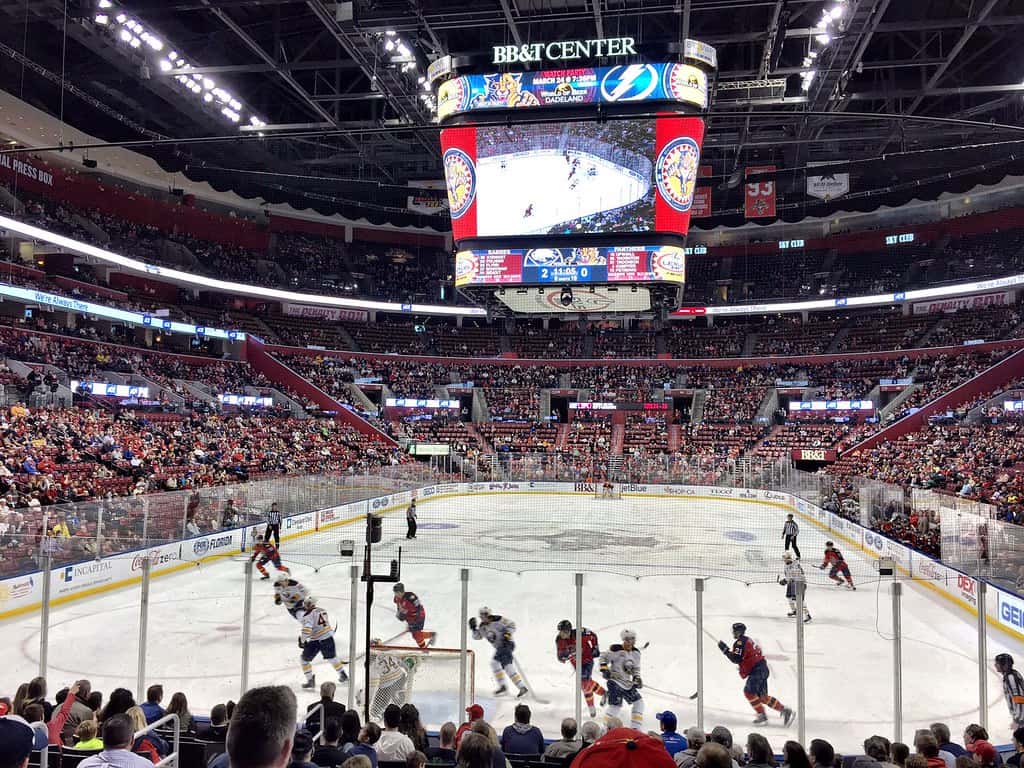
The Florida Panthers will open the 2026-27 regular season on Monday at Carolina with captain Aleksander Barkov healthy, a year after he tore ligaments in his right knee roughly 20 minutes into the first practice of training camp and missed the entire season that followed. Barkov has said he has no concerns about the knee as the Panthers move through camp, which opened September 17 at the Baptist Health IcePlex in Fort Lauderdale. Florida missed the playoffs without him last season.
The injury and the season it cost
Barkov's injury occurred almost exactly one year ago, during the first training camp practice of the 2025-26 season. He tore the ACL and MCL in his right knee, an injury combination that requires surgical reconstruction and a recovery timeline measured in many months rather than weeks.
The timing was close to the worst possible. An injury in the opening practice of camp removes a player for the full season while also denying the team any opportunity to plan around the absence, because rosters are largely set by the time camp opens and the free agent market has thinned.
Florida missed the playoffs in the season that followed. The organization has been careful not to attribute that outcome to a single absence, but a team losing its captain and top two-way center for an entire year loses more than production. It loses defensive structure, faceoff performance and matchup flexibility.
Barkov's role in Florida's system has always extended beyond scoring. He has been among the league's most reliable defensive forwards, typically matched against opposing top lines, and that function is difficult to replace from within a roster.
Camp and the road back
The Panthers opened training camp on September 17 with a roster of 30 forwards, 16 defensemen and five goaltenders, and the club held public viewing sessions and a Training Camp Fan Fest at the Baptist Health IcePlex in the days that followed.
Returning from a combined ACL and MCL reconstruction involves more than clearance to skate. Players in that position typically need time to rebuild confidence in the joint under game conditions, particularly in a sport where edge work, sudden direction changes and contact all load the knee in ways practice cannot fully simulate.
Barkov's own assessment, that he has no concerns about the knee, is the statement teams want to hear from a player at this stage. Physical clearance and psychological readiness are separate milestones, and the second usually arrives later.
The Panthers have structured camp around a mix of returning veterans and new faces, which is typical for a club coming off a season that ended without a playoff berth. Roster turnover after a missed postseason is standard across the league.
What his return changes
The practical effect of a healthy Barkov runs through the entire lineup. A team with a legitimate top-line center capable of handling defensive assignments can deploy its remaining forwards in roles suited to their strengths rather than stretching them to cover a gap.
Last season Florida had to ask players to fill a role they were not built for, which compounds down the lineup. Every forward moves up a slot, matchups become harder across the board, and the cumulative effect exceeds the loss of one player's individual production.
Faceoffs are a specific and measurable element. Top defensive centers win draws in their own zone, which affects possession time and the frequency of defensive zone starts for the rest of the roster.
The broader point is about identity. A team asked to find a new way to play without its best player faces a different task than one building around a healthy core, and the Panthers now have the second situation rather than the first.
The opener at Carolina
Florida opens the regular season on Monday, September 29, at Carolina, where the Hurricanes will raise a Stanley Cup banner before the game. Opening on the road against a defending champion during a banner ceremony is among the more demanding assignments the schedule can produce.
Banner nights carry an atmosphere that visiting teams describe as difficult, with an emotionally elevated home crowd and an opponent playing its most motivated game of the early season. Teams that open in that environment generally treat the result as less informative than a typical opener.
For Florida, the matchup is also a reminder of where the franchise stood recently. The Panthers have been a contending organization in the recent past, and watching another club raise a banner supplies the kind of motivation coaching staffs rarely need to manufacture.
The opener follows a preseason schedule that includes a meeting with the Tampa Bay Lightning at Amerant Bank Arena, an in-state matchup that has become one of the more competitive rivalries in the league.
The Lightning across the state
Tampa Bay opened its own training camp on September 17 at TGH Ice Plex, with a roster of 67 players including 37 forwards, 23 defensemen and seven goaltenders. The Lightning have kept practices free and open to the public, a long-standing arrangement in Tampa.
The two Florida franchises have between them accounted for a substantial share of recent Stanley Cup Final appearances, and the rivalry has grown from a geographic curiosity into a genuine competitive matchup with playoff history behind it.
A preseason meeting between them at Amerant Bank Arena gives fans in both markets an early look at rosters still being sorted, though preseason lineups rarely resemble what either club ices in October.
For the state, having two competitive NHL franchises has changed hockey's standing in a market that was not historically a hockey region, with youth participation growing around both clubs over the past decade.
What it means for South Florida
For Panthers fans in Broward and Miami-Dade counties, the season opens with expectations reset upward from where they sat a year ago. A healthy captain changes the range of plausible outcomes for a roster that has contended recently.
Amerant Bank Arena in Sunrise has become a genuine home ice advantage during the franchise's recent competitive run, and the building's atmosphere during playoff runs has been among the loudest in the league.
South Florida's fall sports calendar is crowded. The Dolphins have opened 0-2, the Heat approach media day, and Inter Miami is deep into an MLS season that finished with the club second in the Eastern Conference and bound for the playoffs in November.
Hockey in South Florida now competes for attention on the strength of results rather than novelty, which is a change from where the franchise stood a decade ago.
The season's structure
The NHL regular season runs from early October through April, and a club's early results matter less than the pattern it establishes. Teams returning a key player from long-term injury frequently need several weeks to settle into the structure they intend to play.
New rules take effect this season, and camps across the league have been devoted in part to adjusting to them. Rule changes typically take several weeks of regular season play before their practical effects become clear.
Depth is usually what separates playoff teams from contenders over an 82-game schedule. Injuries accumulate, and clubs that can absorb them without collapsing are the ones still playing in the spring.
For Florida, the most important variable across the season will be whether Barkov stays healthy. A player returning from a major knee reconstruction carries elevated risk in the first season back, and managing his workload will be an ongoing consideration for the coaching staff.
The roster around him
Florida's camp roster of 30 forwards, 16 defensemen and five goaltenders reflects a club sorting through a mix of returning veterans and new arrivals, which is typical after a season that ended without a playoff berth.
Roster turnover following a disappointing season is standard across the league, driven by expiring contracts, salary cap management and organizational decisions about which players fit the direction a club intends to take.
Goaltending is usually the position that determines how far a team goes, and camp competition among five goaltenders will narrow to the tandem that carries the regular season workload.
Depth scoring is the other variable. Teams that rely entirely on a top line become predictable in the postseason, when matchups tighten and opposing coaches deploy their best defensive units against a single threat, which is precisely the situation a healthy captain helps a roster avoid.
What the season will be measured against
Expectations for the Panthers reset after a year without their captain and without a playoff berth. The immediate benchmark is returning to the postseason field, which the roster's recent history suggests is a reasonable target with a healthy core.
The Atlantic Division is among the league's most competitive, and Florida will be competing for position against opponents including the Lightning, with divisional games carrying the additional weight that comes from head-to-head standings implications.
Workload management for a player returning from ACL and MCL reconstruction will shape how the coaching staff distributes minutes, particularly in the season's first months and across stretches of games in short succession.
Over an 82-game schedule, the clubs that survive into spring are generally those that absorb injuries without collapsing, which puts the emphasis on the depth behind the top of the lineup as much as on the top itself.
What's next
The Panthers complete their preseason schedule before Monday's opener at Carolina. Final roster decisions, including which players from camp make the opening night lineup, will be announced in the days beforehand.
Barkov's usage in the opener, in terms of ice time and matchups, will be the first genuine indication of how the club plans to manage him through the season.
The Lightning open their own season in early October, and the two clubs will meet multiple times during the regular season in a rivalry that has produced meaningful games in recent years.
For a franchise that spent last season without its captain, the immediate goal is straightforward: return to the playoff field, with a roster built around a healthy core.
Spotted an issue with this article?
Have something to say about this story?
Write a letter to the editor