Panthers Rebuild on the Fly With Brady Tkachuk and a New Goalie Tandem
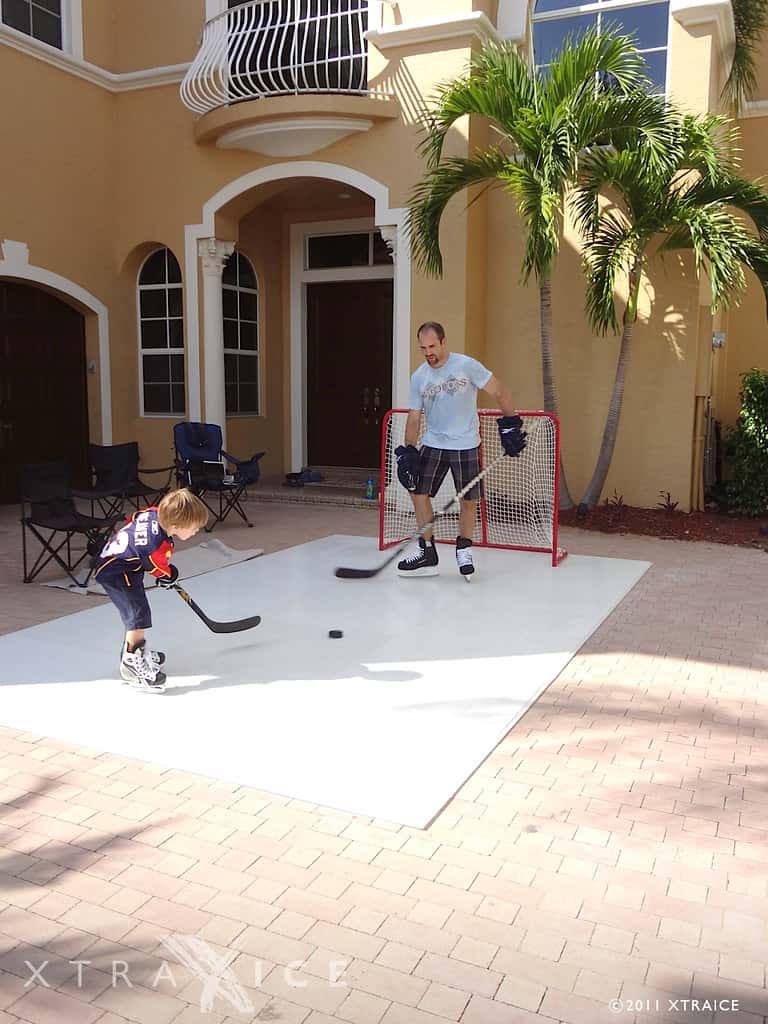
The Florida Panthers responded to a lost season with the least patient offseason in the NHL. In a span of roughly 11 days, the franchise acquired forward Brady Tkachuk from the Ottawa Senators, rebuilt its goaltending from scratch, signed players to long-term deals and added veterans in free agency. For a team that reached three Stanley Cup Finals in four years before missing the playoffs amid a wave of injuries, the message was unambiguous: the window is not closed, and the front office intends to force it back open.
The centerpiece arrived June 21. Tkachuk, 26, came to Sunrise in a blockbuster trade that sent Ottawa the ninth and 25th overall picks in the 2026 NHL Draft, a conditional 2029 first-round pick and a 2027 second-round pick. He joins his older brother Matthew, giving Florida both Tkachuks on the same roster.
Nine days later, the Panthers addressed goaltending, acquiring Jacob Markstrom from the New Jersey Devils on June 30 for forwards Evan Rodrigues, Jesper Boqvist and Ben Steeves. That move followed Sergei Bobrovsky's departure to Toronto in free agency after his contract expired July 1.
The Tkachuk trade and what it cost
The price was steep by any measure. Two first-round picks in the 2026 draft, a conditional first in 2029 and a second in 2027 is the kind of package that mortgages a portion of the future.
What Florida received is a 26-year-old power forward entering his prime who produced 59 points in 60 games last season and is a candidate to play on the top line. Tkachuk's game combines scoring with physicality and a willingness to play in high-traffic areas, a profile that fits the identity Florida has built and that translates well to playoff hockey, where space contracts and games are decided in front of the net.
The brothers angle is more than a storyline. Matthew Tkachuk has been central to Florida's transformation from a talented regular season team into a genuine contender, and adding a sibling with a similar competitive temperament reinforces a locker room culture the organization has explicitly valued.
The risk in the trade is structural rather than about the player. Surrendering multiple first-round picks reduces the organization's ability to replenish cheaply, and cheap young talent is what allows cap-constrained contenders to stay competitive. Florida has bet that its current core has enough remaining runway to justify that trade-off.
Replacing a franchise goaltender
Bobrovsky's departure ends a defining chapter. He backstopped Florida's Cup runs and was the goaltender of record for the franchise's most successful stretch. Replacing that is not a matter of finding equivalent production, since goaltending is the least predictable position in hockey.
Florida approached it with volume. The organization acquired Akira Schmid in a trade with Vegas, then completed the five-player deal with New Jersey for Markstrom, who is 36 and beginning a two-year contract carrying a $6 million annual cap hit.
Markstrom is an established starter with a long track record, and at $6 million he represents reasonable value relative to the market for goaltenders of his caliber. The age is the obvious question. Goaltenders can perform at a high level into their late thirties, but the variance increases, and a team relying on a 36-year-old starter needs a credible fallback.
That is presumably Schmid's role, giving Florida a tandem structure rather than a single-starter dependency. Managing a starter's workload through the regular season to preserve him for the playoffs has become standard practice, and having two viable options makes that manageable.
The rest of the reshuffle
Florida added center Lars Eller and defenseman Alexander Petrovic on July 1 when free agency opened, and three of the offseason's headline additions, including Radko Gudas, Markstrom and Petrovic, are former Panthers returning to the organization.
That pattern is deliberate. Bringing back players who understand the system and the culture reduces integration friction, which matters for a team trying to contend immediately rather than build gradually.
The departures were the cost of the additions. Rodrigues and Boqvist went to New Jersey in the Markstrom trade, and Mackie Samoskevich was traded to Seattle on June 21. Those are useful roster players, and moving them thinned depth in exchange for concentrating talent at the top of the lineup.
General manager Bill Zito's front office described itself as pleased with the pace and outcome of the makeover. The speed is the notable part: most of this happened between June 21 and July 1, compressing what many organizations spread across an entire summer.
The injury context that drove it
The urgency traces directly to last season. Florida missed the playoffs after a run of three Cup Finals appearances in four years, and the collapse was substantially attributed to accumulated injuries rather than a talent deficit.
That distinction matters for how a front office responds. A team that misses the playoffs because its roster is not good enough should rebuild. A team that misses because its roster spent the season in the training room should reload, on the theory that health regression to the mean will restore much of the lost performance on its own.
Florida chose the second interpretation and then went further, adding significant talent on top of expected health recovery. That is an aggressive read, and it assumes the core group has enough remaining prime years to justify the picks surrendered.
The counterargument is that deep playoff runs accumulate mileage. Teams that play into June repeatedly carry a physical debt, and the injury wave that derailed last season may have been a symptom of that rather than bad luck.
What it means for South Florida hockey fans
The Panthers' transformation of the South Florida sports landscape over the past several years has been genuine. Amerant Bank Arena in Sunrise has become a difficult building for visiting teams, playoff atmospheres have been strong, and hockey has established a foothold in a market that was long considered marginal for the sport.
Missing the playoffs interrupted that momentum. The offseason is an attempt to restore it immediately rather than asking the fan base to wait through a transition year.
For fans, the roster now features both Tkachuk brothers, a proven veteran goaltender, and a returning core that has been to three Cup Finals. That is a team built to win now, with the salary cap and draft capital committed accordingly.
The 2026-27 season opens in October. Between now and then, the remaining questions are health, cap compliance and how quickly the new pieces integrate.
The salary cap arithmetic
Adding a player of Brady Tkachuk's caliber while replacing a starting goaltender is a cap management exercise as much as a talent acquisition.
The NHL operates under a hard salary cap with no luxury tax mechanism, which means a team cannot simply spend past the limit. Every acquisition must be accommodated within the ceiling, and contending teams typically operate with almost no room to spare.
Florida's moves show that constraint at work. Markstrom arrives at a $6 million annual cap hit, which is meaningfully less than what an elite starter commands, and the trade sent out forwards whose salaries created the space. Bobrovsky's departure removed a substantial cap charge, which is part of what made the reconfiguration possible.
Teams operating at the cap ceiling depend heavily on entry-level contracts, where young players produce at salaries far below their market value. That is precisely the resource Florida traded away in the Tkachuk deal, which is why the pick cost matters beyond the draft itself: it reduces the future supply of the cheap talent that lets an expensive roster function.
What the injury year revealed
The season that prompted this offseason is worth examining, because how a team interprets a bad year determines how it responds.
Florida missed the playoffs after a run of sustained contention, and the explanation offered was injuries. Teams that lose key players for extended stretches see performance decline in fairly predictable ways: depth players take on roles they are not suited for, ice time distribution skews, and special teams units lose their best personnel.
The counterargument, and the one the front office implicitly rejected, is that deep playoff runs create cumulative physical debt. Teams that play into June repeatedly get shorter offseasons and more games in the legs, and the injury patterns that follow may be consequence rather than coincidence.
Florida's response splits the difference in a way. By adding significant talent rather than merely waiting for health, the organization hedged against the possibility that the roster needed more than recovery. That hedge cost draft capital, but it means the 2026-27 team should be better than last year's healthy version rather than merely equal to it.
Whether that is enough in a difficult Atlantic Division is the question the season answers.
What's next
Training camp in September is the first checkpoint. Line combinations, defensive pairings and the goaltending arrangement will take shape there, and how Florida deploys the Tkachuk brothers, together on a line or separated across two, is among the more interesting tactical questions.
The Atlantic Division remains difficult, with Toronto now holding Bobrovsky, along with strong competition throughout. Florida's path back to contention runs through a division that has not gotten easier.
The larger question is timeline. By trading multiple first-round picks, the Panthers have compressed their competitive window and reduced the cushion that draft capital normally provides. If the reloaded roster produces another deep run, the trade-off will look obvious in retrospect. If injuries recur or the core declines faster than expected, Florida will face a harder rebuild with fewer assets to work with.
The front office made its choice in June, and it made it quickly.
Spotted an issue with this article?
Have something to say about this story?
Write us a letterComments
No comments yet. Be the first to weigh in.
Related Coverage
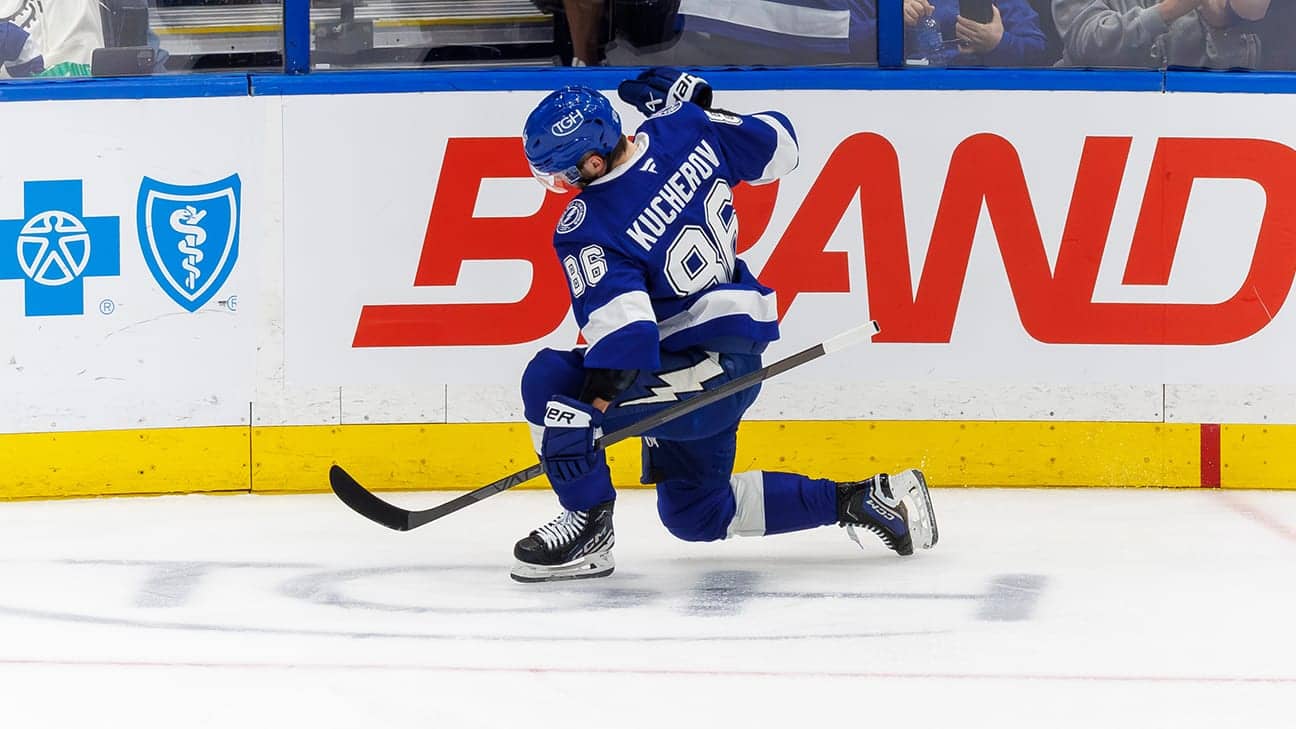
Nikita Kucherov Passes Steven Stamkos as Lightning's All-Time Points Leader in OT Loss to Mammoth
2h ago

Hornets Beat Heat 115-110 as Giannis Antetokounmpo Fouls Out and Miami Falls to 0-3
3h ago

Timberwolves Dominate the Glass, Rout Magic 115-93 at Kia Center as Orlando Falls to 0-2
1d ago

Pistons Beat Heat 128-111 as Giannis Antetokounmpo's 36 Points Can't Fix Miami's Defense in 0-2 Start
1d ago