Pinellas Sheriff Wants Troy Merck Jr., Awaiting Resentencing in 1991 Murder, Sent Back to Death Row Over Cancer Treatment Costs
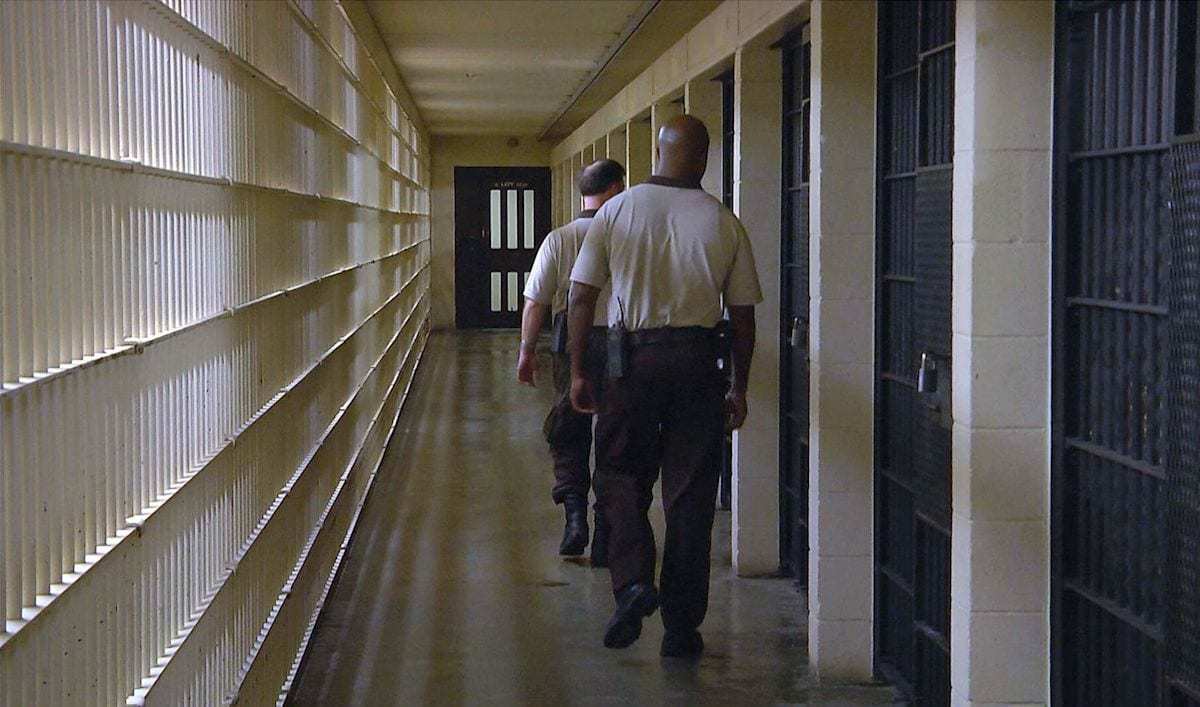
The Pinellas County Sheriff's Office is asking a judge to send Troy Merck Jr., a 54-year-old man who is not currently under a death sentence, back to death row at a Florida Department of Corrections prison, largely so the state rather than the county pays for his treatment for Stage 4 colon cancer. Merck has been in the Pinellas County Jail since last year awaiting a resentencing, scheduled for next August, in the 1991 stabbing death of James Anthony Newton outside a nightclub near Pinellas Park.
Merck's public defender is fighting the move, arguing that sending him to a state prison far from Pinellas County would undercut his right to counsel as he prepares for a hearing that will decide whether he again faces execution. Pinellas Circuit Judge Susan St. John has said she will not sign a transport order until she reviews a written argument from the defense, according to the Tampa Bay Times.
The dispute over who pays
Merck was diagnosed with Stage 4 colon cancer in October. At a Nov. 20 hearing, Shannon Lockheart, an attorney for the sheriff's office, told the judge that the county pays for an inmate's medical treatment while he is housed in the county jail and that the Department of Corrections is better prepared to handle it. Lockheart said Corrections Secretary Richard Comerford had told the sheriff's office the state is ready to take Merck if the judge signs a transport order.
Assistant Public Defender Paige Parish said she received no notice of that arrangement. She argued that moving Merck to death row would sharply limit her access to him, both because of visitation restrictions and the distance she would have to travel. "Their cost emergency is not my due process emergency," she told St. John.
Florida law says the Department of Corrections may house inmates on death row while they await resentencing, but it also says inmates are entitled to medical care and that a facility cannot deny necessary treatment because of an inability to pay. Parish argued the arrangement might make sense for defendants with no trial date, but not for one whose hearing is set. "It's a may, not a must," she said.
Maria DeLiberato, legal and policy director for Floridians for Alternatives to the Death Penalty, told the Times she has seen defendants awaiting resentencing housed on death row only when all parties agreed, and has never seen a jail on its own seek to return someone with a pending trial date and a serious illness. Merck attended the hearing in a wheelchair, his hands and feet shackled. Parish is expected to file her written argument by Friday, the Times reported.
The 1991 killing
On Oct. 11, 1991, Newton and several friends went to the City Lites nightclub to celebrate his 25th birthday and the birth of his second child. When they left, they found Merck, then 19, leaning on one of their cars. According to court records cited by the Times, Merck did not know the group but had overheard someone wish Newton a happy birthday. When they asked him to move off the car, he refused, then attacked Newton with a hunting knife, stabbing him in the back, neck and chest. A medical examiner later testified Newton had 13 stab wounds. He died at the scene.
Merck was indicted on a first-degree murder charge a month later. His first trial, in 1992, ended in a mistrial when the jury could not agree on whether the killing was premeditated.
Three death sentences, all undone
Merck's case has bounced between trial courts and appellate courts for more than three decades. The key turns:
| Year | Stage | Outcome |
|---|---|---|
| 1993 | Second trial | Convicted; jury recommends death 9-3 |
| After 1993 | Florida Supreme Court appeal | Sentence vacated over use of juvenile record |
| 1997 | Second penalty phase | Unanimous jury recommends death |
| After 1997 | Florida Supreme Court appeal | Vacated; probation aggravator applied retroactively |
| 2004 | Third penalty phase | Jury recommends death 9-3; later upheld |
| 2016 onward | Hurst litigation | New sentencing hearing granted |
| August 2027 | Fourth penalty phase | Scheduled |
The first death sentence fell because the trial court relied on Merck's juvenile record as an aggravating factor. At 13, he shot a woman in North Carolina but was never convicted. Before his second penalty phase, the Legislature added a new aggravator for capital crimes committed while on probation, and prosecutors used it because Merck had been on probation for a robbery. The Florida Supreme Court ruled that applying a law that did not exist at the time of the crime violated his rights. The third death sentence, in 2004, was upheld on appeal.
Then came Hurst v. Florida, the 2016 U.S. Supreme Court decision that struck down Florida's sentencing system because it let a judge, not a jury, find the facts needed for a death sentence. In the aftermath, the Florida Supreme Court granted new sentencing hearings to 145 of the 386 people on death row, including Merck, the Times reported.
The law has shifted again since
The rules that will apply at Merck's resentencing are looser than those in place when his case was reopened. In its 2016 follow-up ruling, Hurst v. State, the Florida Supreme Court required a unanimous jury recommendation for death. In January 2020, the court reversed itself in State v. Poole, holding that juries must be unanimous only in finding at least one aggravating factor, WLRN reported. In April 2023, after the Parkland shooter received a life sentence, DeSantis signed a law allowing a death recommendation on an 8-4 jury vote, the lowest threshold in the country, according to WUSF.
The age of the case raises one more issue. Florida abolished parole for first-degree murders committed after 1994, but because Newton was killed in 1991, Merck could become eligible for parole consideration if he is resentenced to life. Pinellas-Pasco State Attorney Bruce Bartlett has previously told the Times that about 40% of local inmates eligible for parole do not receive it.
A family still waiting
Newton's children have spent nearly their whole lives waiting for the case to end. His daughter, Amanda, was 2 when her father was killed. She told the Times the family wants the case finished and fears that if Merck is moved for treatment he could later claim he is too weak to return. "He needs to stay here," she said. Her brother, Matt, was born the day before their father died. He told the Times Merck should have been executed long ago. "Why should he get to live out his life when my dad didn't have the chance to?" he said.
Amanda Newton said the family has been asked over the years whether it would accept a sentence of life without parole, but that outcome would not bring the finality they want.
What's next
St. John is expected to rule on the transport request after reviewing Parish's written argument. If she signs the order, Merck would be moved to a state prison for treatment until his resentencing next August. If she denies it, he stays in the Pinellas jail and the county keeps paying for his care. Either way, the penalty phase next summer will put a fourth jury in front of a case that began on a nightclub parking lot 35 years ago, with Newton's family still waiting for an ending.
Sources
Spotted an issue with this article?
Have something to say about this story?
Write us a letterComments
No comments yet. Be the first to weigh in.
Related Coverage

3 Killed, 2 Wounded in Shooting After Fight in Winter Haven Bar Parking Lot, Police Say
5h ago
18-Year-Old Charged With Murder in Thanksgiving Killing of Uber Driver in Fort Lauderdale; Police Say It Began as Attempted Carjacking
6h ago

Palm Beach County Sheriff's Detective Killed in Thanksgiving Wrong-Way Crash on I-95; Driver With 3 Prior DUIs Held on $1.7 Million Bond
1d ago
Bonita Springs Mayor Mike Gibson Arrested on DUI Charges After Thanksgiving Crash Into Light Pole
1d ago