Port Canaveral Tops Off 13-Story Garage as Cruise Capacity Keeps Climbing
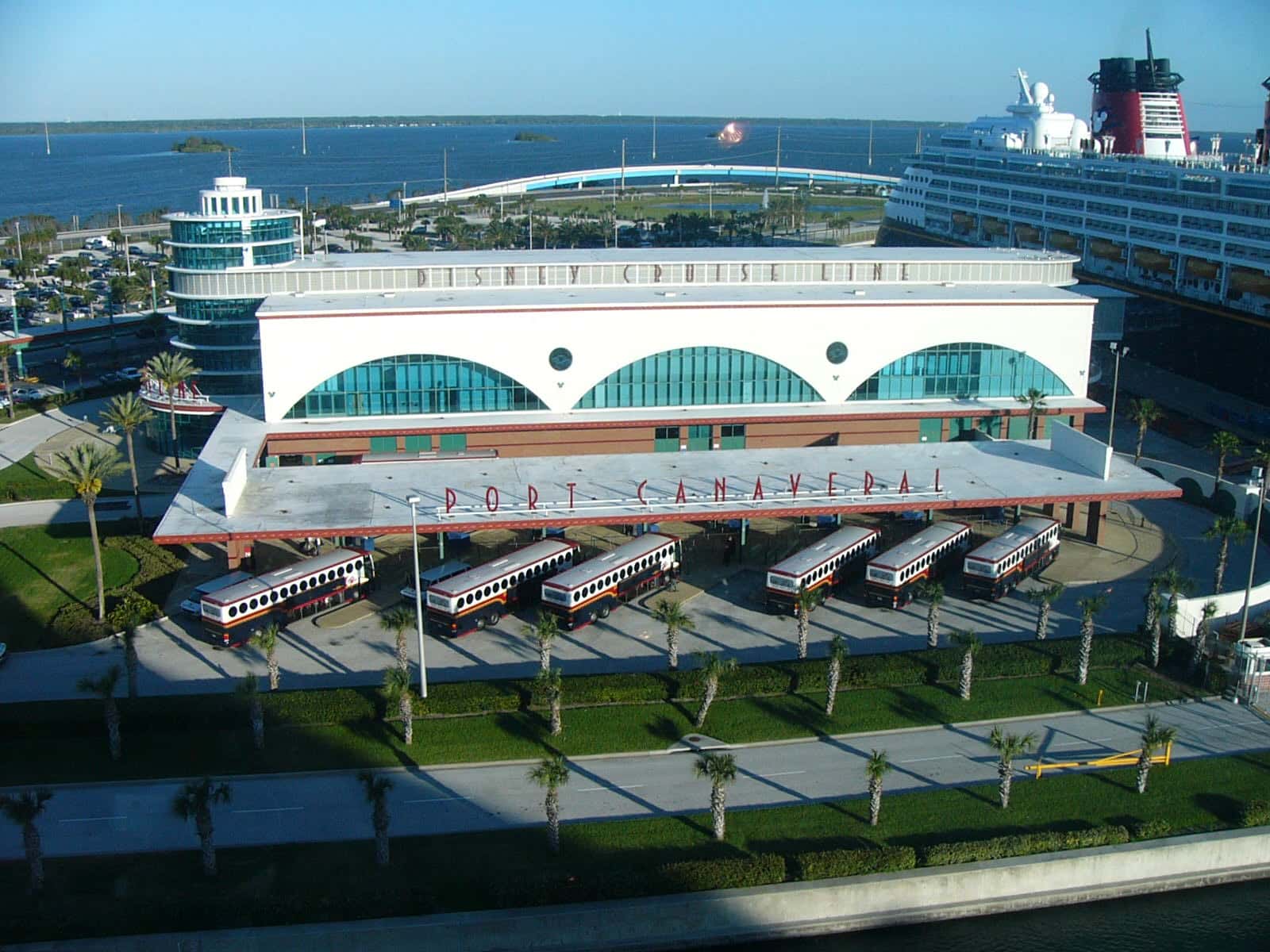
Port Canaveral marked the topping off of a new 13-story parking garage at Cruise Terminal 6 on Aug. 19, the latest in a series of infrastructure investments at a Brevard County port that has grown into one of the busiest cruise gateways in the world. The structure adds vertical parking capacity at a terminal complex where surface land is limited and passenger volumes have continued to rise.
What was built
Topping off marks the placement of the highest structural element of a building and signals the transition from structural construction to interior and systems work. For a parking structure serving a cruise terminal, that means the remaining schedule turns to decking, lighting, elevators, wayfinding, payment systems and traffic circulation.
Cruise Terminal 6 is one of several passenger terminals at Port Canaveral, and parking capacity is a persistent constraint at cruise ports generally. Unlike an airport, where the majority of passengers arrive by rented or shared transportation, a substantial share of cruise passengers at Florida ports drive themselves and leave a vehicle parked for the duration of a voyage, typically three to seven days.
That parking demand scales directly with ship capacity. Modern cruise vessels sailing from Florida ports routinely carry between 3,000 and 7,000 passengers, and turnaround days involve simultaneous debarkation and embarkation within a compressed window.
The fleet driving demand
Royal Caribbean returned Harmony of the Seas to Port Canaveral in early August for year-round operations. The ship offers a range of itineraries from two-day getaways through four- and five-day voyages to week-long sailings, with the line's private Bahamian destination included across the schedule.
Harmony of the Seas underwent a major refit at a European shipyard before the redeployment, part of Royal Caribbean's fleet modernization program, which added new onboard venues including a sports bar and arcade concept. Refits of that scale typically accompany a decision to commit a vessel to a market for an extended period.
Both Royal Caribbean and Carnival have maintained multiple ships homeported at Port Canaveral through the summer season. Coverage of the port's summer deployment counted fourteen cruise ships offering sailings from Port Canaveral during the season.
Why Brevard County has this port
Port Canaveral's advantage is geographic and infrastructural. It sits roughly 45 miles east of Orlando, which places it within a short drive of the largest concentration of theme park tourism in the world and within reach of Orlando International Airport. That proximity allows cruise lines to sell combined park-and-cruise vacations, a product category that has become central to the Central Florida travel economy.
The port is also adjacent to Cape Canaveral Space Force Station and Kennedy Space Center, and the cruise terminals sit within view of launch pads that now support an unusually high launch cadence. Launch viewing has become an incidental attraction for cruise passengers whose sailings coincide with a scheduled liftoff.
Port Canaveral is governed by the Canaveral Port Authority, an independent special district with an elected board of commissioners. That structure gives the port its own taxing and bonding authority, separate from Brevard County government, which is how large capital projects like the Terminal 6 garage are financed.
PortMiami and the statewide picture
Port Canaveral is one node in a Florida cruise network that also includes PortMiami, Port Everglades in Fort Lauderdale, Port Tampa Bay and Jacksonville. Together those ports handle a substantial majority of North American cruise embarkations.
At PortMiami, Royal Caribbean has been temporarily using MSC Cruises' newer terminal while construction work continues at its own Terminal G. Terminal sharing arrangements of that kind are common during construction periods and reflect the degree to which Florida ports operate at or near capacity during peak season.
Carnival Cruise Line, headquartered in Doral, has continued adjusting deployment and booking windows across its Florida-based fleet, including extending booking deadlines for several 2026 sailings aboard Carnival Firenze.
What it means for Floridians
The cruise industry is a direct employer in Brevard, Miami-Dade, Broward and Hillsborough counties, supporting terminal operations, provisioning, ground transportation, ship maintenance and port administration. It is also an indirect economic driver through hotel stays, restaurant spending and car rentals in the days surrounding sailings.
For residents, the more visible effects are traffic and infrastructure. Turnaround days concentrate vehicle movement on the roads serving the port, and parking structure capacity is one of the levers port authorities use to manage that congestion. Additional structured parking reduces the surface-lot footprint and the associated circulation on port roads.
Cruise passenger spending also flows into Brevard County's tourist development tax revenue, which funds beach renourishment, tourism promotion and capital projects under state law governing that revenue source.
The risks the sector carries
Cruise operations are exposed to hurricane season in a way few other Florida industries are. Ships reposition to avoid storms, itineraries are altered on short notice, and ports close to vessel traffic when the Coast Guard sets heightened port conditions. Those disruptions cluster in the August through October window.
The industry also carries fuel cost exposure, regulatory exposure on emissions and wastewater discharge, and demand sensitivity to consumer discretionary spending. Cruise bookings historically soften faster than other travel segments during economic contractions and recover comparatively quickly afterward.
Port authorities manage that volatility through long-term terminal agreements with cruise lines, which provide revenue predictability in exchange for berth commitments.
How a port authority finances a project like this
The Canaveral Port Authority's status as an independent special district is central to how projects of this scale get built. The authority has its own elected commissioners, its own budget and the ability to issue revenue bonds backed by port operating income rather than by general county taxation.
That structure lets the port move on capital projects faster than a general-purpose local government could, because the projects are financed against the revenue they help generate rather than competing against schools, public safety and roads for general fund dollars.
The tradeoff is that port authorities are exposed to sector downturns in a way that diversified governments are not. A sustained collapse in cruise volume, as occurred during the 2020 industry shutdown, hits revenue bond coverage directly, and Florida's cruise ports drew on reserves and deferred capital plans during that period.
What turnaround day actually involves
The operational challenge at a cruise terminal is concentrated almost entirely in a single day per voyage. On turnaround day, several thousand passengers debark in the morning while several thousand more embark in the afternoon, and the ship is simultaneously provisioned, refueled, cleaned and inspected.
Baggage handling alone moves tens of thousands of pieces through the terminal within hours. Customs and Border Protection processes arriving passengers, and boarding processes departing ones. The parking structure sits at the front of that chain: passengers arriving to board must park, and passengers debarking must retrieve vehicles, often within the same few hours.
Structured parking adjacent to the terminal shortens that chain considerably compared with remote lots requiring shuttle service, which is why cruise ports have increasingly built vertical parking despite its higher per-space cost.
Brevard County's twin economies
Port Canaveral shares a coastline with Cape Canaveral Space Force Station and Kennedy Space Center, giving Brevard County two major economic engines within a few miles of each other. That adjacency is unusual and occasionally operationally complex.
Launches require temporary restrictions on maritime traffic in offshore zones, and the Coast Guard coordinates those restrictions with port operations. With launch cadence at record levels, including two Falcon 9 flights 38.5 minutes apart on Aug. 15, that coordination has become routine rather than exceptional.
For the county, the combination has produced a diversified employment base spanning aerospace engineering, defense contracting, maritime logistics and tourism. That diversity has generally made Brevard more resilient than Florida counties dependent on a single sector.
Passenger volume and the regional market
Port Canaveral's growth has been driven substantially by its proximity to Orlando's theme park market, which allows cruise lines to sell combined vacations pairing park days with short sailings. Three-, four- and five-night itineraries have proven particularly well suited to that market.
Shorter itineraries also increase terminal throughput. A ship on a four-night rotation produces more turnaround days per year than one on a seven-night rotation, which increases parking demand, provisioning volume and passenger processing load per berth.
That dynamic is part of why terminal and parking infrastructure at Port Canaveral has required repeated expansion even without adding berths, and why capacity planning at cruise ports is measured in annual passenger movements rather than in ship count alone.
Cargo alongside cruise
Port Canaveral is not exclusively a cruise port. It handles cargo including petroleum products, aggregate, cement, lumber and project cargo, and that business provides revenue diversification that pure cruise ports lack.
Fuel imports through the port serve Central Florida's distribution network, and disruptions to that flow during storms have historically contributed to regional fuel supply pressure. Port operations are therefore part of the state's emergency planning as well as its economy.
The port also supports the aerospace sector directly, handling oversized components and providing marine services to recovery operations. Booster recovery vessels operating from Port Canaveral return first stages from offshore droneship landings.
What visitors and residents should know
Cruise passengers driving to Port Canaveral should account for turnaround-day traffic, which concentrates in the morning and early afternoon. Parking reservations and terminal assignments are published by the cruise lines rather than by the port itself.
Residents of Cape Canaveral, Cocoa Beach and Merritt Island experience the traffic effects most directly, and the county and municipalities coordinate with the port on road capacity and signal timing around peak periods.
Public access areas including Jetty Park and the port's observation areas allow viewing of ship movements and, on launch days, of liftoffs from the adjacent Space Force station. Those amenities are operated by the port authority and funded from its revenue.
What's next
The Terminal 6 garage will proceed through interior and systems work toward completion, with the Canaveral Port Authority publishing project updates through its board meetings and public communications.
The port's fall and winter deployment schedule brings the seasonal shift toward Caribbean itineraries and holiday sailings, historically the highest-demand period of the year at Florida ports. Peak hurricane season through October remains the principal operational variable in the near term.
The Florida Press will continue to cover Florida's ports and the cruise sector's role in the state economy.
Spotted an issue with this article?
Have something to say about this story?
Write us a letterComments
No comments yet. Be the first to weigh in.
Related Coverage

Seminole Tribe Sues DraftKings and CEO Jason Robins in Broward, Calling Its Florida Prediction Markets an Illegal Sportsbook
1h ago
Jacksonville council members weigh relief for high JEA bills as utility says it isn't ready for a hyperscale data center
1d ago

Rays to open Westshore ballpark experience center in 2027 as Tampa stadium deal moves ahead
1d ago
New I-95 Interchange at Oslo Road Opens in Indian River County More Than a Year Early
3d ago