Sanford Police Seize Two Cars but Report No Arrests a Week After Mass Shooting at a Street Memorial
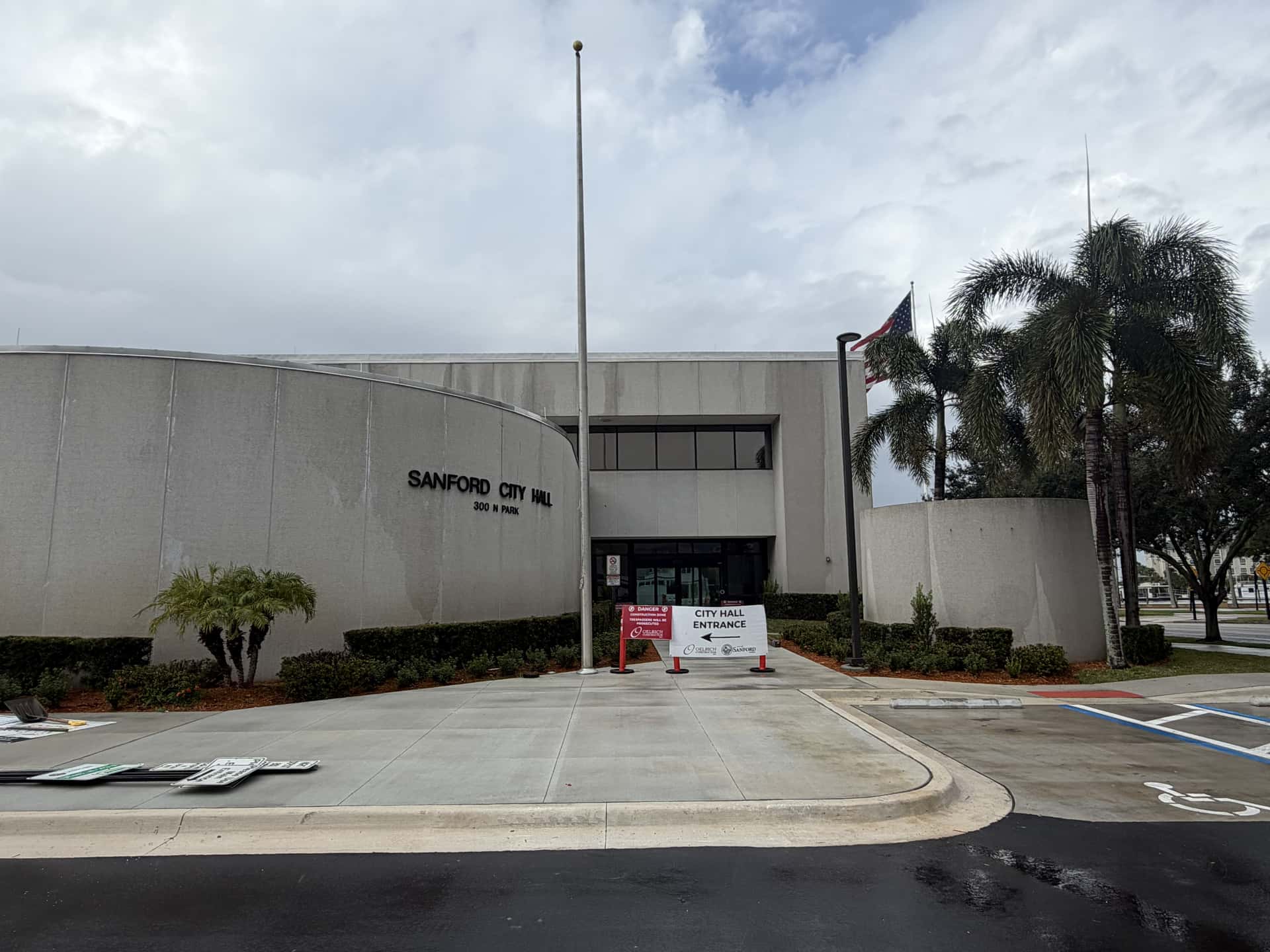
Sanford police have taken two vehicles into custody in connection with a mass shooting that wounded multiple people at a street memorial gathering, but a week after the shooting investigators have announced no arrests and have not publicly identified any suspect. Police have said eight people were injured; some initial reports put the figure at six.
Officers responded just before 10 p.m. on a Saturday night to the area of Poplar Avenue and West 10th Street, where a group had gathered in the street for a celebration of life honoring Zi'Erric Wynn, an 18-year-old Seminole High School student who died in a crash six years earlier. Two of the wounded were reported in critical condition.
The two vehicles, both BMW sedans, were seized after witnesses reported seeing them circling the gathering before shots were fired. Investigators have also said the violence appears to have been a continuation of an incident that began outside Sanford earlier that same Saturday morning, with some of the people involved in that earlier incident later present at the memorial gathering.
What investigators have said
Sanford Police Chief Cecil Smith has publicly asked for the community's help, and the department has said it is still working to identify who opened fire. That framing, a week into the investigation, indicates that investigators do not yet have the evidence to support charges against a specific individual.
As of the Friday following the shooting, the department reported that investigators had received eight tips through Crimeline, the regional anonymous tip program. Crimeline is offering a reward of up to $5,000 for information leading to an arrest.
Eight tips is a modest number for an incident of this severity in a residential neighborhood where a large group had gathered in the street. That figure, more than any statement from police, describes the difficulty of the investigation.
No charges have been filed against anyone, and no individual has been identified by authorities as a suspect. Under Florida practice and standard journalistic practice, a person is named only after authorities have formally charged and identified them, and the presumption of innocence applies throughout.
The witness problem
Investigators are facing a familiar obstacle: witnesses who will not speak with them. Residents near the scene told local reporters that distrust of law enforcement and fear of retaliation may be keeping people from coming forward.
That combination is the most common reason shooting investigations in American cities stall. A person who saw a shooter and who lives in the same neighborhood faces a genuine calculation about personal safety, and an assurance of confidentiality from a police department carries limited weight against that risk.
The dynamic is self-reinforcing. Unsolved shootings reduce confidence that cooperation produces a result, which reduces cooperation, which increases the share of shootings that go unsolved. Criminologists have documented the pattern across jurisdictions, and it operates independently of how effectively any particular department investigates.
Anonymous tip programs exist specifically to address it. Crimeline accepts information without requiring the caller to identify themselves and pays rewards without the recipient appearing in court, which removes the two elements witnesses most fear.
The vehicle evidence
Seizing the two BMW sedans is the most concrete investigative development the department has disclosed. A vehicle taken into custody can be processed for forensic evidence, including biological material, fingerprints, gunshot residue and any firearms or ammunition inside.
A vehicle also generates records. Registration establishes ownership, and modern cars retain electronic data about operation, location and occupancy that can be extracted under a warrant. License plate reader systems, increasingly common across Central Florida, may place a vehicle at specific locations and times.
Witness reports of the vehicles circling the gathering before shots were fired carry potential legal significance beyond identification. Evidence of a vehicle repeatedly passing a location before a shooting supports an inference of planning rather than a spontaneous confrontation, which affects the charges prosecutors can pursue.
Establishing who was inside a vehicle at a given moment is a separate and harder problem than establishing where the vehicle was. Ownership does not establish operation, and a forensic connection to the car does not by itself connect a person to a shooting.
The link to an earlier incident
Investigators have said the shooting was a continuation of something that began outside Sanford earlier that Saturday morning, with individuals involved in that earlier incident later present at the memorial gathering. That connection, if it holds, changes the nature of the case.
A shooting that follows an earlier confrontation between identifiable groups gives investigators a starting point that a random attack does not. It means there are people who know why the shooting happened, even if they will not say so, and it means the pool of potential participants is bounded.
It also raises the concern that most occupies police and community leaders after an incident like this: further retaliation. Cycles of reciprocal violence between groups are the mechanism by which a single incident becomes a series, and interrupting that cycle is the immediate operational priority.
The details of the earlier incident have not been publicly described in detail, and it is not clear whether it generated its own police report or arrests. Investigators frequently withhold that information while an investigation is active.
A memorial that became a crime scene
The gathering was a celebration of life for a young man who died in a crash six years earlier, the kind of informal community memorial that occurs in neighborhoods across Florida without incident. That the event became a mass shooting scene is the detail that has most affected the surrounding community.
The location, a residential street near Poplar Avenue and West 10th Street, means the people wounded were among neighbors, relatives and friends of the person being remembered. Recovery in a case like this extends well beyond the individuals who were shot.
Sanford is a city of roughly 65,000 in Seminole County, north of Orlando along the St. Johns River, with a historic downtown, a lakefront and a significant commuter population. It is served by the Sanford Police Department, with the Seminole County Sheriff's Office covering the surrounding unincorporated county.
Seminole High School, where the young man being memorialized had been a student, sits within the city. The connection between the school community and the incident is part of why the shooting has resonated locally.
What happens in an investigation like this
Cases that do not produce an arrest in the first week often produce one later, and the mechanisms that break them are identifiable. Forensic results from seized vehicles and recovered shell casings take weeks rather than days, and a ballistics match to a firearm recovered in an unrelated case can reopen a stalled investigation months afterward.
The National Integrated Ballistic Information Network allows agencies to compare casings recovered at one scene against casings and firearms from others nationally. A gun used in Sanford and later recovered anywhere in the country can generate a lead.
Digital evidence is often decisive. Cell phone location data, social media activity and private security and doorbell camera footage from surrounding properties are routine investigative avenues, and a residential street generally has more camera coverage than it did a decade ago.
Cooperation from a participant is the other common path. Someone facing charges in an unrelated matter who has information about a shooting has an incentive to provide it, and a significant share of shooting cases resolve through exactly that route rather than through physical evidence.
How Crimeline works
Crimeline is Central Florida's anonymous tip program, operating across several counties including Seminole. Callers are assigned a code number rather than providing a name, and rewards are paid by that code, which means a person can collect without their identity entering a police report or a court file.
The program is funded through a combination of court fees, private donations and grants, and it has paid out rewards on cases ranging from homicides to property crimes. Its value in violent crime investigations is that it separates the act of providing information from the act of testifying.
The limitation is that an anonymous tip is generally not admissible evidence on its own. A tip provides investigative direction that police then have to corroborate independently, which means a case built from a Crimeline call still requires physical or digital evidence to support charges.
In practice, tips most often supply a name that investigators can then work outward from, connecting a person to a vehicle, a phone, a location or a firearm. That is why eight tips on a case of this severity is a figure police would want to see considerably higher.
What is next
The Sanford Police Department's investigation remains open, and the Crimeline reward of up to $5,000 remains available for information leading to an arrest. Anyone with information can contact Crimeline anonymously or the department directly.
Any charging decision would come through the State Attorney's Office for the Eighteenth Judicial Circuit, which covers Seminole and Brevard counties. Prosecutors evaluate whether the evidence developed by investigators supports charges that can be proven beyond a reasonable doubt at trial.
The victims' conditions, including the two reported in critical condition, will affect what charges are ultimately available. Attempted murder and aggravated battery charges differ from homicide charges, and the distinction turns on medical outcomes.
For the neighborhood, the immediate concern is whether the cycle continues. Investigators have described the shooting as connected to an earlier incident that same day, and the period after such an event is when the risk of further violence is highest.
Community leaders in Sanford have pointed to the practical difficulty underneath the case: an investigation that depends on neighborhood cooperation cannot succeed in a neighborhood that does not believe cooperating is safe. Rebuilding that confidence is slower work than any single case, and it is the work that determines whether the next shooting is solved.
Spotted an issue with this article?
Have something to say about this story?
Write a letter to the editor