Senate Panel Advances $935 Million for Florida Military Construction
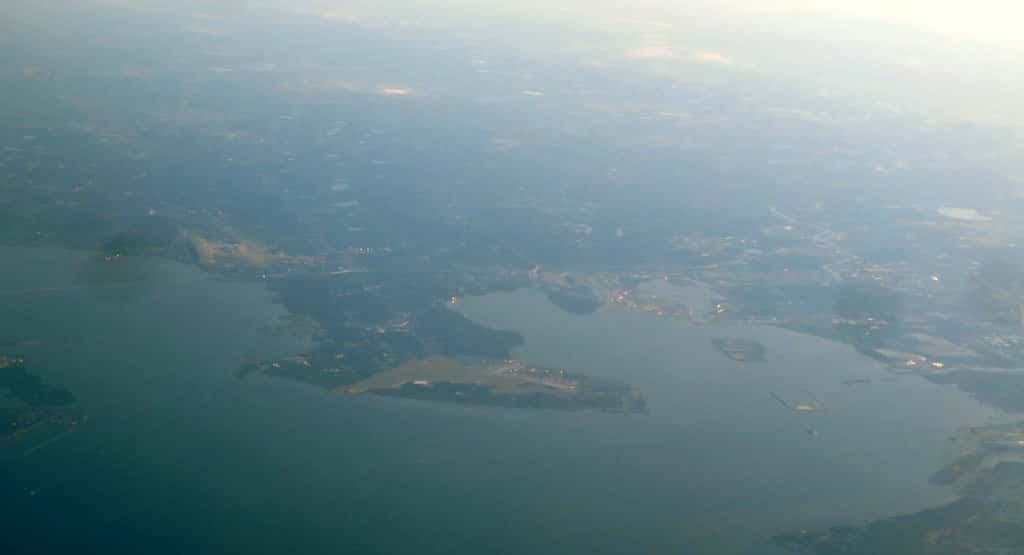
Florida Senators Ashley Moody and Rick Scott announced roughly $935 million for military infrastructure across the state, funding approved by the Senate Armed Services Committee as part of the National Defense Authorization Act for fiscal year 2027. The projects span installations from the Space Coast to South Florida and include a new command center, communication system warehouses, a rail terminal and a missile defense test facility, according to the announcement.
What the funding covers
Military construction accounts in a defense authorization bill fund physical infrastructure rather than personnel or day-to-day operations. The Florida package includes a command center, warehouse capacity for communication systems, a rail terminal and a missile defense test facility, distributed across air bases, naval facilities and space installations across the state.
Rail terminal capacity is a logistics function that rarely draws attention but matters considerably to military readiness. Moving heavy equipment, vehicles and munitions by rail is the backbone of military transportation for anything too large or too heavy for efficient air movement, and terminal capacity at an installation determines how quickly a unit can load out and deploy. Deployment timelines are frequently constrained by loading infrastructure rather than by transport availability.
A missile defense test facility carries research and development significance beyond its construction value. Test infrastructure attracts sustained program activity, contractor presence and technical employment, which tends to have a longer economic tail than the construction itself. Facilities of that kind generally remain in use for decades and draw follow-on investment.
Florida's military footprint
Florida hosts one of the largest concentrations of military installations in the country. The Air Force operates MacDill Air Force Base in Tampa, Eglin Air Force Base and Tyndall Air Force Base in the Panhandle. The Navy operates Naval Air Station Pensacola, Naval Air Station Jacksonville and Naval Station Mayport. The Space Force operates Patrick Space Force Base and Cape Canaveral Space Force Station in Brevard County, and the Coast Guard maintains substantial operations across the state's coastline.
MacDill carries outsized strategic weight as the headquarters of United States Central Command and United States Special Operations Command. Two combatant commands at a single installation makes MacDill one of the most consequential military facilities in the nation, and it draws a concentration of senior officers, allied liaison staff and defense contractors to the Tampa Bay region.
The Panhandle installations anchor the regional economy in a way few other employers do. Eglin's test and training range is among the largest in the world, covering vast tracts of land and adjoining Gulf ranges, and Tyndall has been undergoing a multi-year reconstruction since Hurricane Michael devastated the base in 2018, a rebuild that has itself become a major construction program.
How the authorization process works
An authorization bill sets policy and establishes spending ceilings. It does not by itself provide money. Actual funding requires a separate appropriations bill, and projects authorized in a defense bill can go unfunded if appropriators do not follow through in the corresponding appropriations measure.
Committee approval is an early step in a long process. The Senate Armed Services Committee's version must pass the full Senate, be reconciled with the House version in conference, pass both chambers again and be signed by the president. Individual projects can be modified, delayed or removed at any of those stages, and the final bill frequently differs from either chamber's initial version.
The defense authorization has historically been among the most reliably enacted bills in Congress, passing annually for more than six decades. That track record makes committee approval a meaningful signal even though it is not a guarantee for any specific project, and it is why members work to get projects into the committee-approved version rather than trying to add them later.
Why Florida gets this attention
Delegation seniority and committee assignments drive military construction outcomes as much as strategic need does. Florida's senators have pursued installation funding consistently, and the state's congressional delegation is among the largest in the country with 28 House seats, which gives Florida substantial collective weight in both chambers.
Hurricane vulnerability creates its own funding argument. Tyndall's reconstruction after Hurricane Michael became a case study in the cost of storm damage to military infrastructure, with the base essentially rebuilt from the ground up at a cost measured in billions. Hardening requirements now factor into how projects at Florida installations are designed and justified, and resilience is an explicit consideration in military construction planning.
The space mission adds a distinct category. As the Space Force has matured as a service, infrastructure at Patrick Space Force Base and Cape Canaveral Space Force Station has drawn investment tied to national security launch requirements, which sit alongside the commercial launch activity the Cape is better known for. Range modernization to support higher launch cadence serves both.
Training ranges and airspace
Florida's value to the military extends beyond installations to the ranges and airspace surrounding them. The Eglin range complex and the associated Gulf of Mexico test and training airspace provide room for weapons testing and large-scale exercises that densely populated regions cannot accommodate.
Encroachment is the standing threat to that capability. As Florida's population grows and development pushes outward, the buffer around installations narrows, which raises noise complaints, limits training hours and can eventually constrain what missions an installation can support. Florida has adopted land use tools intended to preserve compatible development near bases.
The state has treated that protection as an economic development priority rather than only a defense matter, since a base that loses training capacity becomes a candidate for realignment or closure in any future base restructuring round. Communities that have lost installations elsewhere in the country provide the cautionary example.
What it means for Floridians
Military installations are among the largest employers in several Florida regions, particularly in Bay, Okaloosa, Escambia, Duval and Brevard counties. Construction spending generates immediate contractor and trades employment, while permanent facilities support longer-term civilian and contractor positions that persist after the construction crews leave.
The multiplier effects extend into housing, retail and school enrollment in surrounding communities. Installation towns are unusually sensitive to changes in base population, which is why local officials and chambers of commerce track authorization and appropriation decisions closely and why delegations from those communities lobby persistently.
There is also a resilience dimension for the surrounding public. Military installations frequently serve as staging areas and logistics hubs during hurricane response, hosting utility crews, emergency supplies and federal response teams. Infrastructure investment that hardens a base against storm damage also preserves that capability when a region needs it most.
The Tyndall rebuild as precedent
Hurricane Michael struck Tyndall Air Force Base near Panama City in October 2018 as an extremely powerful storm, destroying or damaging nearly every structure on the installation. The rebuild that followed became one of the largest military construction programs in recent memory.
The reconstruction was designed as a demonstration of resilient installation design rather than as a like-for-like replacement. New facilities were built to withstand higher wind loads, with hardened structures, elevated critical systems and site planning intended to reduce vulnerability to future storms.
That experience now informs how Florida military construction projects are justified and designed. Resilience requirements add cost to individual projects while reducing the probability of a catastrophic loss that would require rebuilding an installation from nothing, and the tradeoff has become a standard element of project planning.
What military spending means for Florida communities
The economic relationship between a Florida installation and its surrounding community runs deeper than direct employment. Base populations support school enrollment, drive housing demand both on and off installation, and sustain retail and service businesses whose customer base is largely military.
Florida also hosts a large population of military retirees, drawn by climate, the absence of a state income tax and proximity to base medical and commissary facilities. That population represents a substantial and stable component of the economy in several regions, particularly around Pensacola, Panama City, Jacksonville and Tampa.
Defense contractors constitute a third layer. Firms supporting the combatant commands at MacDill, the test mission at Eglin and the space mission on the Space Coast employ engineers, analysts and technical staff whose positions depend on continued program activity at those installations.
What's next
The full Senate must take up the authorization bill, followed by reconciliation with the House version in conference committee. Appropriations bills funding the authorized projects move on a separate track and are where the money is actually provided, which means a project can be authorized in one year and funded in a later one.
Fiscal year 2027 begins October 1, 2026. Congress has frequently operated under continuing resolutions at the start of a fiscal year, which generally prohibit new starts and can delay the beginning of new construction projects even after authorization and appropriation are complete.
The Florida Press will continue tracking the defense authorization and appropriations process, including which Florida projects survive conference and how quickly funded construction begins at installations across the state.
Members of the Florida delegation will continue advocating for individual projects as the bill moves, and the specific installations receiving each component of the package generally become clearer as conference reports are published. Those documents are the authoritative record of what survived negotiation.
Local officials in installation communities typically track the process closely, since a project's timing affects local permitting, contractor availability and workforce housing demand. Chambers of commerce in Bay, Okaloosa, Escambia, Duval and Brevard counties have historically been active participants in that advocacy.
Readers tracking a specific installation can follow the process through the armed services committees in both chambers, which publish bill text and committee reports listing authorized projects by location. Those documents provide substantially more detail than press announcements do about what is actually included and at what dollar figure.
Spotted an issue with this article?
Have something to say about this story?
Write a letter to the editor