Sixth Ranked Miami Returns Home to Face Central Michigan Before the Schedule Turns
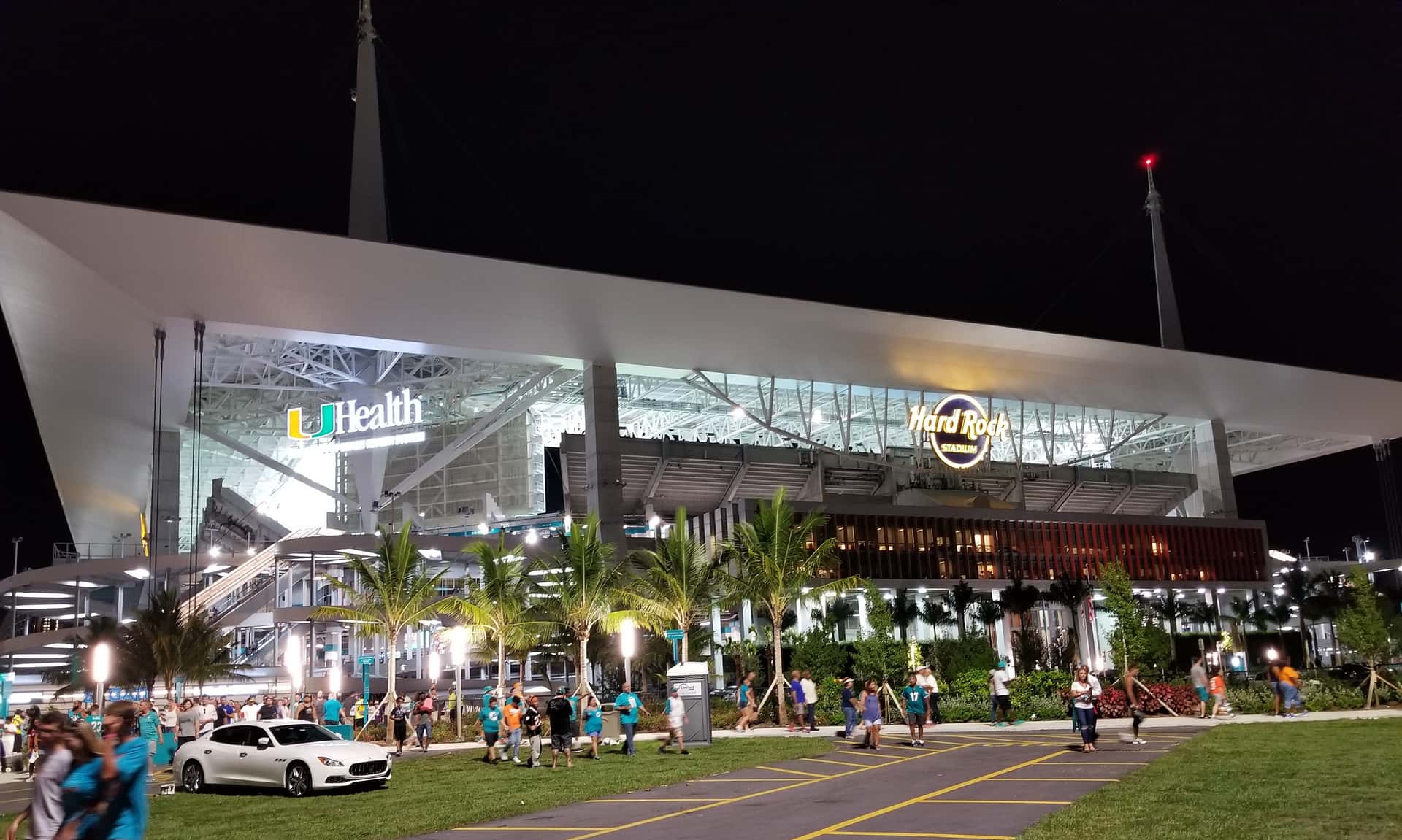
Miami hosts Central Michigan at Hard Rock Stadium on Saturday evening, a nonconference game that arrives with the Hurricanes ranked sixth nationally and carrying the kind of expectations the program has not sustained in two decades. Kickoff is scheduled for the evening window.
The matchup is a scheduling breather by design. Programs build nonconference schedules years in advance and position games like this one to give a roster a lighter week between conference tests, to develop depth and to bank a win without exposure.
That framing does not eliminate the risk. Ranked teams lose games like this every season, usually through a combination of flat preparation, early turnovers and an opponent that plays with nothing to lose in an environment that is not particularly hostile.
For Miami, the more consequential dimension is what the game reveals about roster depth. A comfortable margin allows backups to play meaningful snaps, and in a long season that development is worth more than the final score.
How Miami got to sixth
A top ten ranking in late September reflects both results and preseason expectation, and Miami entered the year with substantial attention after recent recruiting cycles and portal acquisitions reshaped the roster.
The program's investment in personnel has been significant, aligning Miami's spending with its ambitions in a way that had not consistently been true during the long stretch after its championship era.
Hard Rock Stadium has also become a more consistent home environment as the program has won. Attendance in Miami has historically tracked performance more closely than at tradition heavy programs, and a top ten team draws differently than a seven win team.
The ranking creates its own pressure. A top ten team that loses to an unranked nonconference opponent falls further than the single result warrants, because the loss is read as evidence that the ranking was wrong.
Central Michigan's position
Central Michigan is a Mid American Conference program, and games at power conference venues are a standard part of the Group of Five scheduling model. The guarantee payment for a game like this funds a meaningful portion of a smaller athletic department's budget.
That economic reality does not mean the visitors arrive resigned. Mid American programs have upset ranked opponents before, and the conference has a history of producing quarterbacks and offensive systems capable of putting up points against better athletes.
The path to an upset is narrow and specific. Win the turnover margin, convert on early downs to keep the favored team's offense off the field, and hit on a small number of explosive plays to compress the scoreboard.
Miami's task is to prevent the game from reaching the fourth quarter as a competitive contest. Ranked teams that lead comfortably at halftime rarely lose these games. Ranked teams that lead by a touchdown in the fourth quarter sometimes do.
What the schedule looks like after
The value of a lighter week is realized in the weeks that follow. Miami's conference schedule provides the games that determine whether a top ten ranking in September becomes a postseason position in December.
The Florida State rivalry sits on the calendar as well, one of college football's longest running series. Both programs' trajectories through October will determine what that game is worth when it arrives, and this season those trajectories have diverged sharply.
Florida State has struggled, opening with a Week Zero win over New Mexico State followed by losses to SMU and at Alabama. A rivalry game between a top ten team and a struggling one carries different stakes than the version both programs want.
The expanded College Football Playoff means Miami's margin extends beyond a single loss. A one loss Atlantic Coast Conference champion is a near certainty for the field, and even a two loss team with quality wins has a case.
Depth and development
The most valuable thing a favored team gets from a game like this is snaps for players who do not normally get them. Offensive linemen, defensive backs and special teams contributors who play in the fourth quarter of a decided game are the players who fill gaps when injuries arrive in November.
Quarterback depth is a particular concern for every program. A backup who has taken live snaps in a game situation, even a lopsided one, is materially better prepared than one who has only practiced.
Coaching staffs also use these games to evaluate specific packages and personnel groupings in live conditions, testing ideas that would be too risky to introduce in a close conference game.
The counterweight is injury risk. Every snap carries the possibility of losing a contributor, which is why favored teams remove starters as soon as the outcome allows.
Miami's place in the state
Florida's three power conference programs have followed different arcs this season. Florida beat Auburn in a shootout and hosts Ole Miss on Saturday afternoon. Florida State has lost two straight. Miami sits sixth.
That ordering is not the historical norm and reflects how quickly college football programs now rise and fall in an era of transfer portal roster construction and name, image and likeness compensation.
Recruiting within Florida remains the underlying competition. The state produces more Division I talent per capita than almost anywhere in the country, and the three programs' success in retaining that talent shapes their trajectories more than any single season's results.
South Florida's high school programs in Miami-Dade and Broward are the densest talent concentration in the state, which gives Miami a geographic advantage it has not always converted.
What to watch Saturday
The first quarter is the tell. A ranked team that scores on its opening possessions and forces a punt establishes the game's structure and allows the rest of the evening to proceed as planned.
Turnovers are the mechanism by which these games get close. A favored team that gives the ball away twice in the first half invites exactly the kind of contest it scheduled the game to avoid.
Substitution patterns after halftime will indicate how the coaching staff reads the game. Early rotation of backups signals confidence. Starters playing into the fourth quarter signals a game closer than anticipated.
Special teams execution is worth watching for its own sake, since it is an area where preparation gaps between programs of different resource levels are smallest.
Hard Rock Stadium as a home field
Miami plays its home games at Hard Rock Stadium in Miami Gardens, a facility shared with the Dolphins and used for a wide range of events including the Miami Open tennis tournament and major international soccer fixtures.
Sharing a professional stadium with an NFL team carries tradeoffs. The facility is modern and well appointed, but it sits well outside the campus in Coral Gables, which weakens the connection between game day and the university community that on campus stadiums create.
Attendance at Hurricanes games has historically tracked the team's performance closely, more so than at programs where attendance is driven by tradition and season ticket inertia. A top ten team fills the building. A struggling one does not.
The program has worked to improve the game day experience and to build attendance habits that persist through less successful seasons, recognizing that home field advantage is partly a function of consistent turnout.
Roster building in the current era
College football roster construction changed fundamentally with the transfer portal and with name, image and likeness compensation. Programs now assemble rosters through a combination of high school recruiting, portal acquisition and retention spending.
Miami has been active in all three channels, and the program's current ranking reflects that investment. Sustaining a roster at this level requires annual spending rather than a one time push, which is the structural reality every program now manages.
Retention has become as important as acquisition. A program that develops a player only to lose him to a better offer the following year gains little, which has shifted resources toward keeping existing contributors.
The financial model behind that spending varies by program and continues to evolve as revenue sharing arrangements between schools and athletes take shape. The regulatory framework has changed repeatedly and remains unsettled.
What a top ten ranking is worth
Polls do not determine playoff access directly. The College Football Playoff selection committee produces its own rankings beginning in the fall, and those rankings, not the Associated Press or coaches polls, govern the bracket.
A high preseason and early season ranking nonetheless matters. Teams that start highly ranked receive the benefit of the doubt in close evaluations, and a team climbing from outside the rankings must win more decisively to reach the same position.
Strength of schedule enters the committee's analysis explicitly, which is where nonconference games like Saturday's carry a cost. A win over a Mid American opponent adds nothing to a résumé and a loss would be devastating to it.
Conference championship results weigh heavily as well. An Atlantic Coast Conference title would secure Miami a place in the field regardless of how the committee reads the rest of the schedule, which makes the conference games the ones that count.
What is next
Miami's conference schedule resumes after this game, and the ranking will be tested against opponents with comparable resources. The Atlantic Coast Conference has been unpredictable in recent seasons, and road games in the league have produced upsets regularly.
The playoff selection process now rewards quality wins more than it punishes single losses, which means Miami's postseason position will be determined by the conference games rather than by Saturday.
For Hurricanes fans, the near term measure is simply whether the program handles a game it is supposed to win in the manner a top ten team should. That has not always been the case in recent history.
Kickoff is at Hard Rock Stadium in the evening, and the expectation is a comfortable result. In college football, expectations are the part of the week that games exist to test.
Spotted an issue with this article?
Have something to say about this story?
Write a letter to the editor