Florida's Space Coast Keeps Its Launch Cadence High as SpaceX Adds More Starlink Missions From the Cape
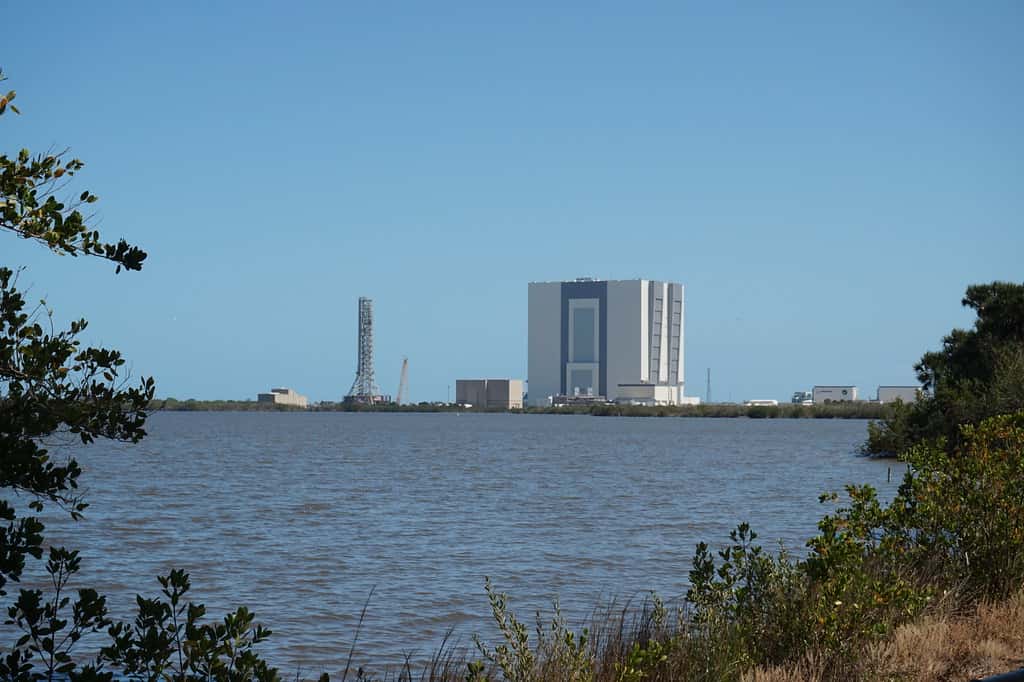
Florida's Space Coast is working through another year of launch activity at a tempo that would have been considered impossible a decade ago, with SpaceX continuing to add Starlink missions from Cape Canaveral Space Force Station and a schedule that keeps Brevard County's launch corridor busy on a near-weekly basis.
The Space Coast hosted a record 109 orbital rocket launches in 2025. The 2026 pace started in the same range, with seven launches recorded by the end of January and 14 by the end of February, all of them by SpaceX in that early stretch.
A Falcon 9 mission carrying another batch of 29 Starlink V2 Mini satellites to low Earth orbit is scheduled from Space Launch Complex 40 at Cape Canaveral for August 25. Starlink missions have become the metronome of the Florida launch schedule, filling the gaps between higher-profile flights.
How Florida became the world's busiest spaceport
The physics gave Florida the initial advantage. Cape Canaveral sits at a latitude that provides a meaningful velocity boost from Earth's rotation for eastward launches, and the Atlantic Ocean downrange means spent stages and failed vehicles fall into water rather than onto population.
The infrastructure built on that advantage over seven decades is what sustains the current cadence. Kennedy Space Center and Cape Canaveral Space Force Station together carry launch pads, processing facilities, range safety systems and a workforce with institutional knowledge that cannot be replicated quickly elsewhere.
Reusability transformed the economics. The ability to recover and refly first stages changed launch from a bespoke operation into something closer to an industrial process, and the cadence records of recent years follow directly from that change. A launch every few days requires a vehicle that does not have to be built from scratch each time.
Range operations adapted alongside. The Space Force's Eastern Range modernized its safety systems, including autonomous flight termination, which removed a bottleneck that had limited how quickly consecutive launches could be scheduled.
What the cadence means for Brevard County
The Space Coast economy has reorganized around launch operations in a way that extends well beyond the launch providers themselves. Suppliers, engineering firms, logistics operations and specialty manufacturers have concentrated in Brevard County, and the region's employment base has shifted accordingly.
Population and housing have followed. Brevard County has absorbed substantial growth, and the housing market pressure familiar across Florida has been amplified locally by the concentration of relatively high-wage technical employment.
Tourism is the other economic channel. Launch viewing has become a genuine draw, and the Kennedy Space Center Visitor Complex is among Florida's more visited attractions. Launch schedules now factor into travel planning for a meaningful number of visitors.
The costs are local too. Sonic booms from returning boosters are a routine feature of life along the coast, road closures accompany launch operations, and the environmental footprint of a high-cadence launch site in a region that includes the Merritt Island National Wildlife Refuge and Canaveral National Seashore is a subject of ongoing study and dispute.
What is flying
Starlink dominates the manifest by count. The constellation requires continuous launches to deploy new satellites and replace units reaching end of life, and those missions provide the baseline volume that keeps the range busy and the recovery fleet working.
Beyond Starlink, the Florida manifest carries national security payloads for the Space Force, commercial communications satellites, NASA science missions and crew and cargo flights to the International Space Station. Each category has different scheduling constraints and different tolerance for delay.
Multiple providers operate from the Space Coast. United Launch Alliance flies from Cape Canaveral, Blue Origin has been developing its New Glenn program with Florida launch infrastructure, and the site hosts vehicles across a wide range of capability classes.
Looking further out, NASA's Dragonfly mission to Saturn's moon Titan is scheduled to launch on a Falcon Heavy from Launch Complex 39A at Kennedy Space Center, with a targeted launch period in July 2028. Deep space missions of that type have narrow launch windows determined by planetary alignment.
The federal and state relationship
The Space Coast operates at the intersection of federal facilities and state economic development policy. Kennedy Space Center is a NASA installation and Cape Canaveral Space Force Station is a military installation, both federal, while Space Florida functions as the state's aerospace development authority.
That structure means Florida's ability to influence the sector runs through infrastructure investment, workforce development, tax policy and regulatory streamlining rather than through direct control of launch operations. The state has been active on each of those fronts.
Competition from other launch sites is real but limited. Vandenberg Space Force Base in California serves polar orbits, and commercial spaceports have developed in Texas, Virginia and elsewhere, but none currently approaches Florida's cadence or infrastructure depth for the orbits that carry the most traffic.
Federal appropriations for NASA and Space Force programs remain the largest external variable for the region's employment base. Program cancellations and delays translate into Brevard County job effects with a lag.
Risk and the limits of cadence
High launch rates concentrate risk. The 2026 New Glenn rocket explosion is a reminder that launch remains a demanding engineering problem and that vehicle failures continue to occur even as the industry industrializes.
Failures carry range consequences beyond the loss of a vehicle. Investigations pause the affected program, and depending on the failure mode they can affect range operations for other providers as well, which propagates schedule delays across the manifest.
Weather is the routine constraint. Florida's summer thunderstorm pattern generates launch scrubs on a regular basis, and range weather rules for lightning and anvil clouds are conservative by design. Launch windows in August and September frequently slip for that reason.
The environmental question at the Cape
Kennedy Space Center occupies land that is also the Merritt Island National Wildlife Refuge, one of the more biodiverse protected areas in the eastern United States. The refuge hosts threatened and endangered species including manatees, sea turtles, wood storks and Florida scrub-jays, and Canaveral National Seashore adjoins it.
That coexistence was possible historically because launch cadence was low. A handful of launches per year imposed limited disturbance, and the security buffer around launch facilities effectively protected habitat from the development pressure that consumed comparable land elsewhere on Florida's coast.
A cadence exceeding 100 launches per year changes the calculation. Noise, light, sonic booms from returning boosters, debris, and the infrastructure footprint required to support that tempo all impose cumulative effects that environmental reviews conducted for lower launch rates did not contemplate.
Federal environmental review processes have been applied to launch site expansions and cadence increases, and the adequacy of those reviews has been challenged. The tension between the region's economic trajectory and its ecological function is unlikely to resolve, because both are genuine and both are anchored to the same geography.
The workforce behind the launches
Brevard County's aerospace workforce has been through more than one boom and bust cycle. The end of the Apollo program and the retirement of the Space Shuttle each produced substantial local employment contractions, and the county's economic development strategy since has emphasized diversification against exactly that risk.
The current expansion is driven by commercial rather than purely government activity, which changes the risk profile. Commercial launch demand depends on satellite constellation deployment, communications markets and eventually on whatever business cases emerge for orbital manufacturing and tourism, none of which is guaranteed.
Workforce development programs at Eastern Florida State College, the Florida Institute of Technology and Embry-Riddle feed technical talent into the sector, and the region has built training pipelines for the technician-level positions that launch operations require in volume.
Housing has become the binding constraint on that workforce. Brevard County's home prices and rents have risen with the rest of Florida's, and employers recruiting technical staff to the Space Coast compete against markets where compensation goes further.
What comes after Starlink
The current cadence rests heavily on a single constellation. Starlink deployment and replacement flights provide the baseline volume that keeps the range busy, and the constellation's eventual maturity would remove that baseline unless other demand replaces it.
Competing constellations are in various stages of deployment, and their launch requirements would partially fill any gap. Government demand from NASA and the Space Force provides a floor that is less variable than commercial demand, though it is smaller in flight count.
Crewed spaceflight remains the highest-profile activity at the Cape. Commercial crew missions to the International Space Station launch from Kennedy Space Center, and the station's planned retirement later this decade raises questions about what replaces it as a destination.
Deep space exploration provides the long-horizon justification for the infrastructure. NASA's lunar program and missions including the Dragonfly rotorcraft bound for Titan in 2028 use Florida launch facilities, and those programs shape the capability requirements that keep the Cape's pads and processing facilities current.
What visitors should know about launch viewing
Launches from Cape Canaveral and Kennedy Space Center are visible from public areas across Brevard County and, for larger vehicles and favorable conditions, from as far as Orlando and the Treasure Coast. Public viewing locations along the beaches and causeways fill on launch days.
Scrubs are common. Weather, technical holds and range conflicts delay launches routinely, and visitors planning travel around a specific launch should build flexibility into their schedules rather than treating a scheduled time as fixed.
The Kennedy Space Center Visitor Complex offers ticketed viewing packages for some launches that place visitors closer than public areas allow. Availability depends on the mission and on range safety requirements, which differ between crewed and uncrewed flights.
What's next
The August 25 Starlink mission from Space Launch Complex 40 is scheduled for 16:44 UTC. Launch times move frequently, and the authoritative sources for current schedules are the launch providers and the Space Force's range announcements.
The rest of 2026 carries a manifest that will determine whether Florida exceeds the 109-launch record set in 2025. The pace through the first months of the year was consistent with matching or surpassing it.
For Brevard County residents and for visitors planning around launches, the practical resources are the Kennedy Space Center Visitor Complex launch schedule and the providers' own announcements, both of which update as windows firm up in the days before a flight.
Spotted an issue with this article?
Have something to say about this story?
Write a letter to the editor