Supreme Court opens term with oil industry climate case as Florida backs companies against Boulder
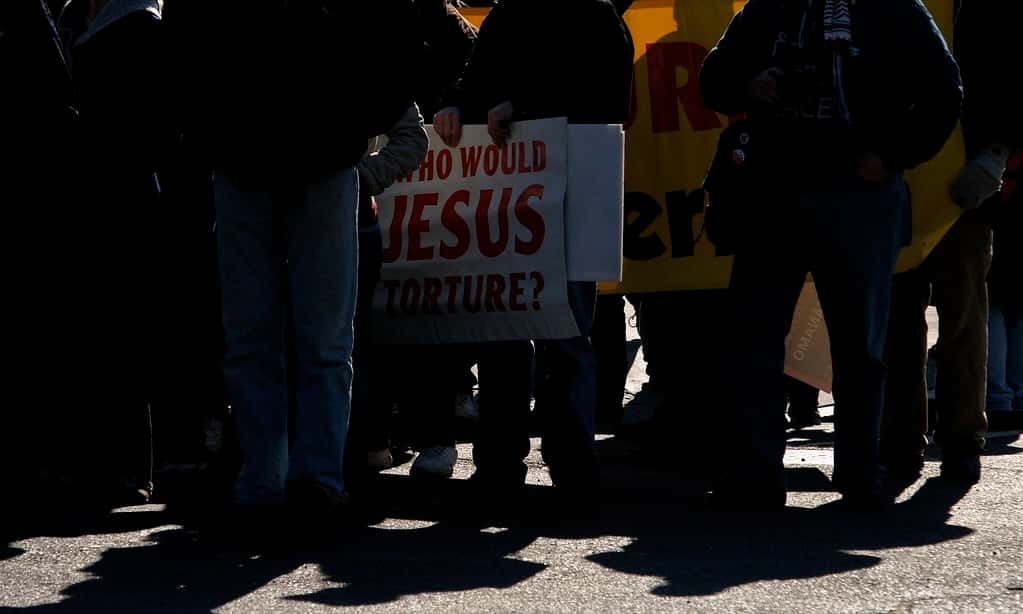
The U.S. Supreme Court opens its new term Monday with a case that could decide whether cities and counties can make oil companies pay for climate damage, and Florida has lined up with the industry. The justices are scheduled to hear arguments at 10 a.m. in Suncor Energy (U.S.A.) Inc. v. Commissioners of Boulder County, No. 25-170, a Colorado lawsuit that asks whether federal law blocks state-law claims over the effects of greenhouse-gas emissions on the global climate.
Florida is one of 26 states that signed a friend-of-the-court brief, led by Alabama and West Virginia, urging the court to throw out Boulder's claims. Florida Attorney General James Uthmeier is listed on the brief's signature page. The ruling, expected by next summer, will carry particular weight in Florida, where coastal cities and counties are spending heavily to cope with rising seas and flooding, and where any path for local governments to recover those costs from fossil fuel producers would turn on how the court answers this question.
The case before the court
The City of Boulder and Boulder County sued Suncor Energy and Exxon Mobil Corp. in Colorado state court in April 2018. The local governments argue that the companies' fossil fuel products have harmed Colorado through climate change, and they assert claims under state law including public nuisance, private nuisance, trespass, unjust enrichment, civil conspiracy and violations of the Colorado Consumer Protection Act.
The companies spent years trying to move the case to federal court and failed. After the case returned to state court, a Colorado trial judge refused to dismiss it in June 2024, and the Colorado Supreme Court affirmed that ruling in a 5-2 decision in May 2025. The U.S. Supreme Court agreed to hear the companies' appeal on Feb. 23, 2026.
The question the court agreed to decide is "whether federal law precludes state-law claims seeking relief for injuries allegedly caused by the effects of interstate and international greenhouse-gas emissions on the global climate." The justices also directed the parties to brief and argue whether the court has statutory and constitutional jurisdiction to hear the case at this stage.
Who is arguing
Kannon Shanmugam of Davis Polk & Wardwell is counsel of record for the oil companies, and Kevin Russell of Russell & Woofter represents Boulder. The federal government is backing the companies: the U.S. Solicitor General filed briefs supporting the petitioners and asked to share the companies' argument time, a request the court granted on Sept. 4.
Only eight justices are expected to decide the case. The court's docket notes that as of Sept. 28, Justice Samuel Alito will not continue to participate. A 4-4 split would leave the Colorado Supreme Court's ruling in place without setting a national rule.
The case has drawn more than 70 friend-of-the-court briefs across the petition and merits stages, from states, local governments, industry groups, scientists, former federal officials and legal scholars.
Where Florida stands
Florida signed the merits-stage brief filed May 21 by Alabama, West Virginia and 24 other states supporting the oil companies. The other states on the brief are Alaska, Arkansas, Georgia, Idaho, Indiana, Iowa, Kansas, Kentucky, Louisiana, Mississippi, Missouri, Montana, Nebraska, New Hampshire, North Dakota, Ohio, Oklahoma, Pennsylvania, South Carolina, South Dakota, Texas, Utah and Wyoming.
The states argue that disputes over pollution that crosses state lines have long been governed by federal law and that no single state can impose its own rules on emissions that originate elsewhere. "Our Constitution does not allow two small localities like these to set national energy policy," the brief says. It warns that a ruling for Boulder would be "a green light for future plaintiffs" and would cause job losses, tax losses and industry harm in energy-producing states. The brief also argues that the same legal theory could be stretched to target almost any activity with nationwide effects.
On the other side, Colorado and 18 other states filed a brief Aug. 3 supporting Boulder. Local governments with their own climate suits also weighed in: a brief filed on behalf of city and county governments representing more than six million residents in California, Hawaii, Illinois and New Jersey argues that claims based on deceptive marketing are different from claims that try to regulate emissions. No Florida city or county appears among the local governments that filed briefs on either side, according to the court's docket.
Why it matters for Florida's coast
Florida's long, low-lying coastline makes rising seas an expensive problem, and much of the cost already falls on local budgets. Miami Beach is spending about $500 million on raised roads, seawalls and pumps under its sea level rise strategy. In the Florida Keys, officials have estimated it would cost $75 million to protect about three miles of road serving roughly two dozen homes. Sea levels in the Southeast have risen by an average of about 0.12 inches a year since the early 1990s, and a 2018 Union of Concerned Scientists analysis found that more than 1 million Florida homes could be at risk by 2100 under a high sea level rise scenario.
Suits like Boulder's are one way local governments elsewhere have tried to shift some of those costs onto fossil fuel producers. A ruling that federal law displaces such state-law claims would close that route nationwide, including for any Florida community that might consider one. A ruling for Boulder would leave the door open, subject to state law, and would let similar cases pending around the country move forward.
Florida's state leadership has moved in the opposite direction from Boulder. In May 2024, Gov. Ron DeSantis signed legislation that removed most references to climate change from state law and dropped greenhouse gas reduction as a state energy policy priority. Florida's position in Suncor is consistent with that approach.
The rest of the October sitting
Suncor is one of two cases on Monday's calendar. The court's October sitting runs over two weeks.
| Date | Case | Docket number |
|---|---|---|
| Monday, Oct. 5 | Suncor Energy (U.S.A.) Inc. v. Commissioners of Boulder County | 25-170 |
| Monday, Oct. 5 | Johnson v. United States Congress | 25-735 |
| Tuesday, Oct. 6 | Anderson v. Intel Corp. Investment Policy Committee | 25-498 |
| Wednesday, Oct. 7 | Department of the Air Force v. Prutehi Guahan | 25-579 |
| Tuesday, Oct. 13 | Beaird v. United States | 25-5343 |
| Wednesday, Oct. 14 | Salazar v. Paramount Global | 25-459 |
Florida's own case waits
The term's case directly involving Florida is not on the October calendar or the November calendar the court has released. In Kian v. Florida, No. 25-6623, the justices agreed on June 15 to decide whether a defendant charged with a serious felony has a Sixth Amendment right to a 12-person jury. Florida uses six-person juries in felony cases other than capital ones. The case comes from Florida's Fourth District Court of Appeal.
Briefing is still underway. Florida's brief was submitted Oct. 2, and the docket shows no argument date yet. Former U.S. Solicitor General Seth Waxman is counsel of record for petitioner Hamed Kian, alongside the public defender's office in West Palm Beach, and the Florida Solicitor General's office is defending the state's jury system.
What's next
The court typically posts audio of arguments the same day, and a decision in Suncor is expected by the end of the term, typically late June. The justices will first have to decide whether they have jurisdiction to rule on the case at this stage. If they do, the decision will determine whether Boulder's suit, and similar ones from Honolulu to New Jersey, can go to trial in state courts, and whether Florida's coastal communities will have that option at all. Kian v. Florida is expected to be set for argument in a later sitting.
Spotted an issue with this article?
Have something to say about this story?
Write a letter to the editorComments
No comments yet. Be the first to weigh in.
Related Coverage

NTSB: Amazon cargo jet hit Miami runway at 184 mph with speed brakes stowed before crash that killed 5
1h ago

Kathy Castor Raises $2.5 Million in Third Quarter as Redrawn Tampa District Becomes a National Battleground
3h ago

Homan Tells Doral Crowd ICE Made Nearly 200,000 Arrests in Four Months, Promises More in 2027
4h ago

Florida lands $85 million federal grant to widen 20 miles of I-4 in Seminole and Volusia counties
5h ago