Suspended Palm Beach County Clerk Held Without Bond on Five Felony Child Abuse Charges
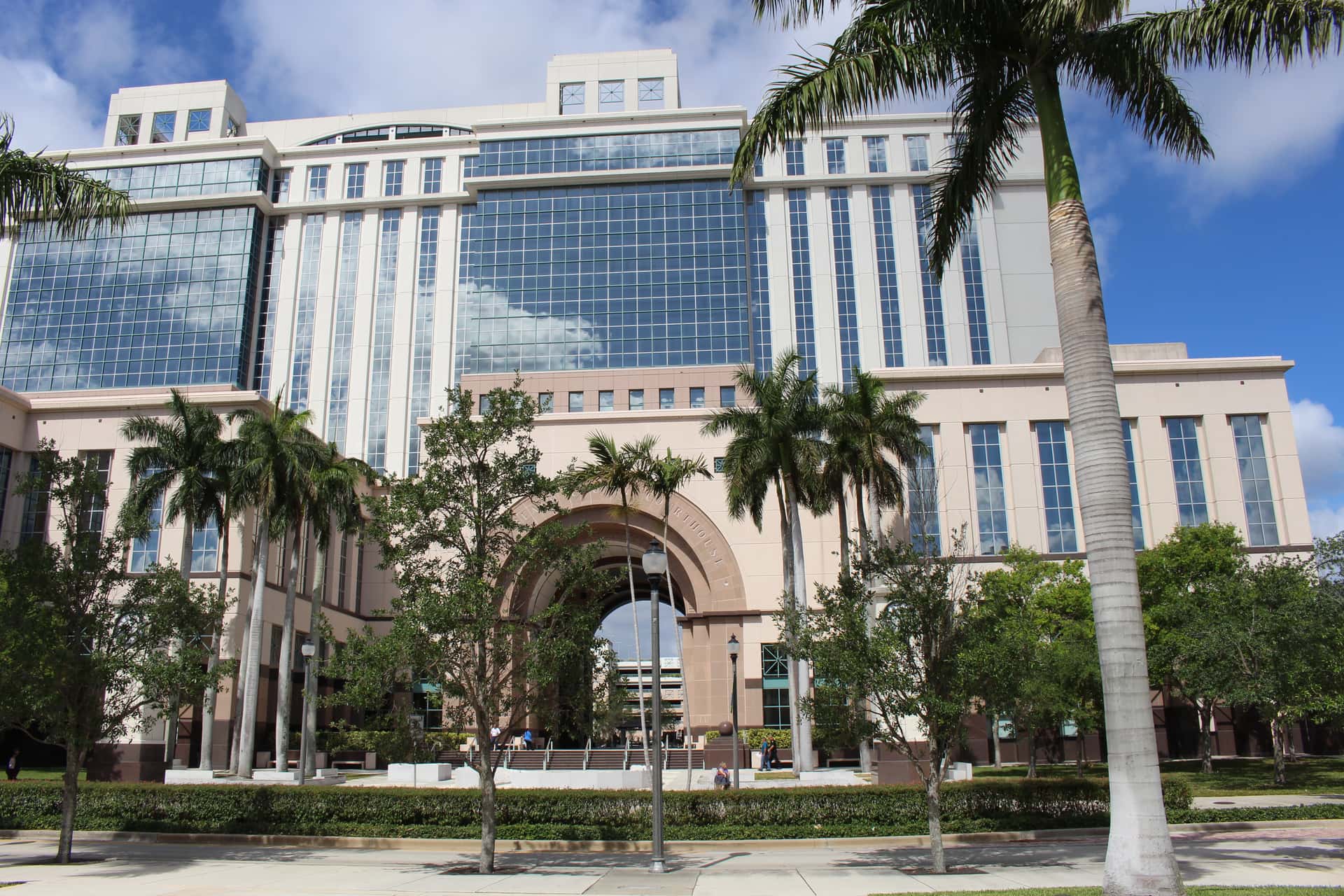
Michael Caruso, the elected Palm Beach County Clerk of the Circuit Court and Comptroller, was arrested on August 18 on five felony charges related to child sexual abuse and has been held without bond since his first appearance. Attorney General James Uthmeier announced the arrest, which he said was made with substantial assistance from the Florida Department of Law Enforcement and local law enforcement. Gov. Ron DeSantis suspended Caruso from office in the hours following the arrest.
Caruso, 67, of Riviera Beach, faces charges of kidnapping, lewd or lascivious molestation, lewd or lascivious exhibition, luring or enticing a child, and child abuse causing mental injury. He has been charged and is presumed innocent unless and until convicted at trial.
He was booked into the Orange County Jail and appeared before a judge at a first appearance hearing the following morning, where he was denied bond. Officials have said the investigation remains ongoing and that additional charges are possible.
Who is prosecuting the case
The case is being handled by Special Counsel Rita Peters and Senior Assistant Statewide Prosecutor Lauryn Day in the Ninth Judicial Circuit, which covers Orange and Osceola counties.
Prosecuting a Palm Beach County official in Orlando rather than in West Palm Beach is a deliberate arrangement. The Palm Beach County Clerk's office is the record-keeping and financial administration arm of the county's court system, which creates obvious conflicts if the same circuit's prosecutors and judges were to handle a case against its head.
The Office of Statewide Prosecution, part of the Attorney General's Office, has jurisdiction over cases spanning multiple judicial circuits and over matters where local prosecution presents conflicts. Its involvement in cases against elected officials is routine for that reason.
What the clerk of court does
Florida's clerks of the circuit court are constitutional officers elected by county voters, and the role carries responsibilities that most residents rarely think about. The clerk maintains all court records, collects fines and fees, processes traffic citations, records deeds and mortgages, issues marriage licenses and serves as county comptroller.
In Palm Beach County, one of Florida's largest, that operation involves hundreds of employees and handles enormous volumes of financial transactions and public records.
The comptroller function makes the office responsible for auditing county expenditures and for custody of county funds, which is why the position is elected independently rather than appointed by the county commission.
How the suspension works
Under Article IV of the Florida Constitution, the governor may suspend any state or county officer who is indicted or informed against for any misdemeanor or felony. The suspension is not a finding of guilt; it removes the officer from duties while the case proceeds.
The Florida Senate has the constitutional authority to remove or reinstate a suspended officer. In practice, Senate action typically waits until criminal proceedings conclude, since the outcome usually determines the result.
The governor appoints a replacement to serve during the suspension. If the suspended officer is convicted or resigns, the vacancy is filled according to the procedures governing that office.
What FDLE's role was
The Florida Department of Law Enforcement is the state's primary investigative agency, with responsibilities that include public integrity investigations, forensic laboratory services, criminal intelligence and support to local agencies.
Investigations involving elected officials frequently run through FDLE precisely because local agencies may have working relationships with the subject. A county sheriff's office investigating a county constitutional officer presents the same conflict problem that local prosecution does.
FDLE has announced a series of arrests through August 2026 across multiple categories, including crimes against children cases developed by its investigative units and task forces operating in South Florida and elsewhere in the state.
The charges explained
Each of the five counts carries a distinct statutory definition under Florida law. Kidnapping is a first-degree felony, and when committed against a child under thirteen in connection with certain other offenses, it carries enhanced penalties.
Lewd or lascivious molestation and lewd or lascivious exhibition are separate offenses under Florida's statute addressing sexual offenses against children, with degree of felony varying by the ages of the defendant and the victim.
Luring or enticing a child and child abuse causing mental injury are separate offenses again. Florida law treats mental injury as a form of child abuse distinct from physical harm.
Why bond was denied
Florida law and the state constitution provide that a defendant is entitled to pretrial release on reasonable conditions unless charged with a capital offense or an offense punishable by life imprisonment where the proof of guilt is evident or the presumption great.
Charges carrying potential life sentences can therefore support pretrial detention without bond following a hearing. First appearance is where that initial determination is made.
Defendants held without bond may seek a subsequent hearing at which the court examines whether the standard for detention is met, and defense counsel commonly file such motions as cases develop.
Reporting restraint around the victim
Florida law provides confidentiality protections for victims of sexual offenses, and those protections are stronger where the victim is a minor. Identifying information about the alleged victim is exempt from public records disclosure.
Responsible reporting practice avoids details that would identify a child victim, including specific relationships, ages, schools or locations, even when those details appear in some coverage.
This publication is describing the charges as filed and the procedural posture of the case, without detail that could identify the child involved.
What comes next procedurally
The prosecution will file a formal charging document, either an information filed by prosecutors or an indictment returned by a grand jury, within the timeframe Florida rules require after arrest.
Arraignment follows, at which the defendant enters a plea. Discovery, motions and pretrial hearings then proceed, and felony cases of this complexity commonly take a year or more to reach trial.
Officials have said additional charges are possible as the investigation continues, which could alter the case's timeline and scope.
The office in the interim
The clerk's office continues operating during a suspension. Chief deputies and division directors run day-to-day functions, and a gubernatorial appointee assumes the officer's formal role.
Court operations, records recording, traffic citation processing and financial administration in Palm Beach County proceed without interruption. Residents conducting business with the office are unaffected.
The office's next scheduled election, and whether a special appointment extends to it, depends on the case's resolution and on the timing relative to Florida's election calendar.
Public officials and criminal charges in Florida
Florida has seen a number of suspensions of elected officials in recent years across a range of offices and allegations. The constitutional suspension mechanism is used regularly enough that the procedure is well established.
Suspended Osceola County Sheriff Marcos Lopez, facing racketeering charges, has a trial scheduled for October, another case in which a Florida constitutional officer was removed from duties pending criminal proceedings.
Those cases share a structure: arrest, immediate executive suspension, appointment of an interim officer, and a criminal case that proceeds on its own timeline independent of the administrative action.
How Florida handles crimes against children cases
Investigations involving alleged offenses against children follow protocols designed to limit the number of times a child is interviewed and to preserve the integrity of what the child reports. Florida uses child protection teams and children's advocacy centers, which bring together law enforcement, child welfare workers, medical providers and prosecutors so that a forensic interview can serve multiple purposes rather than being repeated for each agency.
Those interviews are conducted by trained specialists using non-leading protocols, recorded, and made available to investigators and prosecutors. The approach developed out of research showing that repeated questioning by untrained interviewers degrades the reliability of what children report and compounds the trauma of the process.
The Florida Department of Children and Families operates in parallel with criminal investigators in these cases, since the child welfare response and the criminal case proceed on separate tracks with different standards of proof and different remedies available.
The elected officials the Senate has to act on
Executive suspensions accumulate until the Florida Senate acts, and the Senate has developed a process for handling them that runs through a designated committee with authority to take evidence. In practice, the Senate rarely moves before criminal proceedings conclude, because a conviction resolves the question and an acquittal usually does as well.
That deference means a suspended officer can remain in limbo for a year or more, drawing no salary and performing no duties while an appointee runs the office. Officials who resign during that period end the administrative question entirely, converting the suspension into a vacancy filled through the ordinary process.
For voters in the affected county, the practical consequence is that an office they elected someone to fill is being run by an appointee for an extended period. That is the tradeoff the constitutional mechanism accepts in exchange for removing officers facing serious charges from positions of public trust.
The Office of Statewide Prosecution
The Office of Statewide Prosecution is a division of the Florida Attorney General's Office with authority to prosecute certain crimes that occur in two or more judicial circuits, along with cases where local prosecution would present a conflict. It maintains bureaus across the state and its prosecutors are appointed rather than elected.
That structure exists because Florida's twenty judicial circuits each elect their own state attorney, an arrangement that works well for ordinary criminal cases and poorly for cases spanning circuits or implicating the local justice system itself. Public corruption prosecutions and organized fraud cases routinely land there for that reason.
Assigning the case to prosecutors operating out of the Ninth Judicial Circuit, with the defendant held in the Orange County Jail, separates every element of the proceeding from Palm Beach County institutions. That separation is procedural rather than substantive, but in a case involving the official who keeps a county's court records, it removes questions that would otherwise follow the case through every stage.
What's next
Court records in the Ninth Judicial Circuit are the authoritative source for hearing dates and filings as the case proceeds. Statewide prosecution cases are docketed in the circuit where they are filed.
Any additional charges would be announced by the Attorney General's Office, which has said the investigation is ongoing.
Until a verdict is returned, Caruso stands charged and is entitled to the presumption of innocence. The proceedings ahead will determine whether the state can prove the allegations beyond a reasonable doubt.
Spotted an issue with this article?
Have something to say about this story?
Write us a letterComments
No comments yet. Be the first to weigh in.
Related Coverage

Two Spring Hill men indicted in 2018 home invasion killing of young father in Hernando County
4h ago
Operation Cooked: Undercover Osceola Sting Nets At Least 20 Arrests of Men Accused of Seeking Sex With Children
6h ago

Federal Jury Convicts Three Naples Men in $30,000 Murder-for-Hire Plot Targeting a Man Whose Brother Wanted Him Dead
8h ago

Woman known only as 'Cinnamon,' found dead on a boat off Key West in 1999, identified through DNA
1d ago