Tampa Eyes 9% Water and Sewer Rate Hike for City Residents as New State Law Threatens $28 Million
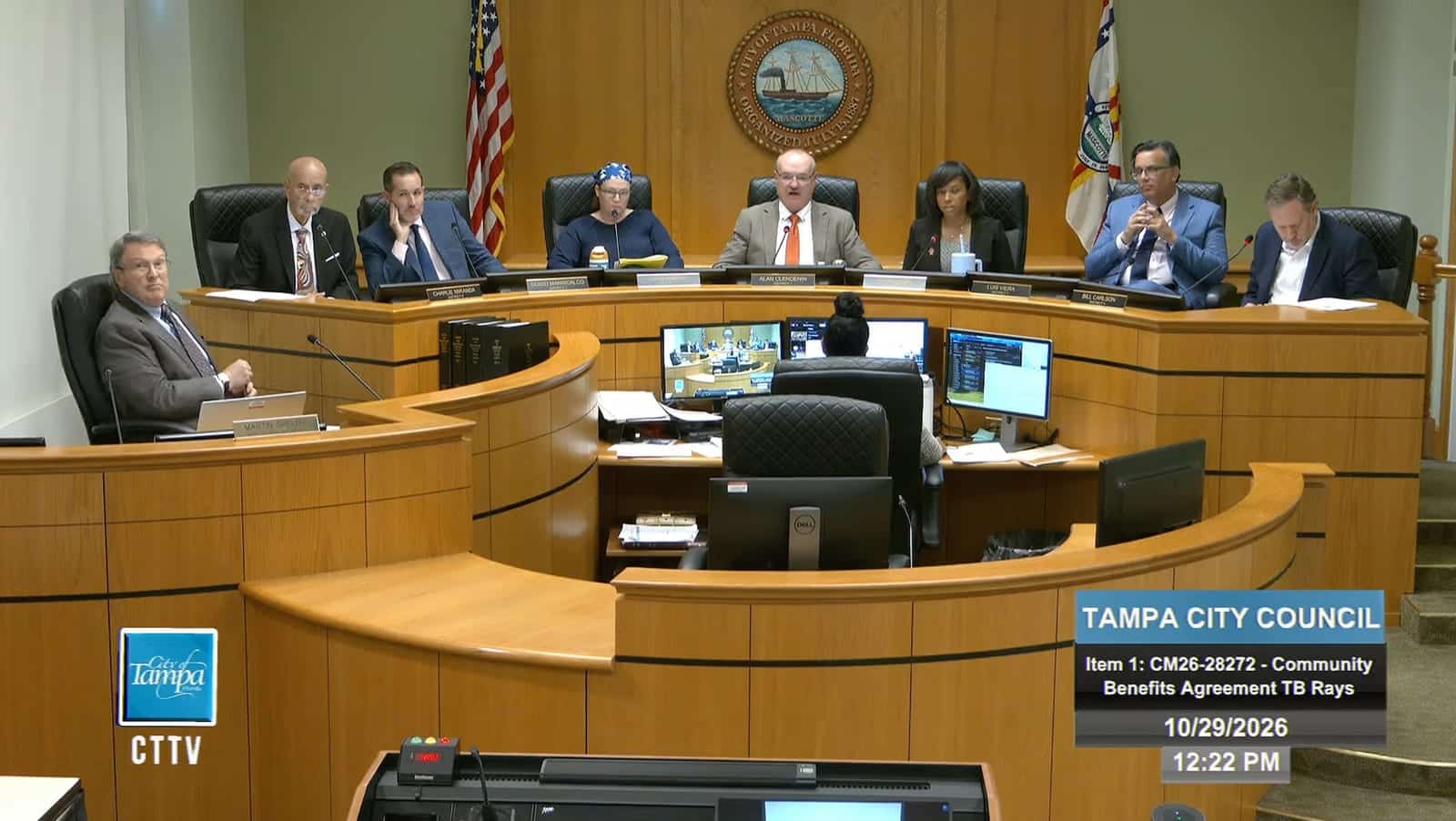
Tampa residents could pay about 9% more for water and wastewater service starting next summer under a proposal headed to the Tampa City Council on Thursday, Nov. 5, while customers who live outside city limits would see their rates fall by roughly 16%. The shift is the city's answer to a new state law that bans the 25% surcharge Tampa has long charged customers beyond its borders, a change city officials estimate would otherwise cost the utility about $28 million a year.
According to a council presentation reported by Florida Politics, a household inside the city using about 6,000 gallons a month would see its combined water and wastewater bill rise by about $5.50, from roughly $78 to roughly $84 a month. If the council approves the package, the new rates would take effect July 1, 2027, the same day the state law kicks in.
What Tampa is proposing
The council is scheduled to take up three related resolutions on Thursday: one on water rates, one on wastewater charges and one on connection fees. Together they would rebalance who pays for the system rather than raise the overall amount the utility collects.
The proposal, as described in the city's presentation, would:
- Raise water and sewer usage rates for customers inside Tampa by about 9%.
- Cut rates for customers outside city limits by roughly 16%, reflecting the loss of the 25% surcharge.
- Make the fixed monthly charges identical for customers inside and outside the city.
City officials estimate that without revised rates, Tampa would lose about $16 million a year in water revenue and about $12 million in wastewater revenue. The presentation warns that the shortfall could also complicate plans to finance water and sewer infrastructure projects in late 2027.
Officials told the council they had weighed other options, including deferring projects and changing how infrastructure improvements are financed. The city is also updating its water and wastewater master plans and expects to revisit long-term rates around fiscal years 2029 and 2030.
The state law behind the change
The law is CS/CS/HB 1451, a utility services bill sponsored in the House by Rep. Demi Busatta, with a Senate companion, SB 1724, carried by Sen. Jonathan Martin. The House passed its final version 79-24 on March 12, 2026, and the Senate gave final approval 30-6 the next day. Gov. Ron DeSantis approved it on June 11, and it became Chapter 2026-135, Laws of Florida.
Under prior law, a Florida city running a water or sewer utility outside its boundaries could charge outside customers the same rates as residents plus a surcharge of up to 25%, and it could do so without a separate public hearing. A city could also set separate rates for outside customers, as long as the total stayed within 50% of what residents paid.
According to the Florida Senate's bill summary, HB 1451 eliminates that 25% surcharge for areas served outside municipal boundaries and lowers the overall cap on the difference between inside and outside rates from 50% to 25%. Rates for outside customers must be set at a public hearing using the same factors used for city residents.
The final law contains one narrow exception added during the session. A city may keep a surcharge that was in effect before March 1, 2026, but only to the extent needed to meet bond covenants in effect as of July 1, 2024. Any such surcharge must be phased out by July 1, 2029, or when the underlying debt is retired, expires or is refinanced, whichever comes first. The city's presentation, as reported, plans for the loss of the surcharge revenue beginning in July 2027.
Most of the rate provisions take effect July 1, 2027. A separate reporting requirement took effect July 1, 2026: by Jan. 1, 2027, every city that sells water, sewer, electric or gas service outside its limits must tell the Florida Public Service Commission how many outside customers it serves, how much revenue those customers generate, whether they pay a different rate, and how much utility revenue is used to pay for non-utility government services. The commission must compile the results for the governor and legislative leaders by March 31, 2027.
Who pays now, and who would pay after July 2027
Tampa's water department serves a population well beyond city limits. The city says its water and wastewater infrastructure serves more than 733,000 people. Customers who live outside city limits have paid the 25% surcharge on top of resident rates.
The proposal effectively moves part of that burden onto city residents. For a typical in-city household, the estimate is about $5.50 more per month. Outside customers would see their rates drop by roughly 16%, according to the city's estimate.
The House staff analysis of HB 1451 noted the bill could have an indeterminate negative effect on the revenues of cities that currently charge outside customers more than the new limits allow. Tampa's estimate of $28 million a year is one of the first concrete figures for what that impact could look like in a large Florida utility.
Stacked on top of PIPES increases
The proposed increase would come on top of the scheduled rate increases already built into Tampa's Progressive Infrastructure Plan to Ensure Sustainability, known as PIPES. The City Council approved the $2.9 billion plan in 2019 after nearly a decade without a utility rate increase, to replace water and sewer pipes and treatment equipment that, according to the city, is in some cases nearly 100 years old.
PIPES set a schedule of annual increases that take effect every Oct. 1 through October 2040, and added monthly base charges for water and wastewater that rise each year through fiscal year 2034. The usage-rate schedule published by the city is below.
| Fiscal years | Water usage rate | Wastewater usage rate |
|---|---|---|
| FY2020 to FY2021 | 3% a year | 3% a year |
| FY2022 to FY2025 | 11% a year | 3% a year |
| FY2026 | 6% | 3% |
| FY2027 to FY2031 | 1% a year | 3% a year |
| FY2032 to FY2040 | 1% a year | 4% a year |
When the council approved PIPES in a 6-1 vote in September 2019, WUSF reported the city projected the average residential bill would climb from about $41 a month to around $80 by 2028.
Tampa offers a Customer Assistance Program that waives water and wastewater base charges for qualifying residential customers at or below 50% of the area median household income, as determined by the U.S. Department of Housing and Urban Development. Applicants can request a mailed application by calling (813) 274-7968.
A statewide fight over city utilities
HB 1451 was part of a broader push in Tallahassee to rein in how cities use their utilities. Beyond the surcharge limits, the law requires a public meeting in each affected community before a city signs or renews an agreement to provide utility service outside its limits, plus an annual public customer meeting in those areas.
The law also preempts to the state any regional utility authority created by the Legislature through a charter amendment after Jan. 1, 2023. According to the Senate bill summary, that provision overrides a charter amendment Gainesville voters approved in fall 2025 that sought to return control of the Gainesville Regional Utility Authority to the city commission.
What's next
The City Council is set to consider the three rate resolutions on Thursday. If they pass, the 9% increase for city residents, the roughly 16% cut for outside customers and the equalized fixed charges would take effect July 1, 2027. Tampa, like other Florida cities that serve customers beyond their borders, must also file its first outside-customer report with the Public Service Commission by Jan. 1, 2027, and the city expects to revisit long-term water and wastewater rates around fiscal years 2029 and 2030 once its updated master plans are complete.
Spotted an issue with this article?
Have something to say about this story?
Write us a letterComments
No comments yet. Be the first to weigh in.
Related Coverage
JTA Eliminates Four Bus Routes, Adds Route 34 and Cuts Weekday Service as Jacksonville Changes Take Effect
1d ago
Port Canaveral Casino Ship Victory I Seized in South Carolina Shipyard Over Nearly $800,000 Unpaid Bill
2d ago
USDA to Buy $20 Million in Oranges and Grapefruit as Florida Citrus Growers Face Shrinking Harvest
3d ago
JTA shuts down Jacksonville Skyway early over staffing issues, with no date to reopen
3d ago