The Heat Head Into Media Day With Giannis Antetokounmpo and the Biggest Expectations in Years
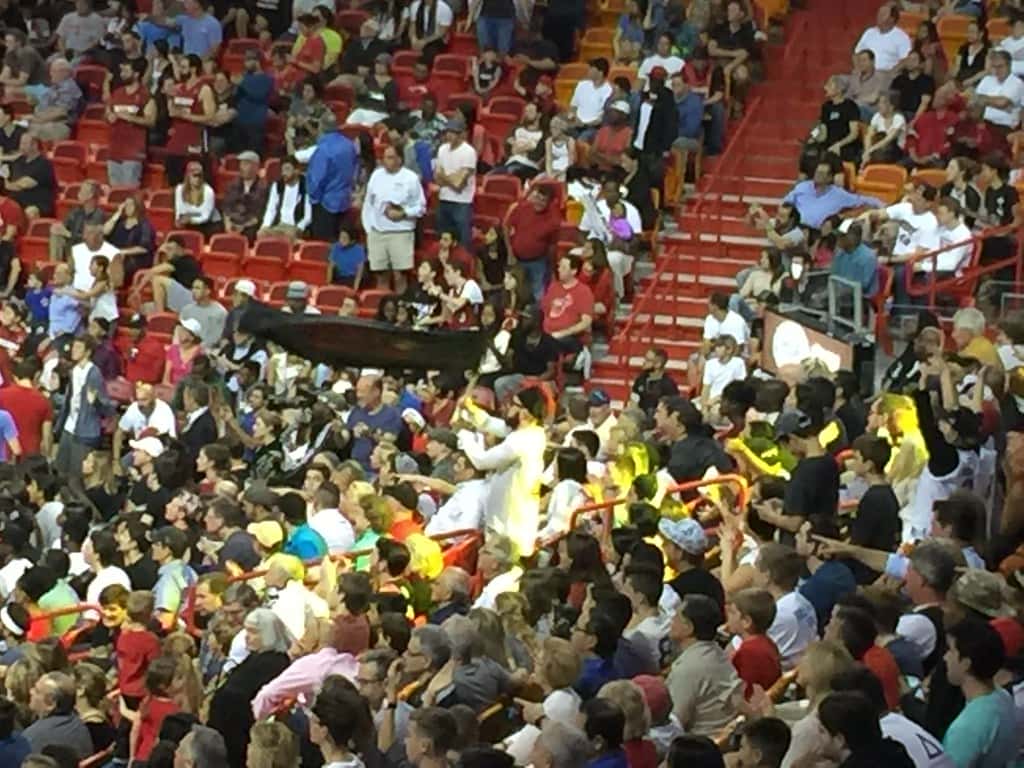
The Miami Heat will hold media day on September 28 at Kaseya Center before opening training camp, beginning a season that carries expectations unlike any the franchise has faced in years. The offseason that produced them was among the most consequential in team history, headlined by the acquisition of Giannis Antetokounmpo from the Milwaukee Bucks in a blockbuster trade completed on the eve of the 2026 NBA Draft.
Miami acquired Antetokounmpo and forward Bobby Portis in the deal, sending Tyler Herro, Kel'el Ware, Jaime Jaquez Jr., Kasparas Jakucionis, three first-round picks including the 13th selection in the 2026 draft, a second-round pick, and a pick swap to Milwaukee. The Heat beat out Boston for the deal.
The front office was not finished. Miami signed veteran guard Klay Thompson in August, adding a proven shooter to a roster reconfigured around a player who has been among the most dominant forces in basketball for the better part of a decade.
What Miami gave up
The price was substantial and worth stating plainly, because the trade's evaluation depends on it. Herro had developed into a primary offensive option. Ware and Jaquez represented young players on rookie-scale contracts, the most efficient asset class in a hard-capped league. Jakucionis was a recent draft selection. Three first-round picks and a swap constitute a decade of draft flexibility.
Trades of that structure are the standard price for a player of Antetokounmpo's caliber, and the fact that Boston was also pursuing him indicates the market. A franchise trading for a player at that level is making an explicit bet that a concentrated star beats distributed depth.
The asymmetry is that the team acquiring the star gains a ceiling and loses a floor. If health holds, Miami is dramatically better. If it does not, the Heat lack both the young players and the draft capital to recover quickly.
The fit question
Antetokounmpo's game has been built around downhill pressure, attacking from the perimeter toward the rim with a combination of size and speed that few defenses have solved. That style requires spacing, which is where the Thompson signing enters the calculation.
A shooter of Thompson's pedigree stretches defenses in a way that creates driving lanes, and pairing elite shooting with elite rim pressure has been the foundational offensive architecture of the modern NBA. Whether Thompson at this stage of his career still commands the defensive attention required is the question.
Miami's existing roster structure, built around Bam Adebayo, presents both an opportunity and a puzzle. Adebayo is one of the league's most versatile defensive players and has historically operated as a hub in the Heat's offense. Two big men who both prefer operating inside the arc can crowd each other's space.
Resolving that will be the central tactical project of training camp, and it is the kind of problem coaching staffs generally solve through lineup construction and role definition rather than through any single adjustment.
What the Bucks got and why they did it
Milwaukee's side of the trade reflects an organization choosing to restart rather than to decline gradually. The Bucks fired their head coach after the season, and the roster around Antetokounmpo had not been constructed to contend at the level his presence demanded.
Trading a franchise player at peak value, rather than waiting until leverage disappears, is the disciplined move even when it is unpopular. Milwaukee received four players and substantial draft capital, which is the raw material of a rebuild.
Antetokounmpo led Milwaukee to the 2021 championship, was named to the NBA's 75th Anniversary Team, and has been selected to nine All-NBA teams. He arrived in Miami coming off an injury-shortened season in which he averaged 27.6 points per game.
The health variable
The injury-shortened season preceding the trade is the most important piece of context for evaluating Miami's outlook. Antetokounmpo's game depends on explosive athleticism, and players whose value derives from physical dominance carry different injury risk profiles than players whose value derives from skill.
Load management has become standard practice across the league for exactly this reason, and the NBA's participation policies now govern how teams can rest healthy stars. Miami will have to balance regular season positioning against availability in the spring.
The Heat organization has a well-established reputation for conditioning and player preparation, and that reputation was part of the pitch in acquiring a player of this magnitude. Whether it translates into availability is the question that determines the trade's outcome.
The Eastern Conference picture
Miami enters a conference that has been unsettled for several seasons, with multiple franchises undergoing roster transitions and no single team establishing the kind of sustained dominance that defined earlier eras.
Boston's pursuit of Antetokounmpo indicates that the Celtics viewed their own window as requiring reinforcement, and the fact that Miami won that competition changes the balance between two franchises that have met repeatedly in the postseason.
Orlando represents an in-state complication, with the Magic having reshaped their coaching staff and continuing to build around a young core. Two Florida teams with legitimate playoff aspirations makes the state's NBA picture more interesting than it has been in some time.
The preseason schedule
Miami's preseason begins on the road in Quebec before the team returns home to host New Orleans on October 8, Minnesota on October 10, and Brooklyn on October 14, closing the exhibition slate against Orlando on the road on October 16.
Preseason games carry limited competitive meaning but substantial informational value in a season following major roster change. The lineup combinations a coaching staff experiments with in October often indicate how it intends to play in November.
For fans, the home preseason dates offer the first opportunity to see the reconfigured roster at Kaseya Center, and interest in those games will run well above the usual preseason level.
Heat culture and a superstar arrival
The Heat organization has built an identity around conditioning standards, defensive commitment, and development of undrafted and overlooked players into rotation contributors. That identity has produced deep playoff runs from rosters that on paper should not have made them.
Integrating a player of Antetokounmpo's stature into that structure is a different exercise than developing a young player within it. Superstars arrive with established habits, established preferences, and legitimate claims to influence how a team plays.
The organizations that have handled that transition best have adapted their systems to the player rather than requiring the reverse. How Miami balances its institutional identity against the requirements of its new centerpiece is the season's most interesting non-tactical question.
The financial picture
The NBA's current collective bargaining agreement imposes severe restrictions on teams with the highest payrolls, limiting their ability to aggregate salaries in trades, use exceptions, and access draft capital. Those restrictions apply progressively at defined spending thresholds.
A roster built around a maximum-salary superstar plus veteran supporting players tends to push against those thresholds quickly. Miami's flexibility to adjust the roster during the season will be constrained by where its payroll sits.
That constraint is another reason the trade represents a concentrated bet. Teams operating near the top of the payroll structure have limited ability to correct mistakes, which raises the stakes on every decision already made.
What it means for South Florida fans
For Heat supporters, the offseason delivered the kind of acquisition that fans of most franchises wait decades to experience. The organization has been aggressive in pursuing stars throughout its history, and this represents the most significant addition since the roster construction that produced its most recent championships.
Expectations will be correspondingly high, and the gap between expectation and result is where fan experience is determined. A team acquiring a top-five player is measured against championship contention rather than against playoff qualification.
Ticket demand and attention will rise accordingly, and Kaseya Center is likely to host a level of national television coverage the franchise has not seen in several years.
The South Florida sports crowd
The Heat's season opens into a regional market already carrying the Panthers, who began camp this week with their captain returning from a season-ending injury, the Dolphins early in their NFL schedule, Inter Miami in its MLS season, and a Miami Hurricanes football team ranked in the national top five.
That density of simultaneous relevance is rare, and it creates genuine competition for attention, coverage, and discretionary spending across a market that supports professional teams in every major sport.
For the region, it is an unusually strong moment. For the individual franchises, it means the margin for underperformance is thinner than it would be in a quieter year.
How the trade compares historically
Blockbuster trades for players at the absolute top of the league are rare, and their outcomes have varied enormously. Some have produced championships almost immediately. Others have produced first-round exits and a decade of rebuilding for the team that paid the price.
The variables that separate those outcomes are mostly not basketball ones. Health is the largest. Fit matters, but coaching staffs generally solve fit given time. Age is a factor, since the acquiring team is buying remaining prime seasons rather than career totals. And the quality of what remains around the star determines whether the team is a contender or a very good player surrounded by insufficient support.
Miami's situation is distinctive in that the Heat retained Adebayo, a genuinely elite defensive player, and added a veteran shooter in the same offseason. That is a more complete supporting structure than many teams have managed to keep after paying a comparable price, though the loss of young, cost-controlled players narrows the path to improving it further.
Defense as the deciding factor
Miami's recent postseason success has been built on defense more than offense, and the arrival of a player who has won Defensive Player of the Year honors should in principle strengthen that foundation rather than compromise it.
The complication is scheme. Antetokounmpo's defensive value in Milwaukee was maximized in a drop coverage system built around protecting the paint. Miami has historically played a more aggressive, switch-heavy style that puts pressure on ball handlers higher up the floor. Those are different jobs, and asking either player to operate outside his strengths costs something.
Pairing him with Adebayo, one of the few big men in the league genuinely capable of switching onto guards, gives the coaching staff options that most teams do not have. Whether they build around Adebayo's versatility or around Antetokounmpo's rim protection may be the most consequential tactical decision of the season.
What's next
Media day on September 28 at Kaseya Center opens the season formally, followed immediately by training camp and the preseason schedule beginning in Quebec. First public comments from Antetokounmpo, Thompson, and the coaching staff about roles and fit will come at media day.
The regular season follows in October, and the early schedule will provide the first real evidence about whether the fit questions raised in the offseason resolve on the floor.
The ultimate verdict will not arrive until spring. Miami traded a decade of flexibility for a championship window, and windows of that kind are judged by what happens in them rather than by how they were opened.
Spotted an issue with this article?
Have something to say about this story?
Write a letter to the editor