Trump Says Immigration Enforcement 'Might Be Too Tough' in First Interview Since Midterms, Putting Florida's Crackdown in the Spotlight
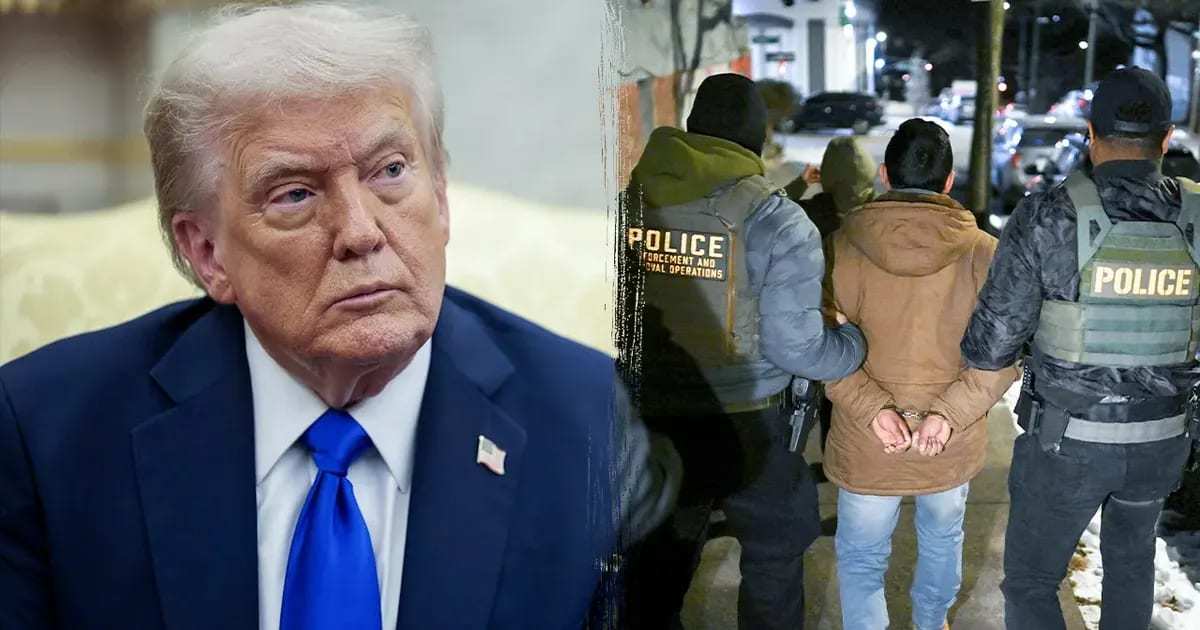
President Donald Trump said in his first sit-down interview since Republicans' midterm losses that his administration's immigration enforcement "might be too tough," a rare concession from a president whose deportation campaign has been carried out more aggressively in Florida than almost anywhere else in the country. In the CBS News "60 Minutes" interview, which aired Sunday, Nov. 8, Trump said the crackdown "both helped and hurt" him and added, "I think ultimately that hurt me."
The remarks land in a state where hundreds of local police and sheriff's agencies have signed on to help federal immigration agents, where the state built and runs its own detention centers, and where Gov. Ron DeSantis has said Florida should not "backtrack." They also arrive days after Trump named Stephen Miller, the chief architect of his immigration agenda, as White House chief of staff, leaving Floridians to sort out whether the president's words signal any real change.
What Trump said
The interview was conducted by Ross Douthat, the former New York Times columnist who joined "60 Minutes" this year, and was taped at the White House after the Nov. 3 election. CBS News posted an extended transcript online.
Asked about his deportation policy, Trump said, "I think it might be too tough, yeah." He told Douthat that "a lot of people would say that it's great, but a lot of people think it's too tough," according to the Miami Herald's account of the broadcast. He defended the border side of his record, giving himself an "A+" for closing the southern border, and said, "I get very high marks for getting the bad ones out."
Trump described a split among his advisers, saying some on the "pretty far right" wanted every immigrant in the country illegally removed, while others urged him to "get the killers out. Get the rapists out." He said he was hurt politically "because we also took people that had good jobs" and were detained over a single immigration violation, and he called the situation of hotel workers "a tough thing."
He also said that many immigrants in the country illegally are good people and suggested that an immigration deal with the incoming Democratic-controlled Congress could be "doable," including a pathway for long-term workers without criminal records, according to Fox News Digital and the Herald.
Fox News Digital noted that the Fox News Voter Analysis found immigration was the only issue on which voters favored Republicans over Democrats this year, which helps explain why Trump framed the issue as one that cut both ways.
A mixed signal from the White House
The interview followed a personnel move that points in the opposite direction. On Nov. 6, Trump announced that Miller, his deputy chief of staff, would replace Susie Wiles, the veteran Florida political strategist, as chief of staff effective Monday, Nov. 9. Trump said Wiles had done an outstanding job and would move to his political operation.
Miller is the official most closely identified with mass deportations and worksite raids. The Herald noted that elevating him might suggest Trump has no plans to moderate in practice, regardless of what he said on camera. No change to federal enforcement policy has been announced.
Florida, the enforcement leader
Few states have more riding on that question than Florida. An Associated Press analysis of federal data published in June found that nearly 39,000 immigrants were arrested in Florida between Jan. 20, 2025, and March 11, 2026, compared with 11,088 in the same number of days before that under President Joe Biden. Florida averaged 93 immigration arrests a day in that period, second only to Texas.
The AP counted 347 state and local agencies in Florida taking part in the crackdown, most of them through 287(g) agreements that let local officers perform certain immigration duties. Nationwide, those agreements grew from 135 in 20 states before Trump's second term to more than 1,700 in 41 states and territories, the AP reported. The Herald, citing the state's own dashboard, reported that more than 17,000 arrests have been made in Florida under those agreements, most of them by the Florida Highway Patrol.
Florida also went further than any other state on detention. DeSantis and Attorney General James Uthmeier turned the Dade-Collier Training and Transition Airport in the Everglades into the facility known as "Alligator Alcatraz," the nation's first state-operated immigration detention center, and later opened a second site the state calls the "Deportation Depot." The Herald reported that Alligator Alcatraz has cost more than $1 billion and drawn complaints about conditions, while DeSantis has said it fulfilled its promise.
Salazar: 'Well done, Mr. President'
The Floridian most eager to embrace Trump's comments was U.S. Rep. María Elvira Salazar, the Miami Republican whose own seat is in a recount. In a September campaign ad, Salazar told Trump that some enforcement efforts had "gone too far" and that Hispanic voters who helped elect him felt betrayed. Trump responded at the time that he understood what she was saying but added, "I'm very strong on the borders, and she isn't."
On election night, Salazar led Democrat Eliott Rodriguez by 1,116 votes in Florida's 27th Congressional District, within the margin that triggers a mandatory recount, WLRN reported. She called the result "a moment of reckoning" and said her party needed to change course on the economy and immigration.
After the "60 Minutes" interview aired, Salazar posted, "Well done, Mr. President!" and said, "What you described on 60 Minutes is what the Dignity Act is all about." She urged Trump to bring both parties together, writing, "You can surpass Reagan's legacy by delivering a historic immigration reform." Her Dignity Act would offer legal status to undocumented immigrants with clean records who pay a $7,000 fine, give up certain public benefits and pay 1% of their salary for seven years, according to the Herald.
Where DeSantis and Florida's sheriffs stand
Trump's remarks echo, in part, a debate that has already split Florida Republicans. In March, the State Immigration Enforcement Council, chaired by Polk County Sheriff Grady Judd, agreed to send a letter to federal officials, including Trump, asking for a path to citizenship for undocumented immigrants without criminal records who pay a fine. Judd said such immigrants are "not a drag on society," and Pinellas County Sheriff Bob Gualtieri agreed.
DeSantis rejected the idea. Speaking in Bradenton, he said the sheriffs' approach was "not consistent with our laws, and it's also not good policy," and cast Florida as the national standard for enforcement, citing state laws, state-run detention and hundreds of millions of dollars spent working with ICE. "We've got to keep the momentum going, we certainly don't want to backtrack on this," he said.
Reports on Trump's interview did not include a response from DeSantis or Uthmeier. DeSantis leaves office in January; Republican Byron Donalds, whom Trump rallied for in Fort Myers on Oct. 23, won the governor's race on Nov. 3 and will be sworn in on Jan. 5, 2027.
What it means for Floridians
For now, nothing on the ground has changed. Florida's state immigration laws, its 287(g) agreements and its detention sites operate independently of anything Trump says in an interview, and any broader pathway for long-term workers would require Congress to pass a law. Florida's agricultural, construction and hospitality industries, which rely heavily on immigrant labor, have the most at stake in whether talk of a deal becomes legislation.
The comments may matter most politically. Immigration was a top issue for voters in places like Doral, according to the Herald, and a Cape Coral Republican interviewed by the paper said that while recent arrivals were different, something should be done for long-term residents, a view that tracks closely with what Trump described.
What's next
Democrats take control of Congress in January, and Trump's openness to an immigration deal will be tested once Miller is running the White House staff. In Florida, the results of the District 27 recount will determine whether Salazar returns to Washington to push her Dignity Act, and Donalds will decide early in his term whether to keep the state's enforcement machinery at its current pace. Immigrant families and employers across the state will be watching for the first concrete sign, such as a change in worksite operations or detention policy, that the president's words carry weight.
Spotted an issue with this article?
Have something to say about this story?
Write us a letterComments
No comments yet. Be the first to weigh in.
Related Coverage

IRS Sets 2027 Tax Brackets: Standard Deduction Rises to $33,200 for Couples, Child Tax Credit to $2,300. Here's What It Means for Floridians
3h ago

ICE Operation at Palatka Primary School Construction Site Leaves Workers Detained and a Putnam County Community Shaken
4h ago
Students at Florida universities protest campus police partnerships with ICE as FIU free speech fight continues
1d ago
Lame-Duck Congress Returns: What the Dec. 11 Shutdown and Flood Insurance Deadline, the Defense Bill and the Hegseth Impeachment Push Mean for Florida
1d ago