Appeals Court Upholds Two-Person Train Crew Rule in Case Brought by Florida East Coast Railway
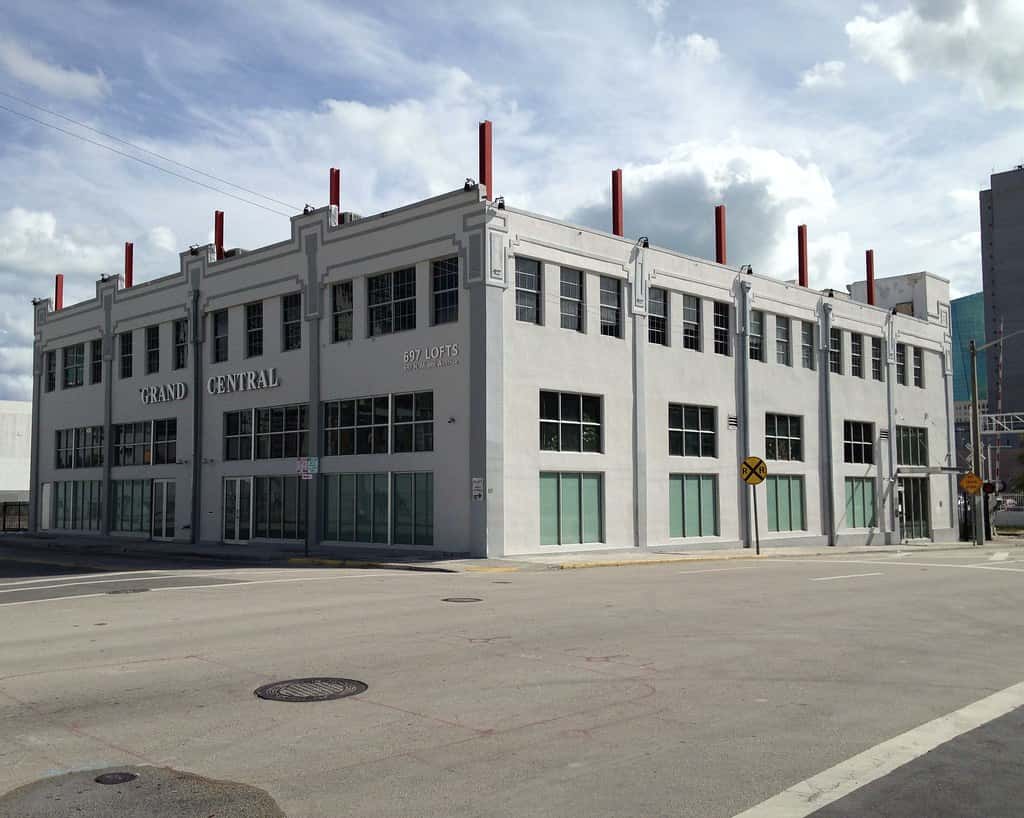
A divided panel of the U.S. Court of Appeals for the Eleventh Circuit has upheld the Federal Railroad Administration's rule requiring most freight trains to operate with a crew of at least two people, rejecting an industry challenge in which Florida East Coast Railway was among the lead petitioners.
The panel ruled 2-1 on August 11 that the agency reasonably justified the safety rationale behind the regulation, turning aside the railroads' argument that the rule exceeded the agency's authority and amounted to regulatory overreach.
The case was one of a set of consolidated petitions filed by railroad companies and industry associations challenging the same rulemaking. The decision leaves the crew size requirement in place across the national freight rail network, including the Florida corridors that move the state's imports, construction materials and intermodal freight.
What the rule requires
The Federal Railroad Administration finalized the crew size regulation to establish a minimum standard of two crew members on most freight operations, replacing a patchwork in which crew staffing was governed largely by collective bargaining agreements rather than by federal safety regulation.
The agency's stated rationale centered on safety redundancy. A second crew member provides a check on the locomotive engineer, assists in emergency response, handles tasks that require someone on the ground and offers a margin against the consequences of a single person becoming incapacitated.
Railroads argued that technology has made the second position unnecessary. Positive train control systems, which the industry installed under a separate federal mandate, automatically enforce speed restrictions and stop trains that pass signals improperly, and the industry position has been that those systems address the risks the second crew member was intended to cover.
The court's majority found the agency's justification sufficient under the deferential standard courts apply to safety rulemaking. The dissent's disagreement centered on the adequacy of the agency's evidentiary support, a familiar fault line in administrative law challenges.
Why Florida East Coast Railway is in this case
Florida East Coast Railway operates the rail corridor running along Florida's east coast from Jacksonville through the Space Coast, Palm Beach, Broward and Miami-Dade counties. It is a freight railroad with a history dating to Henry Flagler's construction of the line that opened South Florida to development.
The railroad's route structure gives it a particular interest in crew rules. It runs relatively short-haul operations in a dense corridor, connecting Florida's ports at Jacksonville, Port Everglades and PortMiami to inland distribution, and labor costs weigh differently in short-haul economics than in transcontinental operations.
The company's corridor also carries Brightline passenger service under a separate operating arrangement, though passenger operations are governed by different staffing rules. The shared corridor arrangement is unusual in American railroading and has made the Florida east coast line a subject of federal regulatory attention on multiple fronts.
What it means for Florida
Freight rail matters to Florida's economy in ways that are largely invisible to residents. Construction aggregate, which the state consumes in enormous volume, moves by rail from Central Florida mines to South Florida job sites. Intermodal containers move from ports to distribution centers. Fuel, chemicals and agricultural products all use the network.
Crew staffing costs feed into rail rates, which feed into the delivered cost of those commodities. The effect on any individual consumer price is small and hard to isolate, but the aggregate matters in a state building housing and infrastructure at Florida's pace.
Safety is the other side. Florida's rail corridors run through dense urban areas along both coasts, and grade crossing incidents have been a persistent problem in the state. The relationship between crew size and grade crossing safety is indirect, but rail safety regulation generally affects communities that live alongside track.
The east coast corridor in particular runs through the center of numerous South Florida municipalities, with at-grade crossings on major surface streets. That geography is why rail operations in Florida draw local government attention in a way they do not in states where freight lines skirt population centers.
The regulatory backdrop
The crew size rule sits within a broader period of activity in federal rail safety regulation, driven substantially by public and congressional attention following major derailments in other states. Agencies operating in that environment have moved to formalize practices that previously depended on labor agreements.
Rail labor unions have supported the crew size requirement consistently, arguing that it protects both worker safety and public safety and that reliance on collective bargaining leaves the standard vulnerable to erosion. The rule's codification in federal regulation makes it substantially harder to change than a contract term.
Industry groups including the Association of American Railroads participated in the consolidated litigation. The U.S. Chamber of Commerce filed an amicus brief supporting the railroads, framing the case within a broader argument about the scope of agency authority.
How administrative law challenges like this work
Petitions challenging federal agency rules go directly to the courts of appeals rather than starting in district court, which is why this case arrived at the Eleventh Circuit without a trial court proceeding. Multiple petitions challenging the same rule are consolidated, and the venue is determined by a lottery among the circuits where petitions were filed.
The standard of review asks whether the agency acted arbitrarily or capriciously, whether it exceeded its statutory authority and whether it followed required procedures. Courts reviewing technical safety judgments generally defer to agency expertise, though the degree of that deference has been the subject of significant recent development in administrative law.
A 2-1 split signals genuine disagreement about the agency's evidentiary record rather than a unanimous affirmance. That division sometimes supports a petition for rehearing before the full circuit, though such petitions are granted rarely.
Freight rail in the Florida economy
Florida's rail network is smaller relative to its economy than networks in industrial states, reflecting the peninsula's geography and the dominance of trucking for intrastate freight. What rail does carry, it carries in volume and in categories where no alternative is practical.
Construction aggregate is the clearest example. Florida consumes enormous quantities of crushed limestone and sand for roads, foundations and concrete, and the material moves from mines concentrated in Central and South Florida to job sites across the state. Moving that volume by truck would add tens of thousands of heavy vehicles to the highway network.
Intermodal container traffic connects Florida's ports to inland distribution. Jacksonville, Port Everglades, PortMiami and Port Tampa Bay all have rail connections, and the competitiveness of those ports against alternatives in Georgia and South Carolina depends partly on inland rail service quality.
Agricultural products including citrus, sugar and produce move by rail in some volume, though the sector's rail dependence has declined as trucking captured share. Fuel and chemicals round out the traffic mix, with the safety profile of those commodities driving much of the regulatory attention rail receives.
Grade crossings and Florida communities
The most direct interaction between Florida residents and freight rail is at grade crossings, where tracks intersect roads at the same level. Florida has thousands of public grade crossings, concentrated in the corridors where rail lines run through developed areas along both coasts.
Crossing incidents have been a persistent safety problem. Collisions between trains and vehicles or pedestrians produce fatalities every year in Florida, and the state has ranked among the higher states nationally for crossing incidents, a function of the density of crossings in populated corridors.
Federal and state programs fund crossing improvements including gates, lights, sealed corridors and grade separations. Grade separation, which eliminates the conflict entirely by building an overpass or underpass, is the definitive solution and also the most expensive, running into tens of millions of dollars per crossing.
Quiet zones, where communities eliminate routine train horn sounding by installing supplemental safety measures, have been adopted in numerous Florida municipalities. The tradeoff between noise reduction and the warning function of the horn is a recurring local government debate along the state's rail corridors.
The passenger rail overlay
Florida's east coast corridor carries an unusual arrangement in American railroading: privately operated intercity passenger service sharing infrastructure with freight operations. That configuration has drawn federal safety attention and has made the corridor a subject of study for other regions considering similar arrangements.
Passenger operations are governed by different crew and operating rules than freight, and the crew size regulation at issue in this case addresses freight operations. The shared corridor nonetheless means that freight operating practices affect passenger service reliability and vice versa.
Grade crossing safety in shared corridors has received particular scrutiny because higher-speed passenger trains interact with the same crossings as slower freight movements. Corridor safety improvements have been implemented along the route, including sealed corridor treatments at numerous crossings.
Expansion of passenger service in Florida remains an active subject, with proposals for additional routes connecting metropolitan areas. Any such expansion runs through the same corridors and the same regulatory framework this case addressed.
What's next
The petitioners could seek rehearing en banc before the full Eleventh Circuit or petition the U.S. Supreme Court for review. Both are long shots by the numbers, though the presence of a dissent and the broader interest in agency authority questions makes further litigation more plausible here than in a unanimous case.
The rule remains in effect while any further review proceeds. Railroads operating in Florida and nationally are subject to the two-person requirement unless and until a higher court sets it aside.
Congress retains the ability to legislate on the question. Rail crew size has been the subject of proposed legislation in past sessions, and a court decision upholding an agency rule frequently shifts the contest to the legislative arena.
Spotted an issue with this article?
Have something to say about this story?
Write a letter to the editorComments
No comments yet. Be the first to weigh in.
Related Coverage
The Fed's First Rate Hike Since 2023 Pushes Mortgages Past 7% and Freezes Florida's Housing Market
15h ago
Florida Sits at the Center of Record Federal Immigration Enforcement With 287(g) Deals in All 67 Counties
18h ago
FEMA Aid for Helene and Milton Recovery Tops $11 Billion as Florida Projects Keep Closing Out
20h ago
Coast Guard and CBP Keep Interdicting Smuggling Boats Off the Florida Keys as Routes Shift
1d ago