Coast Guard and CBP Keep Interdicting Smuggling Boats Off the Florida Keys as Routes Shift
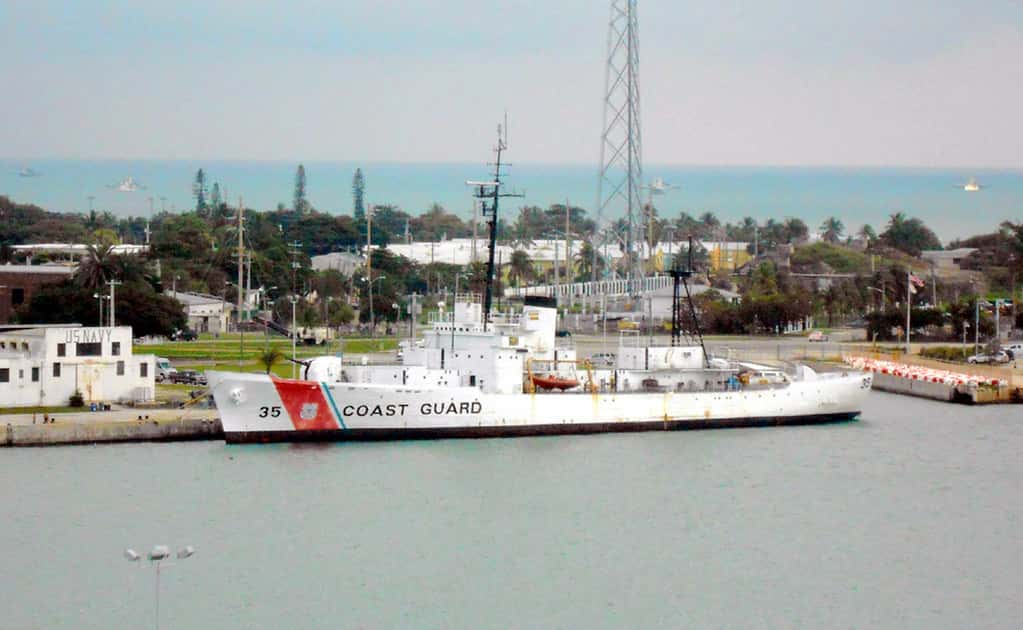
U.S. Customs and Border Protection Air and Marine Operations and the U.S. Coast Guard stopped a 27-foot smuggling vessel near Angelfish Creek off Key Largo on September 15, apprehending 23 people aboard, including 13 Chinese nationals. Those taken into custody were transferred to the Coast Guard Cutter Pablo Valent for processing, and the vessel was seized.
It was not an isolated case. Enforcement reporting has described multiple interdictions off South Florida involving Chinese nationals in recent months, a pattern that represents a meaningful shift in the composition of maritime migration through the Florida Straits, a corridor historically dominated by Cuban and Haitian voyages.
The interdictions fall under Operation Vigilant Sentry, a standing multiagency effort covering the Florida Straits, the Windward Passage, the Mona Passage and the Caribbean Sea, aimed at preventing unlawful maritime entry to the United States.
How maritime interdiction works
Detection typically begins in the air. CBP Air and Marine Operations flies patrol aircraft over the approaches to South Florida, and maritime patrol assets identify vessels whose size, configuration, loading or behavior is inconsistent with recreational or commercial traffic.
Once a vessel of interest is identified, surface assets from the Coast Guard, CBP or partner agencies intercept it. The Coast Guard has law enforcement authority on the high seas that other federal agencies do not, which is why cutters take custody.
People interdicted at sea are processed aboard the cutter, where their identity is established and they receive food, water, shelter and basic medical attention. Disposition follows: repatriation to the country of departure or origin, transfer to another agency, or in limited circumstances, entry into a protection screening process.
Vessels used in smuggling operations are seized, which removes the asset from the smuggling network and is one of the more effective disruption tools available.
Why the routes are changing
Maritime migration through the Florida Straits has historically been driven by conditions in Cuba and Haiti, the two countries closest to the Keys and the two with the longest histories of maritime departure to Florida.
The appearance of Chinese nationals on smuggling vessels off South Florida reflects a different dynamic, one involving organized smuggling networks moving people across multiple continents rather than proximity-driven departures.
Those networks route clients through intermediate countries before the final maritime leg, which is why the boats depart from the Bahamas or other nearby jurisdictions rather than from the migrants' countries of origin.
Enforcement pressure on land routes tends to push volume toward maritime routes, and vice versa. The composition of what the Coast Guard intercepts is therefore partly a function of where enforcement is concentrated elsewhere.
The Keys are the pressure point
Monroe County's geography makes it unusually exposed. The Florida Keys extend more than 100 miles into the Straits, with hundreds of small islands, shallow flats and creek systems that are difficult to patrol comprehensively.
Angelfish Creek, where the September 15 interdiction occurred, is a narrow passage through the upper Keys connecting Biscayne Bay to the Atlantic, the kind of feature that smuggling operations favor because it offers shelter and reduced visibility.
Monroe County's own law enforcement and emergency services are frequently the first responders to landings, a burden on a small county's resources that has been a persistent issue for local officials.
Landings that occur rather than being interdicted at sea produce a different legal outcome than interdiction, which is a significant part of why smuggling operations attempt to reach shore.
The safety dimension
The vessels used are frequently unsuitable for the crossing. Overloaded small boats operating at night without adequate navigation equipment or safety gear in open water present severe risk, and fatal incidents in the Straits are a recurring occurrence.
A 27-foot vessel carrying 23 people is substantially overloaded by any reasonable standard. Boats of that size are typically rated for a fraction of that number.
Coast Guard crews in the Seventh District, which covers Florida and the surrounding waters, conduct search and rescue alongside interdiction, and the two missions frequently overlap when a smuggling vessel gets into trouble.
The weather window matters. Late summer and fall bring tropical systems to the basin, and smuggling operations do not reliably account for marine forecasts.
Where Florida's diaspora politics intersect
South Florida has the largest Cuban American community in the United States and substantial Haitian, Venezuelan and Nicaraguan populations, which makes maritime migration policy a matter of immediate community interest rather than abstract federal policy.
Repatriation of Cuban nationals is a particularly sensitive subject in Miami-Dade, where families have direct experience with the policies that have governed Cuban maritime arrivals over six decades.
Haitian maritime migration has driven separate policy debates, shaped by conditions in Haiti and by the legal frameworks governing protection claims.
Those community dynamics feed directly into Florida's electoral politics, and immigration features prominently in the November 3 races including the governor's contest and the U.S. Senate special election.
The resource question
The Coast Guard operates across a wide mission set including search and rescue, drug interdiction, port security, environmental response and fisheries enforcement, and cutter time spent on migrant interdiction is cutter time unavailable for other missions.
The Seventh District covers an enormous operational area with a finite number of cutters and aircraft, and asset availability is the binding constraint on interdiction capacity.
Florida hosts significant Coast Guard infrastructure including stations across the Keys and along both coasts, and the service is a meaningful employer in several Florida communities.
Federal funding for Coast Guard operations runs through the same appropriations process currently operating under a continuing resolution that expires December 11.
What it means for Floridians
For Keys residents and mariners, the most direct effect is encountering enforcement activity in local waters and, occasionally, encountering distressed vessels. The Coast Guard asks mariners who spot an overloaded vessel to report it rather than to attempt assistance directly.
For Monroe County government, landings and rescues impose costs on emergency services that are not fully reimbursed by federal sources.
For South Florida's immigrant communities, maritime interdiction policy has direct family consequences and shapes community relationships with federal agencies.
For the broader state, maritime enforcement is one component of an immigration enforcement environment that has expanded substantially in Florida over the past two years.
The legal framework at sea
Interdiction on the high seas operates under a legal framework distinct from immigration enforcement on land, and the difference matters enormously to the people involved. A person who reaches United States soil is generally entitled to seek asylum under domestic immigration law and to have that claim adjudicated through an established process with rights to counsel and to appeal.
A person interdicted at sea before reaching shore is in a different posture. The Supreme Court has held that the protections of domestic immigration statutes do not extend to interdictions in international waters, which gives the executive branch substantially broader discretion over disposition, including direct repatriation to the country of departure.
The Coast Guard does conduct protection screening in certain circumstances, and individuals who articulate a fear of return may be referred for further interview, but the process aboard a cutter differs markedly from the one available to someone who has landed. That asymmetry is why reaching shore, rather than simply reaching American waters, is the objective smuggling operations organize around.
It is also why the physical geography of the Keys matters so much operationally. The distance between an interdiction and a landing can be a matter of a few hundred yards of water, and the legal consequences on either side of that line are entirely different.
What Monroe County absorbs
Monroe County has roughly 82,000 permanent residents spread across a chain of islands connected by a single highway, and its public safety infrastructure was sized for that population rather than for a federal enforcement mission. When a vessel lands rather than being interdicted, the immediate response falls to county sheriff's deputies, fire rescue and emergency medical services before any federal agency arrives.
Those responses carry costs that the county has consistently argued are a federal responsibility. Medical transport from the lower Keys to a hospital, for instance, can involve air ambulance service, and the county has periodically sought reimbursement for expenses incurred responding to maritime arrivals.
The county also handles the practical consequences of abandoned vessels. Boats used in crossings are frequently left where they ground, becoming navigational hazards and environmental problems in shallow waters that include protected seagrass beds and coral habitat within the Florida Keys National Marine Sanctuary.
Removing a grounded vessel from a seagrass flat is expensive and technically difficult, and the damage from a grounding can persist for years because seagrass recovers slowly. The sanctuary and the Florida Fish and Wildlife Conservation Commission both have roles in that process, adding further agencies to an already crowded jurisdictional picture.
What's next
Operation Vigilant Sentry continues as a standing multiagency effort, and interdiction volumes will respond to conditions in departure countries and to enforcement pressure on alternative routes.
The shift toward Chinese nationals in the interdiction numbers will bear watching, because it indicates smuggling networks with global reach operating in waters historically used for regional departures.
Coast Guard asset availability and funding will shape the service's capacity to sustain current patrol levels.
For the Keys, the practical situation is unchanged: a long, exposed chain of islands close to international waters, patrolled by a service with finite resources and a wide portfolio of other obligations.
Spotted an issue with this article?
Have something to say about this story?
Write a letter to the editor