Everglades Restoration Delivers Record Freshwater Flows Even as Drought Grips South Florida
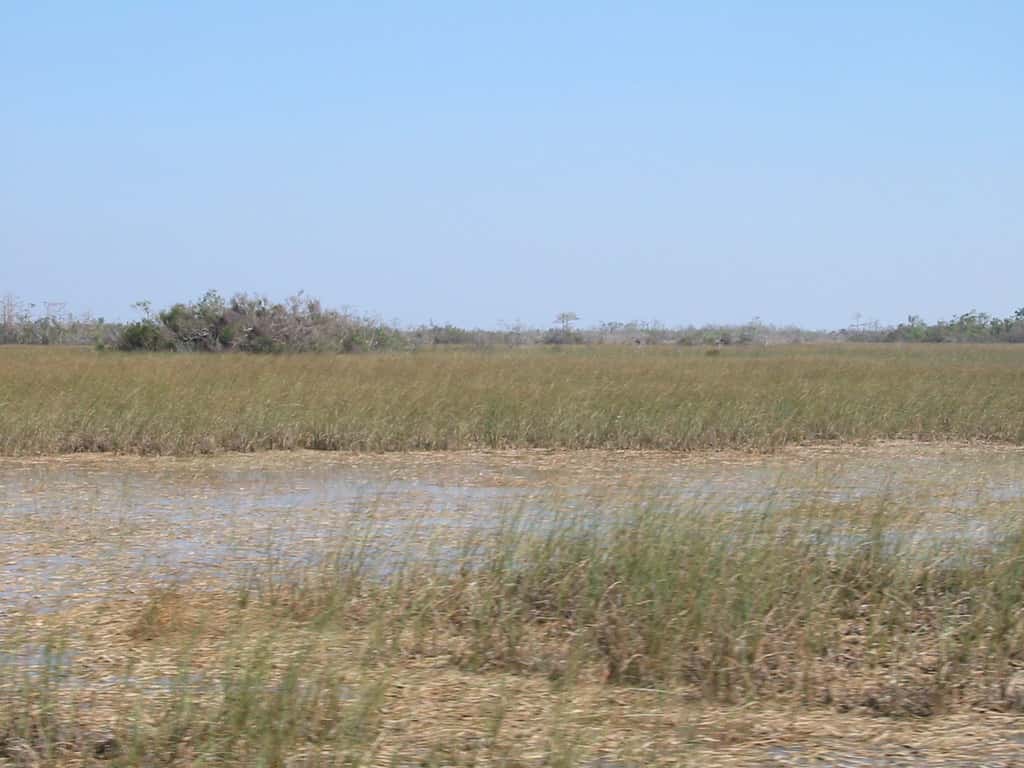
South Florida is enduring a drought more severe than the one it faced in 2015, and yet substantially more freshwater is reaching the Everglades than it did during that earlier dry period. From January through July of this year, roughly 24.1 billion gallons of water flowed beneath the Tamiami Trail into Shark River Slough, compared with about 2.2 billion gallons during the same window in 2015. That is roughly eleven times the volume under worse hydrologic conditions.
The difference is infrastructure. Bridges and culverts built into the Tamiami Trail over the past decade removed a physical barrier that had functioned for most of a century as a dam across the middle of the Everglades, and operational changes in how the regional water management system is run have allowed managers to move water south when it is available rather than discharging it east and west.
The South Florida Water Management District released the figures as part of its 2026 South Florida Environmental Report, an annual accounting of restoration progress and water quality across the region. The report arrives at the same time that the National Academies is completing the eleventh biennial independent scientific review of the restoration program.
Why Tamiami Trail was the problem
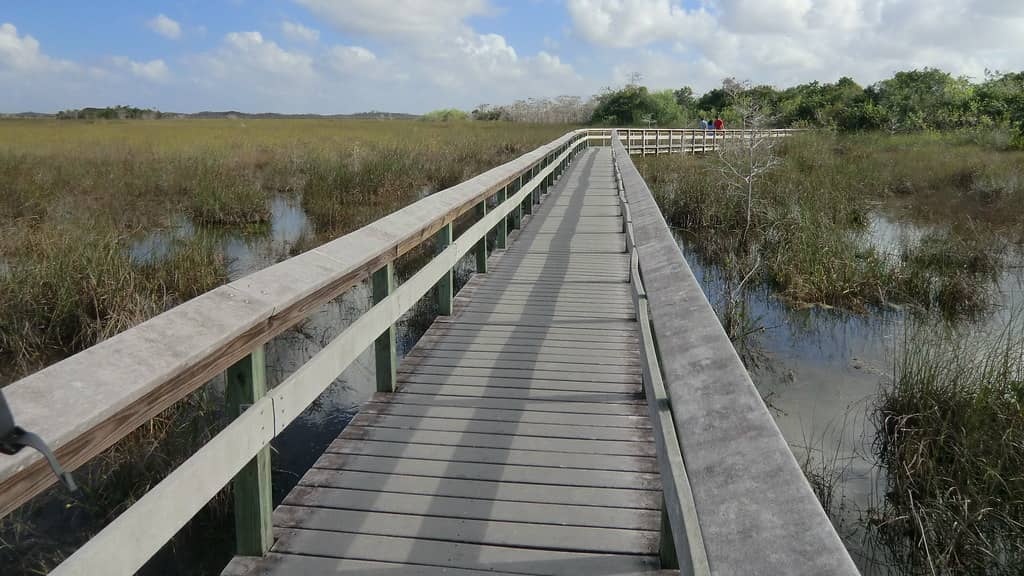
The Everglades functions as a river, not a swamp. Before drainage, water moved slowly south from Lake Okeechobee across a shallow, nearly flat landscape in a sheet tens of miles wide, eventually reaching Florida Bay. The system's plants, fish, wading birds and estuaries all evolved around that continuous flow and its seasonal rhythm.
The Tamiami Trail, completed in 1928 as the first road across the southern peninsula, was built as a berm. It cut the sheet flow perpendicular to its direction of travel, holding water back on the north side and starving Everglades National Park and Florida Bay on the south side. Generations of restoration planning identified that single feature as one of the most consequential blockages in the entire system.
The fix required bridging sections of the road so water could pass underneath rather than being held behind it. That work has been completed in stages, including a one-mile bridge and a subsequent 2.6-mile span, alongside roadbed raising to allow higher water levels upstream without flooding the highway.
The current flow figures are the measurable payoff. Water moving under the Trail is water reaching Shark River Slough, the main channel through Everglades National Park, and ultimately Florida Bay at the southern end of the system.
Florida Bay is responding
Florida Bay sits at the terminus of the system, a shallow estuary between the mainland and the Keys. It depends on a steady supply of freshwater to maintain the brackish salinity that its seagrass beds require. When freshwater delivery fails, the bay becomes hypersaline, seagrass dies, and the die-off can trigger algae blooms and fish kills that take years to recover from.
Major seagrass die-offs in Florida Bay in the 1980s and again in 2015 were directly linked to hypersalinity during drought. The 2015 event killed tens of thousands of acres of seagrass and produced a cascade of water quality problems that affected the Keys fishery.
The district reports that Florida Bay has reached salinity targets for the first time in decades, an outcome it attributes to the increased freshwater delivery combined with expanded water storage capacity upstream. Restoration investments have tripled water storage capacity in South Florida, which gives managers the ability to hold water during the wet season and release it during the dry one.
That storage capacity is what makes the drought comparison meaningful. In 2015, a dry year meant there was simply no water to send south. In 2026, a drier year still produced substantial deliveries because water captured earlier was available to release.
The EAA Reservoir is the next big piece
The largest remaining component of the restoration plan is the Everglades Agricultural Area Reservoir, a storage and treatment project south of Lake Okeechobee designed to capture water that would otherwise be discharged to the coastal estuaries, clean it through stormwater treatment areas, and send it south into the Everglades.
The project is expected to be completed in 2029. Governor Ron DeSantis marked a milestone this year with the full execution of accelerated construction contracts for the reservoir, a step intended to compress the build timeline. The governor's proposed budget included an additional $1.4 billion for Everglades and water resources work, bringing the cumulative state investment to roughly $9.5 billion.
The reservoir addresses two problems at once. Sending water south reduces the harmful discharges to the St. Lucie and Caloosahatchee estuaries that have driven toxic algae events on both coasts, and it increases the supply available for the Everglades and Florida Bay.
It also supports South Florida's drinking water. The Biscayne Aquifer, which supplies most of the region's municipal water, is recharged by surface water in the Everglades system, and keeping water levels up in the wetlands helps hold back saltwater intrusion into coastal wellfields.
What the scientists are reviewing
The National Academies conducts an independent review of Everglades restoration progress every two years at congressional direction, and the eleventh such review is being completed this month. Those reviews have historically been candid about where the program is succeeding and where schedules have slipped.
Recurring themes in prior reviews include the pace of construction relative to the original plan, the adequacy of water quality treatment to meet phosphorus standards, and the question of whether restoration targets set decades ago remain achievable under changed climate conditions.
Sea level rise is the newest complication. The restoration program was designed against a set of assumptions about the elevation of the coastline, and rising seas change the hydraulic gradient that drives water south. A system designed to push freshwater toward a fixed shoreline behaves differently when that shoreline is moving inland.
Scientists have also raised questions about whether the volume targets in the original plan are sufficient given warmer temperatures and higher evapotranspiration rates, which remove more water from the system before it reaches the southern Everglades.
Twenty-five years in
The Comprehensive Everglades Restoration Plan was authorized by Congress in 2000 as a partnership between the federal government and the state of Florida, with costs split roughly evenly. It was projected at the time to take about three decades and cost around $8 billion. Both the timeline and the cost have grown substantially.
Florida has generally moved faster than the federal side, funding and building state components ahead of matching federal appropriations in several cases. That has produced a program where state-built projects sometimes wait on federal components to become fully functional.
The program is now the largest ecosystem restoration effort in the world by cost, and its scale means it functions as a test case for whether a heavily engineered landscape can be partially re-engineered back toward natural function.
The flow numbers reported this year are among the clearer pieces of evidence that the answer is at least partly yes, though the program remains years from completion and the hardest components are still ahead.
What it means for Floridians
For South Florida residents, the most direct benefit is water supply. Roughly nine million people draw drinking water from aquifers recharged by the Everglades system, and holding water in the wetlands is the primary defense against saltwater intrusion into coastal wells.
For coastal communities on the Treasure Coast and the Southwest Florida shoreline, the benefit is fewer discharge-driven algae events. Toxic blue-green algae blooms following Lake Okeechobee releases have closed beaches, killed fish and damaged tourism revenue in both regions.
For the Keys and the commercial and recreational fishery, Florida Bay's recovery matters directly. Seagrass beds are the nursery habitat for the species that support the sport fishing economy in Monroe County.
For taxpayers, the program represents a long-term financial commitment across multiple governors and Congresses, funded through state appropriations, federal appropriations and local district revenues.
Water quality remains the harder half
Moving water south is one problem. Moving clean water south is a separate and considerably more difficult one, because the water available to send is largely agricultural and urban runoff carrying phosphorus loads well above what the Everglades ecosystem evolved to handle. The native sawgrass system is adapted to extraordinarily low nutrient levels, and even modest phosphorus enrichment converts sawgrass marsh into cattail monoculture, which supports far less wildlife and changes the hydrology of the marsh itself.
Florida addresses this through stormwater treatment areas, constructed wetlands totaling tens of thousands of acres that use plants and soil chemistry to strip phosphorus out of water before it enters the protected marsh. These treatment areas are among the largest engineered wetlands in the world, and their performance has improved substantially over the past two decades as operators have learned how to manage vegetation and flow rates within them.
The legally binding standard is stringent, and meeting it consistently across all inflow points has been the subject of long-running federal litigation. Treatment areas perform best when they receive steady, moderate flows, and worst when they receive sudden large pulses, which is precisely what happens during heavy wet-season discharges from Lake Okeechobee.
That tension between volume and quality is why additional storage matters so much. Water held in a reservoir can be metered through treatment areas at rates the wetlands can actually process, rather than surged through in quantities that overwhelm them. The EAA Reservoir is designed around exactly that function, pairing storage with treatment capacity.
What's next
Construction on the EAA Reservoir continues toward the 2029 completion target, with the accelerated contracts intended to hold or improve that schedule. Additional components of the restoration plan remain in design and construction across the system.
The findings of the National Academies biennial review will be published and will shape federal appropriations discussions, particularly around whether the program's pace and targets require adjustment.
Drought conditions in South Florida will determine how much water is available to move south through the remainder of the dry season, and managers will be watching Florida Bay salinity closely through the winter and spring.
State funding for the coming fiscal year will be set by the Legislature during its regular session beginning March 2, 2027, and Everglades appropriations have historically drawn bipartisan support in Tallahassee regardless of which party holds the governor's office.
Spotted an issue with this article?
Have something to say about this story?
Write a letter to the editor