Ashley Moody Says Florida Has Now Recovered More Than $2.5 Billion in Delayed FEMA Reimbursements for 500-Plus Disaster Projects
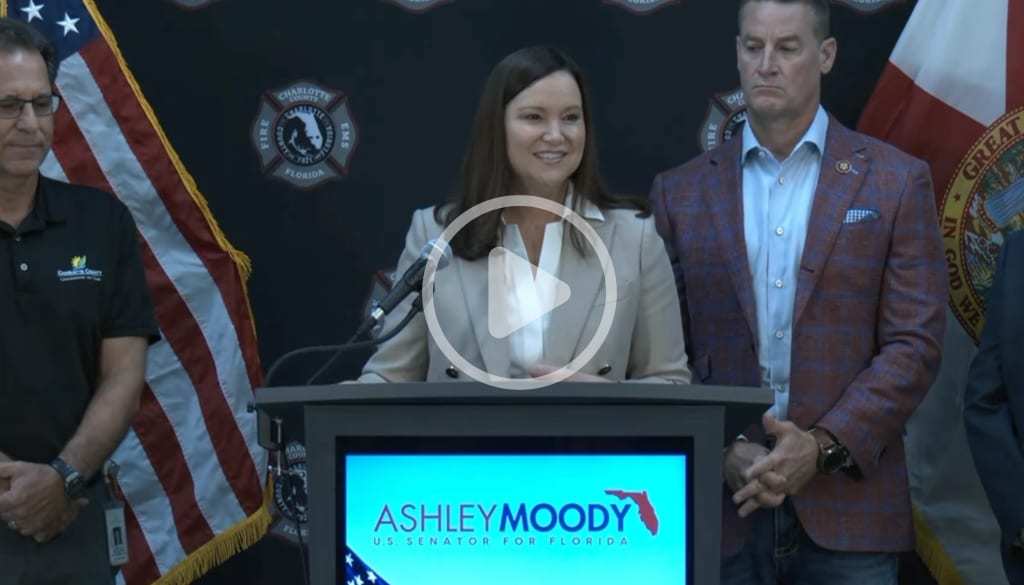
U.S. Sen. Ashley Moody says Florida has now received more than $2.5 billion in long-delayed Federal Emergency Management Agency reimbursements for past disasters, covering more than 500 recovery projects, with some of the money going back to storms as far back as 2017.
The Plant City Republican announced the milestone Monday, Nov. 9, in a release from her Senate office, describing the money as FEMA Public Assistance funding to be paid to the state and local governments. The announcement comes as Florida is still waiting on federal decisions about aid for this fall's flooding and continues to recover from Hurricane Isaias in the Panhandle.
What was announced
According to Moody's office, the more than $2.5 billion will flow to the state and to local communities for disaster recovery work. The release lists four broad categories of reimbursed projects: repairs to educational facilities, restoration of critical infrastructure, debris removal, and costs local governments incurred during emergencies to protect life and property.
"These are funds that communities have been waiting on for years, and something I began working on for Floridians as soon as I was appointed to the Senate," Moody said in the release. "Our work is not done."
The November release does not break the total down by county, by disaster or by project, and it does not say how much of the $2.5 billion is newly approved since her last update. It also describes the money as funding Moody "secured," though the reimbursements are approved and paid by FEMA under its Public Assistance program, which repays state and local governments for eligible disaster costs after they submit and document claims.
A running total that has grown all year
The $2.5 billion figure is the latest step in a cumulative tally Moody's office has updated through 2026. Each announcement has added to the previous total rather than describing a separate pot of money.
| Date | Total announced | Notes |
|---|---|---|
| May 18, 2026 | More than $1.5 billion | FEMA total put at $1,563,897,520 |
| June 2026 | $1.7 billion | Announced as Moody pressed a FEMA nominee |
| July 8, 2026 | More than $1.8 billion | Billed as nearly $2 billion in total funds |
| Nov. 9, 2026 | More than $2.5 billion | More than 500 projects |
That puts the increase since early July at roughly $700 million, based on the figures in Moody's own releases.
Where earlier money went
Earlier releases named specific projects, giving a sense of what the reimbursements pay for. The May announcement listed $17.2 million for countywide debris removal in Sarasota County, $6.6 million for citywide debris removal in Tallahassee, $4.1 million for Brevard County dune engineering, $4.1 million for Clearwater beach walkways and seawalls, $2.2 million for Dunedin marina seawall projects, $721,822 for power restoration in Columbia County, $617,987 for Madeira Beach parking lot repairs, $617,068 for repairs to the Lynn Haven wastewater plant and $167,955 for Seminole County roads and stormwater work.
In July, Moody announced more than $64 million for 28 projects in Charlotte County, covering waterways, roads, traffic signals, debris removal and the Port of Charlotte after Hurricanes Debby, Helene, Milton, Idalia and Ian. She also announced more than $57 million for Lee County and more than $4.2 million for Collier County at that time.
Local officials have described long waits. When Moody visited Bartow in May to announce $5.3 million for that city's power and electrical system repairs, City Manager Mike Herr told FOX 13 the city had been waiting "18 months, maybe longer."
The TRACK Act
Moody's office also pointed again to the TRACK Act, short for the Transparency in Recovery Assistance and Claims Knowledge Act, which she introduced and which has been signed into law. It requires FEMA to post a status tracker on its website so disaster victims and local governments can follow the progress of their claims. FOX 13 reported in May that the law also sets deadlines for the agency to release information on where funds are going. It applies nationwide, not only to Florida.
Separate from the new flooding and Isaias requests
The $2.5 billion is reimbursement for older disasters and is not tied to the requests Florida has made this fall.
On the Panhandle, President Donald Trump approved FEMA Public Assistance for 15 counties hit by Hurricane Isaias, which made landfall in Destin as a Category 2 storm on Oct. 9, and later approved Individual Assistance for residents of Bay, Escambia, Gulf, Holmes, Okaloosa, Santa Rosa, Walton and Washington counties, the Florida Phoenix reported. The DeSantis administration had requested $237 million in public assistance for that storm; the federal approval did not specify an amount. Moody's release says she has visited communities struck by Isaias and led nearly all of the Florida congressional delegation in urging the president to approve the state's disaster declaration.
Farther south and east, heavy rain in early November flooded parts of Brevard County and other counties, and Gov. Ron DeSantis declared a state of emergency. Florida's Division of Emergency Management submitted a request for a major disaster declaration on Monday at DeSantis' direction, Florida Politics reported, a request the federal government must approve. U.S. Rep. Mike Haridopolos of Indian Harbour Beach said he is urging FEMA to move quickly on requests from his coastal district.
What it means for Floridians
For cities, counties and school districts, Public Assistance reimbursements replace money they spent up front on cleanup, emergency response and repairs, often from reserves or borrowing. Delays can leave local budgets stretched for years, especially in places hit by several storms in a row, such as Southwest Florida after Ian, Idalia, Debby, Helene and Milton.
Homeowners are not directly paid through this program. Individual Assistance, the separate FEMA program for residents, is what was approved for the eight Isaias counties, and residents there are told to file with their insurers before applying for federal help.
What's next
Moody's office said the money will be disbursed to the state and local communities, and that she will keep pressing for remaining claims. The pending major disaster declaration for the fall flooding is the next decision Florida is waiting on from Washington, and the TRACK Act's online tracker is meant to let local governments follow their claims as they move through FEMA.
Spotted an issue with this article?
Have something to say about this story?
Write us a letterComments
No comments yet. Be the first to weigh in.
Related Coverage
Trump Says Immigration Enforcement 'Might Be Too Tough' in First Interview Since Midterms, Putting Florida's Crackdown in the Spotlight
17h ago
IRS Sets 2027 Tax Brackets: Standard Deduction Rises to $33,200 for Couples, Child Tax Credit to $2,300. Here's What It Means for Floridians
20h ago
ICE Operation at Palatka Primary School Construction Site Leaves Workers Detained and a Putnam County Community Shaken
21h ago
Students at Florida universities protest campus police partnerships with ICE as FIU free speech fight continues
1d ago