Attorney General James Uthmeier Declares Florida's 2018 Bump Stock Ban Unconstitutional, Won't Defend Convictions
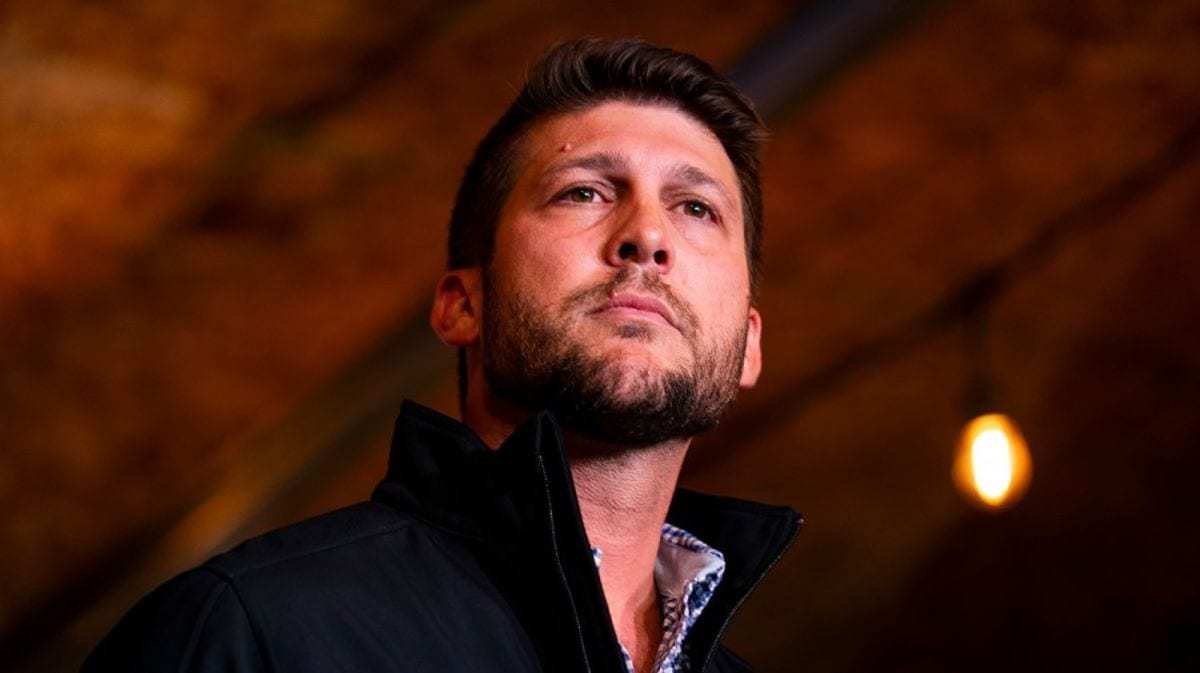
Florida Attorney General James Uthmeier on Friday declared the state's 2018 ban on bump-fire stocks unconstitutional, issuing a legal opinion that concludes the law violates the Second Amendment and announcing that his office will no longer defend convictions under it. The opinion targets a provision of the gun safety law Florida passed after the 2018 mass shooting at Marjory Stoneman Douglas High School in Parkland.
The opinion goes further than a refusal to defend the law in court. Uthmeier concluded that executive branch officials cannot lawfully enforce the ban, according to Florida Politics. The move came shortly after voters elected Uthmeier to the office this month, WKMG News 6 reported.
What Uthmeier said
In a social media post announcing the opinion, Uthmeier said people are being arrested and prosecuted under the 2018 law. He wrote that the "overly broad law" appears to restrict trigger enhancements that gun owners use for lawful purposes, "subjecting them to five years in prison." He said his office "will not defend a conviction" under the statute going forward.
The attorney general's office represents the state when criminal convictions are appealed, so the decision means the state's chief legal officer will not argue to uphold a bump stock conviction if a defendant challenges it on appeal.
The 2018 law
Then-Gov. Rick Scott signed the bump stock ban, Section 790.222 of Florida Statutes, as part of the Marjory Stoneman Douglas High School Public Safety Act, passed weeks after a gunman killed 17 people at the Parkland school on Feb. 14, 2018. The same law raised the minimum age to buy any firearm in Florida from 18 to 21.
The ban covers any conversion kit, tool, accessory or device used to make a firearm mimic automatic fire or to increase its rate of fire. Violations are a third-degree felony, punishable by up to five years in prison.
Bump stocks use a gun's recoil energy to rapidly and repeatedly bump the trigger against the shooter's finger, allowing a semiautomatic rifle to fire dozens of rounds in seconds. They drew national attention after the October 2017 Las Vegas massacre, in which the gunman used bump stocks, months before the Parkland shooting.
The opinion recalls Scott's remark at the signing that everyone must give a little and compromise. It responds that "The Constitution, however, brooks little compromise" when it comes to fundamental rights.
The legal reasoning
Uthmeier applied the test the U.S. Supreme Court set out in its 2022 Bruen decision, which asks first whether the Second Amendment's text covers the conduct and then whether a regulation fits the nation's historical tradition of firearm regulation. He concluded that bump stocks are "arms" covered by the amendment's plain text, which shifts the burden to the state to show a historical tradition of similar bans. He said he found none, pointing to 19th-century lever-action and revolving firearms that increased rates of fire, and noting that until 1986 federal law allowed civilians to lawfully acquire registered automatic weapons.
The opinion also cites United States v. Miller, in which the Supreme Court recognized that the Second Amendment protects equipment useful to a firearm's operation, WFLA reported. And it says bump stocks are widely used for lawful purposes and that their development was spurred by an effort to help disabled Americans.
Uthmeier rejected the argument that bump stocks are "dangerous and unusual," a category the courts have said can be banned. The opinion cites a federal Bureau of Alcohol, Tobacco, Firearms and Explosives estimate that more than half a million bump stocks are in private circulation and notes they are designed for common platforms such as the AR-15.
It also leans on the Supreme Court's 2024 ruling in Garland v. Cargill, which held that a rifle fitted with a bump stock fires only one shot per function of the trigger and is therefore not a machine gun under federal law. That decision struck down a federal rule, adopted after the Las Vegas shooting, that had classified bump stocks as machine guns. Uthmeier added that the state could still regulate devices that truly convert semiautomatic firearms into machine guns.
Cargill, however, interpreted a federal statute, not the Second Amendment, and did not affect state bans such as Florida's, Florida Politics noted.
What the opinion does and does not do
Attorney general opinions in Florida are advisory and do not bind the courts. Section 790.222 remains on the books unless the Legislature repeals it or a court strikes it down. Lawmakers have declined to do so: a repeal effort in 2025 died in committee, as did a repeal bill in 2026.
Florida's elected state attorneys, who prosecute most crimes at the trial level, are not bound by the opinion, so arrests and charges under the law remain possible. What changes is that the state will not defend those convictions once they reach the appeals stage.
Supporters of the ban
Supporters of the law argue rate-of-fire devices pose heightened public safety risks, pointing to the 2017 Las Vegas shooting, the deadliest mass shooting in modern U.S. history, in which the gunman used bump stocks. Gun rights publications, meanwhile, welcomed the opinion after it was released Friday.
A pattern for Uthmeier
The bump stock opinion is the latest in a series of moves by Uthmeier against parts of Florida's gun laws and other statutes he considers unconstitutional. In 2025, he said his office would not defend the 2018 law's age-21 requirement for buying rifles and shotguns at the U.S. Supreme Court, after the full 11th U.S. Circuit Court of Appeals upheld it 8-4. His office then filed a brief urging the justices to take up the National Rifle Association's challenge and find the law unconstitutional.
Later that year, after Florida's 1st District Court of Appeal struck down the state's ban on openly carrying firearms in McDaniels v. State, Uthmeier declined to appeal the ruling. And earlier this year, on Martin Luther King Jr. Day, he issued an opinion saying his office would not enforce 80 state laws he described as race-based, WKMG reported.
What's next
The opinion sets up a test for courts and lawmakers. Defendants already convicted under the ban may cite it in appeals, and judges will decide whether to strike the statute down without the state defending it. The Legislature, which convenes for its 2027 session in the spring, could also take up repeal again after the attempts in 2025 and 2026 failed. Until one of those things happens, the 2018 bump stock ban remains Florida law.
Spotted an issue with this article?
Have something to say about this story?
Write us a letterComments
No comments yet. Be the first to weigh in.
Related Coverage

Judge Orders Tampa to Turn Over 38 Records in SoHo Business Alliance Lawsuit Over South Howard Flood Project
1d ago
Death Row Pastor Asks Byron Donalds for Six-Month Execution Pause as Florida Matches Its Record Pace
1d ago
Uthmeier Subpoenas Democratic Socialists of America Over Alleged Foreign Money, Citing Cuba and China
2d ago

Hillsborough Sets Speed Limits, $50 to $500 Fines for E-Bikes and Bicycles on Sidewalks, Trails and Roads as Crashes Rise
2d ago