Blue-Green Algae Caution at Lake Okeechobee as Wet Season Discharges Continue
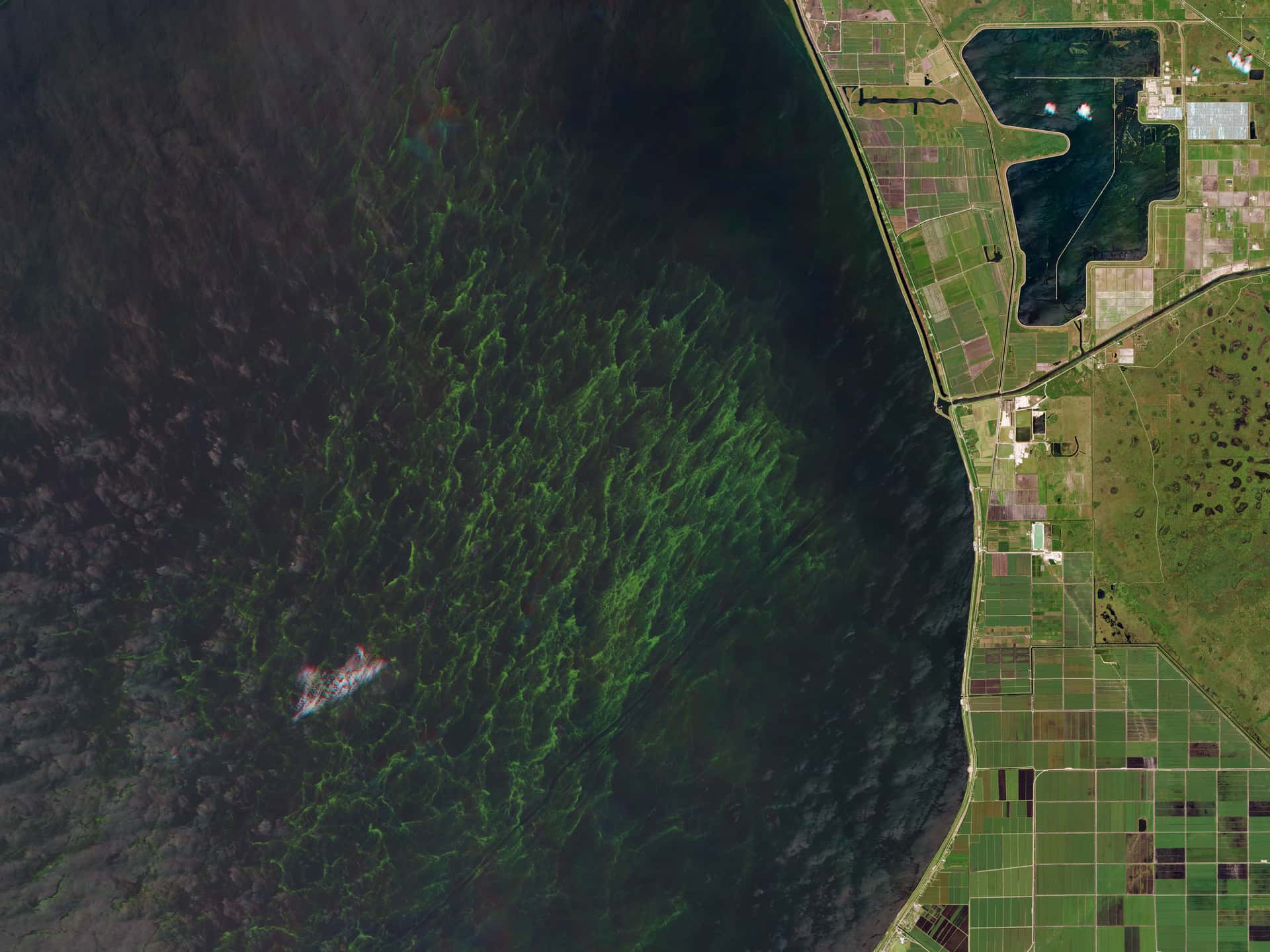
The Florida Department of Health in Palm Beach County has cautioned the public about the presence of blue-green algae at Lake Okeechobee, with water sample testing underway to determine whether the bloom is producing toxins. The advisory arrives in the middle of Florida's wet season, when rainfall raises lake levels and the United States Army Corps of Engineers manages releases through the structures that connect the lake to the St. Lucie Estuary on the east coast and the Caloosahatchee River on the west.
Blue-green algae, more precisely cyanobacteria, occur naturally in Florida fresh water. Under the right combination of warmth, sunlight, calm water, and nutrient availability, populations can multiply rapidly into visible surface blooms. Some cyanobacteria produce toxins, including microcystin, that pose health risks to people and animals through contact, inhalation of aerosols, or ingestion.
Because toxin production is not uniform across blooms or across time, health advisories are typically issued as a caution pending laboratory results rather than as a confirmation of toxicity. Residents are advised to avoid contact with water where algae is visible, keep pets and livestock away, and not consume fish taken from areas with active blooms.
Why Lake Okeechobee sits at the center
Lake Okeechobee is the second largest freshwater lake entirely within the continental United States and functions as the hydrologic heart of South Florida. Historically the lake overflowed its southern rim during high water, sending a broad sheet of water south through the Everglades to Florida Bay.
That natural flow was interrupted by the Herbert Hoover Dike and the network of canals, levees, and water control structures built after devastating hurricane flooding in 1926 and 1928. The engineered system protects the communities around the lake and the agricultural area to its south, but it also means that when the lake rises, the water must be sent somewhere, and the available outlets run east and west rather than south.
Those outlets are the St. Lucie Canal toward Stuart and the Indian River Lagoon, and the Caloosahatchee River toward Fort Myers and San Carlos Bay. Both are estuaries, meaning brackish systems where fresh and salt water mix. Large volumes of fresh water lower salinity, carry nutrients, and can trigger or worsen algal blooms in receiving waters.
Lake level management therefore involves an unavoidable trade-off between flood risk to the communities around the lake, water supply for agriculture and municipalities, ecological health of the lake itself, and the condition of the two estuaries.
The nutrient problem
Blooms require nutrients, principally phosphorus and nitrogen. In the Lake Okeechobee watershed, those nutrients arrive from agricultural runoff, stormwater from developed areas, septic systems, and from decades of accumulated phosphorus bound in lake bottom sediment that can be resuspended by wind and wave action.
Florida has invested substantially in reducing nutrient loading through best management practices for agriculture, stormwater treatment areas, and water quality projects across the watershed. Progress has been real but incremental, and the legacy phosphorus in lake sediment means that even perfect control of new inputs would not eliminate blooms quickly.
Environmental groups working on the estuaries, including organizations based on both the Treasure Coast and the Southwest Florida coast, have consistently argued that nutrient-laden discharges during the wet season exacerbate harmful algal blooms of increasing scope and frequency in the receiving estuaries.
The South Florida Water Management District has said it is taking actions intended to shorten the duration of discharges, and the Army Corps periodically adjusts release rates in response to lake stage, weather forecasts, and estuary conditions.
What the health guidance says
The practical guidance during a blue-green algae advisory is direct. Do not swim, wade, or use personal watercraft in water where algae is visible or where an advisory has been posted. Keep pets and livestock away from the water and do not let them drink it; dogs are particularly vulnerable because they drink while swimming and groom algae from their coats afterward.
Do not eat fish or shellfish taken from waters with an active bloom. If fish are caught elsewhere in the same water body, rinse fillets with clean water and discard the guts, though health officials generally advise against consuming fish from bloom-affected areas at all.
People who come into contact with bloom water should wash thoroughly with soap and clean water. Symptoms of exposure can include skin rash, eye irritation, respiratory irritation from inhaled aerosols, and gastrointestinal illness. Anyone experiencing significant symptoms should contact a health care provider, and the Florida Poison Information Center network is available for guidance.
What it means for South Florida communities
For residents of the Glades communities around the lake, including Clewiston, Belle Glade, Pahokee, and South Bay, the lake is both a resource and a risk. Recreational fishing on Lake Okeechobee supports local economies, and bloom advisories affect that activity directly.
On the Treasure Coast, Martin and St. Lucie county residents and businesses experience the effects of discharges through the St. Lucie Estuary and Indian River Lagoon. Waterfront property values, marine businesses, tourism, and the lagoon's seagrass and oyster habitat are all sensitive to freshwater and nutrient inputs.
In Southwest Florida, Lee County communities along the Caloosahatchee face parallel effects, with the added complication that Gulf coast waters are also subject to red tide, a separate marine algal phenomenon caused by Karenia brevis. Florida wildlife officials reported that red tide was not observed in statewide samples in recent weekly testing, which is a positive signal for the Gulf coast this summer.
The restoration picture
Everglades restoration projects underway across South Florida are designed in part to address this system. Storage reservoirs north and south of the lake, along with stormwater treatment areas, are intended to capture water that would otherwise be discharged east and west, clean it, and send more of it south toward the Everglades and Florida Bay.
The Everglades Agricultural Area reservoir south of the lake is the largest of those projects and has been under construction for several years. When complete, it is projected to substantially reduce the volume and frequency of damaging estuary discharges.
Separately, the Herbert Hoover Dike rehabilitation completed in recent years gave water managers more flexibility to hold water in the lake at higher levels than the older, more fragile structure permitted. That flexibility has changed the operating schedule and, in principle, reduces the need for precautionary releases.
Blue-green algae versus red tide
Florida experiences two distinct harmful algal phenomena that are frequently confused, and the distinction matters for both risk assessment and response.
Blue-green algae, or cyanobacteria, occur in fresh and brackish water, including Lake Okeechobee, the St. Lucie and Caloosahatchee systems, and inland lakes and canals. They are driven substantially by nutrient loading and warm, calm conditions, and some species produce liver and nerve toxins.
Red tide is caused by Karenia brevis, a marine organism that blooms in Gulf waters and can be carried to the coast by currents and wind. It produces brevetoxins that kill fish and cause respiratory irritation in people onshore. Florida wildlife officials reported that red tide was not observed in statewide samples in recent weekly testing.
The two are monitored by different programs and require different guidance. Blue-green algae advisories concern contact with fresh water. Red tide advisories concern coastal marine conditions and airborne irritation at the beach.
Who manages Florida's water
Water management in South Florida involves an unusual number of agencies with overlapping responsibilities. The United States Army Corps of Engineers operates Lake Okeechobee under a federally adopted regulation schedule that governs when and how much water is released.
The South Florida Water Management District, a state agency governed by an appointed board, operates much of the regional canal and pump infrastructure, holds water quality responsibilities, and partners on restoration projects.
The Florida Department of Environmental Protection sets and enforces water quality standards and operates the algal bloom sampling program. The Florida Department of Health issues public health advisories, generally through county health departments.
The Florida Fish and Wildlife Conservation Commission monitors ecological effects, including fish kills and impacts on manatees and other wildlife. Coordination among these agencies is formalized but complex, and residents frequently find it difficult to identify which agency to contact about a given concern.
Reporting a bloom and finding current data
Residents who observe suspected algal blooms can report them to the Florida Department of Environmental Protection through its public reporting system, which triggers sampling in many cases. Reports from the public are a meaningful component of the state's monitoring coverage.
Current sampling results, advisory locations, and lake conditions are published online. The Department of Environmental Protection maintains an algal bloom dashboard, the Department of Health publishes health advisories by county, and the Army Corps publishes daily lake stage and structure flow data.
For the Gulf coast, red tide status is published weekly by the Florida Fish and Wildlife Conservation Commission based on statewide water sampling, alongside short-term movement forecasts developed with University of South Florida researchers.
Residents planning water recreation should check current conditions rather than relying on the absence of news, since advisories are location-specific and change with sampling results.
What's next
Laboratory results from the water samples collected at Lake Okeechobee will determine whether the current bloom is producing toxins and at what concentration. The Florida Department of Environmental Protection maintains an algal bloom sampling program and publishes results and advisories.
Lake stage and discharge rates are published daily by the Army Corps of Engineers, and residents on both coasts can track releases at the Port Mayaca and Moore Haven structures. Those figures are the leading indicator of estuary conditions in the days that follow.
Wet season conditions typically persist into October, meaning bloom risk and discharge management will remain active issues for the next several months. Residents can report algal blooms to the Florida Department of Environmental Protection through its public reporting system. The Florida Press will continue covering water quality conditions across the state.
Spotted an issue with this article?
Have something to say about this story?
Write a letter to the editor