Brevard Deputies Arrest Driver Accused of Speeding Through Fatal Crash Scene
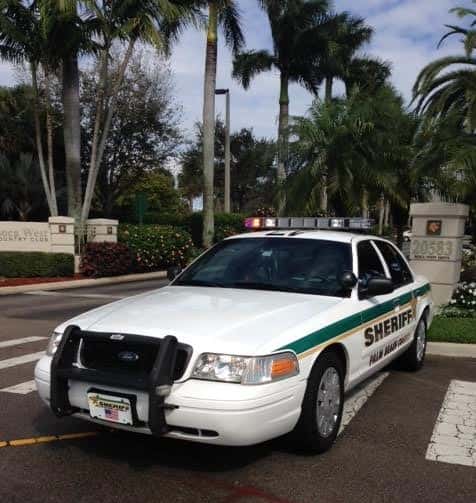
Deputies in Brevard County arrested a driver on driving under the influence charges Tuesday after she allegedly drove around a roadblock protecting an active Florida Highway Patrol traffic homicide investigation, according to information released by the Brevard County Sheriff's Office. The agency identified the driver as Lauren Anderson and said a breath test returned a result more than twice Florida's legal limit.
According to the sheriff's office, deputies were assisting FHP by blocking a roadway while troopers investigated a fatal crash. The agency said a vehicle attempted to maneuver around the closure and continued past deputies who were signaling and calling for the driver to stop. Deputies subsequently stopped the vehicle and conducted a roadside investigation.
Anderson has been accused and charged, not convicted, and is presumed innocent unless proven guilty. The description of events here reflects the account provided by the sheriff's office in its public statement and arrest documentation, which has not been tested in court.
What the sheriff's office described
Deputies in Brevard County were performing traffic control at the perimeter of a crash scene, a routine but hazardous assignment. When a serious or fatal crash occurs on a Florida roadway, FHP's Traffic Homicide Investigation unit takes over the scene, and the road typically stays closed for several hours while investigators document evidence, take measurements, and photograph the roadway.
The sheriff's office said the driver went around the closure. Deputies reported observing signs consistent with impairment during their contact with her, including slurred speech and sluggish responses, according to the agency's account. She was taken into custody and transported for breath testing.
Florida's legal limit for drivers 21 and older is a blood alcohol concentration of 0.08. The agency reported a result more than double that threshold. Under Florida law, a BAC of 0.15 or higher triggers enhanced penalties, including higher fines and a mandatory ignition interlock device upon conviction.
The sheriff's office did not indicate that the driver struck anyone or caused a secondary collision at the scene. The charge relates to the alleged impaired driving and the movement past the closure.
Why crash scene closures matter
Scene security at fatal crashes is not a formality. Traffic homicide investigations require preserving the physical evidence on the roadway, including skid marks, debris fields, fluid trails, and final resting positions of vehicles. A vehicle driving through that area can destroy or alter evidence that determines whether charges are filed and against whom.
The closures also protect the personnel working the scene. Law enforcement officers, firefighters, paramedics, and tow operators working on open roadways face a persistent risk of being struck. Florida's Move Over Law requires drivers approaching stopped emergency, law enforcement, sanitation, utility, or disabled vehicles to move over a lane when possible, or slow to 20 miles per hour below the posted limit when they cannot.
Florida strengthened the Move Over Law in recent years, expanding it to cover any disabled vehicle displaying hazard lights, emergency flares, or warning signs. Violations carry fines and points against a driver's license. Law enforcement agencies across the state conduct periodic enforcement waves to publicize the requirement.
Roadside worker fatalities remain a national concern. Agencies including the Florida Department of Transportation and FHP have run public awareness campaigns pointing out that the workers most exposed are the ones managing the aftermath of someone else's crash.
Florida's DUI enforcement landscape
Florida law treats DUI as a criminal offense, not a traffic infraction. A first conviction carries fines, possible jail time, license revocation, mandatory DUI school, and probation. Penalties escalate sharply with prior convictions, with a fourth offense chargeable as a felony regardless of how much time has passed.
Refusing a lawful breath test in Florida triggers an automatic administrative license suspension under the state's implied consent law, and a second refusal is itself a misdemeanor. Drivers are advised of these consequences at the time of the request.
Agencies across Florida run periodic saturation patrols and checkpoints, particularly around holidays. The Hillsborough County Sheriff's Office reported dozens of DUI arrests during a Fourth of July enforcement operation this summer, one of several such statewide efforts. FHP publishes enforcement totals around major holiday travel periods.
Impaired driving continues to account for a meaningful share of Florida traffic deaths. Florida records well over 3,000 traffic fatalities in a typical year across all causes, a figure that reflects the state's population, its year-round tourism traffic, and its large network of high-speed arterial roads.
Brevard County and the Space Coast context
Brevard County runs along Florida's central Atlantic coast and includes Melbourne, Palm Bay, Titusville, and Cocoa Beach, along with Cape Canaveral Space Force Station and Kennedy Space Center. The county's population has grown substantially over the past decade, driven in part by the expansion of the commercial space sector.
That growth has put pressure on roadways. Corridors including Interstate 95, U.S. 1, and State Road 528 carry heavy commuter and tourist volume, and launch days can add significant traffic to coastal routes as spectators travel to viewing areas.
The Brevard County Sheriff's Office is the county's primary law enforcement agency for unincorporated areas and several contracted municipalities, working alongside city police departments in Melbourne, Palm Bay, Titusville, and elsewhere. FHP handles crash investigation on state roads and highways.
Fatal crash investigations in the county are handled by FHP's traffic homicide investigators, who may take weeks or months to complete a reconstruction. Charging decisions in fatal crashes typically wait for that report and are made by the Office of the State Attorney for the Eighteenth Judicial Circuit.
How Florida measures impairment
Florida law provides two routes to a driving under the influence conviction. The first is proof that a driver's normal faculties were impaired by alcohol or a controlled substance. The second is proof of a blood alcohol concentration of 0.08 or above, regardless of observable impairment.
Breath testing in Florida uses instruments approved and regulated by the Florida Department of Law Enforcement, which sets maintenance, inspection, and operator certification requirements. Compliance with those requirements is a routine subject of pretrial litigation, because results obtained on an instrument outside its inspection cycle can be challenged.
Field sobriety exercises, including the horizontal gaze nystagmus test, the walk-and-turn, and the one-leg stand, are standardized under National Highway Traffic Safety Administration protocols. Officers must administer them as trained for the results to carry evidentiary weight.
Blood draws are permitted in limited circumstances under Florida law, generally where a driver is incapable of consenting or where a crash caused serious bodily injury or death. Warrantless blood draws have been substantially limited by U.S. Supreme Court decisions requiring a warrant absent exigent circumstances.
Traffic homicide investigation in Florida
The Florida Highway Patrol maintains specialized traffic homicide investigators who handle fatal and serious injury crashes on state roads. Their work involves crash reconstruction, a technical discipline that uses physical evidence to determine speeds, points of impact, and vehicle dynamics.
Investigators document the scene through measurement, photography, and increasingly through three-dimensional scanning equipment that captures the roadway geometry precisely. That documentation is why extended closures are necessary and why scene integrity matters so much.
Modern vehicles also carry event data recorders that capture speed, braking, throttle position, and seatbelt status in the seconds before a collision. Downloading that data requires specialized equipment and, in many circumstances, a warrant.
Reconstruction reports frequently take weeks or months to complete. Charging decisions in fatal crashes wait for that analysis, which is why a fatal crash may not produce charges for a substantial period after the incident even when impairment is suspected.
Florida's road safety record
Florida consistently ranks among the states with the highest total traffic fatalities, a function of population size, year-round driving conditions, heavy tourism traffic, and an extensive network of high-speed arterial roads that carry both through traffic and local access.
Pedestrian and bicyclist deaths have been a particular concern. Several Florida metropolitan areas have appeared near the top of national rankings for pedestrian fatality rates, driven by road designs that prioritize vehicle throughput over crossing safety.
The Florida Department of Transportation operates a Target Zero initiative aimed at eliminating traffic deaths, coordinating engineering changes, enforcement campaigns, and public education. Engineering work includes median treatments, lighting improvements, and signalized crossings on high-crash corridors.
Data on Florida crashes is compiled through the state's crash reporting system and published in annual summaries. Those reports break down fatalities by cause, including impairment, speed, distraction, and failure to use restraints, and inform where enforcement and engineering resources are directed.
What happens next
The DUI case will proceed through Brevard County court. A first-time DUI in Florida is a misdemeanor handled in county court, with arraignment followed by pretrial conferences. Defendants frequently contest the traffic stop itself, the administration of field sobriety exercises, and the maintenance and calibration records of the breath testing instrument.
Separately, the driver faces an administrative license suspension through the Florida Department of Highway Safety and Motor Vehicles. That is a civil process independent of the criminal case, and a driver has a limited window to request a formal review hearing after arrest.
The underlying fatal crash investigation by FHP continues on its own track. Traffic homicide investigations conclude with a report that may or may not recommend charges, depending on whether investigators find evidence of criminal conduct such as impairment, reckless driving, or fleeing.
Law enforcement agencies in Brevard and across Florida continue to urge drivers approaching any scene with emergency lighting to slow down, move over, and follow directions from personnel on scene. Officials have repeatedly noted that a closed road is closed for a reason, and that the reason is usually that someone has already been seriously hurt.
Spotted an issue with this article?
Have something to say about this story?
Write us a letterComments
No comments yet. Be the first to weigh in.
Related Coverage
Five Brevard County men sentenced to 13 to 18 years in federal prison for armed robbery of Ybor City nightclub
15h ago
Coral Gables developer sentenced to six years in prison for DUI crash into home that killed sleeping 82-year-old
16h ago

St. Johns County inmate accused of trying to arrange murder of witness in his drug case
1d ago
Six killed in fiery Florida's Turnpike crash after SUV strikes Road Ranger truck in Orange County
1d ago