Maduro and Cilia Flores face torture conspiracy charge in Manhattan court as Miami cases against their circle advance
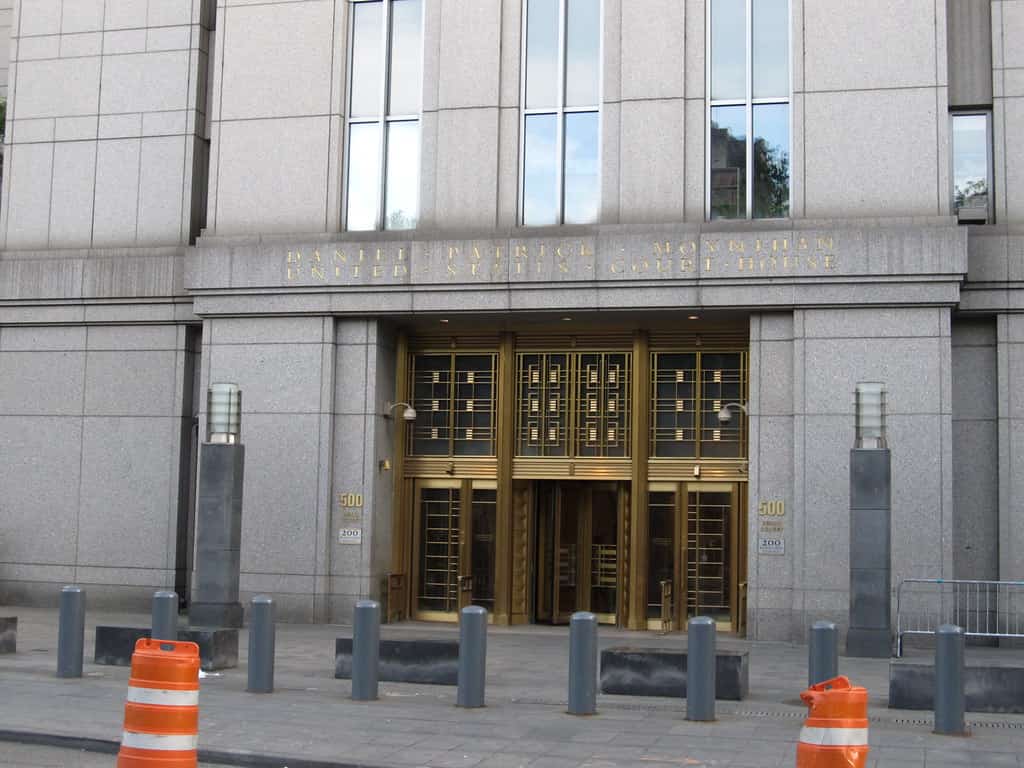
Former Venezuelan President Nicolás Maduro and his wife, Cilia Flores, are due back in Manhattan federal court Thursday, Oct. 15, to answer a superseding indictment that adds a charge of conspiracy to commit torture to the drug trafficking case that has held them in a Brooklyn jail since January. The arraignment, set for 11 a.m. EDT before U.S. District Judge Alvin Hellerstein, comes one week after the judge refused Flores's request to leave jail for home confinement, and two days after a longtime associate of Maduro's inner circle made his first appearance in Miami federal court.
The couple were expected to plead not guilty to the new charge, the Associated Press reported. Maduro's attorney, Barry Pollack, said when the charges were announced last week that Maduro denies them and "looks forward to his day in court," according to the AP.
The new torture charge
Prosecutors filed the superseding indictment on Oct. 8. It adds conspiracy to commit torture to the existing counts of narco-terrorism conspiracy, conspiracy to import cocaine and possession of machine guns and destructive devices, according to news reports. The new indictment also extends the narco-terrorism conspiracy charge to Flores, which had previously applied only to Maduro, according to reports on the filing.
According to the rewritten indictment as described by the AP, Maduro oversaw a system of torture that "beat, asphyxiated, and delivered electric shocks to its victims." He is accused of personally recommending torture methods, receiving updates on how victims were treated and "threatening to kill one prisoner's child as a form of psychological torture," the AP reported.
Flores, 69, a former Venezuelan attorney general, is accused of helping develop the system and ordering the torture of specific people. The alleged victims number in the scores, including three Americans, and the allegations stretch back to 2013, when Maduro took office, according to the AP. Neither defendant is accused of personally carrying out acts of torture, according to news reports previewing the hearing.
The torture allegations are accusations in an indictment and have not been proven in court.
Judge keeps Flores in jail
On Oct. 8, the same day the new indictment was filed, Hellerstein denied Flores's motion to be released to home confinement while she awaits trial. The judge found that she presents both a serious flight risk and a danger to the community, according to reports on his order, but left the door open for her to renew the request if her medical condition worsens.
Flores's lawyers had argued that a pre-existing heart condition, mitral valve prolapse, has become unstable since her capture, and that she has lost significant weight in custody, according to AP and Reuters coverage of the Sept. 9 motion. They proposed that she live under home detention in the New York area with 24-hour armed guards paid for by the defense, GPS monitoring, video surveillance and a monitored phone line. In September, Hellerstein agreed to seal her medical records.
Prosecutors with the U.S. Attorney's Office for the Southern District of New York opposed her release, arguing that she has received adequate medical care at the Metropolitan Detention Center in Brooklyn and would pose a flight risk.
How the case got here
U.S. forces seized Maduro and Flores from their home in Caracas in a nighttime military raid in early January 2026 and flew them to New York. Both pleaded not guilty to the drug and weapons charges on Jan. 5.
The underlying case dates to an indictment first unsealed against Maduro in March 2020, when the State Department offered a reward for information leading to his arrest. The drug case accuses the couple of conspiring to flood the United States with cocaine. Their attorneys have asked for the case to be dismissed on the grounds that, as the leader and first lady of a foreign country, they are immune from prosecution, according to the AP. The State Department and federal prosecutors have asked the judge to reject that argument.
Trial is scheduled to begin June 1, 2027, and a pretrial hearing had been set for Nov. 17.
The Miami side of the Maduro cases
While the couple's case plays out in New York, federal prosecutors in Miami are pressing cases against the business associates accused of enriching Maduro's government.
On Oct. 11, the Justice Department announced that Alvaro Pulido Vargas, a 62-year-old Colombian businessman long sought by U.S. authorities, had been taken into custody in a Homeland Security Task Force operation. Pulido faces two indictments in the Southern District of Florida, returned in 2019 and 2021, accusing him of laundering money from Venezuelan government bribery and fraud schemes, including contracts tied to the country's CLAP subsidized food program.
The 2019 indictment also charged Alex Saab, the Colombian businessman described by U.S. prosecutors as a key financial operator for Maduro's government, with laundering about $350 million through a low-income housing contract. Pulido appeared in Miami federal court on Oct. 13, where his lawyer waived a bail hearing and a magistrate judge ordered him held in federal custody, Martí Noticias reported. His next hearing is set for Nov. 4, according to that report. Pulido has not been convicted, and the charges against him are allegations.
Saab himself pleaded guilty in Miami federal court on Sept. 15 before U.S. District Judge Kathleen M. Williams to one count of conspiracy to launder money tied to the CLAP program, according to news reports. Under his plea deal, he agreed to forfeit $195 million and to cooperate with continuing federal investigations. Saab had been extradited to Miami once before and was freed in a 2023 prisoner exchange with Venezuela before being returned to the United States this year to face new charges.
Saab's cooperation agreement and Pulido's arrest put two of the people closest to the Maduro government's finances in the hands of federal prosecutors in Miami, at the same time the former president and his wife face a jury in New York next year.
Why South Florida is watching
South Florida, centered in Doral and Weston, is home to the largest Venezuelan community in the United States, and many residents fled the Maduro government's crackdowns on opponents. The torture charge in particular resonates in a diaspora that includes former political prisoners and relatives of people detained in Venezuela.
The prosecutions also come as Venezuelans in Florida face their own uncertainty. The Trump administration ended Temporary Protected Status for Venezuelans in late 2025, and Florida had been home to nearly a third of the program's recipients nationwide, according to federal data. Sen. Rick Scott and Secretary of State Marco Rubio, a Miami native, have both called for free and fair elections in Venezuela since Maduro's removal.
What's next
At Thursday's arraignment, Maduro and Flores are expected to enter pleas to the superseding indictment, and Hellerstein could address scheduling and the pending immunity arguments. Flores may renew her request for release if her health deteriorates. In Miami, Pulido returns to court Nov. 4, and Saab's sentencing will depend in part on the value of his cooperation. The New York trial remains set for June 1, 2027.
Spotted an issue with this article?
Have something to say about this story?
Write us a letterComments
No comments yet. Be the first to weigh in.
Related Coverage
Trump heads to Asia to meet Xi and Putin, with the U.S.-China trade truce possibly renewed at next month's Miami G20
9h ago
Orlando, Fort Lauderdale and Miami top AAA's Thanksgiving flight list as 4.6 million Floridians get ready to travel
11h ago
New international enrollment at U.S. colleges falls 15% this fall, and Florida universities face their own new limits
12h ago
Army whistleblower says commanders ignored drone warnings before the Kuwait strike that killed Winter Haven's Maj. Cody Khork
17h ago