Coast Guard reveals interdiction of Cuba-bound fuel ship Grace and orders six more C-130J patrol planes
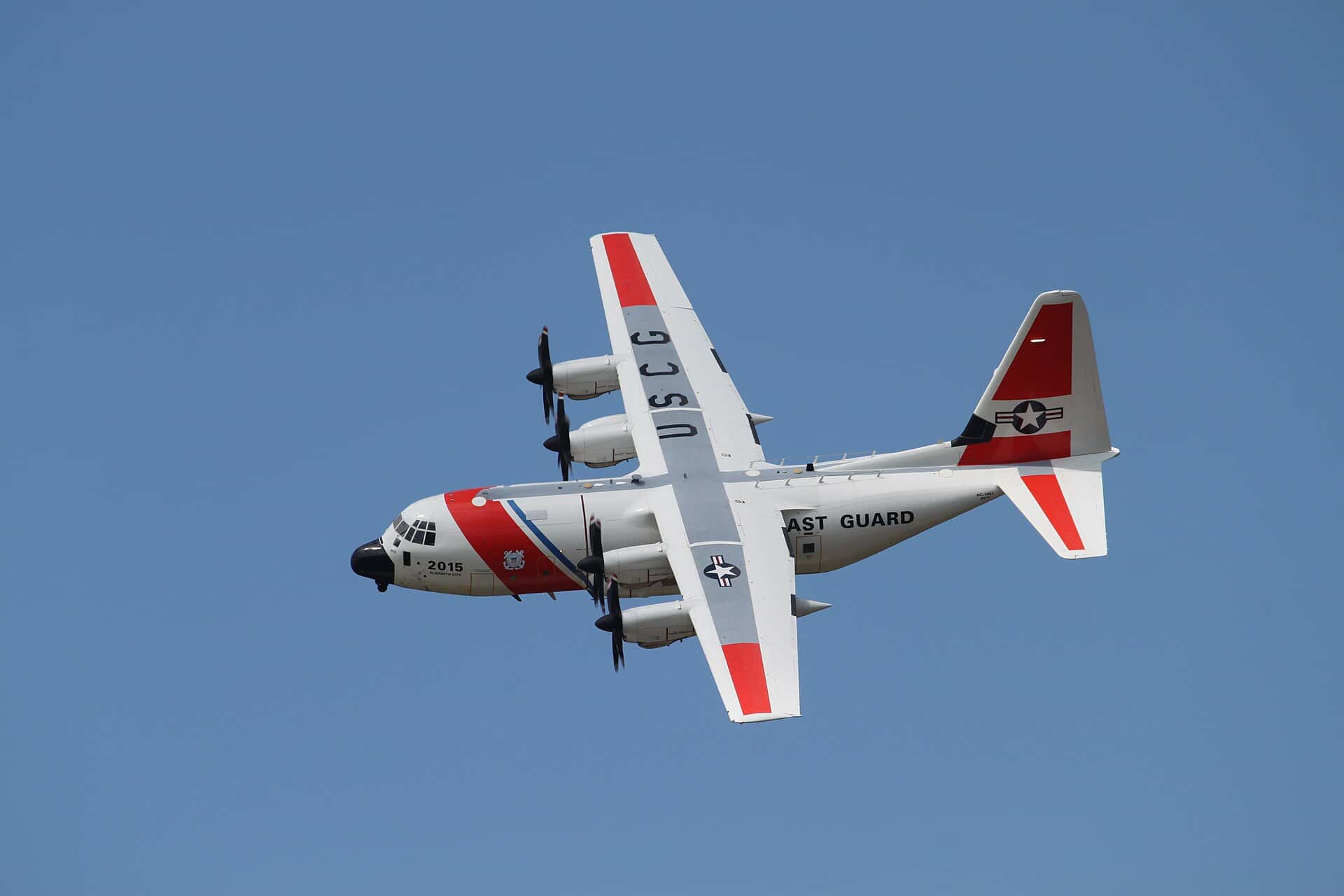
The U.S. Coast Guard said Friday, Oct. 2, that it had completed the interdiction of a Cuba-bound cargo ship found carrying fuel hidden in its ballast tanks, the latest move in the Trump administration's campaign to choke off fuel supplies to the island. The same day, the service announced it had ordered six more C-130J long-range surveillance aircraft, the planes it relies on to patrol the Florida Straits and the Caribbean.
Both announcements land squarely in South Florida, home to the largest Cuban diaspora in the United States and the base for much of the Coast Guard's Caribbean operations. The fuel campaign has deepened a severe energy crisis in Cuba that has produced repeated nationwide blackouts this year.
The Grace interdiction
According to the Coast Guard, a Coast Guard tactical team boarded the motor vessel Grace in the Caribbean Sea in early September while it was transiting to Cuba with fuel. News reports, including from ABC News and maritime trade outlets, put the boarding on Sept. 5 in waters between Cuba and Mexico and identified the ship as flagged in Comoros.
The Coast Guard said the ship was believed to be using tactics common to the so-called dark fleet, a term for vessels that use deceptive practices to obscure their ownership, movements or cargo. After the boarding, the Coast Guard escorted Grace to the Mexican port of Progreso, on the Yucatan Peninsula. There, an inspection team from the Mexican Navy, known as SEMAR or MARINA, confirmed large quantities of fuel in the ship's ballast tanks, which are normally used to hold seawater for stability. The vessel was also carrying several containers believed to hold illicit fuel, the Coast Guard said.
The service also disclosed an earlier case. On June 28, the Coast Guard seized the Jaira Provider, which it said was carrying more than 200,000 gallons of fuel bound for Cuba, also stored in ballast tanks.
"The high seas are not a sanctuary for lawlessness," Coast Guard Commandant Adm. Kevin Lunday said in the announcement, adding that dark fleet operators using deceptive tactics would not evade justice. Vice Adm. Nate Moore, the deputy commandant for operations, said illicit fuel shipments violate international law and pose severe environmental threats in the Caribbean.
Behind the pressure campaign
The interdictions are part of a broader effort to cut Cuba off from imported fuel, a policy in which Secretary of State Marco Rubio, the Miami native and son of Cuban immigrants who has long pushed for a harder line against Havana, has been a leading voice.
| Date (2026) | Development |
|---|---|
| Jan. 27 | Mexico halts oil shipments to Cuba |
| Jan. 29 | Trump signs order threatening tariffs on countries that supply Cuba with oil |
| May 13 | Cuba's energy minister announces diesel and fuel oil supplies are exhausted |
| June 28 | Coast Guard seizes Jaira Provider |
| Sept. 5 | Coast Guard boards Grace, according to reports |
| Oct. 2 | Coast Guard announces both interdictions |
The Jan. 29 executive order declared the Cuban government an unusual and extraordinary threat to U.S. national security and set up a framework for tariffs on goods from any country that directly or indirectly provides Cuba with crude oil or petroleum products. It followed the cutoff of Venezuelan oil, long Cuba's main supplier, after the U.S. capture of Nicolas Maduro in January.
Rubio has rejected the term blockade. "There is no oil blockade against Cuba as such," he said in May, arguing that Cuba had lost free Venezuelan oil, much of which it resold. Cuban officials dispute that. At the United Nations General Assembly in late September, Cuban Foreign Minister Bruno Rodriguez Parrilla accused Washington of imposing an illegal energy blockade, according to WLRN.
The effects on the island have been severe. Cuba has suffered island-wide blackouts on at least eight dates this year, according to a running tally of events, cutting electricity and disrupting water supply, refrigeration and communications. Those outages are felt directly in South Florida, where many families send money, medicine and supplies to relatives on the island.
Six more C-130Js
In its second announcement, the Coast Guard said it used existing U.S. Air Force contracts on Sept. 24 to order six baseline C-130J aircraft from Lockheed Martin Aeronautics in Marietta, Georgia. The order brings the service's long-range surveillance aircraft program to 25 planes.
The purchase uses up to $735 million of the $1.412 billion for fixed-wing aircraft provided in the fiscal 2025 reconciliation law that Republicans dubbed the One Big Beautiful Bill Act. Deliveries are expected to begin in fiscal 2028 and be completed by the end of fiscal 2030.
Compared with the older HC-130H Hercules, the C-130J has more advanced engines and propellers that give it about 20% more speed and altitude and roughly 40% more range, the Coast Guard said. The aircraft fly counterdrug patrols, migrant interdiction missions and long-range search and rescue. "The HC-130J is the largest and most capable airlift asset for the Coast Guard and the Department of Homeland Security," said Michael Haycock, the Coast Guard's director of systems integration.
The Florida connection
Coast Guard Air Station Clearwater, at St. Pete-Clearwater International Airport, is the service's largest air station, with nearly 700 aviation and support personnel. It has long flown HC-130 Hercules patrol planes alongside MH-60T Jayhawk helicopters, and it supports forward operating locations in the Bahamas used for counterdrug and migrant interdiction work. HC-130J aircraft currently operate from air stations in Elizabeth City, North Carolina; Kodiak, Alaska; Barbers Point, Hawaii; and Sacramento, California, which received its first in July. Reports on the new order did not say where the six additional planes will be based.
The Coast Guard's Miami-based command oversees operations across Florida's coasts, the Florida Straits and much of the Caribbean, the same waters where the service patrols for migrant vessels and drug shipments and now for fuel bound for Cuba.
What's next
The Coast Guard's announcement did not detail what will happen to the Grace or its cargo, or whether anyone aboard faces charges. Officials have signaled that interdictions of Cuba-bound fuel will continue. The first of the six new C-130Js is due in fiscal 2028.
Spotted an issue with this article?
Have something to say about this story?
Write us a letterComments
No comments yet. Be the first to weigh in.
Related Coverage

U.S. Exports to Cuba Hit a Record $202.5 Million in August as Fuel Sold to Private Firms Makes America the Island's Top Supplier
3h ago

Seven Florida Cases Are Part of the Justice Department's Largest Push Yet to Strip Citizenship From Naturalized Americans
3h ago

Proposed 2030 Census Rule Could Cost Florida a House Seat, and Count Snowbirds as Floridians
4h ago
Alligator Alcatraz Is Closed, but Florida Is Still Chasing More Than $500 Million in Federal Reimbursement
8h ago