Cory Mills Loses His Primary With a Trump Endorsement in Hand
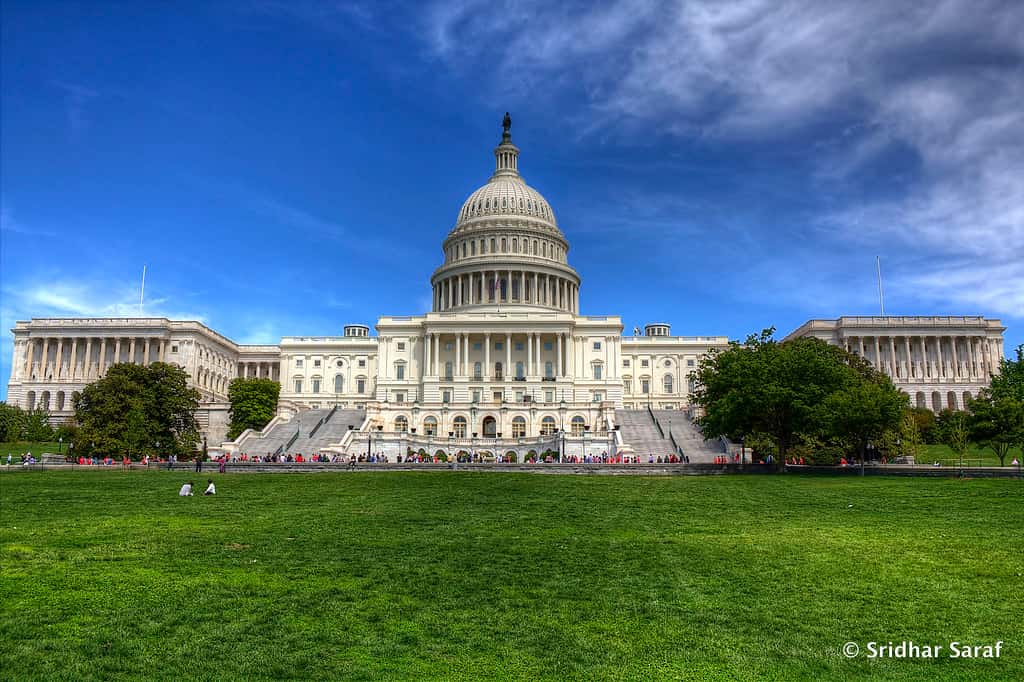
U.S. Rep. Cory Mills lost his Republican primary in Florida's 7th Congressional District on Tuesday, falling to challenger Ryan Elijah in a race conducted while Mills faced a House Ethics Committee investigation and a Justice Department inquiry into his finances.
With more than 80 percent of the expected vote counted, Elijah held 46 percent to 34 percent for Mills. The margin was substantial for a race involving a sitting member of Congress, and it came despite an endorsement Mills had received from President Donald Trump the previous year.
Mills has denied wrongdoing in connection with the investigations. The House Ethics Committee probe involves allegations centering on domestic abuse, misrepresentation of military service and financial misconduct, and a separate Justice Department investigation has examined his finances.
The result gives the Central Florida district a new Republican nominee heading into a general election under the state's redrawn congressional map.
How the support eroded
Mills entered the cycle with a Trump endorsement issued the previous year. In the weeks before the primary, Trump released an updated endorsement list that did not include Mills, a signal that carries substantial weight in Republican primaries.
Gov. Ron DeSantis also stated publicly that he did not support Mills. The combination of a withdrawn presidential endorsement and explicit opposition from the state's Republican governor left Mills without the institutional backing that typically protects incumbents.
Prominent Florida Republicans distanced themselves over the months preceding the vote as details of the investigations became public. Incumbents facing ethics investigations frequently retain enough support to survive primaries, but the loss of top-tier endorsements changes that calculus.
Elijah's campaign was able to consolidate opposition without needing to overcome an endorsed incumbent, which is a substantially easier path than challenging an incumbent with full party backing.
The investigations
The House Ethics Committee opened its investigation into Mills in November 2025 and issued a public statement about the matter in January 2026. The committee, which is evenly divided between the parties, investigates allegations of misconduct by members and can recommend sanctions to the full House.
The allegations under review, according to reporting on the matter, concern domestic abuse allegations, claims regarding representation of military service, and financial matters including campaign finance questions. Mills has denied all of them.
The Justice Department inquiry into Mills' finances proceeds separately and under different standards. A criminal investigation is not a charge, and the existence of an investigation does not establish that any offense occurred.
Ethics investigations of sitting members ordinarily continue regardless of election outcomes while the member remains in office, though the committee's jurisdiction ends when a member leaves. Mills will serve out the remainder of his term through January.
The Florida angle
Florida's 7th Congressional District covers portions of Central Florida including Volusia and Seminole counties, an area encompassing Daytona Beach and communities north and east of Orlando. It is one of the state's 28 districts under the map the Legislature approved in April.
The district's residents rely on their representative for federal casework including Social Security matters, veterans benefits, immigration questions and disaster assistance, the last of which carries particular significance in a region exposed to hurricane impacts.
Central Florida also has substantial federal interests including NASA and commercial space operations along the Space Coast in neighboring Brevard County, and the corridor's transportation infrastructure receives federal formula funding.
A change in representation affects which committee assignments the district holds and how much seniority its member carries, both of which influence a member's ability to advance district priorities.
What it means for Floridians
Florida's 28-member House delegation is the third largest in the chamber, and its composition affects the state's leverage in appropriations, disaster supplementals and policy matters where Florida has distinct interests.
Those interests include the National Flood Insurance Program, which requires periodic congressional reauthorization and whose terms directly affect Florida property owners more than those in almost any other state. Agricultural policy affecting citrus and produce growers is another.
Federal disaster funding is the most consequential recurring matter. Florida requests major disaster declarations more frequently than most states, and supplemental appropriations following major storms require action by Congress.
The Everglades restoration program depends on federal appropriations matched by state funding, and the Florida delegation has historically worked across party lines to protect that funding stream.
The broader pattern
Mills' defeat is one data point in a longer-running question about whether ethics controversies cost incumbents their seats. The historical record is mixed, with many members surviving investigations and some losing.
What appears to distinguish the outcomes is party support rather than the allegations themselves. Incumbents who retain endorsements from party leadership and from figures with influence over primary voters have generally survived; those who lose that backing generally have not.
The Trump endorsement's withdrawal was likely the decisive factor in this case. In Republican primaries over recent cycles, that endorsement has demonstrated substantial predictive power, and its removal from a candidate who previously had it sends an unusually clear signal.
Primary electorates are also smaller and more attentive than general electorates, which means information about a candidate's conduct reaches a larger share of the voters who actually participate.
What happens to the seat
Elijah advances to the November 3 general election as the Republican nominee. Under the redrawn map, Florida's districts are expected to produce a 24-4 Republican advantage overall, though individual district competitiveness varies.
Whichever candidate wins in November will be a first-term member, beginning without seniority and receiving committee assignments through the party steering process at the start of the next Congress.
Mills remains in office through the end of his term in January. Members who lose primaries typically continue voting through the remainder of the session, and their offices continue providing constituent services.
The Ethics Committee's jurisdiction over Mills ends when he leaves office. Whether the committee completes its work before then, and whether it releases findings, is a decision for the committee.
How the House Ethics Committee operates
The Committee on Ethics is the only House committee with equal numbers of Republicans and Democrats, a structure designed to prevent the panel from being used as a partisan instrument. That balance also means investigations require bipartisan agreement to advance.
The committee can investigate on its own initiative, on referral from the Office of Congressional Ethics, or in response to a complaint from a member. Its investigative subcommittees have authority to take testimony and obtain documents.
Possible outcomes range from dismissal to a recommendation of sanctions including reprimand, censure or expulsion, the last of which requires a two-thirds vote of the full House. Expulsion has occurred only rarely in the chamber's history.
Committee proceedings are confidential while ongoing, and the panel typically announces only that a matter is under review. That confidentiality is why public information about active investigations is generally limited to what the committee chooses to state.
Florida's 7th District and its voters
The district's residents include a mix of suburban communities, coastal towns and areas connected economically to both Orlando and the Space Coast. Population growth in the region has been substantial over the past decade.
Volusia County includes Daytona Beach, a community with a distinct identity built around motorsports, beaches and tourism, along with inland communities with different economic profiles. Seminole County sits closer to Orlando and has a more suburban character.
Hurricane exposure is a shared concern across the district. Volusia County absorbed significant flooding during recent storms, and recovery projects funded through federal and state programs remain underway in parts of the county.
Those conditions make federal disaster policy, flood insurance and infrastructure funding matters of direct rather than abstract interest to the district's voters, which shapes what constituents expect from their representative.
Incumbency and its limits
House incumbents win renomination at very high rates in ordinary circumstances, typically well above 90 percent. The advantages are structural: name recognition, fundraising access, constituent service relationships and the institutional support of party organizations.
Those advantages erode under specific conditions. Redistricting that places an incumbent before unfamiliar voters is one. Loss of party support is another, and it is the condition that applied here.
Primary challengers rarely have the resources to overcome an incumbent's structural advantages on their own. What changes outcomes is generally a shift in the environment rather than superior challenger execution.
The 12-point margin in this race, with more than 80 percent of the expected vote counted, is decisive by primary standards and suggests the erosion was broad rather than concentrated in one part of the district.
What the outcome signals
Primary results carry information beyond the individual race. Analysts read them for signals about what motivates a party's voters and about the durability of endorsements as a mechanism of influence.
The clearest signal here concerns the conditional nature of the Trump endorsement. Its withdrawal preceded the loss, which suggests the endorsement functions as a live instrument rather than a one-time transfer of support.
The second signal concerns tolerance for ethics controversies among primary voters. The result is consistent with an electorate willing to replace an incumbent under investigation when a viable alternative and permission from party figures are both present.
Whether either pattern generalizes to other races is uncertain from a single outcome. Primary electorates vary by district, and the specific allegations in any given case differ in nature and salience.
What's next
The general election is November 3. County supervisors of elections in Volusia and Seminole counties will publish early voting sites and dates, along with vote-by-mail request deadlines, in the coming weeks.
House Ethics Committee actions are announced publicly through the committee's website when it chooses to make them public. The committee operates under confidentiality rules that limit what it discloses during an ongoing matter.
Justice Department investigations are not typically confirmed or discussed publicly by the department unless and until charges are filed. No charges have been announced in this matter.
Certified primary results will be available through the Florida Division of Elections following county canvassing board review.
Spotted an issue with this article?
Have something to say about this story?
Write a letter to the editorComments
No comments yet. Be the first to weigh in.
Related Coverage

Federal judge strikes down ICE immigration courthouse arrest policy: what it means for Florida
3h ago

Carnival posts record third quarter as Miami cruise giant books 2027 at record levels
3h ago

U.S. Adds Just 29,000 Jobs in September as Unemployment Rises to 4.2%, a Warning Sign for Florida's Job Market
17h ago

SNAP Benefits Rise Slightly for Florida Families as State Takes On 75% of Program's Administrative Costs Under New Federal Law
17h ago