Crew-13 Slips at the Cape as Florida's Launch Cadence Hits Records Nobody Expected
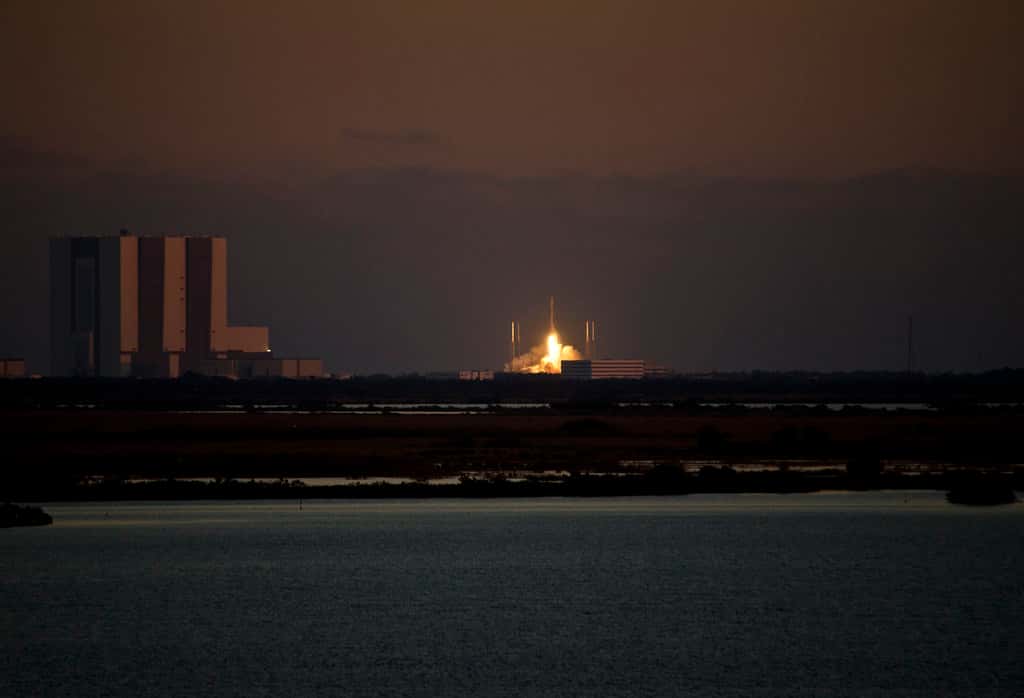
NASA and SpaceX have postponed the Crew-13 mission to the International Space Station to address an oxidizer leak in the Dragon spacecraft's propulsion system, detected during standard prelaunch processing. The mission had been targeting a launch no earlier than September 12 from Space Launch Complex 40 at Cape Canaveral Space Force Station, and a new target date will be announced once available.
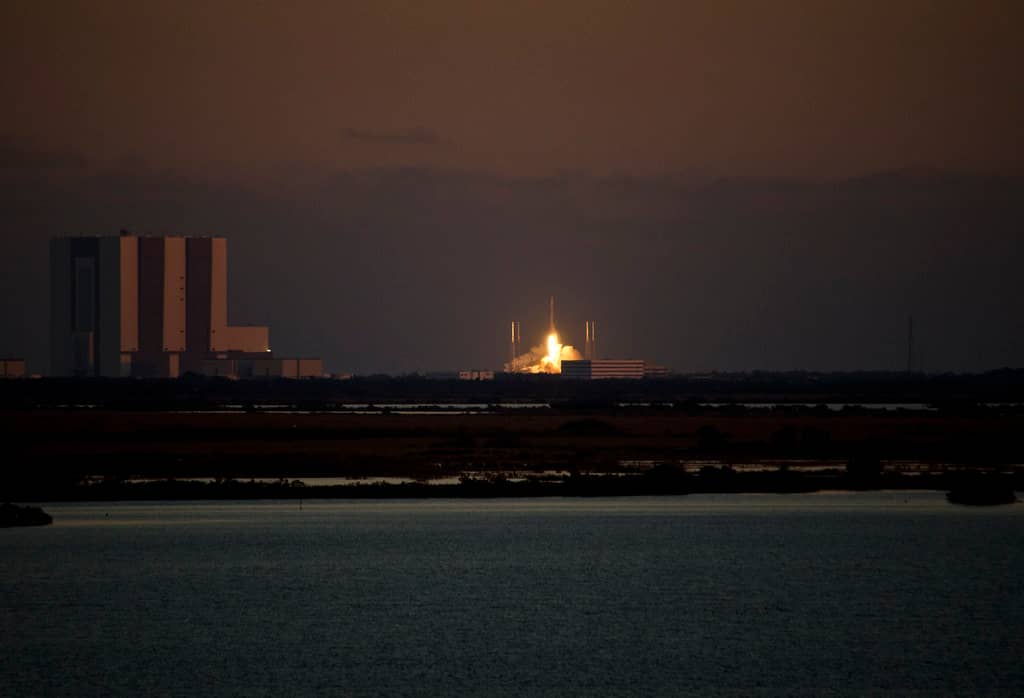
The delay comes during a year in which Florida's Space Coast has set operational records that would have seemed implausible a decade ago. SpaceX reached 96 Falcon 9 launches in 2026 by mid-August, roughly three quarters of them Starlink missions, and set a record by launching two Falcon 9 rockets 38.5 minutes apart from Florida in a single evening.
Space Launch Complex 40 alone has now hosted more than 345 Falcon 9 launches, and the company has consolidated its Falcon 9 operations there, with first stage boosters returning to a landing zone constructed adjacent to the launch pad rather than flying to a distant recovery site.
The Crew-13 mission
Crew-13 will carry commander Jessica Watkins and pilot Luke Delaney of NASA, along with mission specialists Joshua Kutryk of the Canadian Space Agency and Sergey Teteryatnikov of Roscosmos. Upon arrival at the station the crew will join Expedition 75.
The composition reflects the international structure of station operations, which has continued through periods of considerable geopolitical tension. Crew rotation missions routinely carry astronauts from multiple partner agencies, and the arrangement has persisted as a durable element of the program.
Commercial crew missions launch aboard a Dragon spacecraft atop a Falcon 9, an arrangement that restored the United States' ability to launch astronauts from American soil after the space shuttle's retirement left a gap of nearly a decade during which crews reached the station aboard Russian Soyuz vehicles.
Why the delay happened
An oxidizer leak in a spacecraft's propulsion system is precisely the category of problem that prelaunch processing exists to find. Dragon's propulsion system provides orbital maneuvering and, critically, the launch escape capability that would pull the crew away from a failing rocket.
Propulsion systems using hypergolic propellants, which ignite on contact without an ignition source, are standard for spacecraft maneuvering because of their reliability and storability. They are also corrosive and toxic, which makes leak detection and handling procedures rigorous.
Delays of this kind are routine in human spaceflight and are properly understood as the system working. The alternative, launching with a known propulsion anomaly, is not a tradeoff any program makes. Schedule slips are the visible cost of a safety culture that treats them as acceptable.
The cadence story
The operational tempo at the Cape has transformed Brevard County. Reaching 96 Falcon 9 launches by mid-August implies a pace that would have consumed an entire decade of launch activity during earlier eras of the American space program.
The 38.5-minute turnaround between two Falcon 9 launches, one for Globalstar and one for the United States Space Force, illustrates how thoroughly the operational model has changed. Launching twice in under 40 minutes requires range infrastructure, tracking, and safety systems capable of resetting nearly instantaneously.
Booster reuse is the foundation. One 2026 Starlink mission flew on a booster making its 37th flight, a figure that represents an entirely different economic model from the expendable rockets that defined launch for six decades.
What that means for the Space Force range
Cape Canaveral Space Force Station is a military installation, and the Eastern Range it operates provides tracking, telemetry, and flight safety services for every launch from the Cape and from Kennedy Space Center.
Supporting the current cadence required modernizing range infrastructure, including moving toward autonomous flight safety systems in which the vehicle terminates its own flight if it deviates, rather than requiring a human range safety officer to send a destruct command.
That change is what made rapid turnaround possible. A range that must reconfigure human-operated safety systems between launches cannot support two missions 38 minutes apart; a range built around autonomous systems can.
Brevard County's economy
The Space Coast built its identity around the federal space program and absorbed a painful adjustment when the shuttle program ended, with thousands of highly skilled jobs eliminated and a regional economy that had been organized around a single employer facing a structural problem.
Commercial launch has more than restored that activity. Launch operations, manufacturing, refurbishment, and the supply chain supporting them employ substantial numbers across the county, and the work is technical and well compensated.
Brevard has also diversified beyond aerospace. Port Canaveral projects 9 million multi-day cruise passenger movements in fiscal 2026, and defense contracting maintains a significant presence. That combination has produced a more resilient economy than the county had during the shuttle era.
Launch viewing and tourism
Launches have become a tourism product. Kennedy Space Center Visitor Complex offers viewing opportunities for launches, with bleacher seating at locations including The Gantry and Banana Creek providing launch audio and live video feeds for guests with general admission.
The frequency has changed the character of that experience. When launches occurred a handful of times a year, each was an event that drew planned travel. At current cadence, visitors to Central Florida have a reasonable chance of catching a launch without planning around one.
Public viewing areas along the Space Coast beaches and causeways draw crowds for higher-profile missions, particularly crewed launches and heavy-lift flights, which produce traffic and economic activity across Titusville, Cocoa Beach, and Merritt Island.
Workforce and training
The technical workforce supporting launch operations requires skills that Florida's education system has worked to supply. The state's rollout of federal Workforce Pell Grants for short-term programs, announced this week at Eastern Florida State College in Melbourne, covers occupations including welding, manufacturing, and aviation maintenance.
Those are precisely the skills aerospace operations require, and the geographic coincidence of the announcement location with the Space Coast is not accidental. Brevard County's employers have a demonstrated need for technicians that the region's training capacity has worked to meet.
Higher education contributes as well, with institutions including Embry-Riddle Aeronautical University in Daytona Beach and the Florida Institute of Technology in Melbourne supplying engineering graduates to the sector.
Environmental considerations
Launch activity at this volume has environmental implications that regulators and local communities have examined. The Cape sits adjacent to Merritt Island National Wildlife Refuge and Canaveral National Seashore, areas of significant ecological value that coexist with the launch complexes.
Noise, sonic booms from returning boosters, and launch emissions are the primary concerns raised, alongside the effects of increased ground activity on sensitive habitat. Federal environmental review processes apply to significant changes in launch operations.
The wildlife refuge's coexistence with the space program is long-standing, and the restricted access that security requirements impose has incidentally protected substantial habitat from the development that has transformed most of Florida's Atlantic coast.
Competition at the Cape
SpaceX dominates current launch volume, but it is not the only operator. United Launch Alliance operates from the Cape, Blue Origin has developed launch infrastructure in the area, and additional providers have pursued Florida launch capacity.
Space Florida, the state's aerospace development authority, works to attract and retain operators, and the state has invested in infrastructure supporting the sector. Competition among launch providers benefits Florida by increasing total activity regardless of which company captures market share.
The Artemis program and associated heavy-lift activity provide another stream of Kennedy Space Center operations distinct from the commercial cadence at the adjacent Space Force Station.
What it means for Floridians
For Brevard County residents, launch activity is part of daily life, with the associated employment, traffic, and noise. The economic benefit is substantial and concentrated in a county that experienced the opposite condition within recent memory.
For Central Florida more broadly, aerospace adds a high-wage technical sector to an economy otherwise dominated by tourism and hospitality, which improves regional resilience and median earnings.
For Floridians statewide, the sector represents one of the clearest cases where the state's economy has moved beyond its traditional pillars, and it generates tax revenue and employment that do not depend on visitor volume or construction cycles.
How commercial crew changed the program
The commercial crew model differs fundamentally from how NASA procured human spaceflight for its first five decades. Under the traditional approach, the agency specified a vehicle in detail, owned it, and operated it. Under commercial crew, NASA purchases transportation services from companies that own and operate the vehicles.
The practical consequence is that the same Dragon design flies both NASA crew rotations and private missions, which spreads fixed costs across more flights and gives the vehicle a flight history far richer than a government-only program would generate. Every flight, government or commercial, informs the reliability picture for all of them.
It also means NASA has less direct control over schedule. When a technical issue arises during processing, as with the Crew-13 oxidizer leak, the resolution timeline depends on the contractor's engineering assessment within a framework NASA oversees rather than directs day to day.
The station's remaining years
The International Space Station has a finite operational horizon, with the partner agencies having set a target for ending operations and conducting a controlled deorbit near the end of the decade. Crew rotation missions like Crew-13 are part of a program with a defined endpoint.
What follows is meant to be commercial. Several companies are developing private orbital stations, with NASA intending to purchase services from them rather than operate a successor facility itself, mirroring the commercial crew model one level higher.
For Florida, the transition matters because crew launches from the Cape would continue under that model, and possibly increase if multiple commercial destinations require servicing. The Space Coast's role in American human spaceflight does not depend on the station's continuation, though the cadence of crewed launches over the next decade does depend on how quickly commercial stations become operational.
What's next
NASA and SpaceX will announce a revised Crew-13 launch date once the oxidizer leak is resolved. Human spaceflight schedules are driven by technical readiness rather than by calendar targets, and the mission will fly when the vehicle is cleared.
Falcon 9 operations continue at pace, with Starlink missions accounting for the majority of flights and commercial and government payloads filling the remainder. The launch schedule is published and updated regularly for those tracking specific missions.
The longer-term trajectory points toward higher cadence still, with additional vehicles and additional operators pursuing Florida launch capacity. Whether range infrastructure, airspace management, and community tolerance scale with that growth is the question the Space Coast will spend the next several years answering.
Spotted an issue with this article?
Have something to say about this story?
Write a letter to the editor