Cygnus Cargo Ship Named for Jim Lovell Targets Sunday Launch From Cape Canaveral
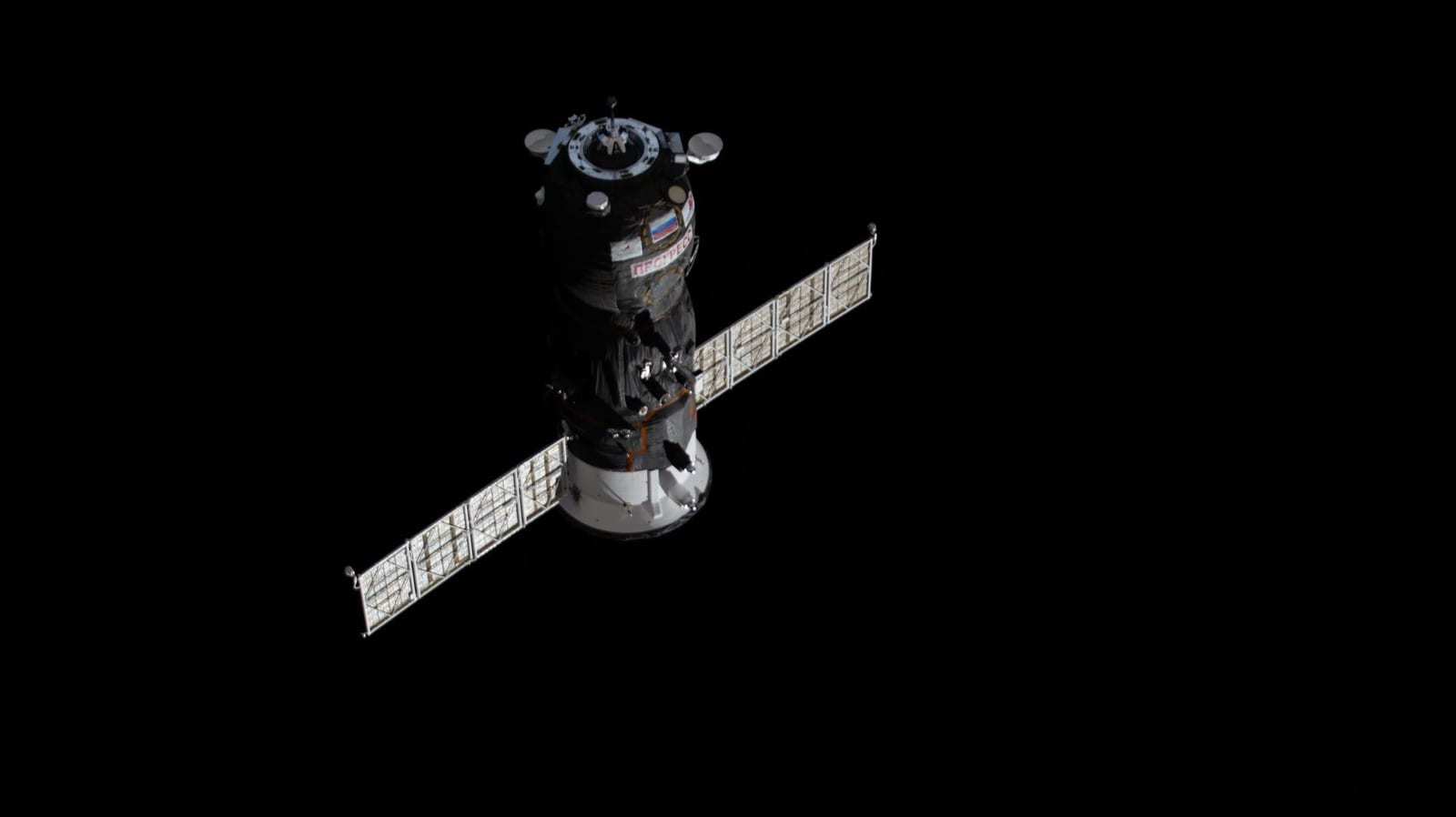
A Northrop Grumman Cygnus cargo ship named for Apollo 13 commander Jim Lovell is targeting liftoff from Cape Canaveral on Sunday, Nov. 29, carrying about 11,000 pounds of science experiments and supplies to the International Space Station. NASA, Northrop Grumman and SpaceX are targeting no earlier than 10:47 a.m. EST for the launch on a SpaceX Falcon 9 rocket from Space Launch Complex 40 at Cape Canaveral Space Force Station, according to NASA.
The mission, which NASA calls Northrop Grumman Commercial Resupply Services 25, or CRS-25, and which is also known as NG-25, will be the last cargo flight to the station this year, according to NASA's space station blog. It comes as Florida's Space Coast closes out a year marked by heavy launch traffic and by a costly failure earlier this month.
The launch plan
NASA said its launch coverage will begin at 10:25 a.m. Sunday on NASA+ and the agency's website. The spacecraft, a Cygnus XL, is the larger and more cargo-capable version of Northrop Grumman's solar-powered freighter, and this is the third flight of the XL design.
If the launch goes on time, Cygnus will spend about two days catching up with the station. NASA astronauts Jessica Watkins and Luke Delaney are scheduled to capture it with the station's Canadarm2 robotic arm at about 2:35 a.m. Tuesday, Dec. 1, with Watkins at the controls and Delaney monitoring. NASA's arrival coverage is set to begin at 1:10 a.m. Ground controllers will then use the arm to install Cygnus on the Earth-facing port of the station's Unity module so the crew can unload it.
| Date and time (EST) | Milestone |
|---|---|
| Sun., Nov. 29, 10:25 a.m. | NASA launch coverage begins |
| Sun., Nov. 29, 10:47 a.m. | Targeted liftoff from SLC-40 |
| Tue., Dec. 1, 1:10 a.m. | NASA arrival coverage begins |
| Tue., Dec. 1, 2:35 a.m. | Canadarm2 capture |
| May 2027 | Scheduled departure from station |
Launch times can slip because of weather, technical issues or range conflicts, and NASA describes Sunday's time as a no-earlier-than target.
Named for Jim Lovell
Northrop Grumman named the spacecraft the S.S. James "Jim" A. Lovell in honor of the former NASA astronaut, according to NASA. Lovell flew four missions: Gemini VII, Gemini XII, Apollo 8, which carried the first crew to orbit the moon, and Apollo 13, the 1970 lunar flight that turned into a rescue after an oxygen tank failure. Both Apollo flights launched from Kennedy Space Center. Lovell died on Aug. 7, 2025, at his home in Lake Forest, Ill., at age 97.
Lovell also had earlier ties to Florida: he began his Navy flight training at Naval Air Station Pensacola in 1952.
Northrop Grumman names each Cygnus in honor of a notable figure. The first Cygnus XL, which launched on NG-23 in September 2025, was named for Columbia astronaut William "Willie" McCool. The second, NG-24, launched in April 2026 as the S.S. Steven R. Nagel and left the station in October.
What is on board
NASA said the cargo includes research aimed at drug delivery for cancer and osteoarthritis, predicting how cancer spreads, treating muscle loss, sensing radiation and growing food on long missions. Highlights listed in NASA's mission overview include:
- Cardinal Muscle 2.0: Uses engineered muscle tissue to test whether drugs already approved by the Food and Drug Administration for other conditions could prevent or reduce muscle loss.
- DNA Nano B: Uses microgravity to make tiny, DNA-inspired particles that could carry medicine into dense tissue such as cartilage and solid tumors.
- Encapsulate-1: Grows miniature replicas of patients' tumors to study how cancer cells move and spread, with the goal of a test that could predict whether a cancer will progress.
- ARES: The Active Radiation Environment Sensor, a small device that monitors radiation in crew living areas, to support Artemis missions to the moon.
- Ohalo III: A mostly automated plant growth facility designed to produce food crops on long-duration missions, using water recovery and air exchange technologies.
- JOINS: A technology demonstration inside the station's Bishop Airlock that will test autonomous robotic welding of aluminum and stainless steel, a step toward assembling and repairing large structures in space.
The manifest also includes station hardware such as crew quarter blankets, hatch seal covers, a modified hose for the station's toilet, tools for a future spacewalk on the Alpha Magnetic Spectrometer and batteries for a gas analyzer. Cygnus is scheduled to stay at the station until May 2027, when it will leave loaded with several thousand pounds of trash and unneeded cargo and burn up on reentry.
A busy holiday week at the station
Cygnus will not be the only delivery this week. A Russian Progress 97 cargo ship launched from Kazakhstan and is scheduled to dock automatically to the station's Rassvet module at 7:11 a.m. on Thanksgiving Day with about three tons of food, fuel and supplies, according to NASA. The station's seven-member Expedition 75 crew includes NASA astronauts Watkins, Delaney and Anil Menon, Canadian Space Agency astronaut Joshua Kutryk and Roscosmos cosmonauts Pyotr Dubrov, Sergey Teteryatnikov and Anna Kikina.
A record pace and a rough November on the Space Coast
For Brevard County, the Cygnus flight is another entry in a launch schedule that has become routine. The Space Coast logged a record of at least 109 launches in 2025, topping the previous record of 93 set in 2024, Central Florida Public Media reported. Spectrum News 13 reported last December that the commander of the Space Force's 45th Space Launch Delta expected 100 to 120 launches in 2026. Most of them are SpaceX Falcon 9 flights, many from the same Space Launch Complex 40 pad that Cygnus will use.
November has also brought setbacks. On Sunday, Nov. 15, United Launch Alliance's Vulcan rocket failed about 10 minutes after liftoff from Space Launch Complex 41, destroying 40 Amazon Leo internet satellites on the first of 38 Vulcan launches Amazon had purchased. ULA said early indications pointed to low booster performance that caused stage separation at too low an altitude, according to the company. Experts told WESH the investigation could take weeks to months.
A day earlier, on Nov. 14, SpaceX caught a Starship upper stage with its launch tower for the first time, at its Starbase site in Texas. SpaceX has been preparing Kennedy Space Center's Launch Complex 39A for Starship, which would bring the giant rocket's launches to Florida.
Watching from Florida
A late-morning Falcon 9 launch from Cape Canaveral is typically visible across much of Brevard County, including from Titusville's riverfront and the beaches near Port Canaveral and Cocoa Beach, weather permitting. Those who cannot make it to the coast can watch NASA's broadcast on NASA+.
What's next
The final launch time will depend on weather and on the readiness of the rocket, spacecraft and range. If Sunday's attempt is scrubbed, a new target would be announced by NASA and SpaceX. Once Cygnus is berthed, the crew will begin unloading experiments over the following weeks, while ULA continues its Vulcan investigation and SpaceX works toward its next Starship flights.
Spotted an issue with this article?
Have something to say about this story?
Write us a letterComments
No comments yet. Be the first to weigh in.
Related Coverage

White House Removes National Cyber Director Sean Cairncross After a Week of Outages That Reached Florida's DMV, Airports and Banks
15h ago

Thanksgiving Dinner Costs More for the First Time Since 2022, and the South's Bill Rose Faster Than the Nation's
15h ago

States Sue HUD to Block Mixed-Status Housing Rule, but Florida Families Face the Dec. 14 Deadline Without Their State in the Fight
16h ago

House Democrats Put Brian Hughes and His Kennedy Space Center Role on Their Oversight List as They Prepare to Take Control of Congress
19h ago