Florida Awards $60 Million in Cancer Research Grants as Innovation Fund Expands
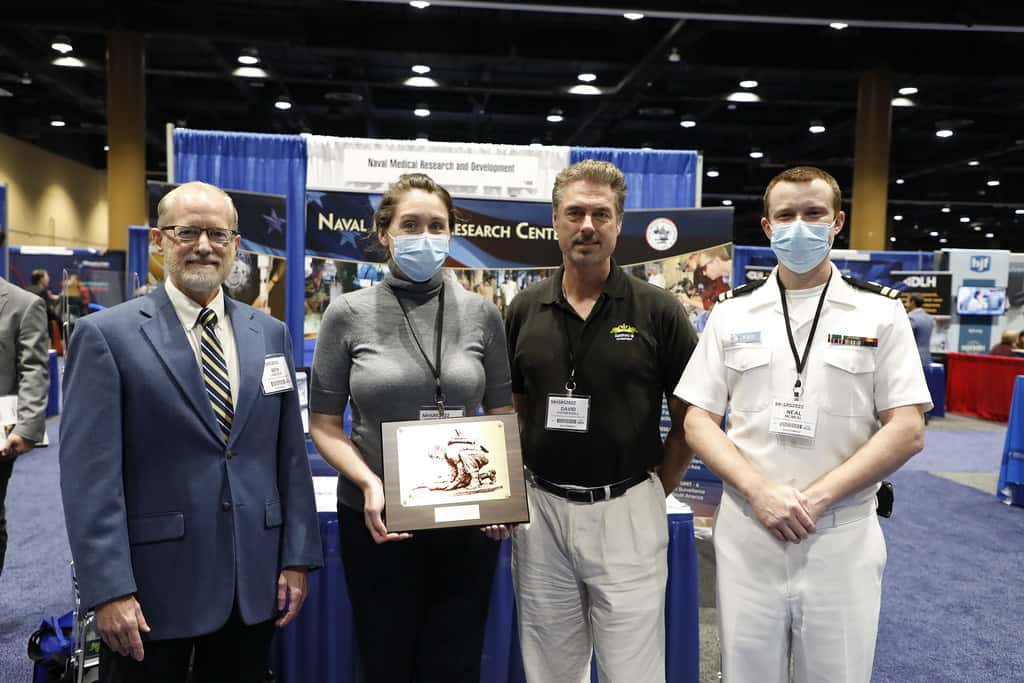
Gov. Ron DeSantis announced $60 million in grant awards from the Florida Cancer Innovation Fund on Wednesday, directing the money toward research institutions working on early detection, treatment and clinical trials inside the state. The governor's office said applications also opened for the 2026-27 cycle, which will carry a larger pool of roughly $70 million. The announcement was made during an appearance in Orlando, and it represents one of the larger single-day research funding commitments the state has made this year.
The Cancer Innovation Fund sits alongside Florida's older cancer research financing programs, and it was designed to move money faster toward projects that can produce clinical results rather than long-horizon basic science alone. State officials have framed the fund as an attempt to keep Florida researchers, and the grant money that follows them, from migrating to institutions in other states.
For Floridians, the practical question is whether a state with one of the largest and oldest populations in the country can build a research base proportionate to its cancer burden. Florida consistently reports among the highest raw numbers of new cancer diagnoses in the nation, a function of both population size and age distribution. The funding decisions announced this week are aimed at that gap.
What was announced
The $60 million represents awards from the current grant cycle, distributed to institutions and investigators who applied earlier in the year. The state has not framed the awards as a single-institution windfall; the Cancer Innovation Fund's structure spreads money across multiple recipients working on distinct research questions.
The simultaneous opening of the 2026-27 application window, with about $70 million available, signals that the state intends to grow the program rather than treat it as a one-time infusion. That is a roughly $10 million year-over-year increase in the announced pool.
Institutions eligible for these awards generally include Florida's academic medical centers and designated cancer centers, along with research organizations that partner with them. The application process runs through the state, and awards are made on a competitive basis rather than by formula allocation to any single region.
The governor's office tied the announcement to the broader argument that Florida's research infrastructure has expanded during his tenure, pointing to growth in state-funded research lines across multiple budget years. Independent verification of long-run outcomes from these programs typically takes years, since cancer research timelines rarely produce results within a single grant cycle.
The Florida context
Florida's cancer research funding sits within a patchwork of state programs that have accumulated over the past two decades. The state supports designated cancer centers through a separate appropriation, funds research through the Department of Health, and has periodically created targeted funds for specific disease areas.
The Cancer Innovation Fund was created to address a specific complaint from Florida's research community: that the state was a net exporter of research talent because the money available here did not match what investigators could raise in states with deeper institutional endowments and larger federal grant footprints.
Florida has three National Cancer Institute-designated centers, a smaller number than several states with comparable or smaller populations. NCI designation matters because it unlocks federal funding streams and makes institutions more competitive for clinical trials, which in turn keeps patients from having to travel out of state for experimental treatment.
The state's demographic profile intensifies the stakes. Cancer incidence rises sharply with age, and Florida's median age and its share of residents over 65 both run well above the national figure. That means the absolute number of Floridians who will need cancer care over the next two decades is projected to grow faster than in most states.
Where the money is aimed
State cancer funding programs in Florida have generally prioritized three categories: early detection and screening technology, treatment research including immunotherapy and targeted therapy, and infrastructure that supports clinical trial capacity. The Innovation Fund's stated emphasis is on projects with a plausible path to patient use.
Clinical trial capacity is the piece with the most direct effect on patients. When a Florida hospital can run a trial locally, patients in that market can enroll without relocating. When it cannot, patients with advanced disease often face a choice between standard care nearby and experimental care several states away.
Early detection funding carries a different kind of payoff. Screening technology that catches disease earlier reduces both mortality and downstream treatment cost, which matters to a state that carries significant Medicaid and county indigent care obligations.
The awards are not distributed evenly across Florida's geography, and that has drawn recurring criticism. The state's largest research institutions cluster in a handful of metropolitan areas, which means competitive grant programs tend to concentrate awards in Tampa Bay, South Florida, Gainesville and Jacksonville.
What it means for Floridians
For most residents, the immediate effect of a research grant announcement is indirect. Research money does not lower a co-pay or shorten a wait for an oncology appointment in the near term.
The medium-term effects are more concrete. Institutions that win sustained research funding tend to recruit more oncologists and subspecialists, which expands the pool of physicians available to treat patients in that market. Research-heavy centers also tend to attract more clinical trials, which is the main pathway for patients to access treatments that have not yet reached general approval.
Rural Floridians see the least direct benefit. Access to advanced cancer care in Florida remains heavily concentrated in metropolitan areas, and a research grant to a university medical center does not by itself extend service to counties without an oncology practice. State officials have periodically discussed telehealth and outreach components attached to research funding, but the core of these programs remains institution-based.
Cost is a separate issue from access. Florida has one of the higher uninsured rates in the country and has not expanded Medicaid, which means a meaningful share of residents diagnosed with cancer face coverage gaps regardless of how strong the research base becomes.
Reaction and open questions
Research institutions have generally supported increases to the fund, which is unsurprising given that they are the recipients. Advocacy organizations focused on cancer care access have historically pressed the state to pair research funding with coverage and screening access measures.
Legislators from both parties have supported cancer research appropriations in recent sessions, making it one of the less contested lines in the health budget. The disagreement tends to be about proportion: whether the state should direct more of its health spending toward research versus toward direct care coverage.
A recurring question is measurement. The state has not published a consistent long-term outcomes framework for the Innovation Fund that would let outside observers judge whether the money produced clinical results, publications, trial enrollment, or retained researchers at rates that justify the spending.
Another open question is stability. Research programs depend on multi-year commitments, and Florida's cancer funding lines have fluctuated with budget conditions in the past. Investigators making hiring and equipment decisions weigh the likelihood that a fund will still exist in five years.
How Florida compares with other states
State-level cancer research funding varies enormously across the country, and comparisons are complicated by the different structures states use. Some fund research directly through appropriations, others through tobacco settlement proceeds, and others through dedicated tax mechanisms.
Texas built the largest state cancer research program in the country through a voter-approved bond program that has distributed billions of dollars over more than a decade. That program has been credited with recruiting a substantial number of senior investigators to Texas institutions from other states.
The recruitment effect is the mechanism state programs are ultimately trying to produce. A senior cancer researcher brings a laboratory, a team, and an existing federal grant portfolio that transfers with them. Winning that competition changes an institution's trajectory in a way that a single project grant does not.
Florida's programs have been smaller and more fragmented than the largest state efforts, which is part of the argument for consolidating and growing the Innovation Fund. Whether $70 million annually is sufficient to compete for senior recruitment is a question the state has not directly addressed.
The clinical trial gap
Clinical trial access is where research funding most directly reaches patients, and Florida's performance on that measure has lagged what its population size would suggest.
Trial enrollment in the United States has persistent geographic and demographic gaps. Patients treated at academic medical centers enroll at far higher rates than patients treated in community oncology practices, and the majority of American cancer patients are treated in community settings.
Florida's demographic diversity makes the enrollment question more consequential than in more homogeneous states. Trial populations that do not reflect the patients who will eventually receive a treatment produce weaker evidence about how that treatment performs across groups, and Florida's Hispanic, Black and Caribbean populations have historically been underrepresented in oncology trials nationally.
Network models, in which academic centers extend trial access to affiliated community practices, are the standard approach to closing that gap. Building those networks requires sustained funding for the infrastructure that supports them, including research coordinators and data management, which are the kinds of costs project grants often do not cover well.
What's next
The 2026-27 application cycle is now open, with roughly $70 million available. Award decisions from that cycle would ordinarily be announced during the following year, meaning the next major announcement is likely months away.
The Legislature will revisit cancer research appropriations during the next regular session, and the size of the fund in future years depends on that process. Budget conditions have tightened as state revenue growth has slowed relative to the post-pandemic years, which puts every discretionary line under more scrutiny.
Watch for whether the state publishes a breakdown of which institutions received the $60 million and what the money will fund. That level of detail determines whether the announcement represents a genuine expansion of Florida's research capacity or a redistribution among the same recipients.
For patients, the more consequential near-term developments will be at the institutional level: which Florida centers open new clinical trials, and which expand oncology service lines into markets that currently lack them.
Spotted an issue with this article?
Have something to say about this story?
Write a letter to the editorComments
No comments yet. Be the first to weigh in.
Related Coverage
Florida on pace for record child drownings as families seek swim lessons
1d ago
Florida Attorney General James Uthmeier Sues Pfizer and CEO Albert Bourla Over COVID-19 Vaccine Claims
2d ago

Dengue Warnings Spread to Central Florida as Orange, Polk Confirm Local Cases
5d ago
Florida Heads Into Open Enrollment as the Nation's Biggest Test of Expired ACA Subsidies
6d ago