DeSantis Awards Nearly $23 Million to Florida's Defense Industry and Military Communities
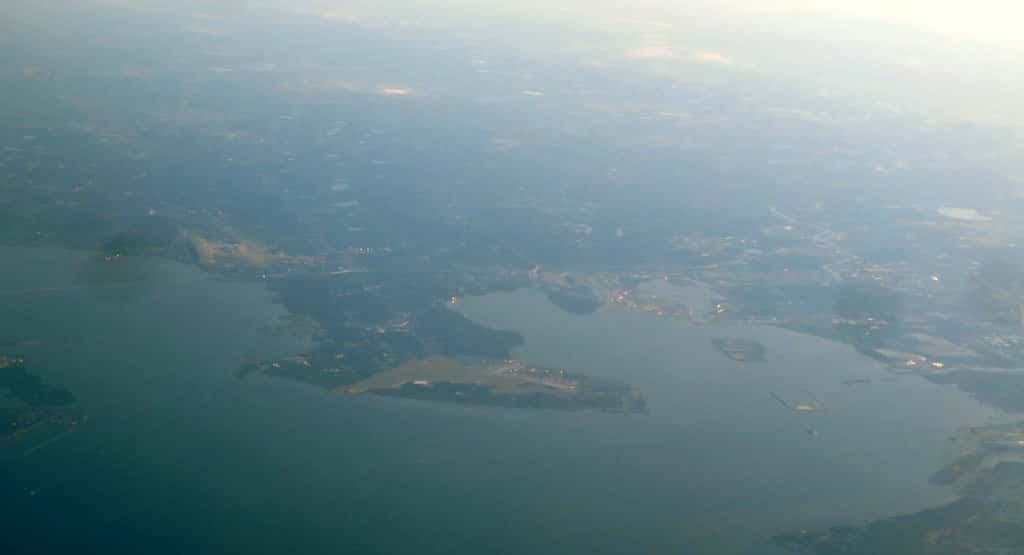
Governor Ron DeSantis has announced nearly $23 million in awards intended to strengthen Florida's defense workforce, military communities, and defense industrial base. The funding arrives in a state that hosts a substantial concentration of military installations, from MacDill Air Force Base in Tampa to Naval Air Station Pensacola, Eglin and Tyndall Air Force bases in the Panhandle, Naval Station Mayport in Jacksonville, and Patrick Space Force Base on the Space Coast. The awards support national security objectives while functioning as economic development for the communities around those installations.
What was announced
The state announced awards totaling nearly $23 million directed at three related objectives: strengthening the defense workforce, supporting military communities, and developing the defense industrial base.
Those three categories describe different problems. Workforce funding addresses the pipeline of trained personnel. Community funding supports the local infrastructure around installations. Industrial base funding supports the companies that supply defense programs.
Florida has operated defense-focused grant programs for years, reflecting a policy judgment that military installations represent economic assets worth protecting through state investment rather than relying solely on federal decisions.
Base realignment and closure processes have historically been the acute risk. Communities that can demonstrate strong local support, compatible land use, and workforce availability are better positioned when the federal government evaluates installations.
Florida's military footprint
Florida hosts installations across all branches, distributed across the state's regions. MacDill Air Force Base in Tampa is home to U.S. Central Command and U.S. Special Operations Command, giving the Tampa Bay region a concentration of senior defense leadership unusual outside Washington.
The Panhandle carries the heaviest concentration by area. Eglin Air Force Base is among the largest military installations in the world by land area, Tyndall near Panama City has been rebuilt following hurricane damage, and Naval Air Station Pensacola is the historic center of naval aviation training.
Northeast Florida hosts Naval Station Mayport and Naval Air Station Jacksonville, giving the region a substantial naval presence tied to Atlantic fleet operations.
The Space Coast adds Patrick Space Force Base and Cape Canaveral Space Force Station, which together anchor the military side of an aerospace corridor that also supports NASA and commercial launch operations.
The economic weight
Military installations and defense contracting represent one of Florida's larger economic sectors, generating direct employment, contractor work, and the retail and service activity that supports base populations.
Defense employment tends to be stable relative to Florida's more cyclical sectors. It does not respond to interest rates the way construction and real estate do, which matters in a state where the 30-year mortgage rate has climbed above 7 percent and housing activity has slowed.
Wage levels in defense contracting and skilled maintenance trades are generally above the Florida median, which affects the economic character of the communities around installations.
Florida's unemployment rate stood at 4.5 percent in August, above the 4.1 percent national average. Sectors offering stable, above-median employment carry particular weight in that environment.
The workforce pipeline
Defense industrial work requires specific skills: aviation and marine maintenance, welding, machining, electronics, and increasingly cybersecurity and software. Those fields face the same hiring constraints across Florida that other skilled trades do.
The state recently launched federal Workforce Pell Grant funding for short-term training programs, with eligible fields including welding, manufacturing, aviation and marine maintenance, and commercial driving. Several of those map directly onto defense industrial needs.
Veterans leaving service represent a natural talent pool, and Florida's large veteran population gives the state an advantage in recruiting for defense-adjacent work. Translating military occupational specialties into civilian credentials is the recurring friction point.
Security clearance requirements add another constraint specific to defense work. Clearance processing timelines limit how quickly a contractor can bring on staff even when qualified candidates are available.
Military communities and encroachment
Community support funding often addresses compatibility between installations and the development around them. As Florida communities grow, residential development can encroach on areas where military training generates noise or requires airspace.
Encroachment is a genuine operational concern rather than a public relations matter. Training missions constrained by surrounding development become candidates for relocation, which puts the installation and the local economy at risk.
Buffer land acquisition, land use planning coordination, and infrastructure investment are the standard tools. State grant programs frequently support those efforts because local governments alone may lack resources.
Florida's rapid population growth over the past decade has intensified the issue in several regions, particularly around Panhandle installations where development has expanded toward previously remote training areas.
Hurricane resilience and installations
Tyndall Air Force Base near Panama City sustained catastrophic damage from Hurricane Michael and has undergone a multi-year rebuilding effort. That experience shaped how both federal and state planners think about installation resilience in Florida.
Coastal installations face storm surge and wind exposure of the same kind that drives Florida's property insurance challenges. Hardening infrastructure against those risks carries costs that compete with other priorities.
The 2026 hurricane season has passed its peak without producing a single Atlantic hurricane, which has spared Florida installations from new damage. The season runs through November 30.
Resilience investment is the category where state and federal interests most clearly align. A base that can resume operations quickly after a storm is more valuable militarily and more secure economically for its community.
The federal funding environment
Defense spending is set through federal appropriations, and federal operations are currently funded under a continuing resolution running through December 11 at current levels.
Continuing resolutions complicate defense planning because they generally prohibit new program starts and hold funding at prior-year levels regardless of program requirements. Contractors and installations plan around that constraint.
State grant programs operate independently of that cycle, which is part of their value. Florida can commit funds on its own schedule rather than waiting for congressional action.
Florida's congressional delegation has historically been attentive to installation and contracting interests, given the economic stakes across multiple districts.
What it means for Floridians
For communities around installations, the funding supports the local economy directly and the installation's long-term viability indirectly. Both matter for property values, employment, and municipal revenue.
For workers, defense-adjacent employment offers a pathway into stable, above-median work, particularly for those with technical training or military experience. Workforce funding targets that pathway.
For the state's broader economy, defense represents a counterweight to the interest-rate-sensitive sectors that have slowed. Diversification of that kind matters more when the housing and construction picture is flat.
Where Florida's defense contracting concentrates
Defense contracting in Florida is not evenly distributed. The Space Coast supports aerospace and launch-related work, the Panhandle has a heavy concentration of testing, training, and munitions activity around Eglin, and the Tampa Bay region supports work tied to the combatant commands at MacDill.
Orlando has become a significant center for simulation and training technology, built around a cluster of military program offices and the contractors serving them. That sector is technology-intensive and draws on the engineering talent produced by the region's universities.
Jacksonville's naval presence supports ship maintenance, repair, and logistics work, a category with substantial skilled trades employment including welding, machining, and marine systems.
Those regional concentrations mean the economic effect of defense funding is localized rather than statewide, and communities compete for projects in ways that state grant programs can either reinforce or balance.
The relationship to Florida's aerospace corridor
The military and civil space programs in Florida share infrastructure, workforce, and supply chains along the Space Coast. Patrick Space Force Base and Cape Canaveral Space Force Station sit alongside NASA's Kennedy Space Center and a growing commercial launch industry.
That overlap means defense industrial base investment in the region supports capabilities that serve national security launch, NASA missions, and commercial operators simultaneously. Workforce trained for one pathway is largely transferable to the others.
Launch cadence from the Space Coast has risen sharply in recent years, and the Space Force has been investing in the range infrastructure that supports it, including reported work on counter-drone defenses at Cape Canaveral.
For Brevard County, the combination has produced one of Florida's more distinctive regional economies, where federal, military, and commercial activity reinforce one another rather than competing.
Why states compete for installations
Military installations function for their host communities much like large manufacturing plants, anchoring employment, generating supplier activity, and supporting retail and housing demand across a surrounding region. The difference is that the decision to keep or close one rests with the federal government.
That asymmetry is what drives state-level investment. A community cannot control the federal decision, but it can influence the factors that decision weighs: available workforce, compatible surrounding land use, transportation access, and demonstrated local support.
Base realignment and closure rounds have historically produced significant economic dislocation for communities that lost installations, and the memory of those rounds shapes how seriously states treat the risk even in periods when no round is pending.
Florida's approach has been to invest consistently rather than reactively, funding workforce and community programs in ordinary years so that the case is already built if an evaluation comes.
Florida's veteran population
Florida is home to one of the largest veteran populations in the country, a consequence of both the number of installations where service members are stationed and the number who choose to remain after separating or retiring.
That population is an economic asset for defense contractors, who value the technical training and security clearance eligibility veterans bring. It also creates demand for services including health care, education benefits administration, and employment support.
Translating military experience into civilian credentials remains the persistent obstacle. A service member trained on aircraft systems may need additional certification to work on civilian or contractor-maintained equipment, and the credentialing pathways are not always aligned.
Short-term training programs newly eligible for federal Workforce Pell Grant funding, including aviation and marine maintenance, address part of that gap by making the credentialing step affordable for veterans transitioning into contractor work.
What's next
Award recipients will implement funded projects on timelines set through the grant agreements. State agencies administering the programs track outcomes and report on them.
Federal appropriations for fiscal 2027 remain unresolved, with the continuing resolution running to December 11. The outcome of that negotiation will shape the defense funding environment Florida installations and contractors operate in.
Florida's positioning strategy, supporting installations and the industrial base through state investment, continues regardless of the federal cycle. The nearly $23 million announced represents the latest installment in that approach.
Spotted an issue with this article?
Have something to say about this story?
Write a letter to the editor