Florida's Terrorist Designations of CAIR, Muslim Brotherhood and Antifa Take Effect as CAIR Says It Is Ending Florida Operations
Florida's designation of the Council on American-Islamic Relations (CAIR), the Muslim Brotherhood and the antifa movement as domestic terrorist organizations took effect Thursday, Nov. 5, under a state law passed this year, according to the Florida Department of Law Enforcement. The same day, a federal judge in Tallahassee declined CAIR's request to avoid the label, and the civil rights group said it is being forced to shut down its advocacy and operations in the state while it appeals.
The designations are the first under House Bill 1471, a 2026 law Gov. Ron DeSantis sought that lets the state's chief of domestic security name domestic and foreign terrorist organizations, subject to approval by the governor and Cabinet. Supporters, led by DeSantis, describe the law as a tool to protect Floridians from what the governor has called radical terrorist ideologies. CAIR and the American Civil Liberties Union, which represents the group, argue the designation punishes constitutionally protected speech and association.
What took effect Thursday
DeSantis and the three members of the Florida Cabinet, Attorney General James Uthmeier, Chief Financial Officer Blaise Ingoglia and Agriculture Commissioner Wilton Simpson, voted Sept. 29 to apply domestic terrorist labels to CAIR, the Muslim Brotherhood and antifa, according to reporting by WUSF and the News Service of Florida. At the same meeting they added more than 90 groups already on the U.S. State Department's foreign terrorist organization list to the state's list, including Tren de Aragua, two Mexican drug cartels and Iran's Islamic Revolutionary Guard Corps.
The vote drew little discussion from the panel and no public comment, WUSF reported. The designations were scheduled to take effect Nov. 5, the date FDLE confirmed this week.
The process ran through several steps. HB 1471 passed the House 80-25 and the Senate 25-11 and took effect July 1. That day, DeSantis and then-FDLE Commissioner Mark Glass announced a recommendation to classify the three groups as domestic terrorist organizations. On Sept. 11, the Cabinet approved an emergency rule setting out how designations would work. Under the law, the FDLE leader must give the Cabinet written notice and written findings at least seven days before a designation, and the Cabinet then approves or rejects it.
The Cabinet on Sept. 29 also approved Larry Keefe, a longtime DeSantis aide, as FDLE commissioner, replacing Glass, who left to become undersheriff of the Miami-Dade Sheriff's Office. Keefe's appointment still requires Senate confirmation.
The court ruling
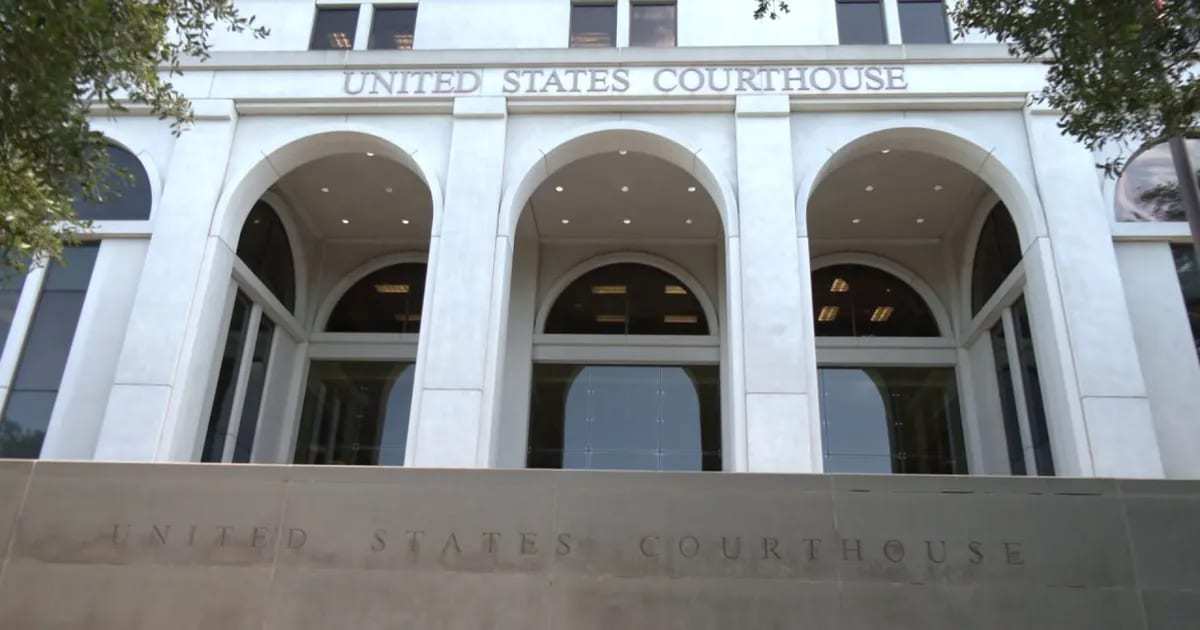
U.S. District Judge Allen Winsor of the Northern District of Florida on Thursday denied the request by CAIR and its Florida chapter to block the designation, according to FOX 13. CAIR had argued the label violates the First Amendment and the due process clause of the Fourteenth Amendment.
Winsor found the groups had not shown that their freedom of association was unconstitutionally restricted or that the designation bars any communication. He wrote that the designation "does not say what a (designated terrorist organization) can or cannot say." He described the overall scheme as "novel" and "perhaps unprecedented," but said the Constitution does not bar a law simply because it is new.
The ruling was not a complete loss for CAIR. Winsor barred the state from taking punitive action under the law against CAIR, its employees or those providing it legal services, FOX 13 reported.
At an Oct. 28 hearing that lasted more than two hours, ACLU attorney Ashley Gorski told the court the designation would make it impossible for the nonprofit to operate and that members were prepared to resign. Charles Cooper, the attorney representing the state, called CAIR a front group for Hamas and the Muslim Brotherhood that hides its activities behind a charitable organization. The federal government has never designated CAIR a terrorist organization under its foreign terrorist programs, Blazakis and other critics have noted.
Reaction from both sides
Uthmeier called the ruling a "great win" in a post on X. FDLE, also on X, said a federal court had affirmed the designations and called the decision the right call for the safety of Floridians.
Gorski, senior counsel for the ACLU National Security Project, said in a statement that Florida officials "have been relentless in seeking to silence our clients' civil rights work and advocacy." CAIR said it would appeal.
Before the Sept. 29 vote, Hina Shamsi, director of the ACLU National Security Project, filed a written objection and asked to speak at the Cabinet meeting but was not recognized, WUSF reported. She said the state's notice contained no allegation or evidence that CAIR had engaged in any violent or dangerous act, and described CAIR-Florida as an American nonprofit that promotes civil rights and runs know-your-rights trainings.
The state's case rests on findings FDLE presented to the Cabinet. According to WLRN, those materials cite CAIR's mention in the 2008 Holy Land Foundation terrorism-financing trial, alleged connections between CAIR founders and Hamas leadership, and the United Arab Emirates' 2014 designation of CAIR as a terrorist organization. Jason Blazakis of the Middlebury Institute of International Studies has argued the evidence is grossly insufficient and that the order lacks the procedural protections of a credible terrorism designation.
What the designation means in practice
According to a WKMG summary of HB 1471, a designation triggers a series of restrictions:
- State and local agencies may not spend public money or levy property taxes to support a designated organization or its members.
- Public colleges, universities and school districts may not use public resources to support or promote designated groups.
- Private schools in the state's K-12 scholarship programs may not be owned or funded by designated groups.
- Florida College System students who "promote" a designated group must be expelled. The law defines promotion as conduct reasonably read as a true threat of violence, disrupting learning, infringing on others' rights, or providing material support or recruitment.
- Criminal penalties can be enhanced, and existing state terrorism crimes, including providing material support and willfully becoming a member of a terrorist organization, apply to conduct involving a designated group.
The law also bars Florida courts from enforcing religious or foreign law when doing so would violate a person's constitutional rights, a provision supporters and critics have both tied to Sharia law. The ACLU has warned that the law's standards are vague and lack constitutional safeguards.
CAIR's exit from Florida
CAIR-Florida, the state chapter of the national Muslim civil rights and advocacy group, had warned in the weeks before the deadline that it would be forced to close its doors in Florida to avoid the consequences of the label. After Thursday's ruling, the group said it is ending its advocacy and operations in the state. Attorney General Uthmeier's office also said CAIR had stopped operating in Florida.
The group has not publicly detailed how many offices or employees are affected. The ACLU has described the chapter's work as civil rights advocacy, including know-your-rights trainings.
Earlier legal fight
This is DeSantis's second attempt to label CAIR and the Muslim Brotherhood as terrorist groups. In December 2025, he issued an executive order designating both as foreign terrorist organizations. In March, U.S. District Judge Mark Walker issued a preliminary injunction against that order, ruling it likely violated CAIR's First Amendment rights by targeting and threatening those who provide the group material support. The state has appealed Walker's ruling.
The Legislature then wrote the designation power into statute through HB 1471, giving the governor and Cabinet a formal process the executive order lacked.
What's next
CAIR says it will appeal Winsor's ruling, which would go to the 11th U.S. Circuit Court of Appeals in Atlanta. The state's appeal of the Walker injunction is also still pending. Meanwhile, Winsor's order bars the state from punishing CAIR, its employees or its lawyers under the law while the case continues.
How aggressively state and local agencies, schools and colleges enforce the funding and student-conduct provisions will be the next test of the law.
Spotted an issue with this article?
Have something to say about this story?
Write us a letterComments
No comments yet. Be the first to weigh in.
Related Coverage
Cape Coral Council Fires City Manager Michael Ilczyszyn Without Cause on Eve of Election That Made Rick Erickson Mayor
2h ago

DeSantis Names Jeff Harrington Pasco County Sheriff After Chris Nocco Wins State Senate Seat
1d ago
Clearwater Council Reconsiders Garden Avenue Closure for Scientology Hall After Residents' Petition Forces a New Vote
1d ago
Florida Republicans Lose State House Supermajority but Cling to Slim Edge in Senate
2d ago