Florida Wraps UK Trade Mission With Aerospace Deals and New Orlando Flights
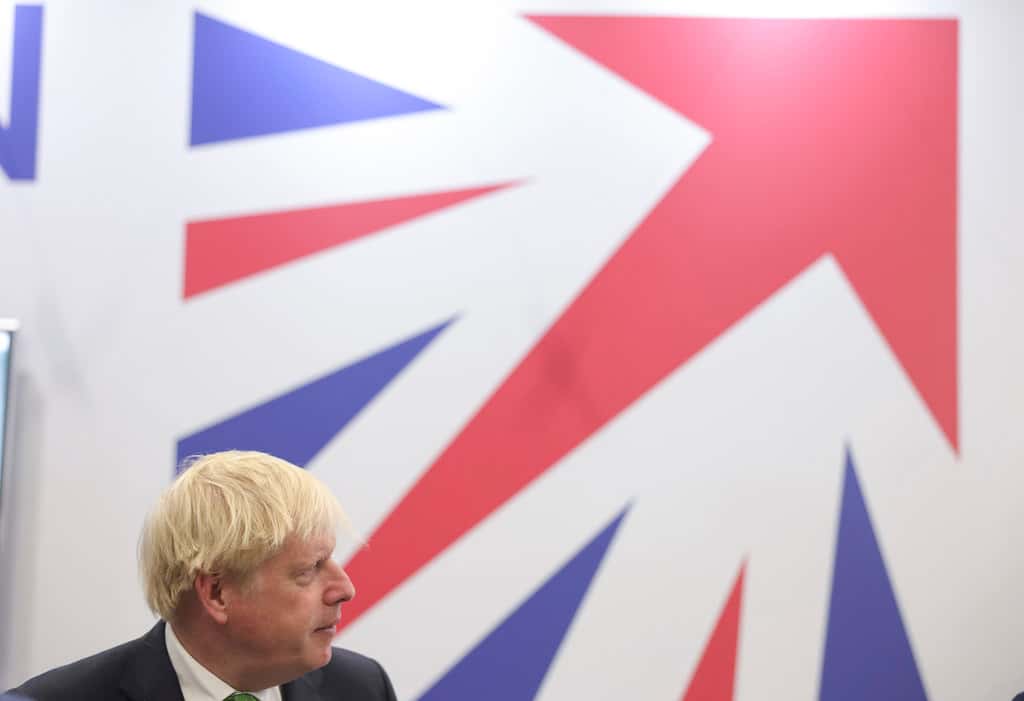
Florida's international business development delegation has returned from a five-day mission to the United Kingdom that produced an aerospace cooperation agreement, a university research partnership and additional transatlantic air service into Orlando. The mission ran July 20 through July 24 and was led by Governor Ron DeSantis, accompanied by Secretary of Commerce J. Alex Kelly, Secretary of Transportation Jared W. Perdue, Secretary of State Cord Byrd, Insurance Commissioner Mike Yaworsky and Space Florida President and Chief Executive Rob Long.
What the delegation brought home
The centerpiece was a memorandum of understanding between Space Florida and the UK Space Agency to advance international space collaboration. State officials described it as the first agreement signed under Florida's International Aerospace Innovation Fund, and it commits $400,000 to collaborative aerospace projects between the two jurisdictions.
The delegation also announced that Relativity Space has committed to expanding its operations on the Space Coast, a project state officials say could create thousands of high-wage jobs by 2034 and that had been tracked under the working name Project Forge. Space Florida separately announced the second cohort of companies for its SpaceTech investment readiness program, run jointly with the venture firm Seraphim Space.
On the academic side, the University of Florida and the University of St Andrews signed a memorandum of understanding for science research and collaboration. St Andrews is Scotland's oldest university and holds particular strength in physics, astronomy and materials science.
The air service announcement was the item with the broadest immediate consumer relevance. British Airways added 18 flights between Orlando International Airport and London Heathrow between July 21 and August 29, 2026.
The Farnborough setting
The mission was built around the 2026 Farnborough International Airshow, one of the two largest aerospace trade events in the world alongside the Paris Air Show. Florida operated a state pavilion at the show supporting 18 Florida-based exhibitors, giving smaller suppliers access to international buyers and investors they would struggle to reach independently.
The pavilion model is a standard instrument of state trade promotion. Rather than each small manufacturer bearing the full cost of an international trade show presence, the state underwrites a shared footprint. For a Florida machine shop or avionics supplier, the difference is between attending and not attending.
The delegation's final day moved to Edinburgh and Northern Ireland, where officials pursued partnerships in aerospace, maritime, advanced manufacturing and economic development. Northern Ireland's aerospace sector, centered on Belfast, has deep aerostructures capability, and Scotland has built a small-satellite and launch industry over the past decade.
Why the United Kingdom
The United Kingdom is among Florida's most important economic partners outside the Western Hemisphere. British visitors have historically formed the largest overseas source market for Florida tourism, concentrated heavily on Orlando and the Gulf coast. Direct air service between the two markets is therefore not merely a convenience but a determinant of visitor volume.
That connection has particular weight this summer. Comcast executives told investors on July 23 that attendance at Universal Orlando softened in June and weakened further into the third quarter, and posted wait times across Walt Disney World have declined. Additional Heathrow service into Orlando during the peak British holiday period is a modest but real counterweight.
On the aerospace side, the logic is complementary rather than competitive. Britain has strong satellite manufacturing, space services and small-launch capability but limited orbital launch infrastructure. Florida has the busiest launch complex in the world. The natural exchange is British payloads and technology flowing to Florida launch capacity.
What it means for Floridians
For Central Florida, the air service addition is the most tangible item. Each transatlantic widebody rotation carries several hundred passengers, and British visitors spend at higher per-trip levels than domestic drive-market visitors because of longer average stays.
For the Space Coast, the Relativity commitment is the larger economic event, and it is covered in detail separately. The state financing framework includes eligibility for up to $134 million from the Florida Department of Transportation's Spaceport Improvement Program and up to $350 million in conduit financing approved by the Space Florida board in June.
For students and researchers, the University of Florida partnership with St Andrews opens exchange and joint research pathways. Agreements of this type typically produce faculty collaboration and graduate student exchange before they produce anything visible to undergraduates.
For taxpayers, trade missions occupy a contested space in economic development policy. Supporters point to specific deals announced during or shortly after the trip. Skeptics note that large corporate location decisions are made over months or years and that announcements are often timed to coincide with high-profile events rather than caused by them. Both observations are generally accurate, and the honest assessment of any single mission is difficult to separate from the underlying pipeline.
The broader state economic picture
Florida has continued to add private sector jobs, and state commerce officials have highlighted extended streaks of monthly growth. The state's economic development apparatus, operating as FloridaCommerce alongside SelectFlorida for international work, has focused recruitment on aerospace, advanced manufacturing, financial services and logistics as counterweights to the state's traditional dependence on tourism, construction and healthcare.
That diversification objective has been a stated priority across multiple administrations. Progress is real but incremental. Tourism and real estate remain the dominant drivers of Florida's economy and of its sales-tax-funded state budget.
Insurance Commissioner Yaworsky's presence on the delegation is worth noting. London remains the center of the global reinsurance market through Lloyd's and the company market, and Florida's property insurance system depends on access to that capital. Reinsurance pricing and capacity directly affect what Florida homeowners pay.
What Florida sells abroad
Trade missions make more sense against the actual composition of Florida's international economy, which differs from the state's domestic economic profile.
Florida's merchandise export base is concentrated in aircraft and aerospace parts, computer and electronic products, machinery, medical instruments and chemicals. Aerospace is consistently among the largest categories by value, which is why an airshow-anchored mission is a rational allocation of the governor's time.
The state's ports handle a large volume of trade with Latin America and the Caribbean, and Miami functions as a commercial and financial hub for the hemisphere in a way no other American city does. That orientation means Europe has historically been a secondary rather than a primary international focus for Florida trade promotion.
Services exports are harder to measure and larger than the merchandise figures suggest. Tourism is an export in economic accounting terms, since it involves foreign purchases of domestically produced services. On that basis, the United Kingdom is one of Florida's most significant export markets, and air service capacity is the binding constraint on the volume.
Higher education is a second services export. Florida's public and private universities enroll substantial numbers of international students who pay non-resident tuition, and research partnerships of the kind announced with St Andrews build the relationships that feed those flows.
The British visitor market
British visitors have occupied a distinctive position in Florida tourism for four decades, and their behavior differs from that of domestic visitors in ways that make the market disproportionately valuable.
The characteristic British trip to Florida is long, frequently two weeks or more, and it typically combines Orlando theme parks with a Gulf coast beach stay. Average spending per visitor party substantially exceeds that of a domestic drive-market visitor, both because of the length of stay and because the trip is often a once-in-several-years purchase rather than a routine weekend.
The market is also concentrated in the summer school holiday period, which runs from late July through August in the United Kingdom, and again around Christmas. The 18 additional British Airways flights between Orlando International Airport and London Heathrow were scheduled between July 21 and August 29, aligning precisely with that window.
Currency movements matter. The sterling to dollar exchange rate directly changes the effective price of a Florida holiday, and British travel agents track it closely in their booking patterns.
The Gulf coast communities of Lee and Collier counties, along with the Panhandle, have developed substantial British visitor bases, and vacation rental operators in those markets orient marketing accordingly.
The reinsurance connection
Insurance Commissioner Mike Yaworsky's presence on the delegation was the least publicized element of the trip and arguably one of the more consequential for Florida households.
London remains the center of the global reinsurance market. Lloyd's of London and the surrounding company market provide a substantial share of the catastrophe reinsurance capacity that Florida property insurers purchase to cover hurricane losses beyond their own retention.
The chain of effect runs directly to consumers. Florida insurers buy reinsurance. The cost of that reinsurance is a major component of the rates they file with the Office of Insurance Regulation. When global reinsurance pricing hardens, Florida premiums rise. When it softens, as it has recently, premiums have room to fall.
Florida's own reinsurance mechanism, the Florida Hurricane Catastrophe Fund, provides a layer of state-backed coverage below the private market layers, and the Legislature has adjusted its attachment point and capacity repeatedly. Private reinsurance sits above and around that fund.
Citizens Property Insurance Corporation is itself a major purchaser of reinsurance, and its reduced exposure, with 293,465 policies as of June 5 against a peak of about 1.42 million in October 2023, has improved its position in those negotiations. Relationships with the London market are a legitimate item of state business, even if they generate no headline.
What's next
The measurable follow-through on any trade mission comes in the subsequent 12 to 24 months: whether the memoranda produce funded projects, whether the added air service is retained beyond the announced window, and whether the announced corporate expansion reaches permitting and construction.
Space Florida board meetings, which are subject to Florida's open meetings requirements, will show the terms of the aerospace financing as they are finalized. Airline schedule filings will show whether British Airways extends the additional Orlando frequencies into the winter season.
The Florida Press will report on those milestones as they arrive.
Spotted an issue with this article?
Have something to say about this story?
Write us a letterComments
No comments yet. Be the first to weigh in.
Related Coverage
Florida Single-Family Home Sales Slip 3.5% in September as Rising Mortgage Rates Stall Growth
2d ago

Miami Cites Club at Brickell Bay Over Short-Term Rentals, Warning of Fines Up to $5,000 a Day
2d ago

Lennar to Buy Boynton Beach Mall, Plans Homes, Shops and Civic Space on 91-Acre Site
2d ago
Florida Supreme Court Rules 2021 Pre-Suit Notice Law Does Not Apply to Older Homeowner Insurance Policies
3d ago