Diaz-Balart Secures $446 Million for Everglades Restoration in Next Year's Federal Spending Bill
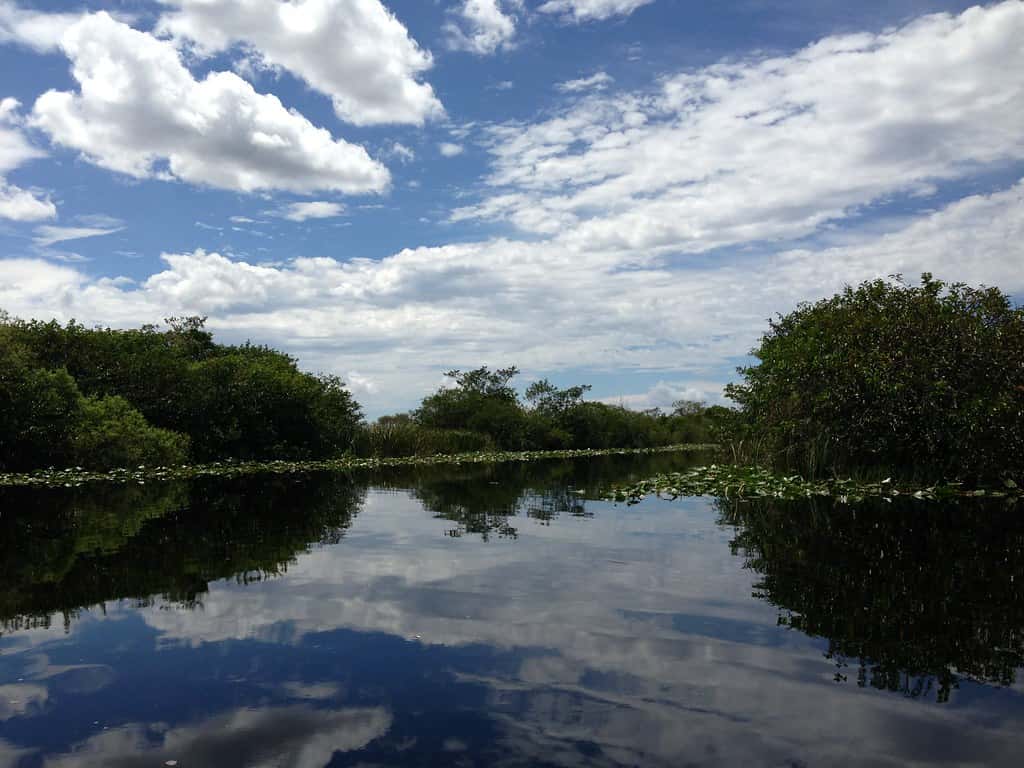
Rep. Mario Diaz-Balart, vice chair of the House Appropriations Committee and dean of Florida's congressional delegation, secured $446 million for Everglades restoration and preservation in the Fiscal Year 2027 Energy and Water Development and Related Agencies appropriations bill. The figure continues a pattern that has held for years: Everglades funding is one of the few items on which Florida's delegation operates with near-total unity and reliably delivers.
The current fiscal year's companion measure, secured with work from Rep. Debbie Wasserman Schultz, included $461 million for Everglades restoration within a larger package of federal funding for South Florida. Those appropriations flow primarily to the U.S. Army Corps of Engineers, which builds the federal share of restoration projects.
Restoration funding is not a permanent entitlement. It has to be secured every year, in every bill, against competing demands from every other district and state in the country. That is why the annual appropriations cycle is watched closely by Florida water managers.
What the money builds
The Comprehensive Everglades Restoration Plan, authorized by Congress in 2000, is the framework. It comprises dozens of individual projects intended to restore something closer to natural water flow through a system that was drained, diked and channelized across the twentieth century.
The largest single component is the Everglades Agricultural Area Reservoir, a storage and treatment facility south of Lake Okeechobee designed to hold water during wet periods, clean it through constructed wetlands and release it south into the remaining Everglades rather than east and west into coastal estuaries.
Governor Ron DeSantis announced earlier this year that all federally funded contracts for the reservoir have been fully executed, with a target completion in 2029, five years ahead of the original schedule. State officials have attributed the acceleration to an infusion of federal dollars.
Why the water has to go south
The engineering problem the restoration addresses is straightforward to describe and enormously difficult to solve. Historically, water flowed from the Kissimmee River chain into Lake Okeechobee and then south across a broad, shallow sheet through the Everglades to Florida Bay.
Drainage projects beginning in the early twentieth century cut that flow. The Herbert Hoover Dike now surrounds Lake Okeechobee, and when lake levels rise, the Army Corps releases water east through the St. Lucie Canal and west through the Caloosahatchee River to prevent dike failure.
Those discharges carry nutrients into two estuaries that were never designed to receive them, contributing to blue-green algae blooms in Martin, St. Lucie and Lee counties that have shut down waterfront businesses and prompted state emergency declarations in past years.
The lake management change
Federal officials recently revised how water is released from Lake Okeechobee under an updated regulation schedule. The change is designed to send more water south through the Everglades while reducing damaging discharges to the coastal estuaries.
That revision was made possible in part by completion of other restoration components that increased the system's capacity to move and store water south of the lake. Operational changes and infrastructure construction are interdependent; neither works alone.
The practical consequence for residents along the Caloosahatchee and the St. Lucie is fewer discharge events, though the schedule cannot eliminate them entirely. Extreme rainfall still forces releases when lake levels approach the range at which dike integrity becomes a concern.
What restoration means for drinking water
The Everglades is not only a wildlife refuge. The Biscayne Aquifer, which supplies drinking water to millions of people across Miami-Dade, Broward and Palm Beach counties, is recharged by water moving through the Everglades system.
Saltwater intrusion into that aquifer is a growing problem as sea levels rise and as fresh water pressure declines. Maintaining freshwater flow through the system is the primary defense, which makes restoration a water supply project as much as an environmental one.
South Florida water utilities have been planning for decades against the possibility that coastal wellfields become unusable. Alternative water supply development, including reverse osmosis treatment of brackish water, is significantly more expensive than treating fresh groundwater.
Florida Bay and the fishing economy
At the southern end of the system, Florida Bay depends on freshwater delivery from the Everglades to maintain salinity within the range that supports seagrass. When flow declines, the bay becomes hypersaline, and seagrass die-offs follow.
Those die-offs cascade. Seagrass supports juvenile fish, shrimp and crustaceans that feed the recreational and commercial fisheries of the Keys and the southwest coast. Monroe County's economy depends heavily on those fisheries and on the flats fishing guide industry built around them.
Restoration advocates in the Keys have been among the most persistent supporters of federal appropriations for this reason. The economic connection between water flowing south from Lake Okeechobee and charter bookings in Islamorada is direct.
How appropriations actually work
Congress funds the federal government through twelve annual appropriations bills. Everglades funding appears in the Energy and Water Development bill, which covers the Army Corps of Engineers, the Bureau of Reclamation and the Department of Energy.
Each chamber writes its own version, which are then reconciled. A member's ability to secure funding depends heavily on committee position, which is why Diaz-Balart's role as vice chair of House Appropriations matters more than seniority alone would suggest.
Fiscal Year 2027 begins on October 1, 2026. Congress rarely completes all twelve bills by that deadline, and continuing resolutions maintaining prior-year funding levels are the usual outcome. A continuing resolution generally holds programs at existing levels, which for a construction program on an accelerated schedule can mean delay.
The shutdown risk
The end of the federal fiscal year has produced repeated funding standoffs, including a shutdown that ran from October 1 to November 12, 2025, the longest in modern history. That experience is fresh enough to shape expectations this year.
A shutdown affects Everglades work in several ways. Army Corps construction contracts already awarded generally continue, but new awards, permitting and federal staff supervision pause.
The same September 30 deadline governs the National Flood Insurance Program's authorization, which affects Florida real estate transactions statewide. Both items sit on the same congressional calendar.
The state's share
Everglades restoration is a cost-shared program, with the federal government and the State of Florida each responsible for portions of project costs. Florida funds its share through the Legislature, and state appropriations for Everglades and water quality programs have been substantial in recent budget cycles.
The South Florida Water Management District is the state agency that implements much of the work, operating a vast network of canals, levees, pump stations and water control structures across sixteen counties.
Coordination between the federal and state components is where restoration schedules typically slip. Projects require both parties to fund and execute their portions on compatible timelines.
Research funding alongside construction
Florida's delegation has also secured research funding tied to restoration. Florida International University received $9.3 million in direct federal earmarks in a recent cycle, including $1 million secured by Rep. Frederica Wilson for equipment supporting Everglades restoration through remote sensing and geographic information systems.
Monitoring is not incidental to restoration. Adaptive management, the framework the program operates under, requires measuring ecosystem response and adjusting operations accordingly, which depends on sustained scientific capacity.
Florida universities, the U.S. Geological Survey and the National Park Service all contribute to that monitoring network.
What could still go wrong
Construction cost inflation has affected large infrastructure projects nationally, and the Everglades program is not exempt. Projects authorized at estimated costs years ago frequently require additional appropriations to complete.
Litigation is another variable. Federal actions in the Everglades are subject to environmental review requirements, and disputes over compliance have reached the Eleventh Circuit repeatedly, including in a case over an immigration detention facility built at a remote airstrip in the ecosystem.
Sea level rise adds a longer-term complication. Restoration was designed against a set of assumptions about coastal conditions, and rising seas change the calculation for the system's southern reaches.
Why the delegation stays unified on this
Florida's congressional delegation disagrees on nearly everything, which makes Everglades funding a genuine outlier. Members from Miami, Fort Lauderdale, Naples, the Treasure Coast and the Keys all represent constituencies with direct exposure to the ecosystem's condition, whether through drinking water supply, estuary discharges, fishing economies or flood control.
The politics are also durable because the beneficiaries are geographically diffuse. Restoration is not a project that delivers to one district at another's expense, which removes the internal competition that usually fractures state delegations on appropriations. A member from Palm Beach County and a member from Monroe County have aligned interests here.
That unity has produced consistent results across administrations of both parties, and it is the reason Everglades funding has survived budget environments in which other large civil works programs were cut. Continuity of funding, more than the size of any single year's appropriation, is what allows a multi-decade construction program to proceed.
What the money does not cover
Federal appropriations fund the federal share of authorized projects. They do not fund land acquisition the state has committed to, they do not fund the South Florida Water Management District's operations and maintenance of the existing canal system, and they do not fund water quality projects that fall outside the federal restoration authorization.
Nutrient reduction in the watershed north of Lake Okeechobee is the clearest example. Phosphorus loading from agricultural and urban sources in the Kissimmee basin drives water quality conditions in the lake, and addressing it involves state programs, agricultural best management practices and local government stormwater work rather than Army Corps construction.
That division of responsibility is why restoration progress cannot be measured by federal appropriations alone. A year with strong federal funding and weak state performance on water quality produces a system that stores more water without necessarily delivering cleaner water south.
What's next
The Fiscal Year 2027 appropriations process continues through the fall. Whether the $446 million figure survives conference between the House and Senate, and whether Congress passes the bill at all rather than defaulting to a continuing resolution, will be determined over the next several months.
Construction on the Everglades Agricultural Area Reservoir continues toward its 2029 target, and progress there is the clearest measure of whether the acceleration state officials announced holds.
For South Florida residents, the practical stakes are drinking water supply, estuary health along both coasts, fishing economies in the Keys and the long-term viability of the ecosystem that makes the region habitable in its current form.
Spotted an issue with this article?
Have something to say about this story?
Write us a letterComments
No comments yet. Be the first to weigh in.
Related Coverage

Ex-CIA official pleads guilty in $194 million fraud, will forfeit $102 million in Palm Beach and Hobe Sound real estate
13m ago
11th Circuit voids septic permit ban in Indian River Lagoon manatee case after federal 'harm' rule rollback
14m ago

Trump ties disaster aid to midterm campaign as Hurricane Isaias nears Florida Panhandle
19h ago

Trump Backs Camp David-Style Presidential Retreat at His West Palm Beach Golf Club on County Land
19h ago