Dolphins Get Quinn Ewers Back at Practice as Roster Cuts Approach
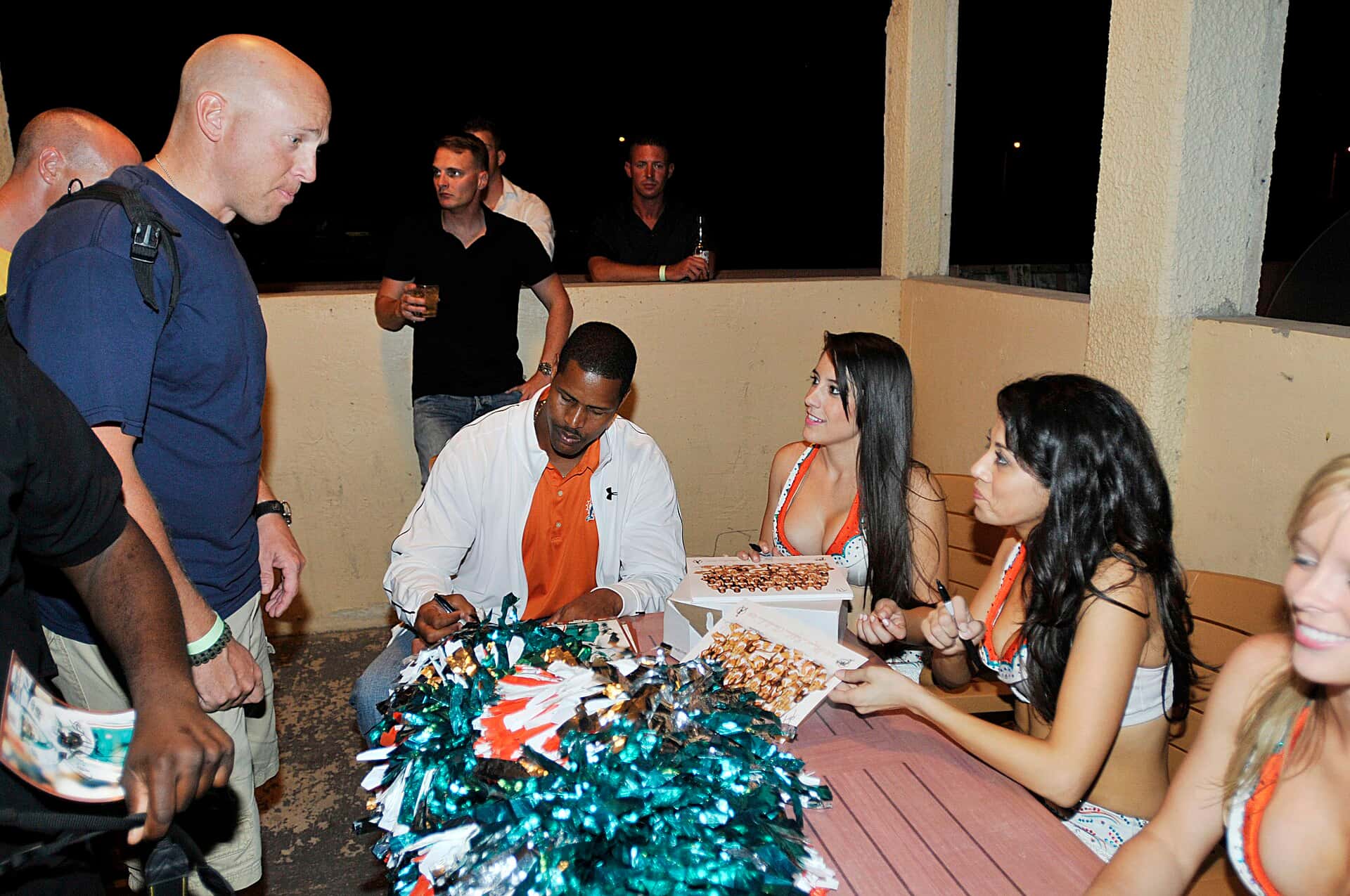
The Miami Dolphins returned to the practice field at the Baptist Health Training Complex on Monday morning after a preseason loss to the New York Giants on Saturday at Hard Rock Stadium, and the most significant development had nothing to do with the game. Quarterback Quinn Ewers was back at practice, and rookie wide receiver Chris Bell shed his red no-contact jersey to participate in team drills.
Bell tore an anterior cruciate ligament during his final season at Louisville. Returning to full team work in late August, roughly on schedule for a player rehabilitating that injury, is the kind of milestone that determines whether a rookie contributes as a first-year player or spends the season on injured reserve.
The Dolphins also made roster moves, signing tight end Ethan Conner and inside linebacker Jaheim Thomas while waiving center Jim Bonifas and cornerback Ahmari Harvey. Transactions of that kind are routine in the final week of camp, but their volume increases sharply as the roster deadline approaches.
The deadline that shapes this week
Every NFL team must reduce its roster to 53 players by 6 p.m. Eastern on Sunday, August 30. Camps open with as many as 90 players, which means each organization will release or trade roughly 37 of them within days.
Those decisions are rarely about pure talent. Special teams contribution, positional versatility and practice squad eligibility routinely determine who occupies the last several roster spots. A player who can back up two positions and cover kicks frequently beats a more talented specialist.
Practice squads add another layer. Teams can carry additional players who practice with the club and can be elevated to the active roster on game days under specific rules, which means being cut is often the beginning of a negotiation rather than the end of a relationship.
Where the quarterback situation stands
Ewers arrived in the NFL after a college career at Texas that made him one of the most scrutinized quarterback prospects of his class. His return to practice was described by observers as a significant development for a team looking for reinforcements.
Quarterback evaluation during preseason is notoriously unreliable. Snaps come against defenses running simplified schemes, with offensive lines composed partly of players who will not make a roster, and the sample sizes are small.
What coaching staffs actually evaluate is practice: how a quarterback processes reads against a defense that knows the offense, how he handles the mental load of a full playbook, and how he performs in situational work.
The preseason record means nothing and everything
Miami entered the week at 0-2 in preseason play. Preseason records have essentially no predictive value for the regular season, and coaching staffs treat these games as evaluation opportunities rather than as competitions to be won.
Starters play sparingly, if at all, particularly in the third preseason game, and play-calling is deliberately vanilla to avoid revealing anything. Teams have won preseason games with rosters that then collapsed in September, and the reverse happens just as often.
What the games do produce is film on players fighting for the final roster spots, which is their actual purpose. For a fringe roster player, a preseason game is the entire audition.
Chris Bell and the receiver depth chart
Bell's return to team drills changes Miami's receiver calculus. A rookie coming off a torn ACL who reaches full participation in late August has a realistic path to contributing during the season, whereas one still limited would likely be headed for injured reserve.
Wide receiver is a position where depth gets tested quickly. NFL teams typically carry five or six, and soft tissue injuries during the season are common enough that the fifth and sixth options routinely play meaningful snaps.
Louisville has produced a steady stream of NFL receivers, and Bell's college production before the injury was what drew Miami's interest.
The Dolphins' broader situation
Miami enters the 2026 season having spent several years cycling between playoff contention and disappointment. The franchise has not won a playoff game since the 2000 season, the longest such drought in the NFL.
That context colors every roster decision. A team in the middle of the league's competitive distribution has less margin than either a contender or a rebuilding club, because neither strategy is fully available.
The AFC East has been one of the league's more volatile divisions in recent years, which means Miami's path to the postseason runs through a schedule that is neither forgiving nor impossible.
What happens to the players who are cut
Players released before the deadline enter waivers if they have fewer than four accrued seasons. Teams can claim them in reverse order of the previous season's standings, which means the worst teams get first choice.
Players with four or more accrued seasons become unrestricted free agents immediately and can sign anywhere. That distinction matters enormously for veterans, who can choose a landing spot rather than being assigned one.
Practice squad rules allow teams to carry additional players, with a limited number of veteran exceptions. The economics are substantially different from active roster contracts, though practice squad pay has risen considerably under recent labor agreements.
The Florida NFL picture
Miami is one of three Florida NFL franchises, alongside the Tampa Bay Buccaneers and Jacksonville Jaguars. All three face the same August 30 deadline.
The Buccaneers and Jaguars will meet in their preseason finale on Friday evening at EverBank Stadium in Jacksonville, preceded by joint practices between the two clubs earlier in the week. Tampa Bay defeated Kansas City 16-15 at Raymond James Stadium in its previous preseason outing.
Joint practices have become the preferred evaluation setting for many coaching staffs, offering controlled competition against unfamiliar opponents without the injury exposure of a game.
Injuries and the roster calculus
Late August injuries complicate cutdown decisions in ways fans rarely see. A player who suffers an injury before the deadline may be placed on injured reserve, which has different implications depending on the timing.
Teams also weigh whether to keep an extra player at a position where a starter is dealing with a minor issue, which can push a healthy player at another position off the roster entirely.
Those calculations are why cutdown day produces surprises. A player who looked secure in early August can be released because of a decision made about an unrelated position group.
What the season opener looks like
The NFL regular season begins in the second week of September, giving teams roughly ten days between the roster deadline and their first game to install game plans against a specific opponent.
That compressed window is why coaching staffs value versatility. A roster with players who can fill multiple roles handles the inevitable early-season injuries better than one built on specialists.
For Miami, the opener will be the first meaningful indication of whether the offseason produced a team capable of ending the franchise's long playoff drought.
What South Florida fans should watch
The final preseason game and the days immediately after the deadline are where the roster's real shape emerges. Waiver claims after cutdown routinely add players who contribute immediately, and teams frequently make trades in the final 48 hours.
Practice reports through the week will indicate whether Bell continues in full participation and how the quarterback reps are distributed, both of which are more informative than anything that happens in a fourth preseason quarter.
Hard Rock Stadium's regular season schedule will bring the usual South Florida logistics: traffic on the Turnpike and I-95, early-season heat that affects both teams, and the afternoon thunderstorm pattern that makes September games in Miami Gardens their own kind of test.
The 90 to 53 process in practice
Reducing a roster from 90 players to 53 is not a single decision made on deadline day. Teams trim in waves through August, releasing players who have clearly not separated themselves, and the final round of cuts involves genuinely difficult calls among players the coaching staff would prefer to keep. By the time Sunday arrives, most organizations know the outcome of all but a handful of spots.
The contested spots almost always sit at the back of position groups: the fifth or sixth wide receiver, the ninth offensive lineman, the fourth safety. Those players are separated by small margins, and the tiebreakers are usually special teams contribution, positional flexibility and whether a player can be stashed on the practice squad without another team claiming him.
Practice squad eligibility is itself a strategic consideration. A player with limited accrued seasons can be released and re-signed to the practice squad if he clears waivers, which lets a team keep him in the building. A veteran cannot be stashed that way, which sometimes means a marginally better veteran loses a roster spot to a younger player the team can retain either way.
What history says about cutdown weekend
Players cut in late August routinely become contributors somewhere. Every season produces examples of roster casualties who are claimed elsewhere and start games by October, which is why personnel departments treat the waiver wire immediately after the deadline as one of the most productive acquisition windows of the year.
Injuries drive that dynamic. NFL rosters do not survive a season intact, and the players available at the end of August become the depth every team draws on in October and November. Clubs that evaluate the waiver wire well can meaningfully improve a roster without spending draft capital or free agent money.
For Miami specifically, a team carrying questions at multiple positions and working a rookie receiver back from knee surgery, the days after the deadline may matter as much as the days before it.
What's next
The Dolphins close the preseason this week before the Sunday deadline. Coaching staffs typically finalize their roster decisions over Saturday and Sunday, with calls to released players made through the morning.
Practice squad signings follow within a day or two, once waivers clear and teams know which players are available.
Then the real season begins, and the preseason record, the joint practices and the roster churn all become irrelevant. For Miami, a franchise measuring itself against a playoff drought that dates to the last century, the only evaluation that will matter starts in September.
Spotted an issue with this article?
Have something to say about this story?
Write us a letterComments
No comments yet. Be the first to weigh in.
Related Coverage

Rays await Guardians or White Sox in ALCS after sweeping Yankees; Game 1 Monday at Tropicana Field
5h ago
John Carlson scores twice, Dennis Hildeby makes 34 saves as Lightning hold off Wild 3-2
6h ago
Winless Dolphins host Bengals at Hard Rock Stadium seeking first win under Jeff Hafley
1d ago
Hurricane Isaias Scrambles Florida Sports: FSU Cancels Pensacola Games, FAMU Moves to Friday
1d ago