Two Months Out, Byron Donalds and David Jolly Set the Terms of Florida's Governor Race
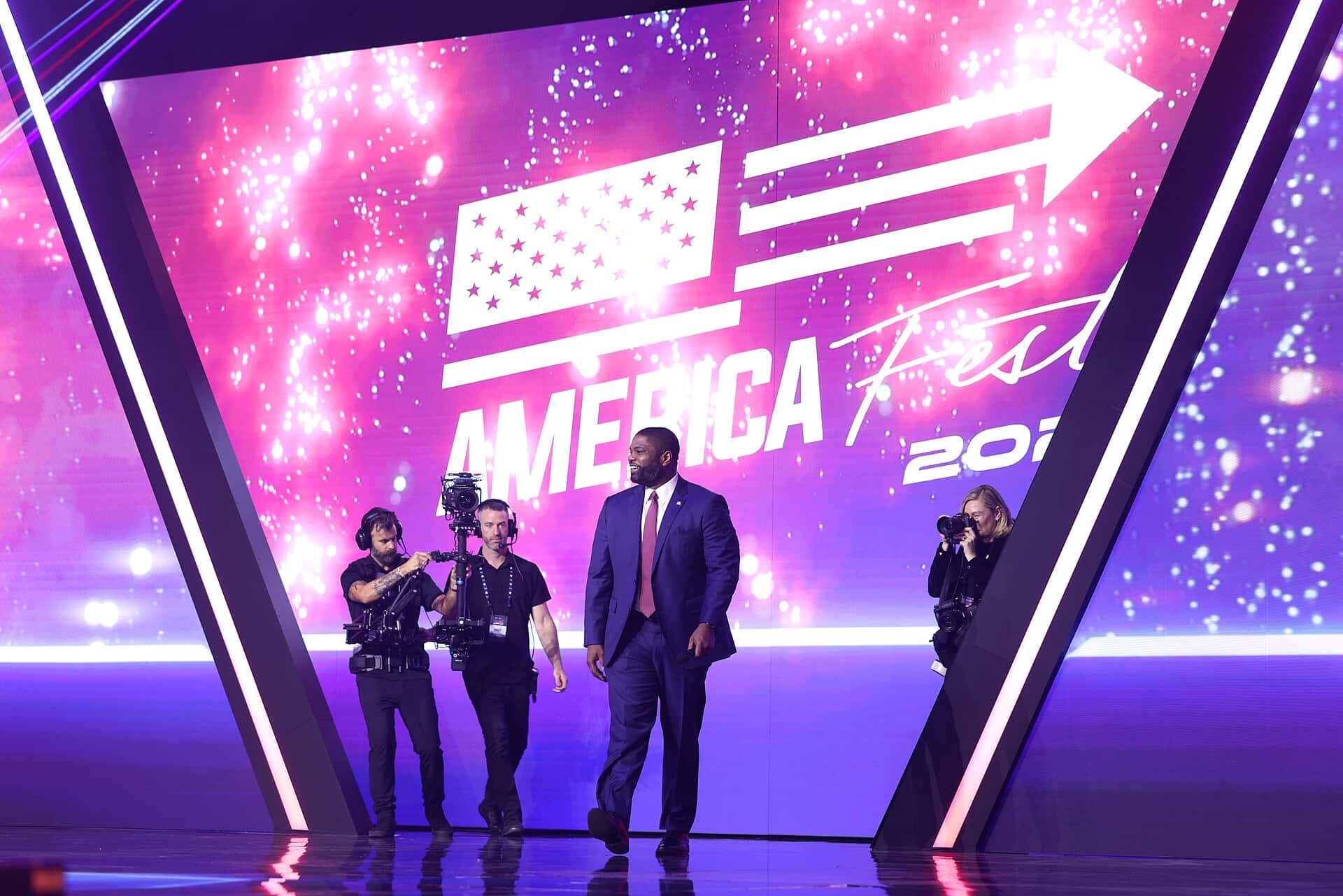
Florida voters will choose a new governor on November 3 for the first time since 2018 without an incumbent on the ballot. Governor Ron DeSantis is term-limited after two consecutive terms and cannot seek a third. Republican Byron Donalds and Democrat David Jolly, who both won their party primaries on August 18, now have roughly two months to define a race for an office that has shaped Florida policy on insurance, education, immigration and public health for eight years.
Donalds emerged from a Republican primary field that included Lieutenant Governor Jay Collins, former Florida House Speaker Paul Renner and James Fishback. He carried an endorsement from President Donald Trump into the primary, and he enters the general election with a substantial financial advantage over Jolly. If elected, Donalds would be the first Black governor of Florida.
Jolly's path is unusual. He served in Congress as a Republican representing a Pinellas County district before leaving the party, and he ran and won this year's Democratic primary as a Democrat. That biography is central to both his pitch and the attack he will face, and it makes his campaign a test of whether a party-switcher can consolidate a Democratic base in a state where Democratic registration has eroded badly.
Where the candidates have staked out ground
Donalds has centered his campaign on three themes: immigration enforcement, the property insurance market and economic opportunity. The immigration plank aligns with the enforcement posture Florida has built over the past two years, including partnership agreements between all 67 county jails and federal immigration authorities. It is the area where continuity with the DeSantis administration is most explicit.
The insurance plank is more complicated territory for a Republican running to continue a Republican administration, because it requires arguing that a problem is being solved rather than that it does not exist. Florida homeowners have experienced years of rate increases and carrier withdrawals, and while 2026 brought rate reductions at the state-backed Citizens Property Insurance Corporation and a sharply reduced Citizens policy count, homeowners compare today's premium to what they paid in 2019 rather than to last year.
Jolly has built his campaign around the argument that the same donor networks control policymaking in Tallahassee regardless of which individual holds the office. He has characterized his opponent as a vehicle for entrenched interests, a framing designed to make the race about affordability and influence rather than about national partisan alignment, which is unfavorable terrain for a Florida Democrat.
Affordability is the through line Jolly has leaned on hardest, and it connects insurance premiums, housing costs, utility bills and property taxes into a single argument. That combination is the strongest available material for a Democrat in Florida, because it does not require voters to shift on cultural questions where the state has moved right.
The structural picture
The fundamentals favor Donalds, and neither campaign disputes that. Florida Republicans hold a substantial voter registration advantage that did not exist a decade ago, a reversal built through sustained registration work and party switching. Statewide Democratic candidates have not won a Florida governor's race since 1994.
Forecasting models reflect that. One publicly available forecast has given Donalds better than an 80 percent chance of winning, projecting a mid-single-digit popular vote margin. Those models are built on registration, past results and available polling, and they are more reliable about direction than about margin this far from Election Day.
Money compounds the structural gap. Donalds established a fundraising lead early and has maintained it, which matters enormously in Florida because the state contains ten media markets and running statewide television is among the most expensive campaign undertakings in American politics. A candidate who cannot afford Tampa, Orlando and the South Florida markets simultaneously is running a fundamentally smaller campaign.
Jolly's counterargument rests on turnout composition in a midterm year and on the possibility that affordability pressure scrambles normal partisan behavior. That is a real mechanism, but it has been predicted in Florida before without materializing.
The rest of the ballot
The governor's race sits atop a full statewide slate. Florida's United States Senate seat is on the ballot, with Republican Senator Ashley Moody, appointed to the seat after Marco Rubio's departure for the State Department, facing Democratic state Representative Angie Nixon following an upset in the Democratic primary. Attorney General, Chief Financial Officer and Commissioner of Agriculture are also up.
All 28 of Florida's congressional seats are on the ballot as well. The delegation currently stands at 20 Republicans and 7 Democrats, with the state's growth having added seats over the past two redistricting cycles. Florida's congressional results will be part of the national story about control of the House.
Voters will also decide a proposed constitutional amendment on property taxes that would expand the homestead exemption to $250,000. Ballot measures in Florida require 60 percent approval to pass, a threshold that has defeated measures with clear majority support. A tax measure polling well above 50 percent is not necessarily a measure that passes.
That amendment interacts with the governor's race in a way both campaigns have to manage. Local governments and school districts fund themselves substantially through property taxes, and the revenue consequences of a larger exemption would land on county commissions and school boards rather than in Tallahassee.
The issues most likely to decide it
Property insurance remains the most reliably salient issue in Florida politics, because it shows up in a bill that arrives on a schedule. The market improved in 2026 in measurable ways, with rate decreases filed across most counties and Citizens shedding policies back to private carriers. Whether voters credit that improvement is a separate question from whether it happened.
Housing costs have not improved on the same trajectory. Mortgage rates near 7 percent, condominium markets absorbing the cost of new reserve requirements, and insurance carried inside monthly payments have kept the effective cost of ownership high even where prices have flattened. Florida's condominium market in particular has been under sustained pressure.
Education is the third arena, spanning the state's voucher expansion, enrollment declines in traditional public schools and the district budget cuts that have followed. Several Central Florida districts have cut hundreds of positions this year, which converts a policy debate into a local employment story.
Immigration enforcement is where the two campaigns differ most sharply in tone. Florida has become the national leader in local participation in federal immigration enforcement, and the effects reach agriculture, construction, hospitality and school enrollment. Donalds has embraced that record and Jolly has criticized its economic consequences.
Regional dynamics across ten media markets
Florida is not one electorate, and statewide campaigns are won by assembling regions rather than by winning a national argument. Miami-Dade County, long the anchor of Democratic statewide margins, has shifted substantially toward Republicans over the past three cycles, driven heavily by Cuban American and Venezuelan American voters responding to how each party discusses socialism and hemispheric policy. That shift alone accounts for much of the change in Florida's statewide math.
The Interstate 4 corridor running from Tampa Bay through Orlando to Daytona Beach remains the largest genuinely contested territory, and it contains a large Puerto Rican population whose voting behavior has been less predictable than either party's messaging assumes. Both campaigns will spend disproportionately there because it is the only region where persuasion still moves numbers at scale.
Southwest Florida and the Panhandle are reliably Republican and function primarily as turnout problems rather than persuasion problems. Broward and Palm Beach counties remain the Democratic base, and Jolly's viability depends less on winning them, which he will, than on the margin and the raw turnout those counties produce.
North Florida, including the Jacksonville area and the rural counties along the Georgia line, is where Jolly's background as a former Republican is theoretically most useful and where his party label is most costly. Whether that trade nets positive is one of the genuine unknowns in the race.
How the next two months run
Florida's general election calendar moves quickly from here. Vote-by-mail ballots go out to voters who have requested them well before Election Day, and Florida's early voting period gives counties latitude on exact dates within a state-set window. A large share of Florida's electorate votes before November 3, which compresses the effective campaign.
That timing changes advertising strategy. Campaigns front-load television and digital spending to reach voters while ballots are in hand rather than saving resources for a closing argument, which advantages the better-funded campaign further.
Debates have not been finalized publicly, and they are one of the few remaining events capable of moving a race with this structure. A trailing candidate generally wants as many as possible and a leading candidate generally wants few.
What the winner inherits
Whoever wins takes office with a Legislature that is heavily Republican in both chambers, which sets the realistic ceiling on any Democratic governor's agenda and the realistic floor on a Republican's. A Governor Jolly would govern largely through the veto pen, agency appointments and executive authority over emergency management. A Governor Donalds would arrive with a cooperative Legislature and correspondingly higher expectations.
The next governor also inherits a state budget shaped by eight years of tax reductions and a slowing population growth rate. Florida's revenue model depends heavily on sales taxes paid substantially by tourists and new residents, which makes it more sensitive to a national slowdown than states relying on income taxes. A recession would land on the next administration's second budget.
Insurance and disaster exposure sit permanently on the desk. The next governor will preside over Citizens Property Insurance Corporation's board appointments, the state's hurricane catastrophe fund and the emergency response apparatus that determines how a landfall is managed. Those responsibilities are indifferent to party.
Finally, the next governor inherits the state's higher education and public health institutions at a moment when both have been reshaped substantially by executive appointments. University boards, the surgeon general's office and the state Board of Education are all positions where a change in governor produces changes in direction within a year.
What's next
Watch the fundraising reports, which are the clearest available signal about whether the race is tightening. A Democratic candidate closing a resource gap in September usually indicates outside money has concluded the race is competitive, and outside money in Florida moves before public polling does.
Watch also for how each campaign handles a hurricane, should one materialize during the peak of the season. Storm response has ended and made Florida political careers, and a governor's race conducted during an active emergency operates under entirely different rules.
Spotted an issue with this article?
Have something to say about this story?
Write us a letterComments
No comments yet. Be the first to weigh in.
Related Coverage

Miami shuts enclosed park slides after 13-year-old dies following Shenandoah Park incident
21h ago
Appeals Court Orders Hope Florida Grand Jury Report Expunged, Rules $10 Million Was Never Public Money
1d ago
Jacksonville Council Committees Clear $30 Million Gas Tax Loan to Rescue JTA Ahead of Oct. 13 Final Vote
1d ago
Florida Supreme Court Suspends Pinellas-Pasco Judge Jennifer Cruz Dubbeld 20 Days Over 2024 Campaign Misconduct
2d ago