Everglades Reservoir Timeline Moves Up to 2029 After $2 Billion Federal Infusion
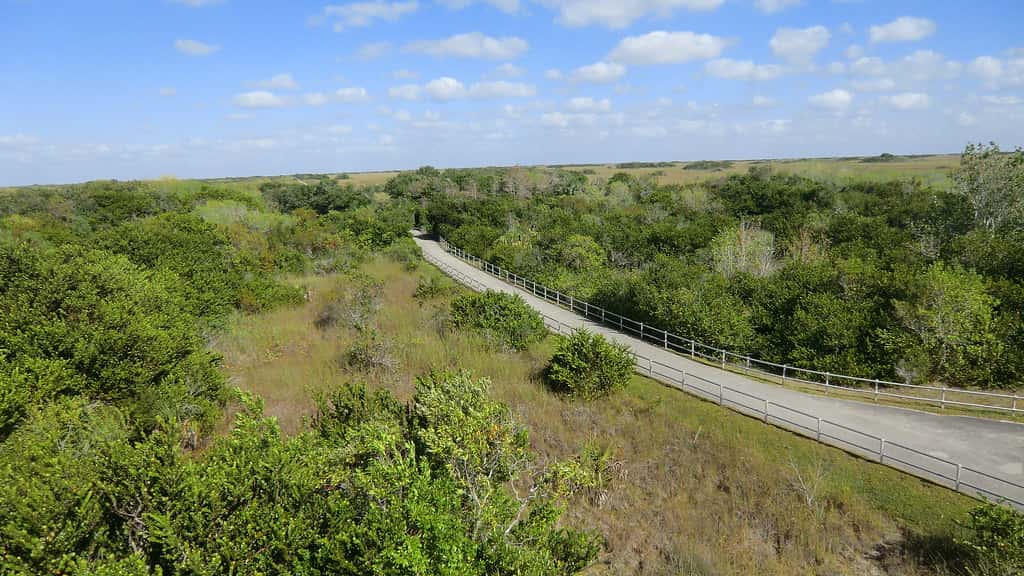
The centerpiece project of Everglades restoration has moved onto an accelerated timeline, with all federally funded contracts executed and completion of the Everglades Agricultural Area Reservoir now targeted for 2029, roughly five years ahead of the original schedule.
The acceleration follows a $2 billion federal infusion into Everglades restoration work. Gov. Ron DeSantis announced the contract execution and the revised completion target, describing the reservoir as the project that determines whether the broader restoration effort achieves its water quality goals.
For Floridians on both coasts, the reservoir is the infrastructure that stands between Lake Okeechobee and the algae blooms that have periodically closed beaches, killed fish and damaged tourism economies from Stuart to Fort Myers.
What the reservoir does
The Everglades Agricultural Area Reservoir is designed to capture water that would otherwise be discharged east and west from Lake Okeechobee and instead send it south, through a stormwater treatment area and into the Everglades, following something closer to the historical flow path.
The engineering problem it solves dates to the twentieth century reengineering of South Florida. Lake Okeechobee historically overflowed its southern rim during the wet season, sending a broad sheet of shallow water south through the sawgrass. The construction of the Herbert Hoover Dike and the drainage of the Everglades Agricultural Area for farming severed that connection.
With the southern outlet closed, the Army Corps of Engineers manages lake levels by discharging east through the St. Lucie Canal and west through the Caloosahatchee River. Those discharges carry nutrient-rich water into estuaries that evolved as brackish systems, and the combination of freshwater volume and nutrient load has repeatedly triggered algae blooms.
State projections indicate the reservoir will reduce nutrient-rich discharges to Florida's east and west coasts from Lake Okeechobee by up to 55 percent.
Why the timeline matters
Everglades restoration has been underway since Congress authorized the Comprehensive Everglades Restoration Plan in 2000, and the program's history is one of extended timelines, cost growth and components completed decades after they were authorized.
Pulling the reservoir's completion forward by roughly five years changes the calculus for communities along the Caloosahatchee and St. Lucie estuaries. Each additional wet season without the reservoir carries discharge risk, and severe bloom years have produced measurable economic damage to coastal tourism, fishing charters and waterfront property values.
The acceleration was made possible by the federal funding covering construction contracts that would otherwise have been let sequentially as annual appropriations arrived. Executing the contracts at once permits parallel construction rather than a phased build.
The connection to red tide and blue-green algae
Public discussion often conflates two distinct phenomena, and the distinction affects what the reservoir can and cannot fix.
Blue-green algae, or cyanobacteria, blooms in fresh water, including Lake Okeechobee itself and the canals and rivers that carry lake water. When discharges push that water into estuaries, blooms can persist into brackish conditions. Nutrient loading is a primary driver, which places these blooms squarely within the reservoir's target.
Red tide is caused by Karenia brevis, a marine organism that blooms offshore in the Gulf and is transported to the coast by currents and wind. Red tide occurs naturally and predates modern agriculture and development in Florida. Nutrient runoff can intensify and prolong a bloom once it reaches nearshore waters, but the reservoir will not prevent red tide from forming offshore.
Researchers have made progress on red tide mitigation and monitoring in recent years, and Florida has funded detection and response programs, but the two problems require different tools.
Manatees and the legal backdrop
Water management in the Lake Okeechobee system has been shaped in part by litigation. Environmental groups sued the Army Corps of Engineers arguing that discharges endangered protected species, including manatees, and a federal judge ordered the agency to consult with stakeholders on minimizing environmental impacts.
A revised operating manual for Lake Okeechobee releases, adopted in 2024, prompted the Corps to take a more proactive approach to keeping lake levels lower going into the wet season and to send more water south, where it is filtered naturally through the Everglades system.
Manatee mortality in Florida has been driven substantially by seagrass loss in the Indian River Lagoon, a system stressed by nutrient loading and algae blooms that block the light seagrass requires. Water quality improvements in that system are tied to a different set of projects than the EAA Reservoir, but the underlying dynamic, nutrient loading killing the plants manatees eat, is the same.
What it means for Floridians
For residents of Martin, St. Lucie, Lee and Charlotte counties, the reservoir represents the most direct structural relief from discharge-driven blooms that has been proposed. Reducing discharge volume by up to 55 percent would not eliminate bloom risk but would substantially narrow the conditions under which severe events occur.
For South Florida's water supply, sending more water south recharges the aquifer system that supplies drinking water to millions of residents and pushes back against saltwater intrusion, a growing problem along the coast as sea levels rise and coastal wellfields draw down.
For Everglades National Park and the broader ecosystem, restored flow supports the wading bird populations, tree islands and estuarine habitat that depend on the timing and volume of freshwater delivery.
For taxpayers, the project is expensive and the federal and state cost shares have both grown over the life of the restoration program. The accelerated schedule reduces the inflation exposure that has driven much of that growth.
How the restoration program is structured
The Comprehensive Everglades Restoration Plan, authorized by Congress in 2000, is one of the largest ecosystem restoration efforts ever attempted. It comprises dozens of individual projects, each requiring its own authorization, design, funding and construction sequence.
The plan operates as a federal-state partnership with costs shared between the United States Army Corps of Engineers and the State of Florida through the South Florida Water Management District. That structure has been both the program's strength and its principal source of delay, since projects advance only when both partners fund their shares in the same budget cycle.
Florida has generally appropriated its share on schedule, and the state has at times advanced projects with its own funds ahead of federal reimbursement. Federal appropriations have been less consistent, arriving through annual budgets and periodic water resources legislation, which is why the recent $2 billion infusion produced such a substantial change in the schedule.
The projects fall into categories: storage, which captures water for later release; treatment, which removes nutrients before water enters the natural system; conveyance, which moves water where it needs to go; and seepage management, which keeps water in the natural system rather than allowing it to drain toward developed areas.
The other pieces of the puzzle
The Everglades Agricultural Area Reservoir is the largest single component, but it depends on other projects functioning alongside it.
Stormwater treatment areas are constructed wetlands that remove phosphorus from water before it enters the Everglades. Phosphorus is the limiting nutrient in the historical Everglades system, and elevated concentrations convert sawgrass marsh into cattail monoculture, which supports a fraction of the wildlife the native community does. The treatment areas attached to the reservoir are what make its stored water usable.
The Central Everglades Planning Project addresses conveyance south of the reservoir, moving water through Water Conservation Areas and into Everglades National Park. Without that conveyance capacity, stored and treated water has nowhere to go.
Tamiami Trail bridging removed a barrier that acted as a dam across the historical flow path. Sections of the roadway have been elevated onto bridges, allowing water to move south into the park rather than pooling north of the road.
The Kissimmee River restoration, completed after decades of work, reversed a mid-century channelization that had straightened a meandering river into a canal. That project restored floodplain function upstream of Lake Okeechobee, reducing the nutrient load entering the lake in the first place.
What still is not solved
Restoration addresses water quantity, timing and distribution. It does not by itself resolve every stress on the system.
Sea level rise is the constraint that operates independently of restoration progress. South Florida's elevation is low enough that rising seas push saltwater into coastal aquifers and into the southern Everglades, converting freshwater marsh to mangrove and brackish habitat. Restoring freshwater flow south actually helps resist that intrusion by maintaining hydraulic pressure, which is one of the less-discussed benefits of the program.
Invasive species are a separate problem. Burmese pythons have substantially reduced mammal populations in the southern Everglades, and the Florida Fish and Wildlife Conservation Commission runs removal programs that manage rather than eliminate the population. Invasive plants including melaleuca and Brazilian pepper require ongoing control.
Agricultural and urban nutrient runoff continues to enter the system from the north, and while treatment areas remove much of it, source reduction through best management practices in the agricultural area and stormwater controls in developed areas remains an ongoing regulatory effort.
Water supply demand from a growing South Florida population competes with environmental delivery for the same resource, a tension that intensifies as the region adds residents.
What's next
Construction on the reservoir and its associated stormwater treatment area continues under Army Corps and South Florida Water Management District oversight. The district publishes progress updates and its annual South Florida Environmental Report, which documents water quality trends and restoration milestones.
Between now and 2029, discharge decisions will continue to be made under the current operating manual, which means the estuaries remain exposed during wet seasons when lake levels rise quickly.
The Florida Department of Environmental Protection and the Florida Fish and Wildlife Conservation Commission publish algae bloom and red tide status reports, and residents along both coasts can check current conditions before planning water-based activities.
Spotted an issue with this article?
Have something to say about this story?
Write a letter to the editorComments
No comments yet. Be the first to weigh in.
Related Coverage

Florida Loggerhead Sea Turtles Set Nesting Record as Leatherbacks Near New High
3h ago
Florida Anglers Get a 14-Day Fall Atlantic Red Snapper Season Starting Oct. 9
2d ago

King Tides Swamp South Florida Streets and Shut Down Two Miles of A1A
2d ago

Everglades Restoration Delivers Record Freshwater Flows Even as Drought Grips South Florida
3d ago