Federal appeals judge rebukes Florida for using white-out to alter execution drug expiration dates
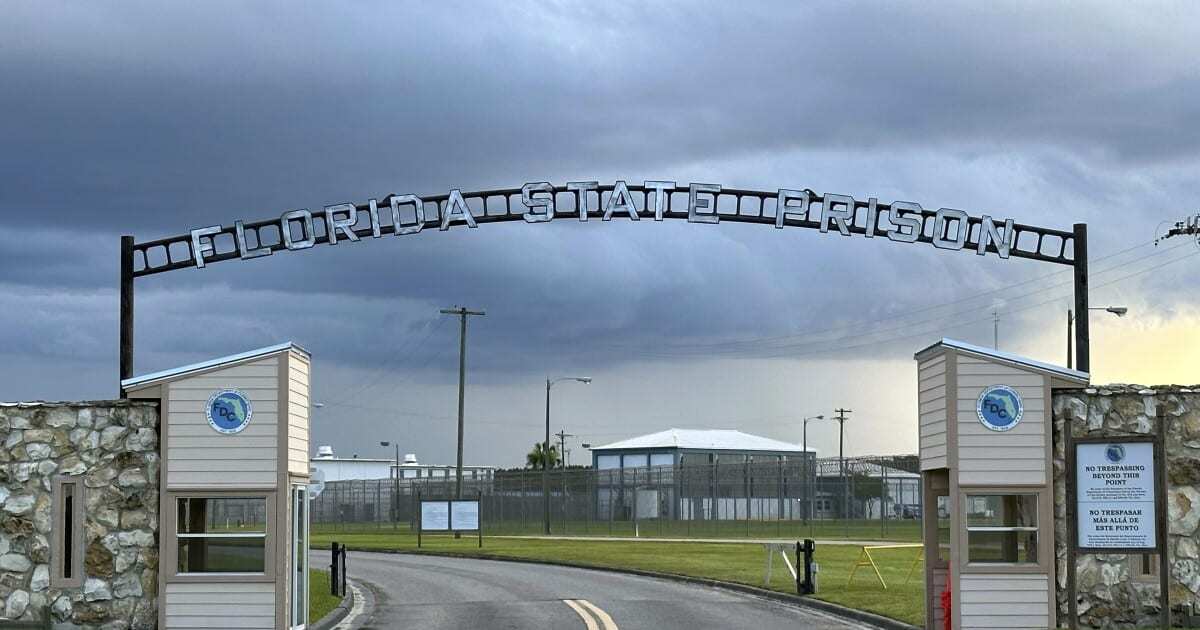
A federal appeals judge has sharply criticized the Florida Department of Corrections after the agency used white-out to change the expiration dates recorded on its lethal injection drug logs, a dispute that surfaced in the final appeal of Jesse Guardado and now hangs over the two executions still scheduled in Florida this year.
The 11th U.S. Circuit Court of Appeals upheld Guardado's death warrant, but U.S. Circuit Judge Jill Pryor wrote separately to call the state's recordkeeping failures and lack of transparency "deeply concerning," according to reporting by The Florida Trib published by WLRN. Guardado, 64, was executed Nov. 5 at Florida State Prison in Starke, the state's 19th execution of 2026.
What the drug logs showed
When Florida receives a supply of any of the three drugs in its lethal injection protocol, it is supposed to log the date the drugs arrived, the vendor, the lot number and the expiration date, and to record each time a drug is used in an execution, according to The Florida Trib.
Guardado's lawsuit, filed in September, relied in part on inventory logs his attorney obtained from the Department of Corrections. The logs showed expiration dates that had been changed from 1/31/2025 to 1/31/2027, with no notation of when or why the change was made. Gov. Ron DeSantis signed Guardado's death warrant on Oct. 5, about a week after the suit was filed.
The state's explanation
At an Oct. 22 evidentiary hearing, Dr. Renea Marcano, the department's bureau chief of pharmaceutical services, testified that the employee who maintained the log did not understand he was supposed to write down the drug's expiration date rather than the current year, The Florida Trib reported. State officials said the employee does not speak English as a first language and misunderstood which date to enter, and that the white-out was used to correct the mistake. Marcano acknowledged that the logs also contained discrepancies between the dates of executions and the dates drugs were logged out.
State officials said Florida has never used expired drugs in an execution.
Guardado's lawyers were not persuaded. In his appeal, they argued that Marcano "did not explain why a person who misunderstood years due to a language barrier would be employed there or why this error was not caught by any other person previously."
Judge Pryor's rebuke
Pryor's separate opinion went beyond the original errors and focused on how the department handled them once they came to light in litigation.
"Even more concerning is Florida's response once it learned during litigation about the errors in its drug log. When the Department realized that its logs contained inaccurate information about drug expiration dates, its solution was to use (white-out) liquid eraser to alter the logs."
"The State's failure to maintain accurate records will invariably lead to concerns and questions about whether the State is adhering to its protocol as well as the efficacy and constitutionality of that protocol," she wrote. She added that the court's decision upholding the warrant "should not in any way signal or suggest that we condone the Department of Corrections' failure to meet its basic responsibility to maintain accurate records."
The ruling did not stop the execution. The U.S. Supreme Court denied Guardado's request for a stay on the afternoon of Nov. 5, and he was pronounced dead at 6:13 p.m., according to The Associated Press. He had pleaded guilty to the 2004 beating and stabbing death of Jackie Malone, a 75-year-old community activist in Walton County.
A pattern of questions about Florida's drugs
The white-out episode matters because it is not the first time Florida's execution records have been challenged. Past lawsuits and Department of Corrections medical records have raised allegations that in at least 35 executions since February 2025, the state may have used expired drugs and lower doses than its protocol requires, The Florida Trib reported.
The U.S. Supreme Court has already been asked about the issue. In February, when the court refused to halt the execution of Melvin Trotter, Justice Sonia Sotomayor agreed that his evidence fell short but wrote separately that "the record to date is troubling." She said the record reflected at least the possibility that recent Florida executions involved expired drugs, incorrect doses, nonprotocol drugs and "recordkeeping lapses that could mask yet additional failings." She also criticized the secrecy around the process, writing that prisoners "should not have to guess at whether the State is, or is not, following its execution protocol."
Courts have so far found that such evidence is not enough to block an execution.
Floridians for Alternatives to the Death Penalty said after Guardado's execution that the state's record "showing expired execution drugs demands an explanation the public can scrutinize." The group added: "An administration carrying out executions at a record pace should expect scrutiny of whether it is following its own protocol."
A record year for executions
Guardado's execution tied Florida's single-year record of 19, set in 2025, which was the most for the state since the U.S. Supreme Court reinstated the death penalty in 1976. Florida has carried out more than half of the 35 executions in the country so far this year, according to the AP.
Florida gives the governor broad authority to sign death warrants without stating a reason. DeSantis, who leaves office in January, has signed death warrants for 39 men in his final two years in office, according to The Florida Trib.
Upcoming executions
Two more executions are scheduled before the end of the year, both at Florida State Prison under the same lethal injection protocol.
| Date | Prisoner | Case |
|---|---|---|
| Nov. 18 | Thomas Mitchell Overton, 70 | 1992 murders of Michael and Missy MacIvor in Tavernier, Monroe County |
| Dec. 1 | Ricardo Gonzalez, 56 | 1992 killing of North Miami Beach Police Officer Steven Bauer during a bank robbery |
DeSantis signed Overton's warrant on Oct. 21, setting the execution for 6 p.m. Nov. 18 at Florida State Prison, according to the News Service of Florida. Some reports, including the Florida Trib story, have listed the date as Nov. 19. Overton was sentenced to death in 1999 for killing the Key Largo-area couple in August 1992; Missy MacIvor was eight months pregnant. His execution would be Florida's 20th of the year, a new state record.
Gonzalez is set to die by lethal injection Dec. 1 at Florida State Prison, which would make him the 21st person executed by the state this year. According to court records cited by WLRN, he fired the shot that killed Bauer on Jan. 3, 1992, as the officer escorted bank tellers at the Kislak National Bank.
What's next
Pryor's opinion did not change the legal standard that prisoners must meet to halt an execution, but it puts on the record a federal appellate judge's view that the Department of Corrections has not kept accurate drug records. The state has not said publicly whether it has changed how the department tracks its execution drugs ahead of the Overton and Gonzalez executions. Whether DeSantis signs more warrants before Donalds takes office in January will determine how far Florida extends its record.
Spotted an issue with this article?
Have something to say about this story?
Write us a letterComments
No comments yet. Be the first to weigh in.
Related Coverage
Lame-Duck Congress Returns: What the Dec. 11 Shutdown and Flood Insurance Deadline, the Defense Bill and the Hegseth Impeachment Push Mean for Florida
1h ago

CENTCOM Launches Tampa-Based Task Force Iron Gate to Cut Iran's Land and Caspian Sea Supply Routes
4h ago

Boca Raton's GEO Group posts record quarter on ICE contracts as Democrats prepare to take over Congress
5h ago

NASA Opens Astronaut Applications at Kennedy Space Center Air Show, Seeking Moon Base Crews for Its 25th Class
1d ago