FEMA Money Keeps Flowing to Florida Storm Recovery Projects
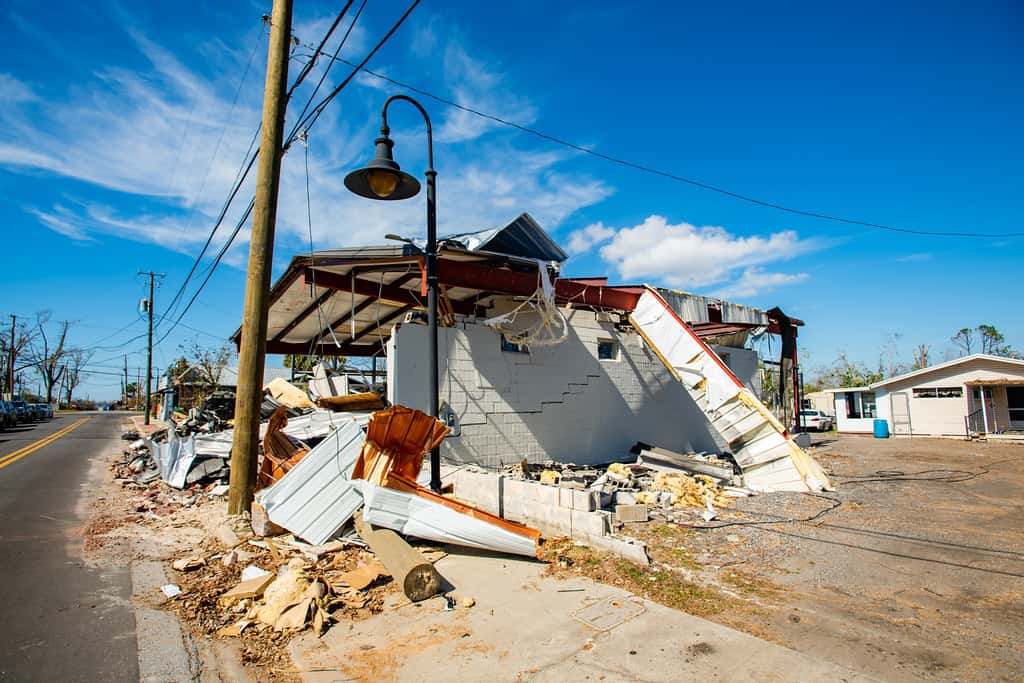
Federal disaster assistance to Florida surpassed $1.2 billion over a 90-day stretch this summer, according to the Federal Emergency Management Agency, funding hundreds of recovery and hazard mitigation projects tied to hurricanes that struck the state in recent seasons.
FEMA announced multiple tranches over the course of 2026, including more than $480 million in January supporting more than 500 disaster recovery projects statewide, nearly $97 million in April, approximately $90 million in June and an additional $89 million later that month, followed by nearly $55 million in July for community resilience and recovery.
The January package alone included roughly $180 million for rebuilding or restoring critical infrastructure and public facilities, more than $136.6 million for emergency protective measures taken to protect life and property, and $66.3 million for debris removal from public roads.
The funding addresses damage from Hurricanes Debby, Helene and Milton along with other past disasters, reflecting the multi-year timeline over which federal disaster recovery money is obligated and disbursed.
How FEMA money reaches Florida
Federal disaster assistance flows through several distinct programs, and understanding which one is at issue matters for who receives the money and what it can be used for.
Individual Assistance goes directly to households and covers temporary housing, home repair, and other needs following a declared disaster. Those payments are capped and are not a substitute for insurance, a point FEMA emphasizes repeatedly in its public communications.
Public Assistance, which accounts for the large majority of the figures announced this year, reimburses state and local governments and certain nonprofits for debris removal, emergency protective measures, and repair or replacement of damaged public infrastructure including roads, bridges, water systems, schools and public buildings.
Hazard Mitigation Grant Program funding supports projects that reduce future damage rather than repairing past damage. That includes elevating structures, hardening critical facilities, improving drainage and acquiring repeatedly flooded properties.
Why the timeline runs so long
Disaster recovery funding continues for years after a storm because the process requires each project to be documented, scoped, engineered and approved before obligation. Large infrastructure repairs involve design work that takes months.
Cost-share requirements add another element. Public Assistance typically covers 75 percent of eligible costs, with the remainder split between state and local government, though the federal share can be increased for catastrophic events. Local governments must budget their portion.
Procurement rules apply as well. Recipients must follow federal procurement standards, which govern how contracts are awarded, and failures to comply can result in funds being deobligated after the fact during audit.
The result is that a community affected by a 2024 storm may still be receiving obligations in 2026 and completing projects in 2027 or later. That pace is the norm rather than an anomaly.
Florida's disaster funding position
Florida requests federal disaster declarations more frequently than nearly any other state, a consequence of its hurricane exposure combined with its population and the value of infrastructure at risk along its coastlines.
The state has built substantial institutional capacity around that reality. The Florida Division of Emergency Management coordinates with FEMA and administers a large share of the federal funding that passes through to local governments, and county emergency management offices handle project-level work.
That capacity is itself an advantage. States that request assistance rarely lack the experienced staff to move projects through the federal process efficiently, which can leave money obligated but unspent for extended periods.
FEMA also noted that funding continued to flow to states during an extended lapse in federal appropriations, and the agency has described working through a backlog of funding requests under current leadership.
What it means for Floridians
For residents, the most visible effects of Public Assistance funding are repaired roads, restored water and sewer service, rebuilt public buildings and cleared debris. Those are the outcomes the money purchases.
Hazard mitigation funding has longer-term implications. Projects that harden infrastructure or elevate structures reduce the damage the next storm produces, which lowers future recovery costs and can affect flood insurance rates for participating communities.
The National Flood Insurance Program's Community Rating System gives premium discounts to residents of communities that exceed minimum floodplain management requirements. Mitigation investment can improve a community's rating and reduce what its residents pay.
For individual homeowners, the most important point is one FEMA states directly: disaster assistance is not insurance. Individual Assistance is capped well below the cost of rebuilding a home, and households without flood insurance in a flood event face substantial uncovered losses.
The federal disaster policy debate
Disaster spending has grown substantially over recent decades, driven by development in exposed areas, the increasing value of property at risk and the frequency of billion-dollar disasters. That growth has generated policy discussion about the federal role.
Proposals under discussion in recent years have included raising the damage thresholds required for a federal declaration, shifting more cost share to states, and increasing the emphasis on pre-disaster mitigation relative to post-disaster recovery.
Mitigation-focused approaches have strong support in the research literature. Studies conducted for the National Institute of Building Sciences have found that mitigation investment returns multiples of its cost in avoided future damage, with the ratio varying by hazard and measure.
For Florida, any change in federal cost-share or declaration thresholds would have outsized effect given how frequently the state receives assistance. The state's congressional delegation has historically worked across party lines on disaster funding matters.
The insurance interaction
Federal disaster assistance and private insurance interact in ways that affect what households actually receive. FEMA assistance is generally reduced by insurance proceeds, since the program is designed to address unmet needs rather than to duplicate coverage.
Flood damage is the critical gap. Standard homeowners policies exclude flood, and flood coverage requires a separate policy through the National Flood Insurance Program or a private carrier. Uptake outside mandatory purchase areas has historically been low.
Storm surge, which causes a large share of hurricane damage in coastal Florida, is flood damage for insurance purposes. Households with homeowners coverage but no flood policy find that distinction consequential after a surge event.
Flood policies carry a 30-day waiting period in most circumstances, which means coverage cannot be obtained after a storm forms. That timing constraint is a recurring point in preparedness messaging.
The storms behind the money
Hurricane Debby made landfall in Florida's Big Bend region in August 2024 as a Category 1 storm, producing extensive freshwater flooding as it moved slowly across the Southeast. Rainfall rather than wind drove most of its damage.
Hurricane Helene followed in September 2024, striking the Big Bend as a major hurricane and driving catastrophic storm surge along a long stretch of Florida's Gulf coast, including areas well south of the landfall point in Pinellas and Hillsborough counties.
Hurricane Milton came ashore near Siesta Key in October 2024, crossing the peninsula and producing wind damage, a significant tornado outbreak and additional flooding in communities still recovering from Helene weeks earlier.
That sequence of three storms in roughly two months created overlapping recovery obligations across many of the same communities, which is why federal funding continues to be obligated into 2026 for projects tied to all three events.
What local governments do with the money
Public Assistance funding reimburses local governments for work they have already performed or contracted, which means municipalities and counties must front costs and recover them through the federal process.
Debris removal is typically the first and most visible category. Following a major storm, local governments contract with debris haulers, and the volume involved after a significant hurricane can be measured in millions of cubic yards.
Infrastructure repair follows, covering roads, bridges, water and wastewater systems, drainage, public buildings, parks and utilities owned by public entities. Each project requires documentation of pre-storm condition and of the damage attributable to the event.
Mitigation funding attached to repair projects allows communities to rebuild to a higher standard rather than simply restoring what existed, which reduces vulnerability to the next event. That provision is one of the more consequential features of the program.
How households apply for help
Individual Assistance applications are submitted through disasterassistance.gov, by phone through FEMA's helpline, or in person at disaster recovery centers that open in affected counties following a declaration.
Applicants need identification, information about insurance coverage, the address of the damaged property and banking details for direct deposit. Registration deadlines apply and are announced with each declaration.
FEMA inspects damaged properties before approving assistance in most cases. Applicants who disagree with a determination may appeal, and the appeal process has specific documentation requirements and deadlines.
The U.S. Small Business Administration provides disaster loans to homeowners, renters and businesses, and those loans often cover more of the loss than FEMA grants. Applicants are frequently referred to the SBA even when they do not consider themselves loan candidates.
State programs alongside federal aid
Florida operates its own disaster assistance mechanisms that complement federal programs. The Florida Division of Emergency Management administers state resources and coordinates the state's portion of cost-share obligations.
The Legislature has also appropriated funds for specific recovery needs following major storms, including housing assistance and support for local governments facing cash flow constraints while awaiting federal reimbursement.
My Safe Florida Home, a state program, has provided grants for wind mitigation improvements to homes, funding measures including roof reinforcement, opening protection and improved roof-to-wall connections that reduce hurricane damage.
Those mitigation improvements can also produce insurance premium discounts, since Florida law requires insurers to provide credits for specified wind mitigation features documented through an inspection.
What's next
FEMA publishes press releases announcing funding obligations, and its disaster declaration pages list open declarations by state with the programs activated under each. Those are the authoritative public sources for Florida's current disaster funding status.
The Disaster Relief Fund monthly report, published by FEMA's Office of the Chief Financial Officer, shows the fund's balance and obligation activity. That document indicates the resources available for future events.
Recovery projects from recent Florida storms will continue moving through design, procurement and construction over the coming years. Local governments publish project status through their public works and emergency management offices.
The Atlantic hurricane season runs through November 30. NOAA's outlook calls for below-normal activity, but emergency managers have consistently noted that seasonal forecasts do not predict landfall risk at any specific location.
Spotted an issue with this article?
Have something to say about this story?
Write a letter to the editorComments
No comments yet. Be the first to weigh in.
Related Coverage
Rick Scott and Ashley Moody file bill to shield Eglin Gulf test range from offshore drilling
15h ago
Miami Federal Judge Rules Federal Ban on Noncitizen Voting Unconstitutional in Broward Case
17h ago
Former Miami Congressman David Rivera Sentenced to 10 Years in Secret Venezuela Lobbying Case
19h ago

Federal judge strikes down ICE immigration courthouse arrest policy: what it means for Florida
22h ago