Former Miami Congressman David Rivera Sentenced to 10 Years in Secret Venezuela Lobbying Case
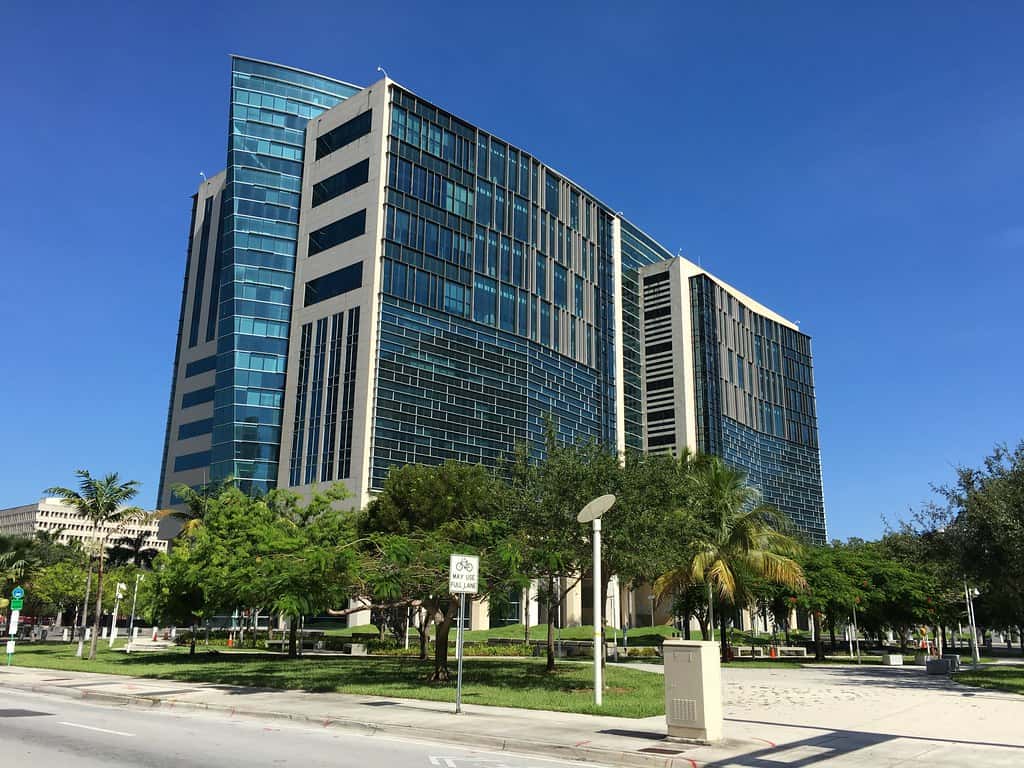
Former U.S. Rep. David Rivera, a Miami Republican who built his political career on opposition to authoritarian governments in Latin America, was sentenced Friday to 10 years in federal prison for secretly working on behalf of Venezuela's socialist government. U.S. District Judge Melissa Damian imposed the sentence in Miami on Oct. 2, closing a case that has reverberated through South Florida's Venezuelan and Cuban exile communities, where Rivera was once a prominent voice.
A federal jury in May 2026 convicted Rivera, 61, and co-defendant Esther Nuhfer on all counts. The charges against Rivera included conspiracy to violate the Foreign Agents Registration Act, violating that law, conspiracy to commit money laundering and four counts of engaging in transactions in criminally derived property, according to federal prosecutors. The case centered on a secret $50 million contract with a U.S. subsidiary of Petróleos de Venezuela, S.A., known as PDVSA, Venezuela's state oil company, to advance the interests of the government of Nicolás Maduro in the United States.
Prosecutors had asked for a sentence of 22 to 30 years. The judge's 10-year term was well below that request but still sends a former member of Congress to federal prison for a decade.
The courtroom: betrayal of a life's mission
In imposing the sentence, Damian denounced Rivera for betraying what she described as his life's mission. Rivera, a Cuban American, spent years in Florida politics as an outspoken critic of the Castro government in Havana and its allies. The judge noted that if the money had come from the Cuban regime instead of Venezuela's, Rivera would have been judged harshly by his own friends, according to accounts of the hearing. Her remarks were directed at a courtroom filled largely with members of Miami's Cuban American community.
The point resonated because Venezuela and Cuba have been closely allied for decades, and many South Florida exiles see the Maduro government and the Cuban government as two parts of the same political project. For many in that community, the idea that one of their own elected representatives had secretly taken money to further Caracas's interests was a deep personal affront.
The sentence fell far short of the statutory maximum. Rivera faced as much as 60 years in prison on the counts of conviction, according to published reports, though federal sentences are guided by the advisory sentencing guidelines and the judge's weighing of factors such as the defendant's history and the seriousness of the offense.
What the jury heard
At trial, prosecutors said Rivera and Nuhfer lobbied U.S. officials on behalf of the Venezuelan government without registering as foreign agents, as federal law requires. Among the officials they approached were then-Sen. Marco Rubio of Florida, now the U.S. Secretary of State, and then-Rep. Pete Sessions of Texas.
Rubio, a longtime friend and former roommate of Rivera from their days in the Florida Legislature, testified at the trial. So did Sessions and a top Washington lobbyist. The witnesses told jurors they felt betrayed, according to trial coverage, because Rivera had not disclosed that he was being paid by a company owned by the Venezuelan state.
The contract, worth $50 million, was with PDV USA, a U.S. subsidiary of PDVSA, and was signed in 2017, during the first Trump administration, according to the indictment and trial evidence. Prosecutors said the work was aimed at improving the Maduro government's standing in Washington at a time when the United States was ramping up sanctions on Venezuela. Prosecutors also said Rivera moved money from the contract through a series of transactions, which led to the money laundering counts.
The jury returned guilty verdicts on every count against both defendants, a clean sweep for the government after a trial that featured testimony from some of the most prominent Republicans in the country.
Key dates in the case
- 2017: Rivera's consulting work under the $50 million contract with PDVSA's U.S. subsidiary began during the first Trump administration, according to prosecutors.
- December 2022: Federal agents arrested Rivera.
- May 2026: A federal jury in Miami convicted Rivera and Nuhfer on all counts after testimony from Rubio, Sessions and a top Washington lobbyist.
- Before Rivera's hearing: Nuhfer, 52, was sentenced to 60 months in prison.
- Oct. 2, 2026: Judge Damian sentenced Rivera to 10 years, well below the 22 to 30 years prosecutors sought.
The three-plus years between arrest and trial is not unusual for complex federal cases involving foreign financial records, multiple defendants and high-profile witnesses. Pretrial litigation over evidence, witness availability and scheduling can stretch such cases well beyond the typical timeline for federal criminal matters.
A long fall for a Miami political figure
Rivera served in the Florida House of Representatives before winning a seat in Congress in 2010. He represented a South Florida district in the U.S. House from 2011 to 2013, serving a single term before losing his re-election bid. He remained active in Miami politics afterward and was a familiar figure in Republican circles in Miami-Dade County.
His congressional tenure was shadowed by investigations into his campaign finances, and his post-Congress life included other legal disputes. The Venezuela case, however, was by far the most serious. Federal agents arrested Rivera in December 2022, and the case moved slowly through the federal courts in Miami before reaching trial in 2026.
His friendship with Rubio, one of the most powerful Florida politicians of his generation, made the case especially notable. The two men rose together through the Florida House and once shared a home in Tallahassee. Rubio's testimony against his former friend was one of the most closely watched moments of the trial.
Co-defendant already sentenced
Nuhfer, 52, a former Rivera associate who was convicted alongside him, had previously been sentenced to 60 months, or five years, in federal prison. She was found guilty in the same May trial.
The gap between Nuhfer's five-year term and Rivera's 10-year sentence reflects the court's view of their respective roles. Rivera was the former elected official whose relationships with sitting lawmakers were central to the lobbying effort, and he faced additional counts tied to the movement of money. The case was brought by federal prosecutors in Miami and Washington, who have increasingly used the Foreign Agents Registration Act to pursue undisclosed lobbying on behalf of foreign governments.
Why foreign agent law matters
The Foreign Agents Registration Act, passed in 1938, requires people who lobby or carry out political activities in the United States on behalf of a foreign government or political party to register with the Justice Department and disclose their activities and payments. The goal is transparency: officials and the public should know when someone advocating a policy is being paid by a foreign power.
For decades, the law was rarely used for criminal prosecution, and violators were more often pushed to file late registrations. That changed in recent years, as the Justice Department brought a series of high-profile cases involving political consultants and former officials. A prison sentence for a former member of Congress is among the more significant outcomes of that shift.
Money laundering counts can carry heavier penalties than FARA violations alone, and they were an important part of the government's case against Rivera. Prosecutors argued that the movement of contract money through transactions was part of the scheme, not just an afterthought.
Florida, with its deep commercial and family ties to Latin America, is a natural setting for such cases. Miami serves as a financial and political crossroads for the hemisphere, and federal prosecutors in the Southern District of Florida have long handled cases involving money flowing from Venezuela and other countries in the region. The Rivera verdict and sentence add a former congressman to that docket and show that the government is willing to take such cases to trial against well-connected defendants.
The view from Miami-Dade
South Florida is home to the largest Venezuelan community in the United States, centered in Doral, Weston and other parts of Miami-Dade and Broward counties, along with the nation's largest Cuban American population. Many residents fled political repression and economic collapse, and Venezuela policy is a defining political issue in the region.
The Rivera case touched a nerve because it involved one of the community's own representatives accepting money linked to the government many of them fled. Local political leaders across party lines have long championed sanctions on Caracas and support for the Venezuelan opposition, and the trial testimony suggested that Rivera's lobbying efforts tried to reach precisely those officials who were most hostile to Maduro.
Rubio's role adds another layer. As a senator, he was among the leading voices in Congress pushing for tougher measures against the Maduro government, and as Secretary of State he now oversees U.S. diplomacy toward Venezuela and the rest of the hemisphere. His decision to testify against a longtime friend underscored how seriously the case was viewed in Washington and in Miami alike.
For Venezuelan exiles, the case also intersected with policy debates that directly affect their lives, including immigration protections, deportations and U.S. pressure on Caracas. Accusations that a South Florida figure had quietly worked for the other side carry particular weight in that environment.
What's next
Rivera may appeal his conviction and sentence to the 11th U.S. Circuit Court of Appeals in Atlanta, a common step after a federal trial. Details on when he must report to prison, and to which facility, are typically set by the court and the Federal Bureau of Prisons. Any forfeiture or financial penalties tied to the case would also be addressed through the court.
The case is likely to remain a reference point in the broader debate over foreign influence in Washington. It also adds to the legal record on how the Foreign Agents Registration Act is applied to former officials who trade on their relationships with sitting lawmakers.
In Miami, where Rivera once represented voters in Tallahassee and Washington, the sentence closes a chapter that many in the exile community viewed as a betrayal of the cause that defined his public life.
Spotted an issue with this article?
Have something to say about this story?
Write a letter to the editorComments
No comments yet. Be the first to weigh in.
Related Coverage

Federal judge strikes down ICE immigration courthouse arrest policy: what it means for Florida
3h ago

Carnival posts record third quarter as Miami cruise giant books 2027 at record levels
3h ago

U.S. Adds Just 29,000 Jobs in September as Unemployment Rises to 4.2%, a Warning Sign for Florida's Job Market
17h ago

SNAP Benefits Rise Slightly for Florida Families as State Takes On 75% of Program's Administrative Costs Under New Federal Law
17h ago