Florida Counties Issue Mosquito-Borne Illness Alerts as Local Dengue Cases Mount
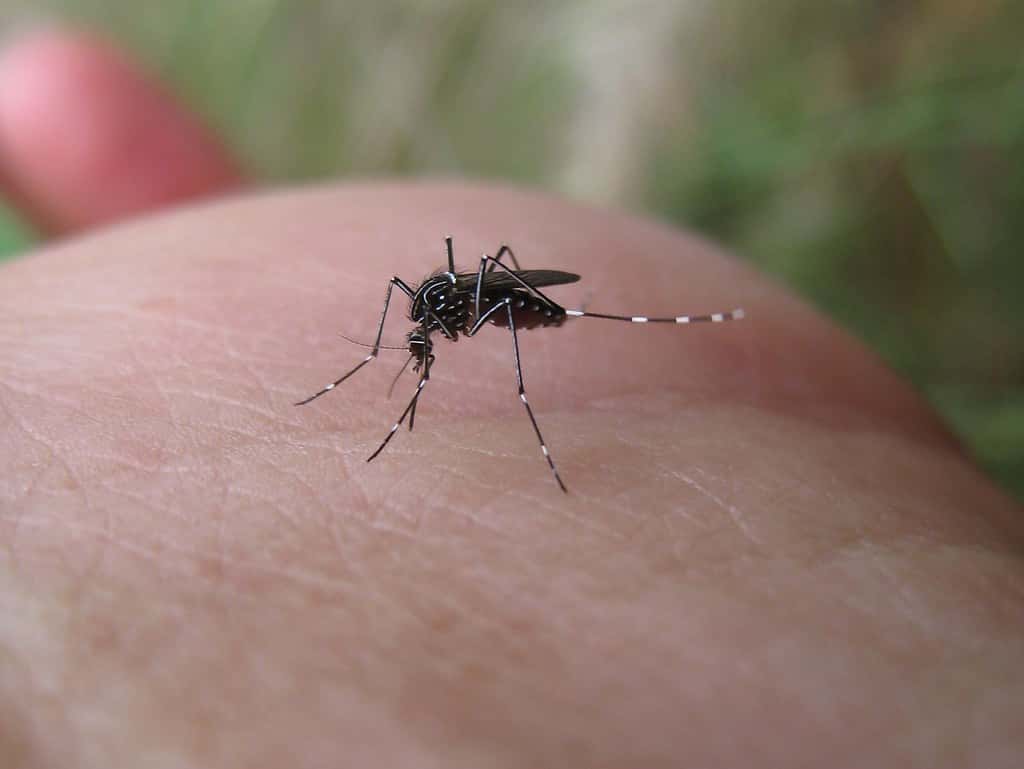
Health departments in several Florida counties have issued mosquito-borne illness alerts and advisories this month after confirming cases of locally acquired dengue fever, the designation used when a patient contracted the virus in Florida rather than while traveling abroad.
The Florida Department of Health in Pinellas County issued an alert in mid-August following two confirmed locally acquired dengue cases. Earlier in the month, the department's Palm Beach County office issued a mosquito-borne illness advisory and its Miami-Dade County office issued an alert, both tied to confirmed local transmission.
Locally acquired cases matter to public health officials in a way imported cases do not. A travel-associated case tells authorities where a patient went. A locally acquired case tells them the virus is circulating in local mosquito populations, which creates ongoing risk to residents who have not traveled.
Alert versus advisory
Florida county health departments use a two-tier system, and the distinction carries meaning. An advisory indicates that health officials have identified a heightened risk of transmission and are urging precautions. An alert indicates confirmed local transmission and a higher level of concern.
Both designations trigger coordination with county mosquito control districts, which respond with increased surveillance trapping, larval source reduction and, where warranted, adulticide treatment in the areas surrounding case locations.
Health departments generally do not disclose specific patient addresses, both for privacy reasons and because the relevant response area is broader than any single residence. Mosquito control operations typically cover a radius around identified case locations.
Residents can confirm the current status in their own county through their local Florida Department of Health office, which publishes advisories and alerts as they are issued.
What dengue is and how it spreads
Dengue is a viral illness transmitted by Aedes mosquitoes, principally Aedes aegypti and Aedes albopictus. Both species are established in Florida. Aedes aegypti in particular thrives in urban and suburban environments and breeds in small containers of standing water rather than in marshes or ponds.
That breeding behavior is why mosquito control guidance emphasizes household containers. Plant saucers, bird baths, clogged gutters, tarps, buckets, tires, bromeliads and pool covers can each hold enough water to produce mosquitoes, and these containers are largely on private property beyond the reach of county spraying operations.
Aedes aegypti bites primarily during daylight hours, with peaks in early morning and late afternoon. That pattern differs from the mosquitoes most Floridians associate with evening activity, and it means daytime protection matters.
Symptoms typically appear within a week or two of a bite and can include high fever, severe headache, pain behind the eyes, muscle and joint pain, nausea and rash. Most cases resolve, but a minority progress to severe dengue, which is a medical emergency. There is no specific antiviral treatment, and clinical care is supportive.
Why Florida is exposed
Florida's combination of climate, geography and travel patterns makes it the most consistently exposed state in the continental United States to mosquito-borne viral disease. Warm temperatures support mosquito activity for most of the year, and the summer rainy season produces abundant breeding habitat.
The state's role as an international gateway is the other factor. Dengue is endemic across much of the Caribbean, Central America and South America, and Florida's airports and seaports handle enormous passenger volumes from those regions. A traveler who arrives while infected can be bitten by a local mosquito, which then transmits the virus onward.
Dengue transmission in the Americas has generally trended upward in recent years, which increases the frequency with which imported cases arrive in Florida. Public health surveillance is designed to catch that pattern early through case reporting requirements imposed on clinicians and laboratories.
Florida also contends with other mosquito-borne diseases, including West Nile virus, eastern equine encephalitis, chikungunya and malaria, each with its own vector and seasonal pattern. County arbovirus surveillance programs monitor sentinel chickens and mosquito trap collections for several of these simultaneously.
What residents can do
Public health guidance centers on two principles: eliminate standing water and prevent bites. Both are within individual control and both are more effective than relying on county spraying alone.
Draining and covering containers weekly is the core recommendation, because the Aedes life cycle from egg to adult can complete in roughly a week under Florida summer conditions. Emptying a plant saucer once a week interrupts that cycle.
For bite prevention, health officials recommend EPA-registered repellents, long sleeves and long pants where practical, and intact window and door screens. Repellents registered for use should be applied according to label instructions, particularly for children.
Residents who develop symptoms consistent with dengue, especially within two weeks of travel to an area where the virus circulates, should contact a health care provider and mention the travel history. Diagnosis requires laboratory testing, and reporting confirmed cases to the health department is part of the surveillance system that triggers these alerts.
Local impact across the state
Miami-Dade County has historically recorded the largest share of Florida's locally acquired dengue cases, reflecting its dense urban environment, established Aedes aegypti population and heavy international travel volume.
Palm Beach and Broward counties share many of the same characteristics and have recorded local transmission in past seasons. The county mosquito control programs in South Florida are among the largest and best resourced in the state.
Pinellas County's alert extends attention to the Tampa Bay region. Pinellas is the most densely populated county in Florida by land area, and its mix of older housing stock and abundant container habitat supports Aedes populations.
Elsewhere in the state, Key West and the Florida Keys have experienced dengue transmission in past years, and Monroe County operates an unusually intensive mosquito control program as a result. Central and North Florida counties conduct routine arbovirus surveillance but have recorded local dengue transmission less frequently.
How mosquito control districts respond
Florida's mosquito control operations are among the most developed in the country, organized largely through independent special districts and county programs with dedicated funding and staff.
Response to a confirmed case begins with surveillance. Programs deploy traps to determine which species are present in the area and at what density, and in some cases they test collected mosquitoes for the presence of virus. That data determines whether and how to treat.
Source reduction is the preferred first intervention. Inspectors survey the area for standing water and treat or eliminate breeding sites, using larvicides in containers that cannot practically be drained. Because Aedes aegypti breeds in small containers on private property, this work depends heavily on resident cooperation and property access.
Adulticide application, whether by truck-mounted equipment or aircraft, targets flying adult mosquitoes and is generally used when surveillance indicates population densities that warrant it. Application schedules are typically published in advance so residents with sensitivities can take precautions.
Distinguishing the mosquito-borne diseases
Several distinct diseases circulate in Florida, and they involve different mosquito species, different transmission cycles and different risk profiles. Conflating them produces confusion about what any given alert means.
Dengue and chikungunya are transmitted between humans by Aedes mosquitoes, which means human cases drive the transmission cycle. Controlling those diseases requires interrupting human-to-mosquito-to-human transmission, and identifying cases quickly is central to the response.
West Nile virus and eastern equine encephalitis circulate primarily between birds and mosquitoes, with humans and horses as incidental hosts. Surveillance for those diseases relies on sentinel chicken flocks and on testing mosquito pools rather than on human case reports alone.
Malaria, which is caused by a parasite rather than a virus and is transmitted by Anopheles mosquitoes, has appeared in Florida in locally acquired cases in recent years after decades without local transmission. Each of these requires a different surveillance and control approach, which is why county programs monitor multiple systems simultaneously.
Severe dengue and warning signs
Most dengue infections resolve without complication, but a minority progress to severe disease, and recognizing the transition is what determines outcomes.
The critical period typically arrives as fever begins to subside, often three to seven days into the illness. Patients and families sometimes interpret the falling fever as recovery precisely when the risk of deterioration is highest.
Warning signs include severe abdominal pain, persistent vomiting, bleeding from the gums or nose, blood in vomit or stool, rapid breathing, extreme fatigue and restlessness. Any of these warrants immediate medical attention.
Severe dengue involves plasma leakage from blood vessels, which can produce shock, along with bleeding complications and organ impairment. Treatment is supportive and centers on careful fluid management, which is why hospital care matters.
A second infection with a different dengue serotype carries elevated risk of severe disease compared with a first infection, a phenomenon relevant in areas where multiple serotypes circulate.
The travel connection
Because locally acquired cases in Florida generally trace back to an imported infection, travel patterns are central to understanding and preventing outbreaks.
Travelers returning from dengue-endemic regions should take bite-prevention measures for roughly two weeks after returning, even if they feel well. An infected traveler bitten by a local Aedes mosquito is the mechanism by which local transmission chains begin.
That guidance is counterintuitive, since most people think of repellent as protecting themselves rather than as protecting their community. In this case both apply.
Travelers who develop fever after returning should seek medical care and specifically mention where they traveled and when. Clinicians who know the travel history can order appropriate testing, and confirmed cases trigger the public health response that limits further spread.
Florida's volume of travel to and from the Caribbean, Central America and South America means importation events occur regularly, and the state's surveillance system is designed around that reality.
What's next
Peak mosquito season in Florida generally extends through the summer rainy season into early fall, which means the current period carries elevated risk statewide. Additional county alerts during this stretch would not be unusual.
County mosquito control districts will continue surveillance trapping and treatment in areas around confirmed cases. Residents can typically request service or report standing water problems directly to their county mosquito control program.
The Florida Department of Health publishes arbovirus surveillance reporting that tracks mosquito-borne disease activity across the state, and county health department offices issue and lift advisories and alerts as conditions change.
Residents planning international travel to dengue-endemic regions should review current health guidance before departure, since preventing imported infection is also part of limiting local transmission.
Spotted an issue with this article?
Have something to say about this story?
Write a letter to the editorComments
No comments yet. Be the first to weigh in.
Related Coverage

Dengue Warnings Spread to Central Florida as Orange, Polk Confirm Local Cases
1d ago
Florida Heads Into Open Enrollment as the Nation's Biggest Test of Expired ACA Subsidies
2d ago
Florida Health Officials Issue Dengue Advisories in Polk and Orange Counties After Locally Acquired Cases
3d ago
Florida Moves to Drop Four Vaccine Requirements in a Year of Record Measles Activity
4d ago