Donalds Holds Commanding Lead as Florida's August 18 Governor Primary Nears
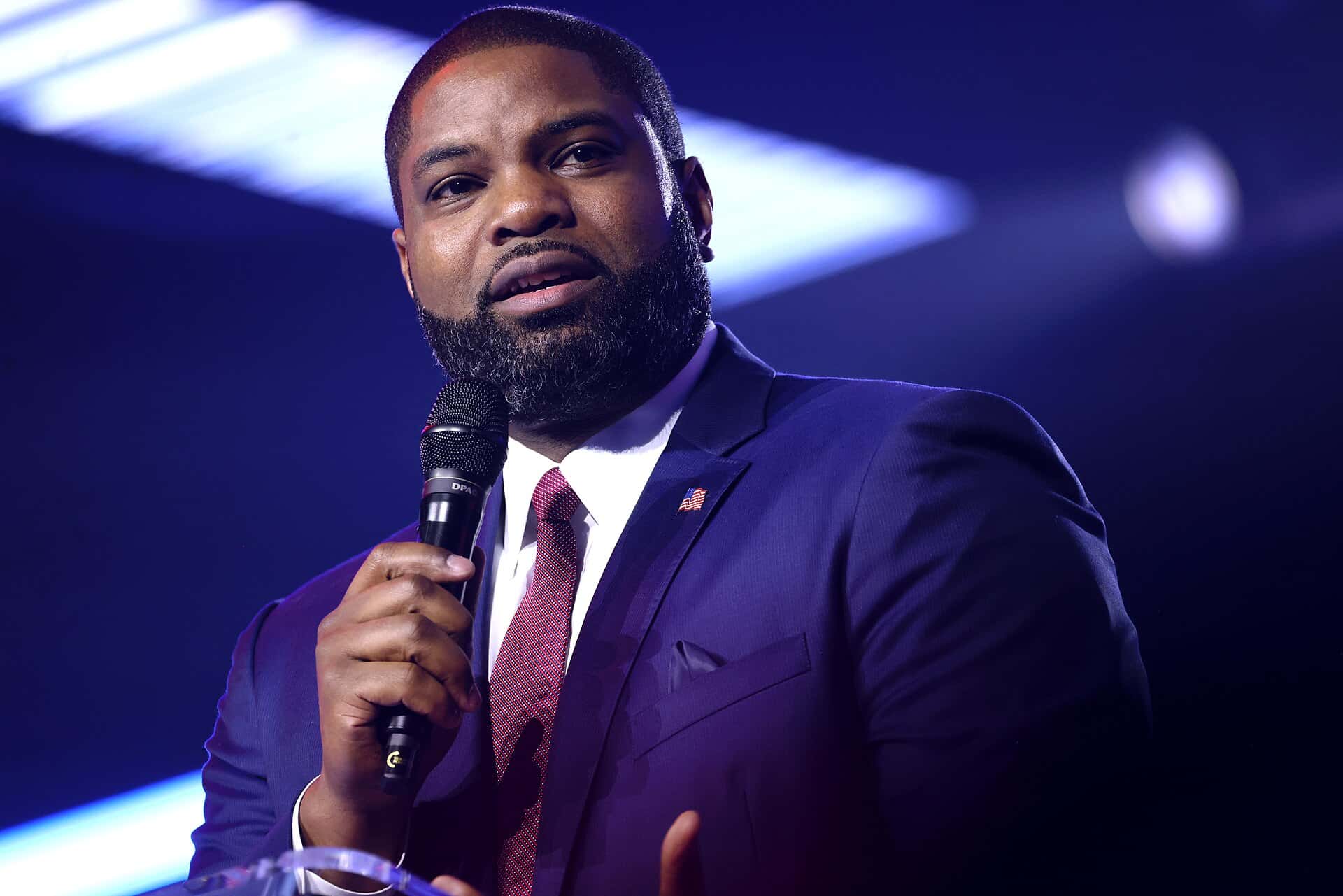
Florida voters go to the polls on August 18 to choose party nominees for governor, and public polling entering the final two weeks points to a Republican primary that has effectively been decided. U.S. Representative Byron Donalds holds a wide lead over the rest of the GOP field in every recent survey of likely primary voters, positioning him to become the party's nominee to succeed term-limited Governor Ron DeSantis.
Where the polling stands
Recent surveys of likely Republican primary voters have put Donalds in a dominant position, with results ranging from the mid-forties to the mid-fifties depending on the pollster and how undecided voters are handled. An Emerson College Polling survey placed him at 46 percent, with Lieutenant Governor Jay Collins and investor James Fishback each in the low single digits and a substantial bloc of voters still undecided. A separate survey conducted by Fabrizio, Lee and Associates put Donalds at 54 percent.
The gap between Donalds and the rest of the field in those surveys runs from roughly 28 to nearly 40 points. Polls of primary electorates carry real uncertainty, particularly in a low-turnout August contest where the composition of the actual voting pool is hard to model. But a lead of that magnitude across multiple independent surveys is difficult to attribute to sampling noise alone.
The undecided share is the number worth watching. When four in ten primary voters have not settled on a candidate two weeks out, there is theoretically room for movement. In practice, undecided voters in a race with one nationally known candidate and several low-name-recognition challengers tend to break disproportionately toward the known quantity or simply not vote.
How the field consolidated
Donalds, who represents Florida's 19th congressional district covering Naples and much of Southwest Florida, entered the race with an early endorsement from President Donald Trump that was repeated over subsequent months. In a Republican primary electorate in Florida, that endorsement functions as a significant sorting mechanism, and several potential candidates who had been mentioned as possible entrants did not ultimately run.
The Republican Party of Florida canceled its scheduled primary debates after determining that only Donalds met the qualifying thresholds the party had set for participation. Debate thresholds typically combine polling minimums with fundraising benchmarks, and the decision removed what would have been the clearest opportunity for a trailing candidate to change the shape of the race in front of a statewide audience.
Collins, the sitting lieutenant governor, and Fishback, an investor who entered the contest as a first-time candidate, have both continued campaigning. Neither has demonstrated the polling movement that would be needed to close a gap of this size in the time remaining.
The Democratic side and the general election
On the Democratic side, former U.S. Representative David Jolly has led in public polling of the party's primary field. Jolly, who represented a Tampa Bay area district as a Republican before leaving the party, has run on a platform emphasizing affordability, property insurance costs, and public education funding.
General election polling at this stage is a rough instrument, but the surveys that have tested a Donalds-Jolly matchup have shown a competitive but Republican-leaning contest. Emerson's numbers put Donalds ahead of Jolly 44 percent to 39 percent, a margin narrower than recent statewide Republican performance in Florida but still a lead.
Florida has trended reliably Republican in statewide races over the past three cycles, with DeSantis winning reelection in 2022 by a margin that reshaped assumptions about the state's competitiveness. Democrats have argued that cost-of-living pressure, particularly on housing and insurance, creates an opening. Republicans point to voter registration numbers that now favor their party statewide by a substantial margin.
What is actually on the ballot August 18
The governor's race is the marquee contest, but the August 18 primary is a full ballot in most Florida counties. Voters will also decide nominations for attorney general, chief financial officer, agriculture commissioner, state legislative seats, and congressional districts, along with a range of county-level offices that in many places are decided outright in August because only one party fields candidates.
Florida runs a closed primary system for partisan races. Registered Republicans receive the Republican ballot, registered Democrats receive the Democratic ballot, and voters registered with no party affiliation receive a ballot containing only nonpartisan contests and any universal primary races where all candidates belong to one party. The registration deadline for the primary has already passed.
Turnout in Florida gubernatorial primaries typically runs well below general election levels. That dynamic amplifies the influence of the most engaged partisan voters and of vote-by-mail programs, which both parties have invested in heavily. Supervisors of elections across the state's 67 counties have been mailing ballots to voters who requested them.
What the next governor inherits
Whoever wins in November takes office facing a set of policy problems that have dominated Florida politics for several years and remain unresolved. Property insurance sits at the top of that list. The market has stabilized measurably since the 2022 legislative reforms, with Citizens Property Insurance Corporation shedding a large share of its peak policy count and private carriers returning, but premiums remain among the highest in the country.
Housing affordability is the related pressure point. Median single-family prices statewide have continued climbing while inventory has expanded, producing a market that is simultaneously softening for sellers in some segments and still out of reach for many first-time buyers. Condo and townhouse inventory in particular has ballooned as buildings absorb the cost of post-Surfside structural reserve requirements.
Beyond those, the next administration will manage a state budget shaped by a slowing revenue picture, an education system working through several recent statutory changes, water and Everglades restoration commitments that run on federal-state cost-share timelines, and an immigration enforcement partnership with federal agencies that has expanded significantly under the current administration.
The down-ballot races that matter
Florida's cabinet offices are on the ballot alongside the governor, and they carry more authority than their relatively low profile suggests. The attorney general leads the state's litigation posture and holds prosecutorial authority through the Office of Statewide Prosecution. The chief financial officer oversees the Department of Financial Services, which includes insurance consumer services and fire marshal functions.
The agriculture commissioner runs a department whose portfolio extends well past farming to include consumer services, concealed weapon licensing, and food safety inspection. All three cabinet officers sit with the governor on the Florida Cabinet, which exercises collective authority over clemency, land acquisition, and several regulatory boards.
Legislative races are where policy actually gets made. Every seat in the Florida House and roughly half the Senate is on the ballot, and in a state where one party holds supermajorities in both chambers, the competitive contests are frequently the primaries rather than the general elections. A district that is safe for one party in November is decided in August.
County-level offices, including sheriff, property appraiser, tax collector, clerk of court, and school board seats, also appear on the ballot. School board races are nonpartisan under Florida law, which means all voters receive them regardless of party registration, and they have become among the most contested local races in the state.
What Florida's electorate looks like now
Florida's voter registration has shifted substantially over the past six years. Republicans now hold a statewide registration advantage over Democrats, reversing a Democratic edge that persisted for decades. That shift traces to a combination of party switching, in-migration patterns, and sustained registration efforts.
The state's population growth has been among the fastest in the country, with new residents arriving primarily from the Northeast, the Midwest, and other Southern states. Those movers do not register uniformly, and their partisan composition has been a subject of considerable analysis with no simple answer.
Florida's Hispanic electorate is large and politically heterogeneous in ways that resist generalization. Cuban American voters in South Florida, Puerto Rican voters concentrated in Central Florida, and growing Venezuelan, Colombian, and Nicaraguan communities each have distinct political histories and voting patterns.
Turnout differentials between primary and general elections compound all of this. The August electorate skews older, whiter, and more consistently partisan than the November electorate, which means primary results are a poor predictor of general election dynamics even in the same year.
How Florida runs its elections
Election administration in Florida is decentralized to 67 elected county supervisors of elections, who manage voter rolls, polling locations, early voting sites, vote-by-mail processing, and canvassing. The Department of State's Division of Elections handles statewide functions including candidate qualifying and the statewide voter registration database.
Florida law requires machine recounts when a race falls within a half-percentage-point margin and manual recounts of overvotes and undervotes at a quarter point. Those thresholds are automatic rather than requiring a candidate request.
Vote-by-mail requests in Florida expire and must be renewed, a change from the prior system in which a request covered multiple election cycles. Voters who assume a standing request remains active are among the most common sources of confusion in recent elections.
Ballot tracking is available through most county supervisors, allowing voters to confirm that a mailed ballot was received and counted. Ballots with signature discrepancies can be cured through a defined process, but only within a deadline after election day.
What's next
Early voting periods vary by county and are set by each supervisor of elections within the window state law allows. Voters can confirm their early voting sites, precinct assignment, and vote-by-mail ballot status through their county supervisor of elections office.
Vote-by-mail ballots must be received by the supervisor of elections by 7 p.m. on election day. A ballot postmarked but not delivered by that deadline does not count, a rule that has caused problems in past Florida elections and that election officials have been emphasizing in public messaging.
Results will begin posting after polls close at 7 p.m. local time on August 18. Florida spans two time zones, and the Panhandle counties in Central time close an hour after the peninsula, meaning statewide results are not complete until after 8 p.m. Eastern. The general election follows on November 3.
Spotted an issue with this article?
Have something to say about this story?
Write us a letterComments
No comments yet. Be the first to weigh in.
Related Coverage

Harry Shorstein, five-term Jacksonville-area state attorney and juvenile justice reformer, dies at 86
5h ago

Pinellas commissioners set Oct. 27 vote on Vince Nowicki's Flock camera ban after Bob Gualtieri's fierce defense
1d ago

Volusia County Launches Florida's First Online Database of Convicted Domestic Abusers
1d ago

Miami-Dade sheriff ends Sergeant-at-Arms security detail; Levine Cava warns of risk at Government Center
2d ago