Florida Governor's Race Enters Final Five Weeks With Split Polls and No Debate Between Donalds and Jolly
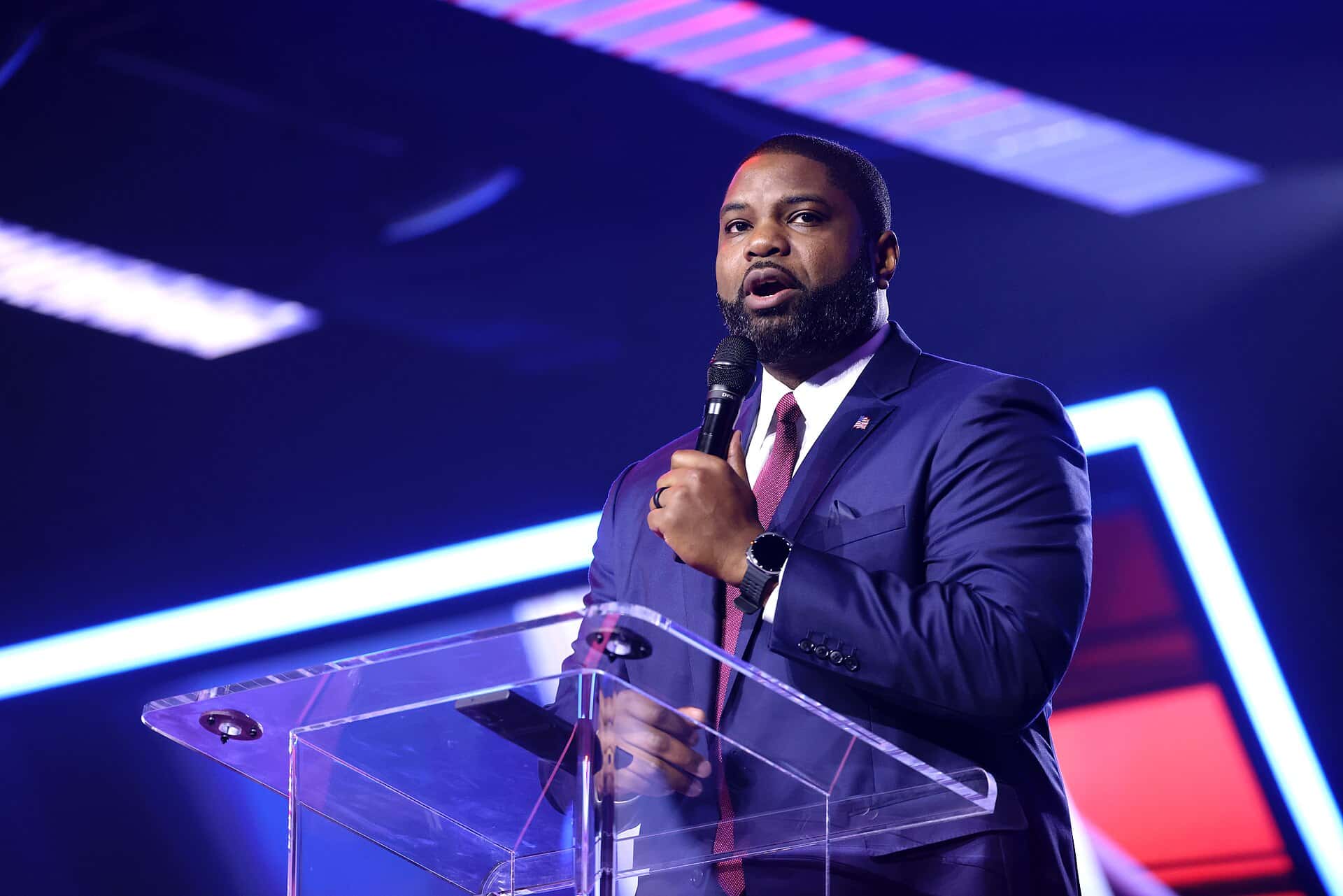
Florida's race for governor enters its final five weeks with Republican Byron Donalds and Democrat David Jolly facing a set of public polls that disagree sharply about how close the contest is, a lopsided fundraising picture and, for the first time in roughly half a century, no scheduled televised debate between the major-party nominees. Election Day is Tuesday, November 3, 2026, and the winner will succeed Gov. Ron DeSantis, who is term-limited after two terms.
The debate question was settled on Sunday, September 20, when Jolly announced that he would decline all general election debates with Donalds. Jolly cited the tone of the campaign and what he described as bad faith on the part of his opponent. The decision means Florida voters are on track to go through a governor's race without a nominee debate for the first time in about 50 years, according to news coverage of the announcement.
At the same time, polls released in September have produced strikingly different pictures of the race. Some show a statistical tie, while at least one shows Donalds with a double-digit lead. That spread has given both campaigns material to argue that momentum is on their side as early voting and mail ballots approach.
What the polls show
Three September surveys illustrate the range of results:
- A St. Pete Polls survey conducted September 15 to 17 found Donalds at 43.5 percent and Jolly at 43.4 percent among likely voters, effectively a tie.
- A survey conducted September 14 to 21, reported by Stetson University, found Donalds at 51 percent and Jolly at 39 percent, a 12-point Republican lead. The same poll found Republicans holding double-digit leads in both the governor's race and Florida's U.S. Senate race.
- An earlier Change Research poll conducted September 7 to 9 found the Democratic ticket of Jolly and his running mate ahead of the Republican ticket, 47 percent to 44 percent.
Differences in polling methods, the mix of voters each pollster expects to turn out and the timing of fieldwork can all produce varied results, especially in a state as large and politically diverse as Florida. Polls sponsored by or conducted for partisan groups also tend to be read with caution. Taken together, the September numbers suggest a race that some pollsters see as competitive and others see as leaning comfortably Republican.
Florida's recent election history gives Republicans reasons for confidence. DeSantis won reelection in 2022 by nearly 20 percentage points, and Republicans have built a statewide voter registration advantage that news reports now put at about 1.55 million active voters. Democrats, for their part, have pointed to the tight polls as evidence that concerns over housing costs, property insurance and the direction of the state are creating an opening.
The candidates
Donalds, a congressman from Southwest Florida, won the Republican nomination after entering the race with the endorsement of President Donald Trump. He has campaigned on continuing the conservative policies of the DeSantis years, including on taxes, immigration enforcement and education, while positioning himself as a close Trump ally. His running mate on the Republican ticket is listed in polling as Avila.
Jolly is a former Republican congressman who represented a Pinellas County-based district in the U.S. House. He left the Republican Party, became a prominent critic of Trump and later registered as a Democrat before launching his campaign for governor. He has pitched himself as a candidate who can appeal to independents and disaffected Republicans as well as Democrats, and his ticket is listed in polling as Jolly-Graham.
The contrast between the two nominees is sharp. Donalds is running as the standard-bearer of a Republican Party that has dominated Florida state government for more than two decades. Jolly is attempting to become the first Democrat elected governor of Florida since Lawton Chiles won reelection in 1994.
The money gap
The fundraising disparity is one of the defining features of the race. According to published reports, Donalds and the committees supporting him have raised roughly $121 million, compared with about $15 million for Jolly. That gap gives the Republican side a large advantage in television advertising, digital outreach, mail and get-out-the-vote operations across Florida's many expensive media markets.
Florida is one of the costliest states in the country for statewide campaigns. Reaching voters requires buying advertising in multiple major markets, including Miami, Tampa-St. Petersburg, Orlando, Jacksonville, West Palm Beach, Fort Myers-Naples and the Panhandle markets of Pensacola and Tallahassee. A campaign with a fraction of its opponent's budget must make hard choices about where and when to spend.
Money alone does not decide elections, and underfunded candidates have occasionally benefited from national political winds or late shifts in voter sentiment. But in Florida's recent statewide races, the better-funded Republican side has also had the advantage in registration and turnout operations, a combination Democrats have struggled to overcome.
Why no debate
Gubernatorial debates have been a fixture of Florida campaigns for decades, often hosted by television stations, newspapers and civic organizations. In 2022, DeSantis and Democratic nominee Charlie Crist met in a single debate. In 2018, DeSantis and Democrat Andrew Gillum debated twice in a closely watched race that DeSantis won by less than half a percentage point.
Jolly's decision to decline debates breaks with that tradition. In announcing his choice, he pointed to the campaign environment and accused Donalds of acting in bad faith, according to news reports. Candidates who trail in fundraising often push for debates to gain free exposure, so the decision by the less-funded candidate drew attention from political observers.
The absence of a debate removes one of the few moments when large numbers of Florida voters see both candidates side by side answering the same questions. Voters seeking to compare the nominees will instead rely on candidate forums, interviews, advertising and news coverage. WLRN, the South Florida public media outlet, hosted both candidates at its Sunshine Economy Summit earlier in September, though not in a head-to-head debate format, and published a fact-check of claims each made there.
Issues driving the race
Affordability has emerged as the dominant theme. Florida homeowners have faced years of sharply higher property insurance premiums, although regulators have recently approved rate decreases for some companies. Condominium owners have been hit with large special assessments tied to post-Surfside safety and reserve laws. Renters have seen housing costs rise faster than wages in many metro areas.
Property taxes are also on the ballot in a separate way. Voters will decide Amendment 3, the property tax measure that came out of the Legislature's special session work on DeSantis's tax relief plan, which the governor's allies have promoted as a major tax cut for homeowners. The candidates' positions on the amendment and on how local governments would replace lost revenue have become part of the broader debate over the state's finances.
Other issues in the race include education and school choice, immigration enforcement, abortion policy after the state's six-week ban took effect in 2024, environmental protection including Everglades restoration and water quality, and how the state prepares for and recovers from hurricanes. Each candidate has used these issues to energize his own base while trying to win over independent voters.
How Florida votes now
Florida's electorate has shifted substantially toward Republicans over the past decade. Once the nation's best-known swing state, Florida delivered comfortable statewide wins for Republicans in 2022 and 2024. The GOP holds every statewide elected office, including governor, Cabinet posts and both U.S. Senate seats, as well as supermajorities in both chambers of the Legislature.
Independent and minor-party voters now make up a large and growing share of registered voters, and they are often the deciding factor in close statewide races. Both campaigns are targeting those voters, particularly in swing areas along the Interstate 4 corridor between Tampa Bay and Orlando and in fast-growing suburban counties.
Turnout patterns will matter as well. Florida allows voting by mail and offers early in-person voting in every county, and in recent elections a majority of ballots have been cast before Election Day. Under state law, county supervisors of elections send domestic mail ballots to voters who requested them roughly five weeks before Election Day, so those ballots are now reaching mailboxes, and early in-person voting follows in the second half of October.
What the job will look like in 2027
Whoever wins will inherit enormous influence over state government. Florida's governor proposes the annual budget, holds line-item veto power over spending approved by the Legislature and signs or vetoes every bill that reaches the governor's desk. The first major test for the new governor will be the 2027 regular legislative session, which under the state constitution begins in early March in odd-numbered years.
The governor also shapes Florida's institutions through appointments. That includes the heads of major state agencies, members of the university Board of Governors and the boards of trustees at public universities and state colleges, and judges, including any vacancies that arise on the Florida Supreme Court. DeSantis used those powers extensively over eight years, reshaping the state's high court and its higher education leadership.
For a Republican successor, those powers would largely continue the direction set under DeSantis, working with a Legislature controlled by the same party. For a Democratic governor facing Republican legislative majorities that currently exceed the two-thirds threshold needed to override vetoes, the veto pen, the appointment power and the bully pulpit would become the main tools for shaping policy.
What's next
With no debate on the calendar, the next five weeks will be shaped by advertising, campaign appearances and additional polling. Voters can expect more surveys in October that may help clarify whether the race is truly close or whether the Republican advantage is as large as some September polls suggest.
The deadline to register to vote in the November 3 general election is October 5, 2026, 29 days before Election Day, under Florida law. Voters who want to receive a mail ballot must request one from their county supervisor of elections by the state deadline, and county election offices will publish early voting locations and hours.
The winner will take office in January 2027 and will be the first new Florida governor in eight years. The Florida Press will continue covering the race, including new polling, campaign finance reports and the candidates' positions on issues facing Florida voters.
Spotted an issue with this article?
Have something to say about this story?
Write a letter to the editorComments
No comments yet. Be the first to weigh in.
Related Coverage
Florida's Senate Special Election Tightens as Angie Nixon Pulls Even With Ashley Moody in New Polling
3d ago
Florida's Governor Race Enters the Final Five Weeks With Polls Telling Two Different Stories
3d ago

DeSantis Launches National Election Standards Push as Florida Tops 100 Voter Fraud Prosecutions
4d ago
Volusia County Council Adopts $1.7 Billion Budget at the Rolled-Back Rate
4d ago