Florida Health Officials Flag Water Quality and Mosquito Risks as Wet Season Winds Down

County health departments across Florida have issued a series of advisories in recent weeks covering beach water quality, mosquito borne illness and rabies exposure, a seasonal cluster that reflects the conditions at the tail end of the state's wet season.
The Florida Department of Health in Franklin County issued a water quality health advisory after tests completed on Thursday, September 17, showed water at Alligator Point did not meet recreational water quality criteria for enterococcus bacteria. A similar advisory was issued earlier in the month for the south side of Virginia Key in Miami-Dade County after tests on September 11 returned results above the recommended threshold.
Separately, the health department in Orange County has been operating under a mosquito borne illness advisory following a confirmed case of locally acquired dengue, and the health department in Hillsborough County issued a rabies alert after a confirmed case in an unvaccinated cat in the Gibsonton area.
What the beach water advisories mean
Florida's beach water quality program tests coastal recreational waters regularly for enterococci, a group of bacteria that live in the intestinal tracts of warm blooded animals. The bacteria themselves are not usually the direct cause of illness. They serve as an indicator that fecal contamination is present, which suggests other pathogens may be as well.
When a sample exceeds the recommended threshold, the county health department issues an advisory recommending against swimming at the location until follow up testing returns acceptable results. The advisory does not close the beach. It informs the public of measured risk and leaves the decision to individuals.
The most common sources of elevated bacteria counts are stormwater runoff, which carries animal waste and other material from land into coastal water, sanitary sewer overflows, failing septic systems and concentrations of birds or other wildlife. Heavy rain is the most frequent trigger, which is why advisories cluster during the wet season.
The practical health risk from swimming in water with elevated bacteria counts is gastrointestinal illness, along with skin, ear and eye infections. Risk is higher for young children, older adults and anyone with a weakened immune system or an open wound.
Why late summer produces more advisories
Florida's wet season runs roughly from late May through October, and September typically brings both accumulated soil saturation and the heaviest rainfall events. Water that cannot soak into already saturated ground runs across surfaces and into storm drains, canals and eventually coastal waters, carrying whatever it picks up along the way.
Water temperature compounds the pattern. Bacteria survive longer in warm water, and Florida's coastal waters in September are near their annual peak. The same rainfall in January would generally produce lower counts.
Infrastructure is the third factor. Aging sewer systems in older Florida communities are vulnerable to inflow during heavy rain, and septic systems in low lying areas can fail when the water table rises. Both produce contamination events that correlate directly with rainfall.
The result is a predictable seasonal rhythm in which advisories increase through the late wet season and decline as the dry season arrives. Residents who follow beach conditions regularly will recognize the pattern.
The dengue situation
Locally acquired dengue is the more significant of the current advisories from a public health standpoint, because it indicates local transmission rather than a case imported by a traveler.
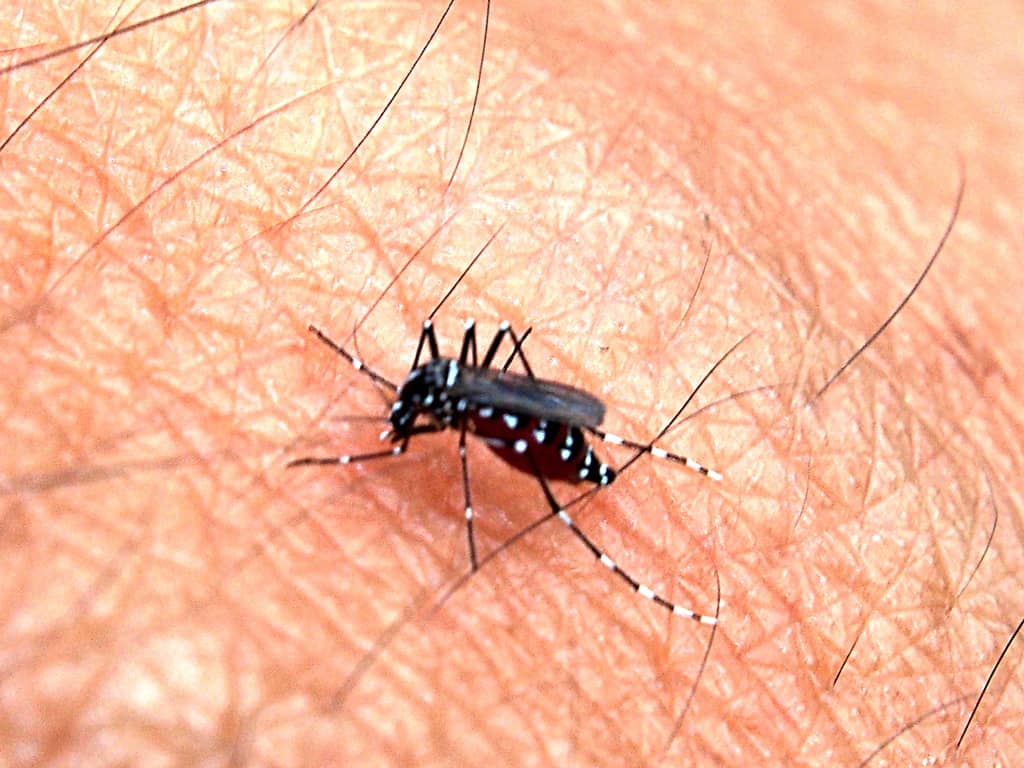
Dengue is a viral illness spread by Aedes mosquitoes, primarily Aedes aegypti, a species well established in Florida. The distinction between a travel associated case and a locally acquired one is central. A traveler who contracts dengue abroad and returns to Florida poses limited risk. A locally acquired case means mosquitoes in the area are carrying the virus and can transmit it to others.
The public health response to a locally acquired case follows a standard pattern: expanded mosquito surveillance in the surrounding area, targeted control operations, door to door outreach in affected neighborhoods and heightened clinical awareness so that physicians consider dengue in patients presenting with compatible symptoms.
Symptoms typically include high fever, severe headache, pain behind the eyes, joint and muscle pain, nausea and rash. Most cases resolve without specific treatment, but a minority progress to severe dengue, which can be life threatening and requires hospital care. Anyone with those symptoms who has been in an area with known transmission should seek medical evaluation.
Florida's mosquito exposure
Florida's climate supports year round mosquito activity in the southern half of the state and a long season elsewhere, and the mosquito species present include vectors for dengue, chikungunya, Zika, West Nile virus and eastern equine encephalitis.
State Surgeon General Dr. Joseph Ladapo joined local officials in Hillsborough County earlier this month to urge residents to take precautions against mosquito borne illness, with the timing tied to the holiday weekend and the outdoor activity that accompanies it.
Aedes aegypti, the primary dengue vector, is a container breeder. It does not require marshland or standing water in the natural landscape. It breeds in the water that collects in flowerpot saucers, discarded tires, clogged gutters, tarps, bottle caps, bromeliads and pet bowls, which means the most effective control measure is action on individual properties.
Mosquito control districts conduct surveillance, larviciding and adult control operations, but their reach into private yards is limited. The standard guidance is to drain standing water weekly, cover containers that cannot be drained, repair screens and use repellent containing an approved active ingredient when outdoors during peak activity periods.
The rabies alert
The Hillsborough County rabies alert followed a confirmed case in a cat with no known vaccination history in the Gibsonton area. Rabies alerts in Florida are issued when an animal tests positive, and they typically cover a defined radius around the location for a set period.
Rabies in Florida circulates primarily in raccoons, bats, foxes and skunks. Domestic animals become infected through contact with wildlife, and unvaccinated pets are the principal bridge between the wildlife reservoir and human exposure.
The disease is effectively always fatal once symptoms appear, which is why post exposure treatment is administered without waiting for symptoms. Anyone bitten or scratched by a wild or unfamiliar animal should wash the wound thoroughly and seek medical care immediately, and the exposure should be reported to the county health department and animal services.
The preventive measure that matters most is pet vaccination, which is required by Florida law for dogs, cats and ferrets. Vaccinated pets that encounter rabid wildlife are protected, and they protect the households around them.
How to check conditions
Beach water quality results are published by the Florida Department of Health through its Healthy Beaches program, with county level pages showing current sampling results and any active advisories. Because results reflect conditions at the time of sampling, and because rainfall changes conditions quickly, current postings at beach access points are also worth checking.
Mosquito borne illness advisories are issued by county health departments and are generally accompanied by local news coverage and direct outreach in affected neighborhoods. Rabies alerts follow the same channel.
For residents in areas under a mosquito advisory, the state's guidance emphasizes both personal protection and source reduction: repellent, appropriate clothing during dawn and dusk activity, intact window and door screens, and the weekly elimination of standing water on the property.
What it means for Floridians
None of the current advisories describes an emergency. They describe ordinary seasonal public health management in a subtropical state, and the appropriate response is proportionate: check before swimming at a beach under advisory, take mosquito precautions in areas with active transmission, keep pets vaccinated.
The population most affected by each of these is different. Beach advisories matter most to families with young children and to anyone immunocompromised. Dengue risk concentrates in neighborhoods with active transmission. Rabies risk attaches to contact with wildlife and unvaccinated animals.
Visitors and seasonal residents are often least aware of these patterns, since the advisories are local and the communication channels are local. Residents hosting family from out of state through the fall season are frequently the most practical source of that information.
The septic and stormwater problem behind the numbers
Recurring water quality advisories in the same locations usually point to infrastructure rather than to weather alone, and Florida has a well documented version of that problem.
Hundreds of thousands of Florida properties are served by septic systems, many of them installed decades ago in areas that have since been developed far beyond what the original design anticipated. In low lying coastal areas with high water tables, septic drainfields can fail to treat effluent properly, and the resulting nutrients and bacteria move into groundwater and surface water.
Stormwater systems in older communities present a parallel issue. Many were designed to move water off streets quickly rather than to treat it, discharging directly into canals, rivers and bays. Every heavy rain therefore delivers a pulse of whatever has accumulated on paved surfaces into the water body downstream.
State and local governments have funded septic to sewer conversion projects and stormwater treatment upgrades, and those projects are expensive, slow and largely invisible to residents until they are finished. The advisories are one of the few visible signals of where the work has not yet been done.
What has changed in recent years
Two developments have altered Florida's mosquito borne illness picture. The first is the expansion of surveillance, which means cases that might once have gone undetected are now identified and reported, making comparisons across years difficult.
The second is travel. Dengue is endemic across much of the Caribbean and Latin America, and Florida's volume of travel to and from those regions is greater than any other state's. Imported cases arrive continuously, and each one creates the possibility of local transmission where competent mosquito vectors are present, which in Florida is nearly everywhere.
Warmer conditions extend the period during which mosquitoes are active and shorten the time the virus needs to become transmissible inside the insect. Public health researchers have documented that relationship, and it points toward longer transmission seasons rather than dramatically different peak risk.
What's next
Water quality advisories remain in place until follow up sampling returns results within the recommended criteria, which in most cases takes days rather than weeks once the rainfall event that caused the exceedance has passed.
Mosquito borne illness advisories generally continue while surveillance and control operations proceed and are lifted when a defined period passes without additional locally acquired cases. Rabies alerts typically run for a fixed period from the date of the confirmed case.
The broader seasonal pattern should ease as Florida transitions into the dry season later in the fall. Reduced rainfall lowers both the runoff that drives water quality exceedances and the standing water that supports mosquito breeding, though south Florida's mosquito season never fully closes.
Spotted an issue with this article?
Have something to say about this story?
Write a letter to the editor