AdventHealth Surgeon in Celebration Removes Prostate From Patient in Minneola in What It Calls the First U.S. Robotic Telesurgery
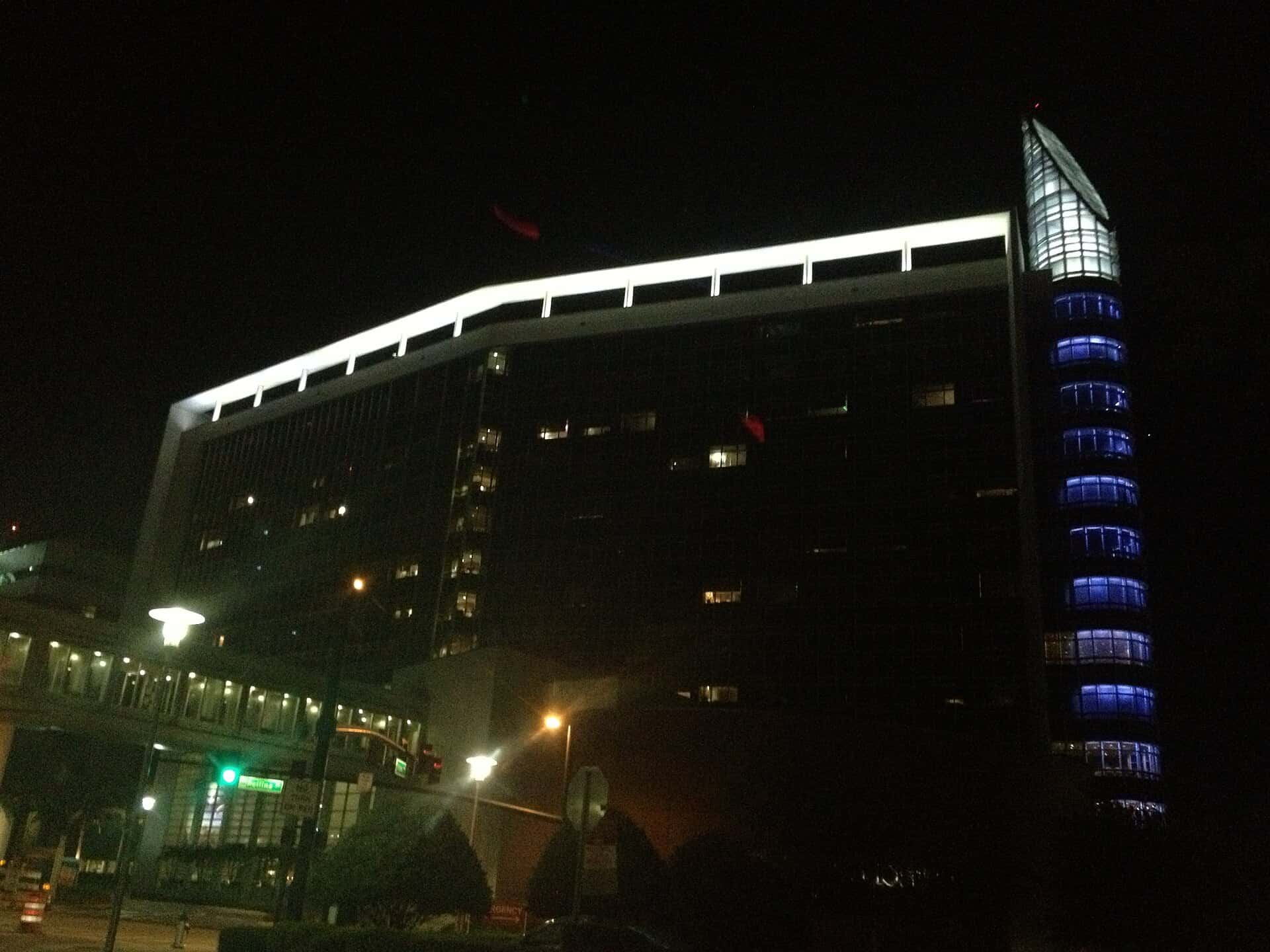
A surgeon at AdventHealth Celebration in Osceola County operated on a prostate cancer patient at AdventHealth Minneola in Lake County without being in the room, controlling a robotic surgical system from roughly 35 miles away in what the health system describes as the first robotic telesurgery performed between two locations in the United States.
The Oct. 25 procedure, a robotic prostatectomy on a 66-year-old man, was performed as part of a clinical research study under a U.S. Food and Drug Administration Investigational Device Exemption, AdventHealth said. The exemption allows the technology to be studied on patients; it does not mean the system has been approved or cleared by the FDA for this use.
What happened in the operating room
Dr. Vipul Patel, founder and medical director of the Global Robotics Institute at AdventHealth Celebration and the study's principal investigator, operated from Celebration, according to AdventHealth. In Minneola, Dr. Marcio Moschovas and a surgical team stayed with the patient and were available to support the procedure and intervene if necessary, the health system said.
The patient chose to take part in the study after he was diagnosed with prostate cancer, WESH reported. AdventHealth told ABC News the patient was recovering well, People magazine reported. His name has not been released.
AdventHealth and most outlets put the distance between the two hospitals at about 35 miles; WESH's report described it as about 40 miles.
The "first" claim
The "first in the U.S." description comes from AdventHealth. According to WFTV, the health system said that published evidence to date has not documented a robotic telesurgery procedure performed between two locations in the United States. Surgeons in the U.S. routinely use robotic systems, but with the surgeon at a console in the same operating room or the same building as the patient. Telesurgery separates the surgeon and the patient across a network connection.
Patel himself has done long-distance telesurgery before, but outside the country's borders. Before the Minneola case, 10 investigational telesurgery procedures had been performed between Orlando and Luanda, Angola, People reported. In June 2025, Patel removed the prostate of a patient in Angola while operating from Celebration, a distance AdventHealth put at nearly 7,000 miles and described as the longest-distance telesurgery ever completed.
That transcontinental work was years in the making. In an interview with the urology outlet UroToday, Patel said the Angola procedure took about two years to plan, and that connectivity testing before the operation achieved a latency, the delay between the surgeon's hand movement and the robot's response, of about 146 milliseconds. The team also tested the approach on animals first. A 2025 paper in the International Brazilian Journal of Urology, with Moschovas as first author and Patel as senior author, described a September 2024 procedure in which a surgeon in São Paulo, Brazil, operated on a live pig in Orlando using the Toumai robot. The authors reported no complications during the operation and no robotic malfunctions.
The Minneola case moves that research onto a domestic network. AdventHealth said the study brings the research into the U.S. health care setting for further evaluation, this time between two of its own hospitals rather than across continents.
The robot and the regulatory status
AdventHealth's study account identifies the robot as the investigational Toumai surgical system made by MicroPort MedBot, a Chinese company, the same platform used in the Angola procedures. MicroPort says the Toumai remote surgery system is approved in nearly 10 countries, including China, India and Brazil, and that the FDA granted it an Investigational Device Exemption for study in the United States.
That exemption is the key regulatory point. According to WFTV, AdventHealth stressed that the exemption does not mean the robotic telesurgery system has received FDA approval or clearance for this use, or that its safety and effectiveness have been established. No FDA marketing authorization for telesurgery with the system in the U.S. has been announced.
What researchers are studying
AdventHealth said the research is looking at several questions before any broader conclusions can be drawn, including:
- Surgical outcomes and patient safety.
- Network performance, meaning how reliably the connection carries the surgeon's movements and the video feed between hospitals.
- Cybersecurity protections for the link between the console and the robot.
- What happens if equipment or connectivity fails during a procedure.
- Operational workflows and other safeguards needed for remote robotic surgery in a hospital.
The health system described the Oct. 25 case as one procedure in an ongoing investigation and said it does not establish general clinical performance. "This study allows us to evaluate whether telesurgery could one day help reduce geographic barriers to specialized treatment. Important questions about safety, effectiveness and technical performance remain under investigation," Patel said in a statement.
Why it matters for Floridians
The study is built around access. "For generations, access to highly specialized care has often depended on where a patient lives," Patel said. AdventHealth said the research is exploring whether telesurgery could eventually let patients get specialized surgical care without traveling long distances, with a local surgical team at the bedside and a specialist connected remotely.
In a state as large as Florida, the idea has obvious appeal for patients far from major specialty surgical centers. But the Minneola case connected two hospitals within the same Central Florida health system, and AdventHealth has not said when or whether the approach could be offered outside the study.
Doug Harcombe, CEO of AdventHealth's Central Florida South Market, said in a release that the health system's mission is "to extend whole-person healing and hope to every person we care for regardless of where they live." He added, "By expanding access to leading expertise and advanced technology, we can ensure more patients receive the care they need in their own community."
What's next
AdventHealth said additional research is needed before broader conclusions can be made about the technology. The study will continue under the FDA exemption, and any move toward routine clinical use would require FDA authorization of the system for telesurgery.
"We are entering a new era of surgery," Patel said. "The future will be defined by how we combine human expertise, robotics and technology to push the boundaries of what is possible for patients around the world."
Spotted an issue with this article?
Have something to say about this story?
Write us a letterComments
No comments yet. Be the first to weigh in.
Related Coverage
Cape Coral Approves Up to $31 Million in Incentives for HCA Florida Hospital on Pine Island Road, Opening Targeted for 2029
3d ago
Florida Dengue Outbreak Reaches 425 Local Cases as Virus Spreads to 11 Counties
3d ago

Florida ABA Therapy Providers Say Molina Has Not Paid Them Since Taking Over Children's Medical Services Plan
4d ago

Moffitt Opens 250,000-Square-Foot Cancer Research Center at Speros Campus in Pasco County
5d ago