Florida Health Officials Issue Dengue Advisories in Polk and Orange Counties After Locally Acquired Cases
County health departments in Central Florida have issued mosquito-borne illness advisories following confirmed cases of dengue acquired locally rather than during travel outside the United States. The Florida Department of Health in Polk County issued an advisory on September 24 in response to a confirmed human case of locally acquired dengue, and the department's Orange County office has issued a series of notices through September after multiple confirmed local cases.
The Orange County sequence began with an advisory update on September 2 tied to a confirmed locally acquired case, followed by a notice on September 18 informing residents of two additional confirmed locally acquired cases. Each notice escalates the department's public messaging and its coordination with local mosquito control districts.
The distinction between a locally acquired case and a travel-associated case is the central fact in these advisories. Florida records travel-associated dengue cases every year in residents returning from countries where the virus circulates continuously. A locally acquired case means the person was infected by a mosquito in Florida, which establishes that the transmission cycle is operating within the state.
What the advisories say
A mosquito-borne illness advisory is the Florida Department of Health's standard notification when locally acquired transmission of a mosquito-borne disease is confirmed in a county. It directs residents to take personal protective measures and signals to local mosquito control programs that enhanced surveillance and treatment are warranted in the areas connected to the case.
Florida's framework distinguishes between an advisory and an alert, and Orange County's notices through September have included both designations. An alert generally reflects a heightened assessment of risk to the public, typically when multiple cases cluster or when surveillance indicates ongoing transmission rather than an isolated event.
Neither designation constitutes a restriction on activity. There are no closures, no travel guidance and no limitations attached to these notices. They are informational and are intended to change individual behavior around mosquito exposure and around eliminating breeding habitat on private property.
County health departments publish these notices on their own websites rather than through a single statewide release, which means the full picture at any given moment requires checking individual county pages. Polk, Orange and other county offices have each maintained their own advisory listings through the season.
How dengue spreads
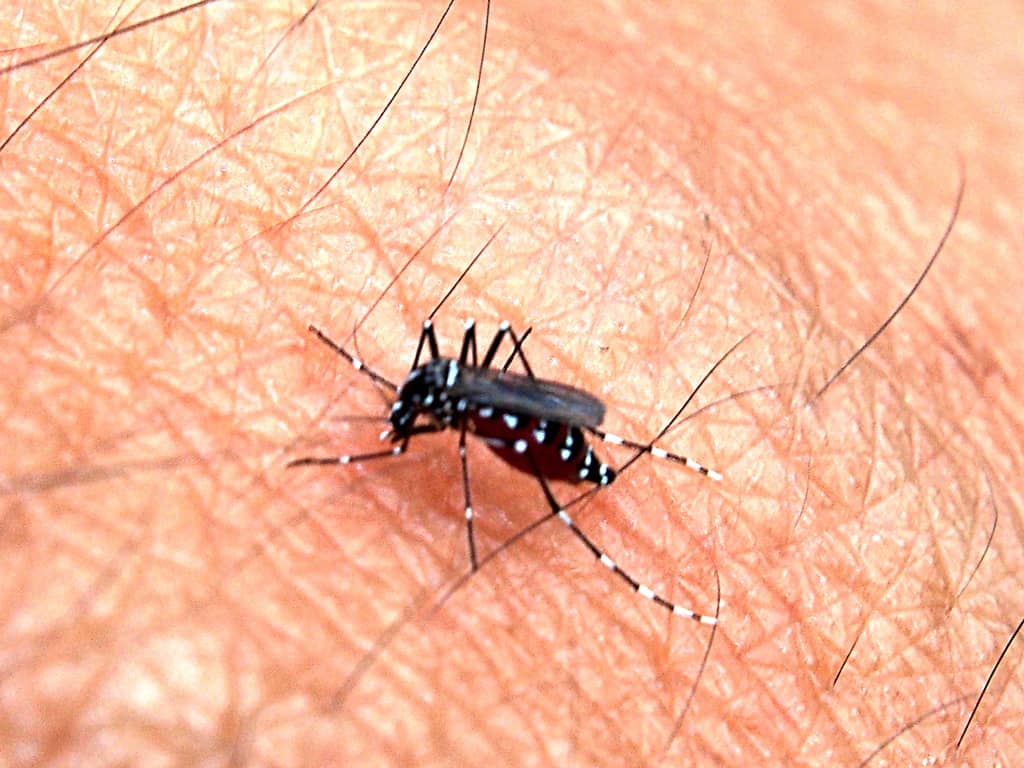
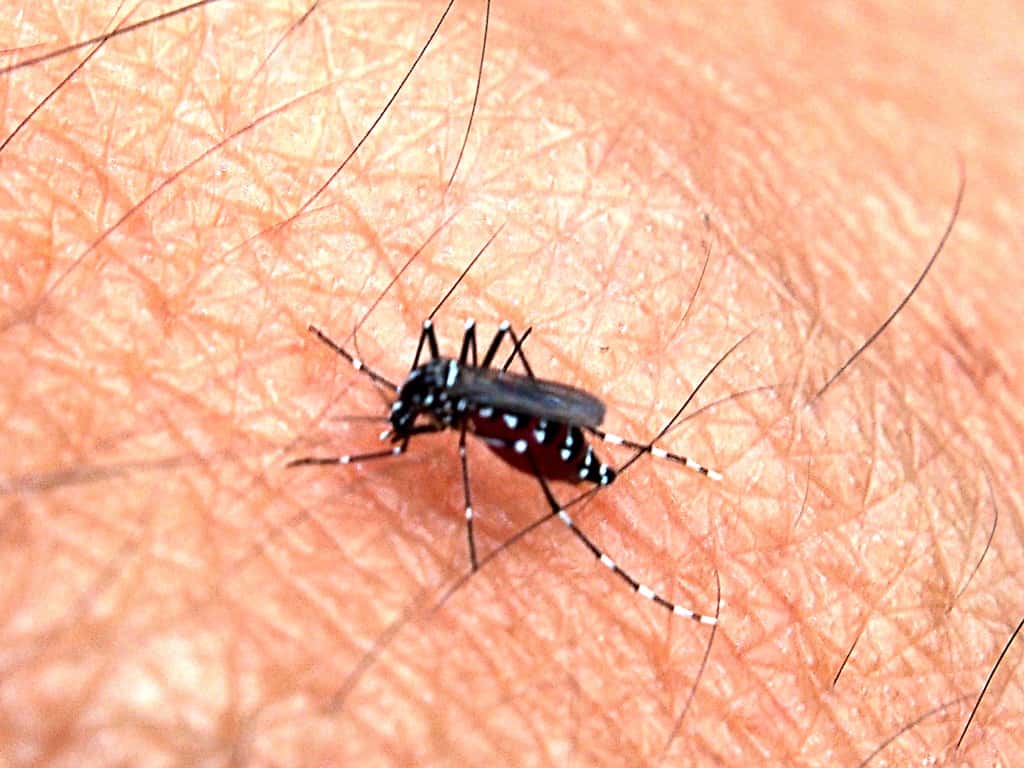
Dengue is a viral illness transmitted by Aedes mosquitoes, principally Aedes aegypti and Aedes albopictus, both of which are established in Florida. These are container-breeding mosquitoes. They do not require marshes or ponds, and they reproduce readily in the small volumes of standing water that accumulate in flowerpot saucers, clogged gutters, tarps, bottle caps, tires, birdbaths, pool covers and children's toys.
Aedes aegypti in particular bites during daylight hours, most actively in the hours after sunrise and before sunset. That behavior pattern makes the common assumption that mosquito risk is a dusk-and-dawn problem misleading in the context of dengue. It also means the mosquito that transmits dengue is typically breeding within a short distance of the person it bites, often on the same property.
Human-to-mosquito-to-human transmission sustains the cycle. A person infected with dengue carries virus in their blood for roughly a week, during which a biting mosquito can acquire it and, after an incubation period, transmit it onward. Dengue does not spread directly between people through casual contact.
Four distinct dengue serotypes circulate globally. Infection with one produces lasting immunity to that serotype but not to the others, and a second infection with a different serotype carries a higher risk of severe disease. That interaction is why repeat exposure matters more for dengue than for many other viral infections.
Symptoms and when to seek care
Most dengue infections produce either no symptoms or a mild illness. When symptoms appear, they typically begin four to ten days after the bite and include sudden high fever, severe headache, pain behind the eyes, muscle and joint pain, nausea, vomiting and a rash. The joint and muscle pain can be intense enough that the illness has long been described in plain terms as breakbone fever.
The critical period in dengue is not the peak of the fever but the day or two after the fever begins to fall, typically days three through seven of illness. Warning signs that require immediate medical attention include severe abdominal pain, persistent vomiting, bleeding from the gums or nose, blood in vomit or stool, rapid breathing, extreme fatigue and restlessness.
Health authorities consistently advise against using aspirin, ibuprofen and other nonsteroidal anti-inflammatory drugs for suspected dengue, because these medications affect platelet function and can worsen bleeding risk in a disease that already lowers platelet counts. Acetaminophen is the generally recommended option for fever and pain.
There is no specific antiviral treatment for dengue. Care is supportive and centers on fluid management, which is why timely medical evaluation matters. Severe dengue is a medical emergency, and outcomes depend heavily on how quickly fluid and blood pressure support begins.
What residents can do
The single most effective action is eliminating standing water on the property, and the relevant volumes are small. A container holding a tablespoon of water for a week can produce mosquitoes. Health departments recommend a weekly walk of the property to dump and scrub containers, clear gutters, turn over anything that collects rain, change birdbath and pet bowl water, and check tarps, boat covers and pool covers for pooling.
Personal protection follows. Repellents registered with the Environmental Protection Agency containing DEET, picaridin, IR3535, oil of lemon eucalyptus or 2-undecanone are effective when used according to label directions. Long sleeves and long pants reduce exposed skin, and loose light-colored clothing is more comfortable in Florida heat.
Structural measures matter for keeping mosquitoes out of living space. Intact window and door screens, functioning air conditioning and repairs to torn screening all reduce indoor biting. Aedes aegypti readily enters and rests inside buildings, which distinguishes it from many other mosquito species.
Residents who have recently traveled to a country with circulating dengue and who develop fever should mention the travel history to their clinician promptly. Early identification of imported cases helps county health departments and mosquito control districts respond before local transmission can establish.
Why Florida is exposed
Florida's climate supports year-round Aedes activity across most of the peninsula, with populations peaking during and after the summer rainy season. Late September, following months of daily afternoon thunderstorms, is typically when container-breeding mosquito populations are near their seasonal maximum.
The state's position as a travel hub compounds the exposure. Florida airports handle enormous passenger volumes from Latin America and the Caribbean, where dengue circulates year-round and where the Americas have recorded exceptionally high case counts in recent years. Each imported case is a potential seed for local transmission if it coincides with high mosquito density.
Urban and suburban development patterns add to the risk. Aedes aegypti is well adapted to dense human settlement, and Florida's combination of year-round warmth, frequent rain, irrigation, ornamental landscaping and outdoor container storage produces abundant breeding habitat in exactly the places people live.
Florida has recorded locally acquired dengue transmission in multiple counties across several recent years, including in Miami-Dade, Broward, Hillsborough and Pasco. The pattern has been clusters of a handful of cases in specific neighborhoods rather than sustained widespread outbreaks, which reflects both the localized nature of Aedes flight range and the effect of targeted mosquito control response.
What local agencies are doing
Florida's mosquito control districts operate as independent local agencies with taxing authority in many counties, and they conduct the operational response to a confirmed local case. That work typically includes trapping to measure adult mosquito density near the case location, inspecting properties for breeding containers, applying larvicide to standing water that cannot be removed, and targeted adulticide treatment.
Because Aedes aegypti has a short flight range, often measured in hundreds of feet, response is concentrated in a small radius around a confirmed case. That geographic precision is one reason these clusters tend to remain small when identified early.
County health departments handle case investigation, which includes interviewing patients about travel and activity, coordinating laboratory confirmation and identifying whether additional unreported cases may exist nearby. Confirmation of dengue requires laboratory testing, because the early clinical presentation overlaps with influenza and other viral illnesses.
The advisories also serve a clinical purpose. A physician in Polk or Orange County who knows local transmission has been confirmed is substantially more likely to order dengue testing for a patient with fever and body aches who has not traveled, which improves detection.
What is next
Florida's mosquito season does not end abruptly. Populations decline as rainfall decreases and temperatures moderate through the fall, and Central Florida's first significant cold front of the season passed through in late September, bringing drier air and cooler temperatures. Drier conditions reduce container breeding, though they do not eliminate it where irrigation and stored water persist.
County health departments will continue issuing notices as cases are confirmed, and the number and geographic spread of advisories through October will indicate whether the current clusters are being contained or expanding. Residents in affected counties can monitor their county health department websites for updated notices.
Dengue vaccines exist but their use in the United States has been limited and highly restricted by prior-infection requirements and by manufacturing decisions, which means vaccination is not currently a practical tool for the general Florida population. Prevention remains centered on mosquito control and personal protection.
The longer-term trend is the one public health officials watch most closely. Locally acquired dengue has appeared in Florida with increasing regularity, and whether that reflects better surveillance, larger imported case volumes, expanding mosquito populations or some combination is an open question with direct implications for how the state allocates mosquito control funding.
Spotted an issue with this article?
Have something to say about this story?
Write a letter to the editor