Florida High School Football Returns With a New Open Division and a Loaded South Florida Slate
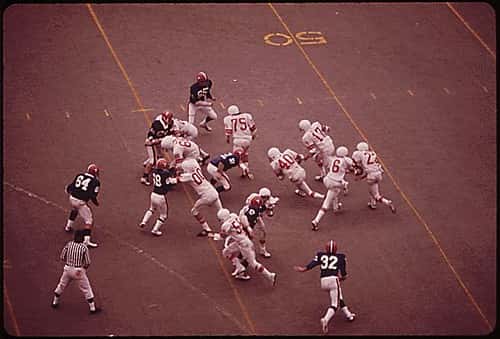
Florida high school football is back. The Florida High School Athletic Association's kickoff classics were played on Friday, August 14, and the regular season began the following week on August 21, opening a fall that runs through state championship weekend in December. This year's season arrives with a structural change: a new FHSAA Open Division that reorganizes how the state's strongest programs compete for titles.
The opening weekend delivered the kind of slate that explains why college recruiters treat Florida as one of the two or three most important states in the country. Miami Central traveled to California to play Orange Lutheran, a national-level intersectional game that South Florida observers described as potentially the biggest involving a state team all season. West Boca faced American Heritage in a meeting of back-to-back state champions, and Mandarin traveled to Hollywood to play McArthur.
Elsewhere in the state, Pensacola Catholic shut out Milton on Thursday night, Columbus overwhelmed Miami Southridge, Miami Norland visited South Dade, and Miami Carol City played at Mainland in Daytona Beach. The geographic spread of competitive games from Pensacola to Miami is itself a feature of Florida high school football that few states can match.
What the Open Division changes
Florida has spent years adjusting its classification system to address a recurring problem: a small number of programs, generally private schools and large public schools in talent-rich areas, that consistently overwhelm everyone else in their classification. The state has tried competitive balance formulas, metro and suburban splits, and enrollment-based classifications, each with mixed results.
An Open Division approach separates the strongest programs into a single bracket regardless of enrollment, allowing them to compete against one another for a distinct championship while the remaining classifications produce more balanced fields. Several states have adopted variations of this model, and the logic is consistent across them.
The practical effect is twofold. Programs at the top face tougher postseason paths, which is generally what their coaches and players want. Programs a tier below get postseason runs that are competitive rather than exercises in absorbing a blowout from a nationally ranked opponent.
Why Florida produces so much talent
Florida, Texas and California form the top tier of high school football talent production in the United States, and Florida's output relative to its population is the most striking of the three. South Florida in particular, spanning Miami-Dade, Broward and Palm Beach counties, sends players to college and professional football at a rate that has been studied and written about for decades.
The explanations generally offered include year-round outdoor training weather, deeply established youth football leagues, a dense concentration of programs competing against one another regularly, and generations of family and community connection to the sport. Whatever the mix, the outcome is consistent enough to be treated as a structural feature of American football.
That talent concentration is why coaching staffs from every Power conference in the country maintain recruiting presence in South Florida, and why programs in the Southeastern Conference and Big Ten regularly sign classes with substantial Florida representation despite being located hundreds of miles away.
The in-state college programs' stake
Florida State, Florida and Miami compete directly for the state's top prospects, and their success in doing so has fluctuated considerably over the past two decades. When those programs are winning, they retain more in-state talent. When they are not, out-of-state programs take a larger share.
Central Florida, now in the Big 12, along with South Florida, Florida Atlantic, Florida International and Florida A&M, all recruit the state as well, though generally at a different level of the prospect distribution. Florida high schools supply a significant share of rosters across all of college football's divisions.
The current compensation environment has changed those dynamics again. Name, image and likeness collectives and revenue sharing mean recruiting conversations now include compensation figures, and a prospect's decision may turn on factors that did not exist five years ago.
The season's structure
The FHSAA regular season runs roughly ten weeks, with district play determining postseason qualification in most classifications. Playoffs begin in November and run through state championship games in December, held at a designated site that has rotated among venues in recent years.
District alignment is redone on a two-year cycle, and it determines which schools compete directly for automatic postseason berths. Alignment decisions frequently produce complaints from programs assigned to travel-heavy districts or grouped with much larger schools.
At-large qualification supplements district champions in most classifications, using a ranking formula that accounts for opponent quality. That formula has been revised several times, and coaches have historically had strong opinions about it.
Safety and heat
Late August football in Florida presents a genuine medical challenge. Heat index values in the upper 90s and low 100s are routine during August practices and early season games, and exertional heat illness is the most significant preventable risk in the sport at this level.
Florida has adopted heat acclimatization requirements and policies mandating cold water immersion tubs at practices and games, measures driven in part by the deaths of high school athletes in prior years. Those policies require schools to have equipment on site and staff trained to use it.
Athletic trainers are the central figure in enforcing those protocols, and access to a certified athletic trainer varies considerably across Florida schools. Programs at well-funded schools generally have full-time coverage; smaller and rural programs frequently do not.
What Friday nights mean to Florida towns
In much of Florida, the high school football team is the primary shared civic institution. That is more true in the Panhandle, in rural North Florida, and in agricultural communities in the interior than it is in the state's largest metropolitan areas, but the pattern holds broadly.
Games generate revenue that funds athletic departments across all sports, and gate receipts from football frequently subsidize programs that cannot support themselves. Booster clubs, concession operations and community sponsorship form an economy around the season.
The social function extends further. Friday night games are where communities gather, and in towns without other regular public assembly, the stadium serves a role that is difficult to replace.
The private school question
Florida's competitive landscape includes private schools that compete in FHSAA classifications alongside public schools, and several of those programs, particularly in South Florida, are among the strongest in the country.
The recurring tension is that private schools draw students from across a metropolitan area rather than from a defined attendance zone, which produces roster construction advantages that public schools with geographic boundaries cannot match.
Florida's school choice programs, which have expanded substantially in recent years, complicate the distinction further by making transfers between public schools easier as well. The competitive balance measures in the classification system are the state's attempt to address the resulting disparities.
What college coaches are watching
Evaluation of high school prospects now happens year-round through camps, seven-on-seven competition and recruiting services, but the fall season remains where projections are confirmed or revised. A player who dominates in shorts in June and disappears in pads in October drops on boards.
The traits college staffs evaluate at this stage are largely physical and developmental: frame, movement quality, competitive response and how a player performs against the best opponent on his schedule. Production against weak competition carries limited weight.
Signing day mechanics have shifted in recent years, with the December period now carrying the bulk of national commitments, which compresses the recruiting calendar and puts more weight on early-season evaluation.
Programs to watch this fall
American Heritage and West Boca met in the opening week as back-to-back state champions, which sets a marker for the Broward and Palm Beach programs. Miami Central's national schedule reflects the program's standing among the state's traditional powers.
Columbus, Miami Norland, Mainland, Mandarin and Pensacola Catholic all featured in opening week action across different regions, and Florida's championship fields typically draw from a mix of South Florida powers and strong programs in the Tampa Bay, Central Florida and Jacksonville areas.
The Open Division's first season will produce its own storyline, since the format itself is new and the postseason path for the state's strongest programs has not been run before.
How to follow the season
The FHSAA maintains classification, district and postseason information, and its broadcast partner streams a substantial number of games each week. Regional newspapers and television stations across the state produce weekly rankings and scoreboards.
Local coverage remains the most reliable source for individual programs, particularly in smaller markets where statewide outlets do not have reporters assigned.
Ticketing and attendance policies vary by district, and several Florida districts have moved to digital-only ticketing for high school events in recent years.
What the season means for athletic budgets
Football is the revenue engine for most Florida high school athletic departments, and the season's gate receipts fund sports that generate nothing on their own. A successful playoff run can determine whether a school's soccer, track, swimming and softball programs are fully funded the following year.
That financial reality shapes scheduling decisions in ways that are not always about competition. A home game against a strong regional rival draws a larger crowd than a road trip against an unfamiliar opponent, and athletic directors weigh that revenue against the competitive value of a challenging schedule.
Costs have risen alongside revenue. Officiating fees, transportation, equipment reconditioning and required safety equipment all increased in recent years, and Florida districts have generally not expanded athletic budgets to match. Booster clubs and community sponsorship fill the gap, which produces disparities between schools in affluent areas and those without the same fundraising base.
What's next
Week two games are scheduled across the state for Friday, August 28, the same evening the Tampa Bay Buccaneers and Jacksonville Jaguars close their preseason at EverBank Stadium. Florida's football calendar is fully loaded from this point forward.
District play begins in earnest in September and October, and postseason seeding will be determined through November. The state championship games in December will be the first contested under the new Open Division format.
For Florida families, the season means Friday nights that structure the fall. For college programs across the country, it means the annual return to the state that supplies more of their rosters than almost anywhere else.
Spotted an issue with this article?
Have something to say about this story?
Write us a letterComments
No comments yet. Be the first to weigh in.
Related Coverage
Rays await Guardians or White Sox in ALCS after sweeping Yankees; Game 1 Monday at Tropicana Field
1h ago

John Carlson scores twice, Dennis Hildeby makes 34 saves as Lightning hold off Wild 3-2
2h ago

Winless Dolphins host Bengals at Hard Rock Stadium seeking first win under Jeff Hafley
22h ago
Hurricane Isaias Scrambles Florida Sports: FSU Cancels Pensacola Games, FAMU Moves to Friday
1d ago